Background Adder for Product Photos: Build On-Brand Scenes in Minutes, Not Hours
Drop cut-out products into on-brand scenes in minutes. See how Pixflux.AI’s background adder nails lighting, shadows, and exports for Amazon, IG, Shopify.
 Sierra CappelenDecember 11, 2025
Background Adder for Product Photos: Build On-Brand Scenes in Minutes, Not Hours
If your team is juggling marketplace standards, social formats, and seasonal campaigns, your product photos are probably the bottleneck. Cutting out objects, finding the right background, and making shadows look natural can turn a single SKU into an afternoon of layer work.
A more efficient path is using a background adder—an AI tool that drops your cut-out products into clean, on-brand scenes automatically. Instead of spending hours in a desktop suite, try an online workflow with Pixflux.AI. It’s a simple background adder that helps you place products into realistic scenes fast and keep consistency across your catalog.
In 2025, AI scene generation is mainstream for catalog and social content. At the same time, marketplaces are tightening visual standards while allowing lifestyle secondary images. This combination makes speed and consistency more important than ever.
What is a background adder and why it matters for product photos
A background adder uses AI to remove, replace, or generate backgrounds around a subject—typically a product shot—while preserving edges, shape, and believable shadows. For ecommerce and social:
- Catalog consistency: Keep all SKUs on the same clean backdrop to match your brand store and marketplace rules.
- Speed to campaign: Build lifestyle variations (studio, kitchen, outdoor, holiday) in minutes to test what converts.
- Cost control: Reduce reshoots and ad-hoc design time by reusing core product cut-outs across multiple scenes.
Pixflux.AI focuses on practical scene building: remove busy backgrounds, add new ones, generate on-brand environments, enhance clarity, and remove unwanted objects that distract from the hero product.
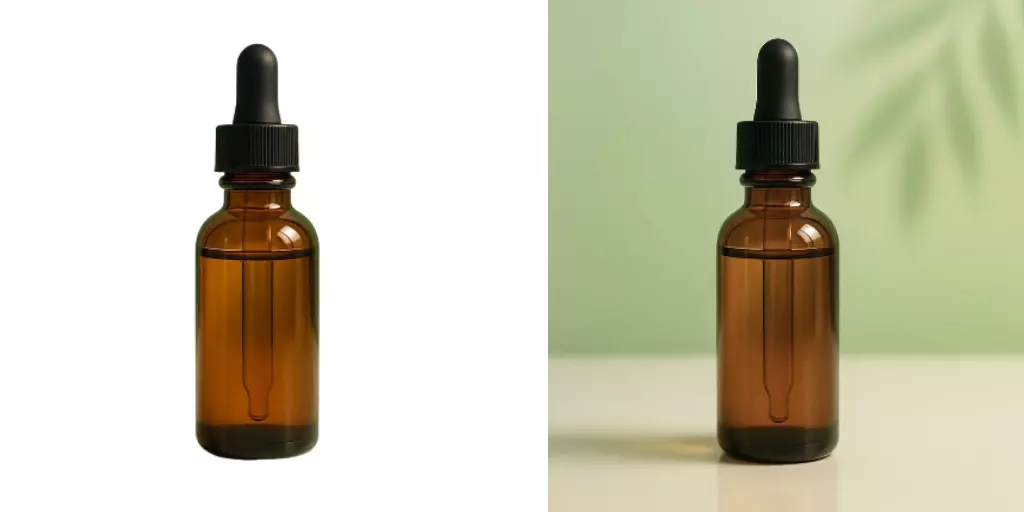
(See image: Before-and-after comparison showing a cut-out product on white vs an on-brand lifestyle scene with matched shadows.)
Visual fundamentals: lighting, shadows, perspective, and material cues
Even with AI, your image still needs visual fundamentals to sell believability:
- Lighting direction: Match the scene’s light direction to the product’s existing highlights. If the product was lit from the left, choose or generate a background with a left key light.
- Shadow quality: Hard shadows suggest sun or harsh studio light; soft shadows suggest overcast or diffused lighting. Adjust shadow softness to fit the scene’s mood.
- Perspective and horizon: Keep surfaces aligned (tabletop, floor, shelf). If the camera angle is low, background lines should converge accordingly.
- Material cues: Products “belong” when reflections, grain, and texture cues are consistent. For glossy items, watch for reflected color from nearby props or walls.
- Color temperature: Warm product lights (tungsten) clash with cool blue backgrounds. Aim for balanced color temperature or nudge tones to match.
Choosing tools: online editors vs desktop suites, and where Pixflux.AI fits
There are three typical approaches:
- Desktop suites: Powerful, but require layer masks, shadow painting, and hours of manual refinement. Great for one-off hero shots, slow for catalogs.
- Outsourcing: Scales hands-on time, but introduces communication delays and inconsistent style without rigorous guidelines.
- Online AI tools: Faster for background remove/change/generation, easier for non-designers, and ideal for batch work.
Pixflux.AI fits the third approach. It’s designed to help teams produce clean cut-outs, add or generate on-brand backgrounds, enhance product clarity, and remove distractions—all without deep layer work.
How to use a background adder in Pixflux.AI (3-step quick start)
Use this 3-step flow to go from raw photo to a publish-ready product image:
- Upload your source image
- Choose a product photo with clear subject focus. Avoid extreme motion blur.
- Let the AI process the background
- Remove a busy background or add a new one that fits your brand. Pixflux.AI handles edge detection, base shadowing, and scene placement.
- Download your result
- Export in the size and format you need, then place it into your catalog, marketplace listing, or social layout.
Ready to try? Use this AI background adder for product photos and repeat the process across your SKU list.
(See image: Pixflux.AI interface showing the three-step flow: Upload → AI process → Download result.)
Optional 5-step workflow for more control
- Open Pixflux.AI in your browser.
- Upload the product photo.
- Choose remove/change/generate background to match the scene you want.
- Preview and make small adjustments (crop, alignment, composition).
- Download the final image and save it to your asset library.
Tip: For a consistent catalog, repeat with the same brand palette and background style across your entire range.
Building on-brand scenes: palettes, props, framing, and consistency
- Palettes: Pick two to three brand colors for surfaces and walls. Subtle gradients or textured neutrals often feel premium without stealing focus.
- Props: Use minimal props that reinforce product use—cups for mugs, leaves for skincare, cables for electronics. Keep them secondary in scale and contrast.
- Framing: Use the rule of thirds for lifestyle shots and central framing for primary product images. Maintain safe margins for marketplaces and social crops.
- Consistency: Document your choices. Keep a simple style sheet: lighting direction, shadow softness, color temperature, and background hue for each product line.
Marketplace and social formats: export sizes that just work
Plan your output dimensions before you download:
- Amazon main image: White background, product fills 85%+ of frame, at least 1,000 px on the shortest side (2,000 px recommended for zoom).
- Amazon secondary: Lifestyle or contextual scenes are allowed—keep clarity, avoid distracting text elements.
- Instagram: Square 1080 × 1080; Portrait 1080 × 1350 (4:5); Reels/Stories 1080 × 1920 (9:16).
- Shopify: Product images commonly 2048 px on longest side for crisp zoom; hero banners vary by theme—test the safe zones for text and product placement.
You can produce your final image in Pixflux.AI and then place it into a pre-sized layout or canvas in your design workflow so nothing important gets cropped.
(See image: Preset export grid displaying Amazon main and secondary images, Instagram square and 4:5, and Shopify banners with safe zones.)
Advanced Pixflux.AI techniques: change, generate, batch, enhance, remove distractions
As you scale beyond the basics, these capabilities help you keep throughput high and quality consistent:
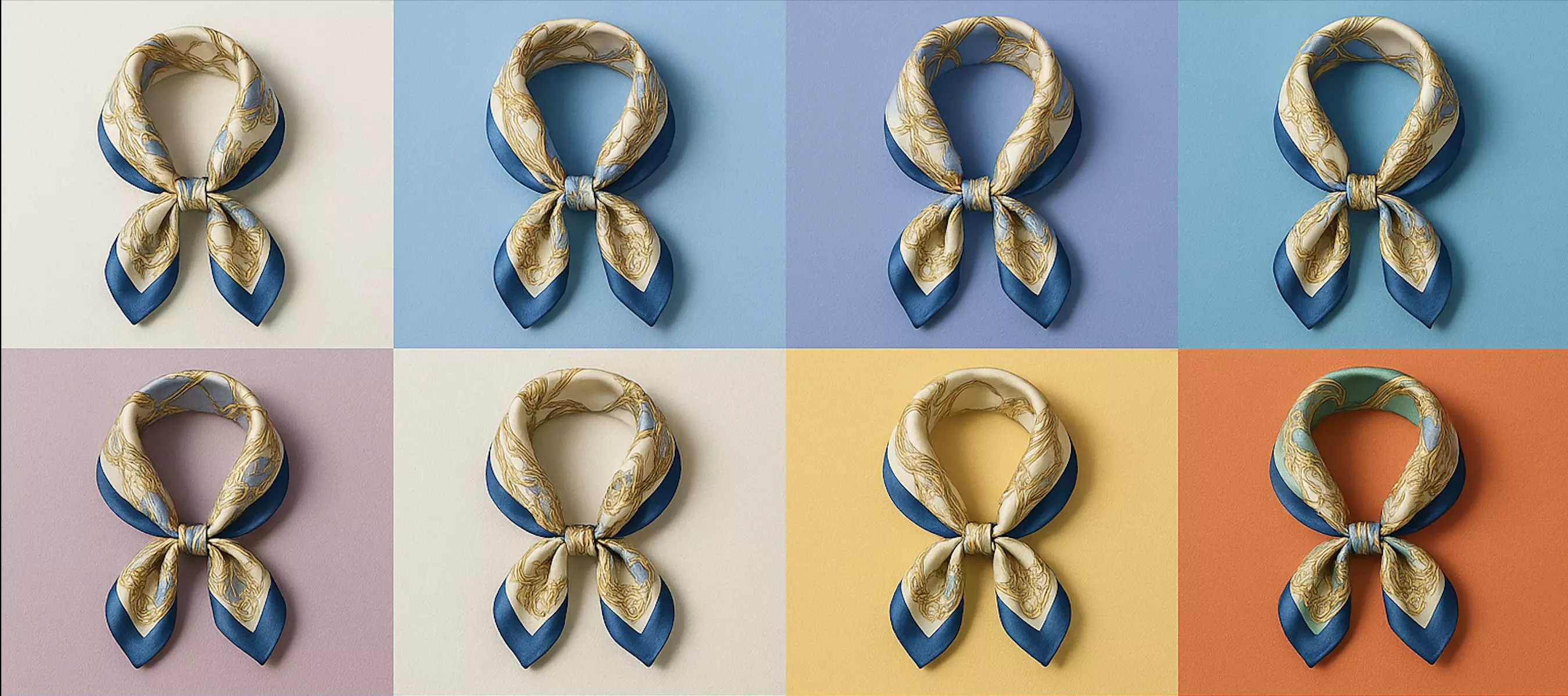
- Change or generate backgrounds: Swap sterile studio backdrops for lifestyle scenes that highlight use-cases—bathroom counters for skincare, wood tables for kitchenware, minimal concrete for fashion accessories.
- Batch process: Upload multiple images and apply the same background style so a collection page looks cohesive in one pass.
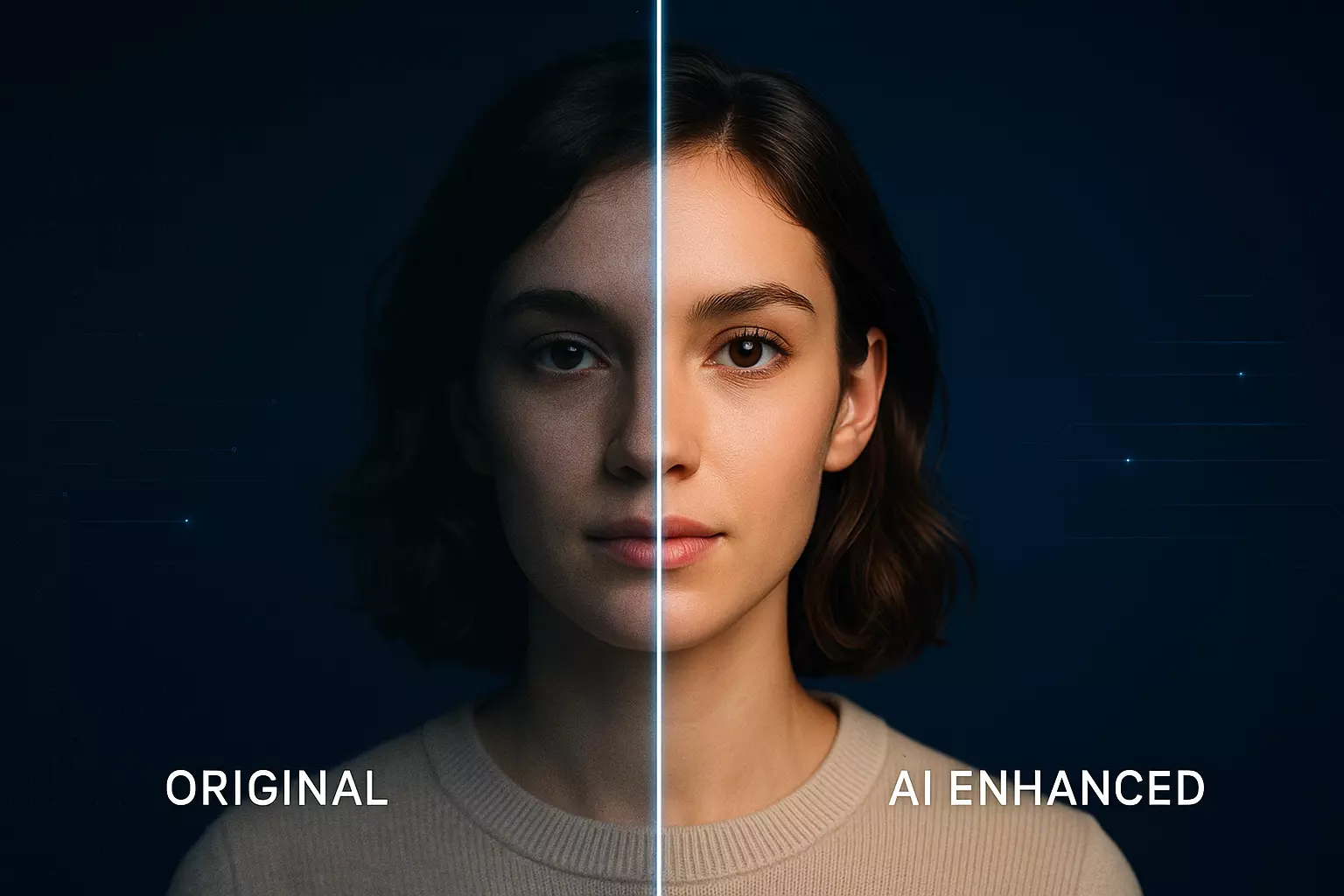
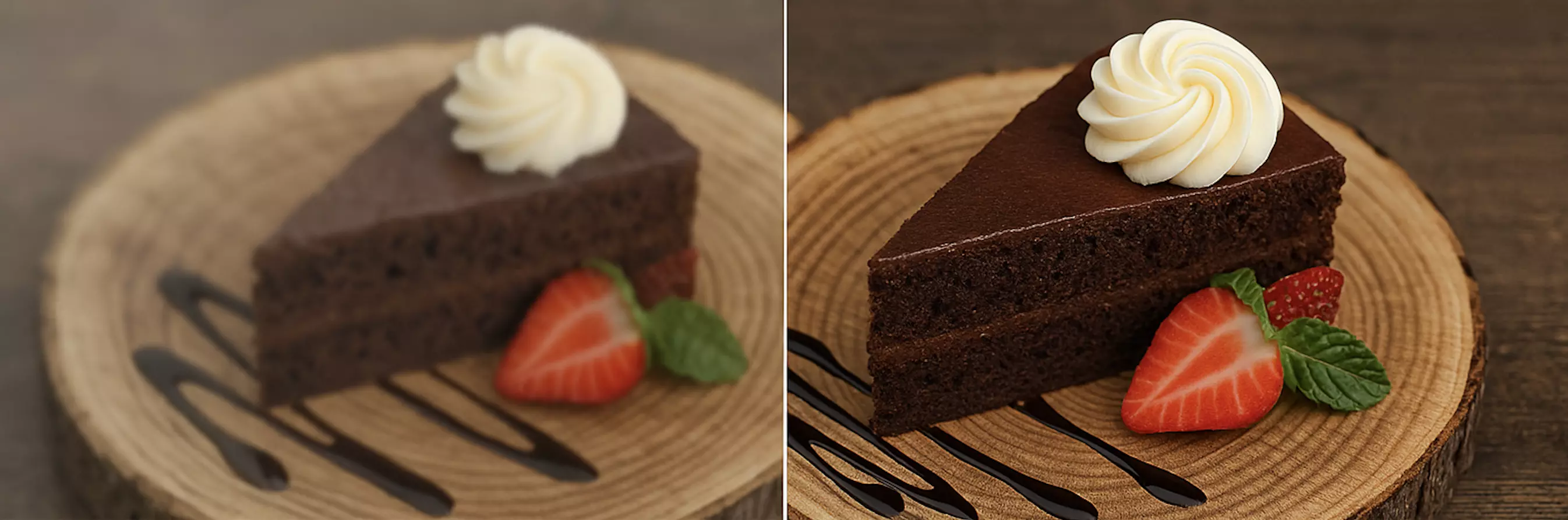
- AI photo enhancement: Improve clarity, contrast, and detail to recover soft product shots or to standardize a mixed vendor set.
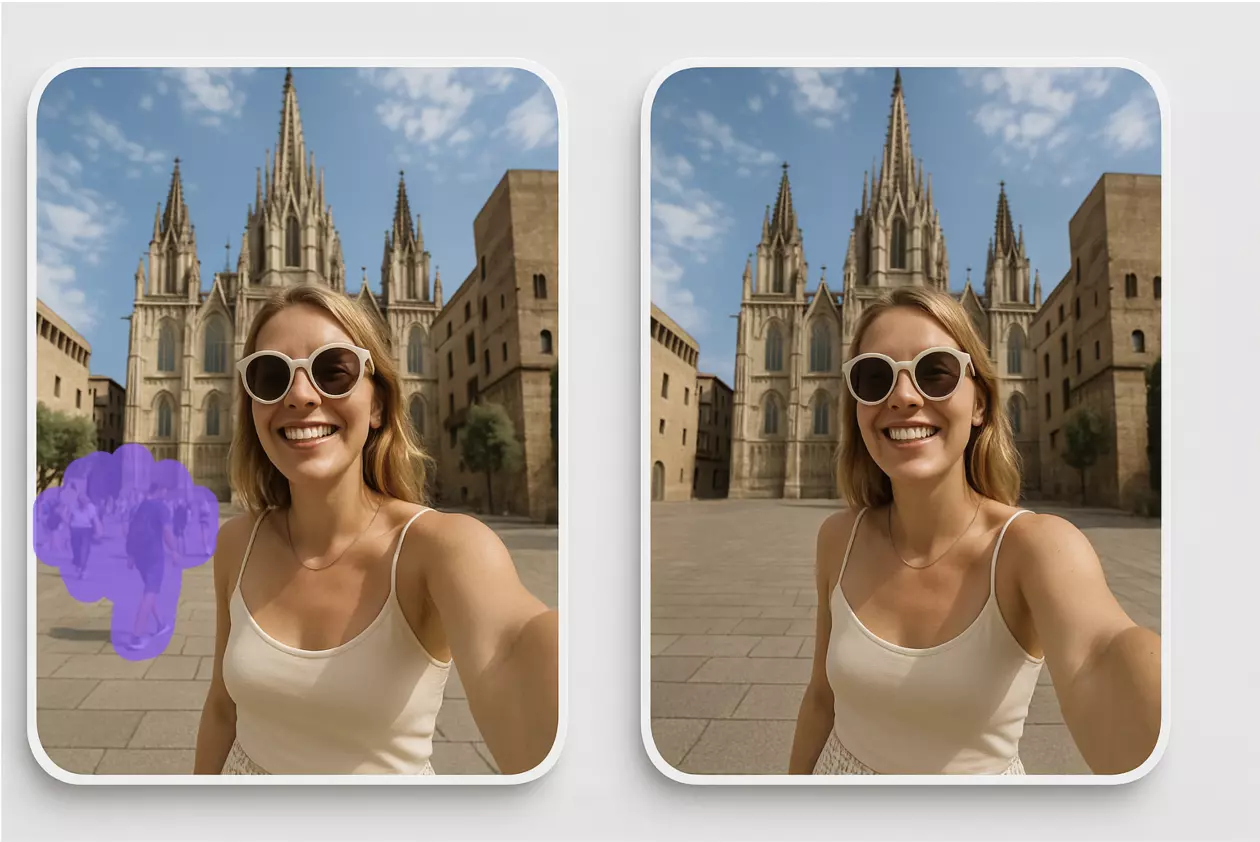
- Remove unwanted objects: Clean up cables, stray hands, or reflections that pull attention away from the product.
- Watermark removal: If you own the rights to the image but it contains your old watermark or internal markings, clean it for listing. Only remove watermarks on assets you own or are licensed to edit.
Compliance reminder: Always process images you have the right to use, and follow marketplace policies. Removing third-party watermarks or altering assets without permission can violate copyright or platform rules.
Quality control: edges, shadows, noise, and color
Before you publish, check:
- Edges: Look for halo artifacts or jagged contours around fine details (laces, hair, transparent packaging). Re-run the cut or adjust the placement if needed.
- Shadow realism: The contact shadow should sit directly under the product; intensity should match the scene. Softening or darkening may improve believability.
- Noise and sharpness: Ensure your background doesn’t introduce grain that clashes with a sharp product. Enhance lightly if the subject looks soft.
- Color accuracy: Compare to your physical sample. Adjust white balance and saturation so the product color is true—especially critical for apparel and cosmetics.
- Compression: Export with enough quality to avoid banding in gradients and to pass marketplace zoom standards.
Troubleshooting common issues
- Product looks “floating”: Add or deepen the contact shadow; lower the product slightly to “touch” the surface line.
- Mismatch in perspective: Nudge rotation and scale so product lines align with background vanishing points.
- Overpowering props: Reduce prop size or contrast. The product should be the brightest or sharpest element.
- Background too busy: Simplify textures or lower saturation. Keep the product legible at thumbnail size.
- Color cast from background: If the product picks up unwanted color, neutralize with a slight temperature or tint correction.
AI online tool vs traditional methods
- Time cost:
- Traditional: 20–60 minutes per image with masks, brushwork, and manual shadows.
- Online AI: 1–3 minutes per image, with realistic shadows and quick swaps for alternate scenes.
- Learning curve:
- Traditional: High—requires layer techniques, blending modes, and retouching skills.
- Online AI: Low—upload, process, and download with minimal training.
- Batch efficiency:
- Traditional: Hard to standardize across dozens of SKUs.
- Online AI: Batch uploads and consistent style choices make collection-level updates feasible.
- Cross-team adaptability:
- Traditional: Bottlenecked by a small set of specialists.
- Online AI: Merchandisers, social managers, and creators can produce on-brand images without deep design skills.
A quick checklist to publish-ready product images
- Subject cleanly cut with natural, well-placed shadow
- Background aligned with brand palette and lighting direction
- Props minimal and relevant; no text clutter unless policy allows
- Correct output sizes for Amazon, Instagram (1:1, 4:5, 9:16), and Shopify
- Color checked against the physical product
- Noise, banding, and compression artifacts minimized
- Rights confirmed, with watermarks removed only from owned or licensed assets
Conclusion and next steps
Background adders are now essential for catalog and social production. With marketplaces raising the bar and short-form content accelerating refresh cycles, teams need a faster way to compose believable, on-brand scenes without getting lost in layers.
If you’re ready to move from manual edits to an AI workflow, try Pixflux.AI. Start with one SKU, build your reference look, then scale it across your line. In a few minutes, you can add backgrounds to product images, enhance clarity, and publish with confidence.