Best Upscaler and Background Remover: Meet Zoom Requirements Without Re-Shooting
Tired of re‑shooting soft product photos? Learn when to upscale first, when to cut out, and how to avoid halos for crisp, zoom‑ready images.
 Richard SullivanJanuary 21, 2026
Best Upscaler and Background Remover: Meet Zoom Requirements Without Re‑Shooting
Your product photos look fine on the category grid, but fall apart the moment shoppers pinch to zoom. Textures smear. Edges ring. Busy studio backdrops distract from the product itself. Re-shooting every SKU to meet marketplace zoom requirements is costly and slows your time-to-listing.
A faster path is to combine two fixes in one pass: upscale for clarity and remove the background for consistency. Modern AI makes this practical even from small or imperfect originals. Tools like Pixflux.AI help you get there quickly; if you’re evaluating options, try a workflow built around the best upscaler and background remover to see how much clarity you can recover without re-shooting.
Marketplaces increasingly enforce higher zoom-resolution thresholds, and retailers (especially in the US) favor neutral backdrops that stay crisp on mobile. The teams that standardize a repeatable “upscale + clean background” workflow typically see higher CTR on PDPs, fewer “item not as described” returns, and smoother compliance across Amazon, Walmart, eBay, and Etsy.
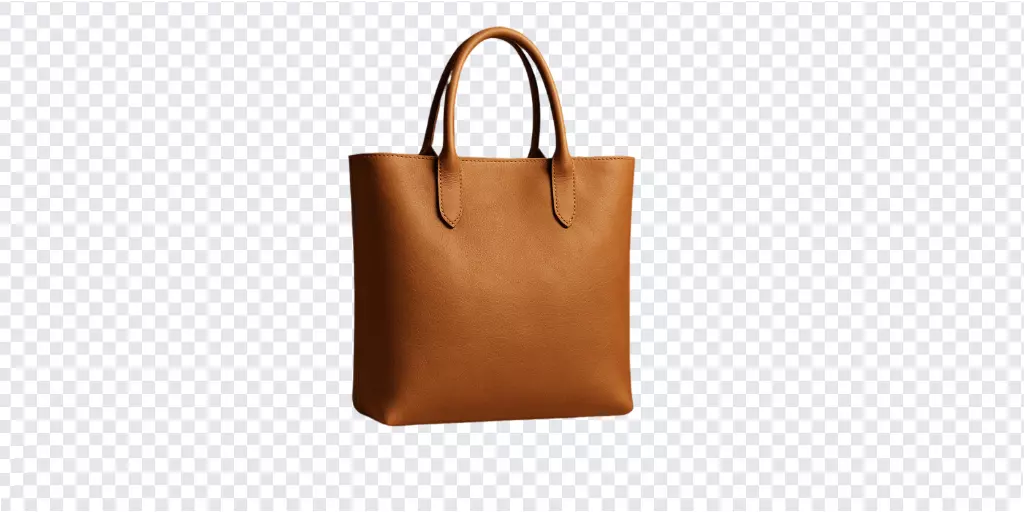
(see image: side-by-side product photo—original vs upscaled-only vs upscaled plus clean white background)
Why “zoom-ready” images matter for conversion and compliance
- Conversion and bounce: Shoppers zoom to validate material, stitching, ports, and finish. If the zoom view breaks down, bounce and doubt increase.
- Return rates: Poor clarity makes color, texture, and scale feel uncertain. Clear, zoom-friendly photos reduce “quality mismatch” returns.
- Marketplace rules: Many marketplaces recommend 1500–2000 px on the long side to enable zoom. Missing that threshold can suppress your zoom icon or flag listings for revision.
How upscalers work (and where artifacts come from)
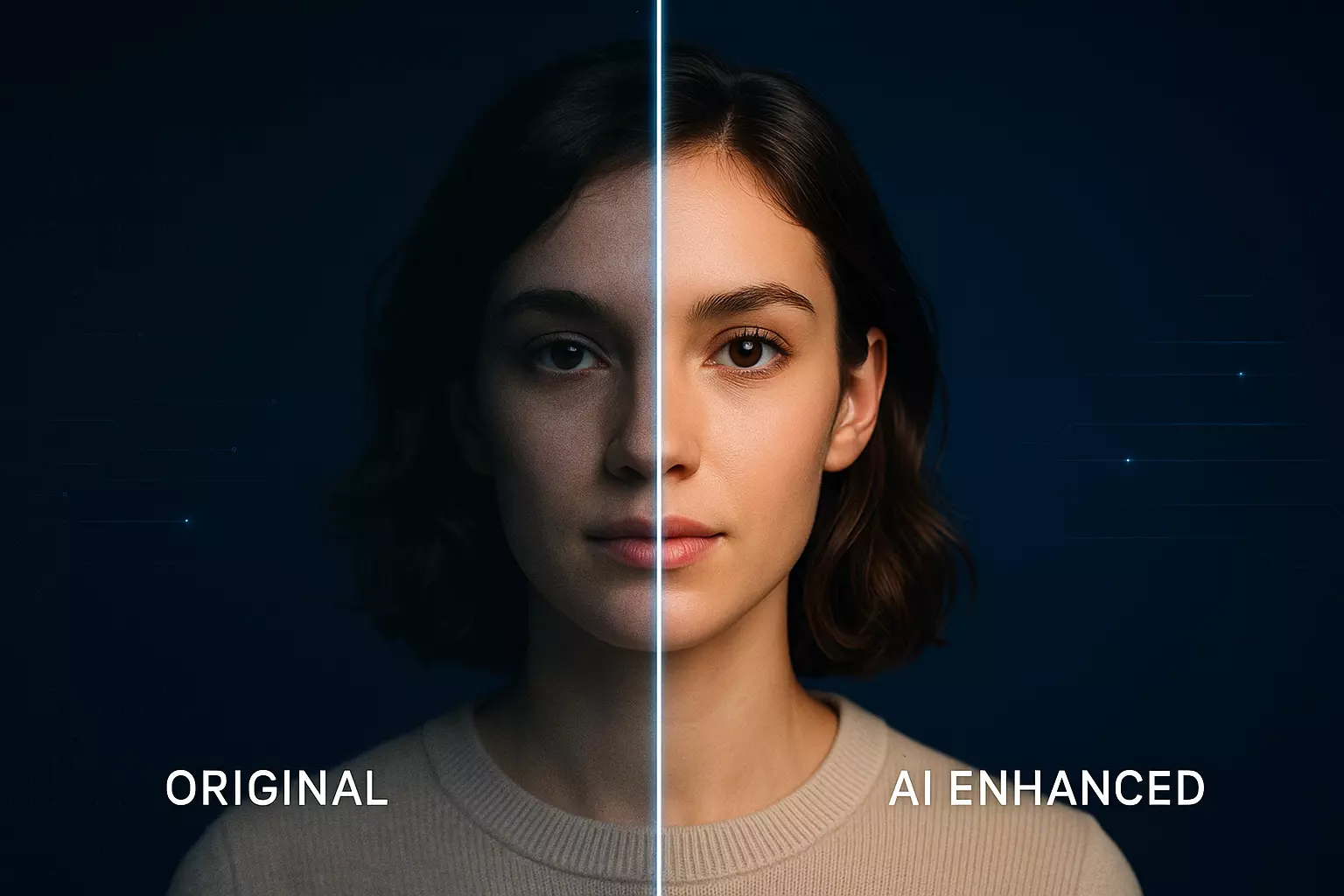
AI super-resolution models learn how details should look at higher resolution by training on millions of image pairs. They can recover plausible texture and sharpen edges far better than simple interpolation (bicubic/nearest). Still, every upscaler faces tradeoffs:
- Over-sharpening and halos: Strong edge emphasis creates bright/dark fringes that get worse on white backgrounds.
- Plastic skin or waxy textures: Over-aggressive noise reduction can smear pores, fabric weave, or wood grain.
- Ringing and zipper artifacts: Reconstructed edges can “buzz” in high-contrast areas like logos and seams.
The fix is sensible parameter choices and a workflow that doesn’t amplify noise before you cut out the subject.
Background removal fundamentals
A solid AI background remover needs to preserve edge fidelity (no “steps” on curves), avoid color spill (green-screen tints bleeding into edges), and keep delicate structures like hair, fur, or fine threads intact. It also needs to respect realistic shadows where marketplaces allow them, so the product doesn’t float unnaturally.
- Edge fidelity: Crisp edges help logos and small type hold up at 2x–4x zoom.
- Hair/fur/transparency: Strands and translucent materials benefit from higher input resolution and smart matting.
- Shadows: For ecommerce, subtle ground shadows add realism; hard cast shadows from busy sets should be minimized.
Workflow choice: upscale before or after removing the background?
Use these rules of thumb to decide:
Upscale first when:
- The original is small (≤800–1200 px long side). Upscaling first gives the remover more pixels to resolve hair, mesh, and fine edges.
- You have hair/fur, translucent edges, or lace. Higher detail improves matting.
- The background is smooth and clean. You won’t amplify much noise before cutout.
Remove background first when:
- The background is noisy, patterned, or high-contrast. Removing it first prevents upscaling from exaggerating noise and moiré.
- You plan to generate/replace a backdrop (pure white, light gray, or contextual scene). Isolating the subject first helps the upscaler focus on product detail only.
- You see halos around the product after upscaling. Cutting out first reduces halo risk against a white or light background.
Example:
- A small jewelry shot against plain acrylic: upscale → remove background → add subtle shadow.
- A sneaker on busy concrete with speckled noise: remove background → upscale → place on light gray.
Use Pixflux.AI in three steps: upload → AI process → download
Pixflux.AI brings upscaling and background cleanup together so you can meet zoom thresholds fast.
1) Upload your image Drag in your product shot—even if it’s small or slightly noisy.
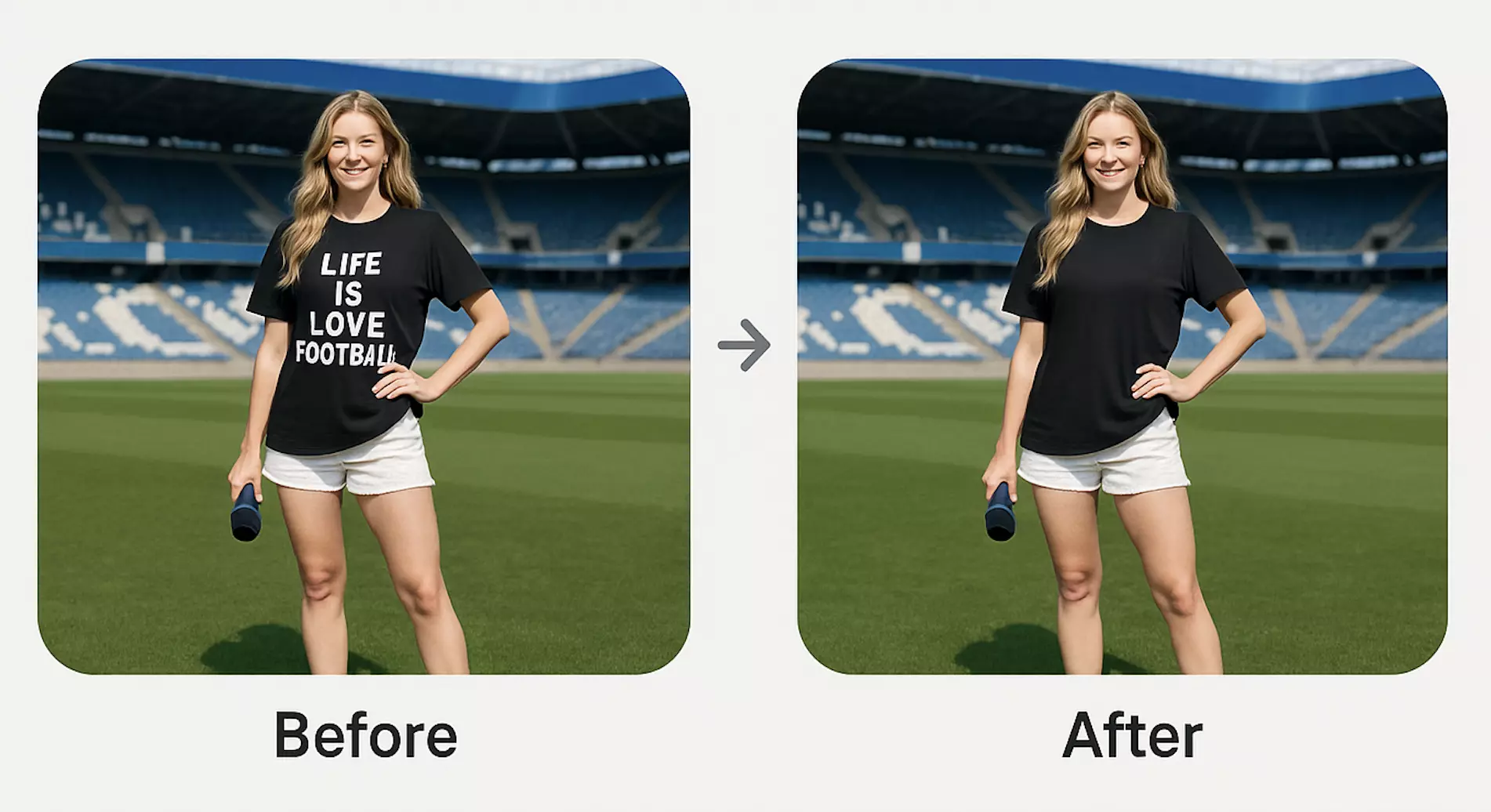
2) Let the AI process Choose to upscale and remove the background in one pass or sequentially (per the decision rules above). You can also clean watermarks, remove stray objects, and enhance contrast if needed.
3) Download the result Preview edges at 100–200% zoom, then export the file sized for your marketplace template.
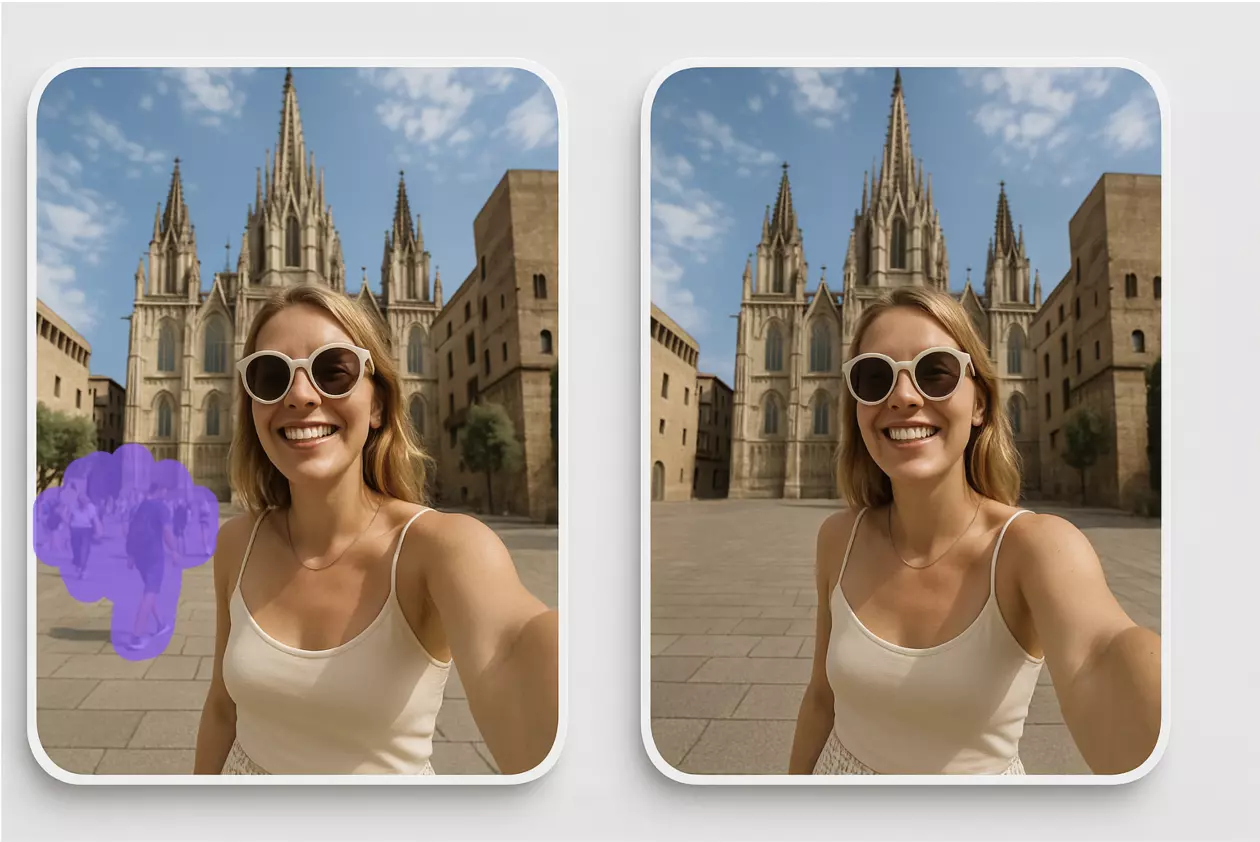
If you prefer a direct prompt to start, open a top image upscaler and background cleaner and run a quick before/after on one SKU. (see image: Pixflux.AI interface showing the three-step flow: upload image, AI processes upscaling and background removal, then download result)
Parameter tuning to avoid over-sharpening, halos, and “plastic” textures
- Start moderate: Try 2x upscaling before jumping to 4x; add a light clarity/contrast boost only if needed.
- Watch whites and high-contrast edges: Zoom to 200% and check for bright/dark fringes. If present, reduce sharpening intensity or apply it selectively to midtones.
- Preserve texture: For fabric, skin, leather, and wood, keep denoise low; reintroduce a touch of grain if things look “too clean.”
- No double sharpening: Avoid stacking sharpening from your camera profile, the upscaler, and a finishing pass.
- Shadow realism: After background removal, add or retain a soft ground shadow to avoid a cutout look.
Tip: If halos persist against white, swap the backdrop to light gray; edges appear cleaner without extra processing.
Choose background strategy: pure white, light gray, or contextual
- Pure white (255/255/255): Often preferred or required by marketplaces for hero shots. Clean, consistent, and compliance-friendly.
- Light gray or off-white: More forgiving on edges, still neutral and premium, excellent for mobile zoom.
- Contextual scenes: Great for lifestyle images and ads. Keep them subtle; the background should support, not steal attention.
With Pixflux.AI you can remove a busy background, replace it with a clean neutral, or generate a simple brand-aligned scene so the product stands out without distraction.
(see image: before/after composite—stray cables removed, background generated to light gray, detail enhanced for 2x zoom)
Note on watermark removal and rights: Only remove watermarks or logos from images you own or are licensed to edit. Do not use watermark removal to bypass rights management or platform policies.
Batch processing for catalogs: speed-to-publish without chaos
- Naming and versions: Append suffixes like _2x, _BGwhite, or _Lgray so your DAM folders stay tidy.
- Aspect ratios: Predefine crops (1:1, 4:5, 16:9) per channel so you’re not re-exporting last minute.
- Bulk edits: Run batch product photo editing to upscale, clean backgrounds, and remove stray props in one go. Pixflux.AI supports multi-image uploads so you can move entire categories at once.
- Consistency rules: Lock in a common ground shadow opacity and backdrop tone so the grid looks unified.
Case example: cleaner zoom, clearer decisions
A footwear retailer started with 1000 px lifestyle shots. The zoom felt grainy, and textured knit panels looked mushy. They adopted an “upscale first → remove background → relight on light gray” flow for hero images and “remove background first → upscale” for noisy studio sets. After rollout, customer support reported fewer “texture looks different than expected” questions, and PDP analytics showed stronger engagement with the zoom viewer. While your mileage will vary, pairing upscaling with background consistency is a reliable lever for clarity and confidence.
Quality control checklist for zoom-level confidence
- Edges: No jagged steps, halos, or double contours on high-contrast borders.
- Textures: Fabric weave, leather grain, and fine print remain natural (not waxy).
- Noise: Noise/grain is tamped down, but not at the expense of detail.
- Color: No color casts from previous backdrops; whites are neutral.
- Shadows: Subtle and believable; no floating products unless required.
- Size: Meets your platform’s zoom threshold (commonly 1500–2000 px long side).
- Metadata: Correct filename conventions; alt text reflects product variant.
AI online tools vs traditional methods
- Time cost: AI tools like Pixflux.AI can elevate clarity and remove backgrounds in minutes, not hours. Manual pen tool work or reshoots add days.
- Learning curve: You don’t need deep Photoshop skills to get clean edges and upscale images for zoom; settings are approachable and repeatable.
- Batch efficiency: Running hundreds of SKUs in one session beats layer-by-layer editing. This matters for seasonal drops and flash sales.
- Cross-team fit: A lightweight, template-driven approach makes it easy for marketers, merchandisers, and creatives to stay aligned on quality without complex handoffs.
Ethics and compliance
- Only process images you own or are licensed to use.
- Watermark and logo removal must never be used to infringe copyrights or evade marketplace policies.
- Check current image rules for each marketplace—especially background, minimum pixel dimensions, and allowed shadows—before bulk publishing.
FAQ: Best upscaler and background remover for ecommerce, zoom, and consistency
What is the best workflow to upscale images for zoom and remove backgrounds?
Upscale small or delicate subjects first, and remove background first when the original is noisy or patterned. Start by assessing the image: if it’s under ~1200 px or has hair/fur/lace, upscaling first improves edge detection during cutout. If the background is busy or grainy, remove it first so upscaling focuses on the product, not noise. After either path, place the subject on a consistent white or light-gray backdrop.
Should I upscale before or after the background remover?
Choose based on noise and detail: upscale-first for small, detail-heavy subjects; cutout-first for noisy backdrops. The aim is to avoid amplifying noise while preserving edge fidelity. If halos appear after upscaling, try cutting out first and then upscaling, or switch the backdrop to light gray to soften edge contrast.
How do I avoid over-sharpening and halos on white backgrounds?
Use moderate sharpening and check edges at 200% before export. Start with 2x upscaling, keep denoise conservative, and avoid stacking multiple sharpen passes. If fringes persist, reduce sharpening strength, use selective sharpening on midtones, or switch to a light-gray backdrop that’s more forgiving at high zoom.
Will AI background removal handle hair, fur, and transparent materials?
Yes, but it benefits from higher input resolution and careful preview. Upscale small images first to give the model more pixels for strands and translucency. After cutout, verify edges against your final background at 100–200% zoom to catch fringing or color spill before you publish.
Can I batch process a full catalog with consistent backdrops?
Yes, batch processing is ideal for multi-SKU catalogs. Group similar products, set your target aspect ratios, and run bulk edits to remove backgrounds, enhance clarity, and standardize backdrops. This shortens time-to-listing and keeps your grid uniform.
Are my images safe when using an online AI background remover?
Your images should only be processed with trusted tools that respect privacy and security. Always use reputable services, review their privacy statements, and avoid uploading assets you don’t own or control. Keep your own backups and versioned exports to maintain a clean audit trail.
Is removing watermarks legal?
It’s only appropriate when you own the rights or have explicit permission. Watermarks signal ownership; removing them without authorization can violate copyright and marketplace rules. Limit watermark removal to your own brand assets or licensed content.
What pixel size do I need for marketplace zoom?
Aim for at least 1500–2000 px on the long edge to enable zoom on most platforms. Specifics vary by channel and category, so check current documentation for Amazon, Walmart, eBay, Etsy, and others. Remember that clarity at 100% matters as much as raw pixels—avoid over-sharpening that creates halos.
Try it now: clarity and consistency in one pass
You don’t need a re-shoot to reach zoom-ready clarity. Combine upscaling with clean, consistent backgrounds and ship listings faster—while protecting texture detail and edges shoppers rely on. Open Pixflux.AI and start with one hero image: run the 3-step flow and inspect at 200% zoom. When you’re ready to scale, drop in your whole category and publish with confidence.
Get started with an AI upscaling and background removal tool and see how quickly you can meet zoom requirements without re-shooting.