How Social Media Creators Use Black Background Images to Make Products and Portraits Stand Out
Want your products and portraits to jump off the feed? Try a black background for bold contrast, crisp edges, and scroll-stopping thumbnails.
 Michael WalshMarch 9, 2026
How Social Media Creators Use Black Background Images to Make Products and Portraits Stand Out
Busy feeds. Tiny thumbnails. Split‑second attention. That’s the creative reality on Instagram, TikTok, YouTube, and Pinterest. You can have a great shot, but if the background is noisy or low-contrast, the subject blends into the scroll and your post gets skipped.
That’s why creators increasingly turn to a clean black background: it instantly boosts contrast, isolates the subject, and makes thumbnails pop on mobile. If you don’t have studio gear or time to mask edges by hand, AI tools can help you get there in minutes. A simple way to start is to generate or switch to black background images and keep your subject crisp across posts, reels, and covers.
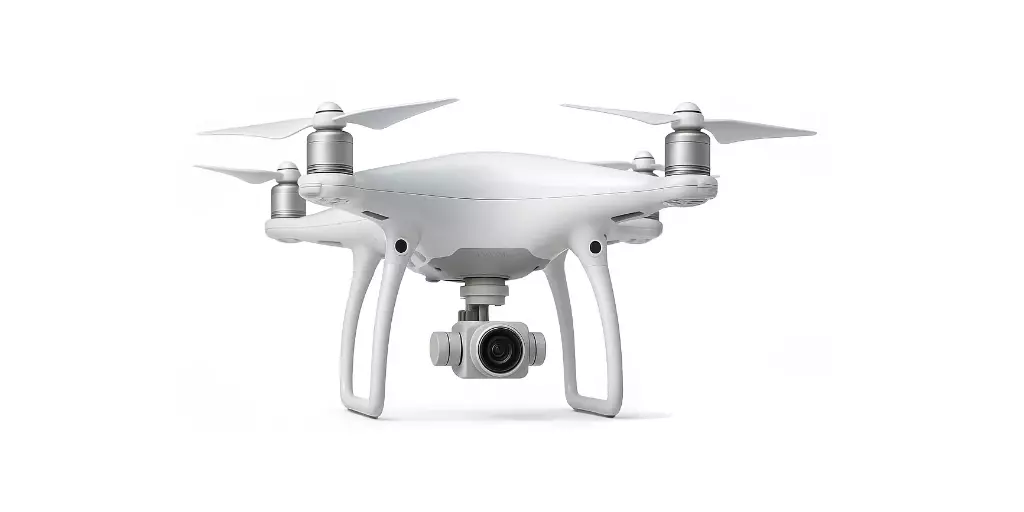
(See image: Side-by-side comparison of the same product on a busy lifestyle backdrop versus a pure black background, highlighting dramatic contrast and tighter focus.)
Why black backgrounds grab attention on social feeds
- High-contrast silhouettes read instantly at small sizes, which is crucial for mobile-first viewing.
- A black backdrop reduces visual noise, keeping the eye on the subject, headline, or CTA sticker.
- Dark canvases make color accents (brand hues, buttons, captions) feel bolder and more premium.
Trend watch: short-form video covers and ecommerce-first feeds increasingly favor high-contrast subjects over minimal, dark backdrops. If your posts need to stand out in a grid or recommendation shelf, this is a quick win.
Visual psychology: contrast, isolation, and subject emphasis
A black background maximizes figure–ground separation. Our eyes search for dominant shapes and edges; when the background recedes to near-black, the subject edge appears sharper and the brain resolves it faster. That perceived clarity translates to better scanning, stronger recall, and more confident clicks.
There’s also a mood benefit. Black implies drama, precision, and quality. For creators in tech, beauty, fashion, or fitness, it can add a cinematic feel without heavy color grading.
When to use a black background vs. white or color
Choose black when:
- You want instant drama for product hero shots or portrait thumbnails.
- The subject has metallic, glossy, or neon elements that “glow” against dark.
- Your composition relies on negative space for oversized typography or stickers.
Choose white when:
- You need maximum versatility for marketplaces with light UI (e.g., simple catalog grids).
- The product is already dark and risks disappearing against black.
Choose color when:
- You want brand storytelling through gradients or seasonal palettes.
- You need high warmth or playfulness that a pure black might mute.
Tip: test three variants—black, white, brand color—across 9–12 posts. Track thumbnail CTR, watch time, and saves. Many creators find black wins for covers and hero frames, even if the in-feed carousel returns to lifestyle scenes.
Composition and lighting tips for products and portraits on black
Products
- Edge light for separation: Use a subtle rim light behind and above to edge-highlight the product.
- Control reflections: Flag off unwanted reflections with black foam core; polish glossy surfaces before shooting.
- Build negative space: Leave room for captions or price tags on one side; black makes overlays pop.
Portraits
- Key-and-rim setup: Soft key at 45° in front, strip/rim light behind for outline; keep spill off the background.
- Dark wardrobe management: Add a reflective accent (e.g., jewelry, zipper, subtle fill) to avoid a “floating head.”
- Expression first: Compose tight; black backgrounds reward expressive eyes and clean lines.
(See image: Portrait lighting diagram showing a soft key and a rear rim light against a black backdrop, plus the resulting sample shot.)
Workflow: create a black background in-camera and in post
In-camera
- Distance matters: Pull the subject 6–10 feet from the backdrop; underexpose the backdrop by 2–3 stops.
- Kill spill: Use grids and flags so key light doesn’t brighten the background.
- Use dark sweeps: Black seamless paper or velvet absorbs light better than painted walls.
In post
- Deepen blacks selectively: Curves adjustment or a radial gradient to tame midtone spill.
- Clean edges: Refine masks around hair/fur with a small feather and contrast tweak.
- Add micro-contrast: Subtle clarity/sharpening on the subject only; keep background flat.
File formats, dynamic range, and compression for dark images
- Color space: Export sRGB for consistent rendering on iOS/Android.
- JPEG for photos; PNG for overlays: Photo thumbnails compress well as JPEG (quality 80–90). Use PNG when you need transparent cutouts over black.
- Bit depth: Shoot RAW where possible; dark gradients band easily with 8-bit sources.
- Avoid crushed blacks: Preserve a tiny amount of detail in the 0–5% range so algorithms don’t overcompress.
Change or generate a black background in three quick steps with Pixflux.AI
If you don’t have a black seamless or you need fast turnarounds, Pixflux.AI can switch, modify, or generate a clean dark backdrop around your subject—no advanced masking required.
1) Upload your original image Pick a product, portrait, or thumbnail frame.
2) Let the AI process the background Use the background removal or background change tool to isolate the subject and apply a rich black backdrop. You can also enhance the image to boost clarity and contrast if needed.
3) Download your result Export for your target platform. For thumbnails, keep edges crisp and test readability at 10–15% scale.
To move from idea to post even faster, you can directly switch to a clean black background and preview variations before final export.
(See image: Pixflux.AI interface showing the three-step flow—upload image → AI processing → download result.)
Pro tips
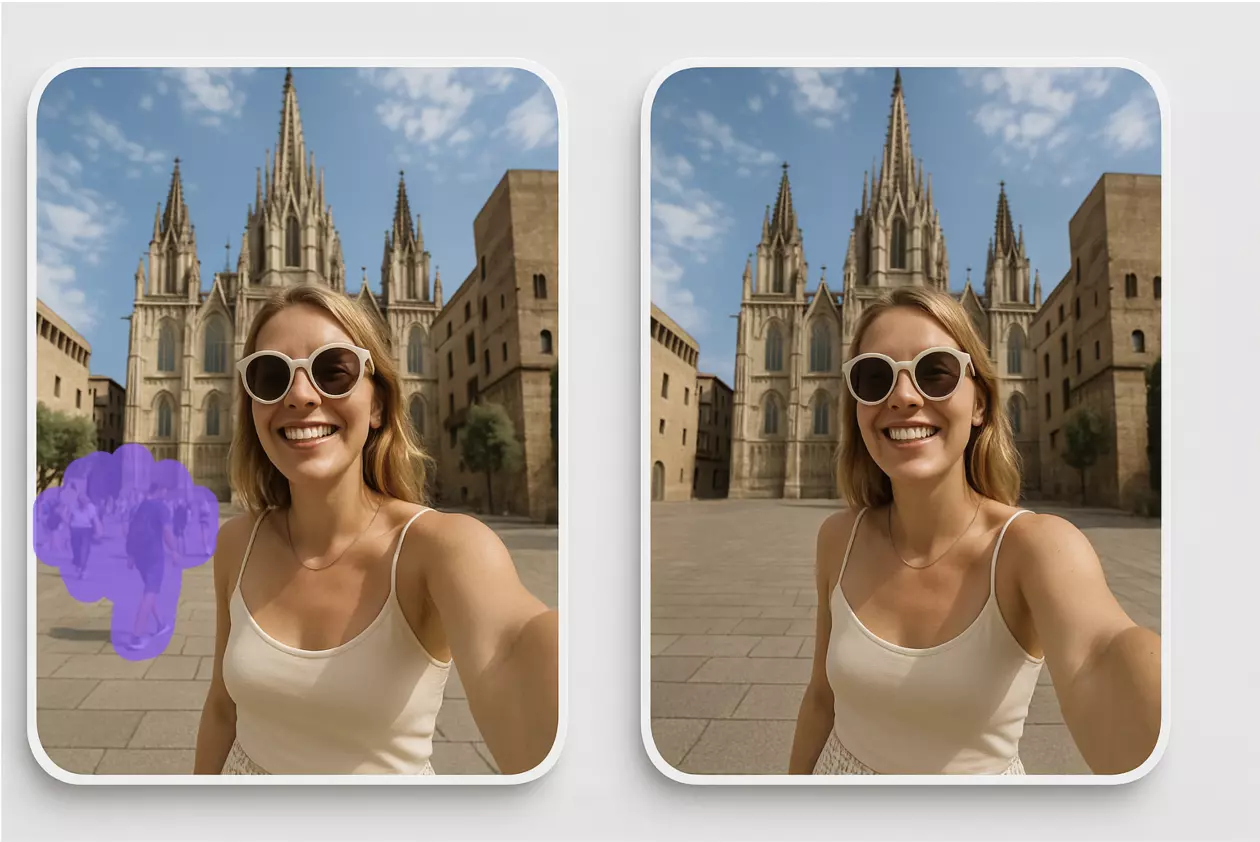
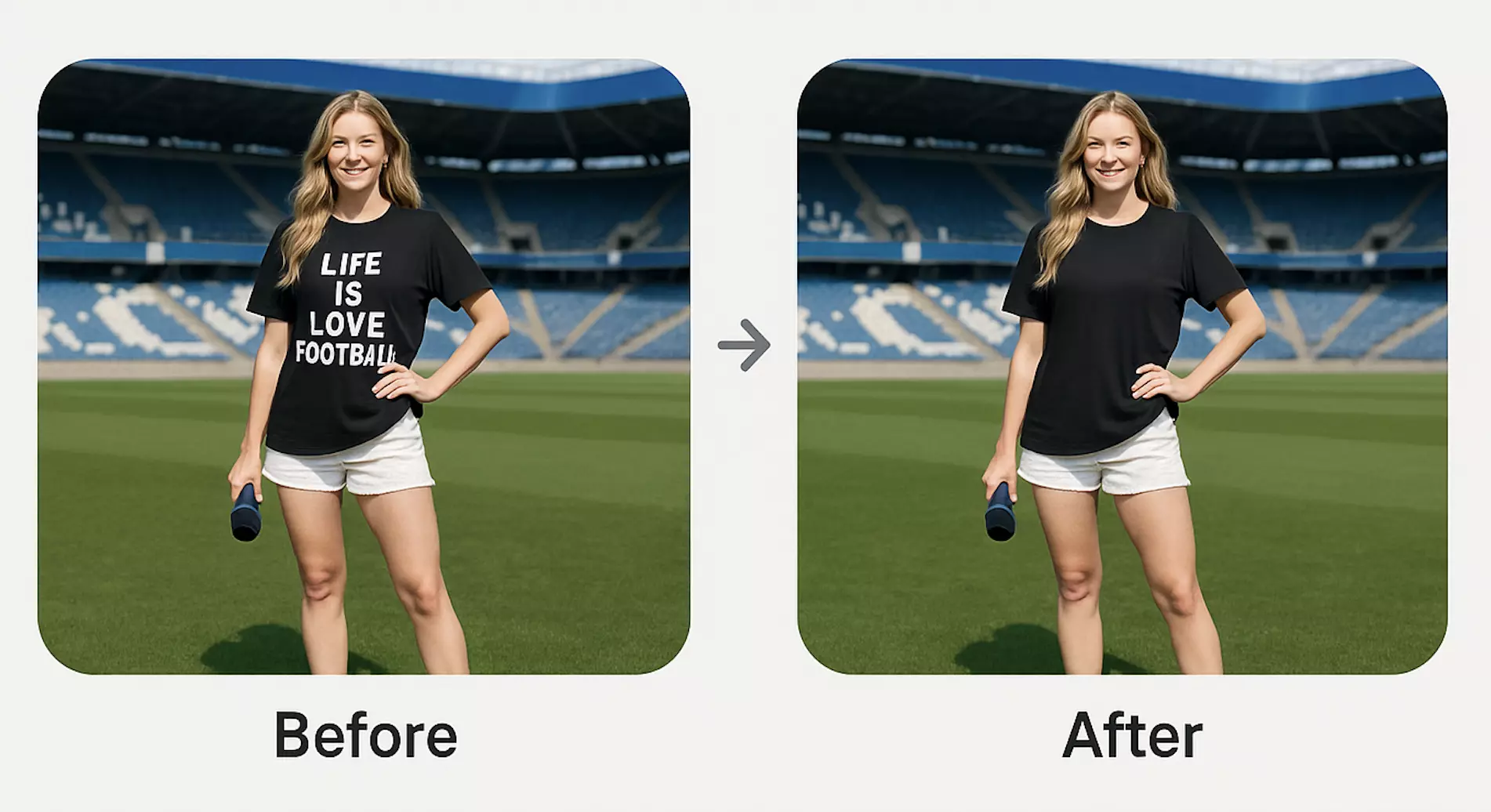
- If your original has watermarks or text you own and need to remove, Pixflux.AI can clean them up. Only remove watermarks on images you own or are authorized to edit; do not use this to infringe rights or bypass platform rules.
- Remove distractions like stray cables or background objects the camera picked up; a quick cleanup keeps the black field perfectly uniform.
Batch-ready editing for posts, reels, and thumbnails
Creators rarely ship one asset. You might need 15 product angles, 9 story frames, and 3 cover options in an afternoon. Pixflux.AI supports batch processing, so you can upload a set of images, apply consistent black backgrounds, remove unwanted objects, and enhance sharpness across the set—ideal for series content and A/B thumbnails.
Template the essentials:
- Safe zones: Keep headlines at least 5–8% inside edges for TikTok/YouTube UI overlays.
- Aspect ratios: 1:1 or 4:5 for Instagram posts, 9:16 for Reels/Stories/Shorts, 16:9 for YouTube thumbnails.
- Export presets: Keep a high-res master and platform-optimized copies to avoid recompression.
Quality checks: edge halos, noise, and artifact control
Before publishing, zoom to 200% on:
- Hairlines and transparent edges: Re-run background isolation or lightly feather to remove halos.
- Shadow realism: Add a faint, soft shadow under products so they don’t appear to float unnaturally.
- Banding in gradients: Introduce a subtle noise layer (0.5–1%) if your black backdrop includes a vignette.
- Over-sharpening: Enhance the subject, not the background; avoid crunchy noise in dark areas.
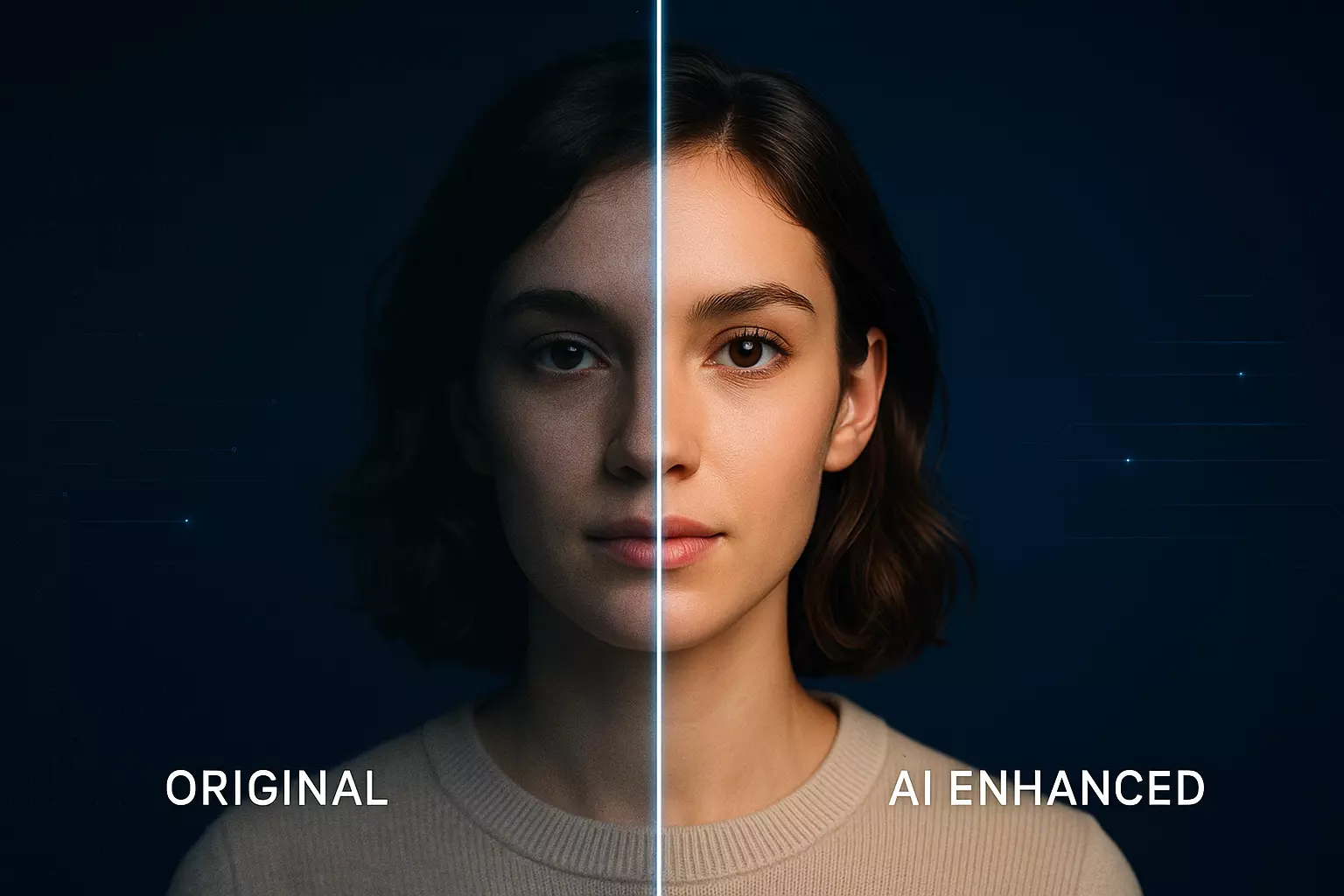
Pixflux.AI’s image enhancement can recover fine detail without over-boosting the dark field, and object removal can clean any remaining specks or hot pixels that appear after export.
Brand consistency, accessibility, and legible overlays on dark backdrops
- Contrast for text: Aim for WCAG AA+ contrast. Pure white (#FFFFFF) on pure black (#000000) is readable but can feel harsh; try slightly off-black (#0A0A0A) and off-white (#F2F2F2) for comfort.
- Brand color accents: Use a single bright accent (buttons, arrows) to guide the eye; keep saturation consistent post to post.
- Font weights: Medium to semibold sans-serifs hold up better at small sizes on dark.
- Accessibility: Add alt text that describes the subject; avoid text-only thumbnails when possible.
Compliance, watermark removal ethics, and creator best practices
- Only edit and publish images you own or are licensed to use.
- Do not remove third-party watermarks or signatures to sidestep ownership or platform rules.
- When cleaning your own logos, test both versions (with and without) to see which converts best.
AI online tools vs. traditional methods
- Time cost
- AI tool (Pixflux.AI): Minutes per batch; near-instant isolation and black backdrop generation.
- Traditional software: Manual masking, edge refinement, and grading can take 15–45 minutes per image.
- Learning curve
- AI tool: Simple upload → process → download workflow; no advanced retouching skills required.
- Traditional: Requires experience with masking, blend modes, feathering, and color management.
- Batch efficiency
- AI tool: Process multiple images in one go with consistent settings.
- Traditional: Actions help, but complex edges still require hand fixes per frame.
- Cross-team adaptability
- AI tool: Anyone on the content team can produce on-brand assets quickly with minimal handoff.
- Traditional: Often bottlenecked by the single designer or retoucher, slowing iteration.
For solo creators and lean social teams, this difference means more publishing cadence and faster A/B testing cycles without sacrificing visual quality.
FAQ: Black background images for social media
Are black backgrounds good for social media thumbnails and covers?
Yes—black backgrounds help subjects read instantly and boost click-through when paired with legible overlays. The combination of high-contrast edges and simplified context performs well on mobile, especially for YouTube thumbnails and Reels covers. Keep type large and ensure AA+ contrast for text and stickers.
How can I create a clean black background without a full studio?
Use distance, controlled lighting, and underexposure—then finish in post or with an AI background tool. Pull your subject away from the wall, flag off light spill, and underexpose the background by 2–3 stops. If you still see texture, use selective darkening or switch to a generated black backdrop using an online tool like Pixflux.AI for a uniform result.
What file format should I use for black background visuals?
Use JPEG for photo-based thumbnails and PNG when you need transparent overlays. Export sRGB color space, keep JPEG quality around 80–90 for a balance of detail and size, and reserve PNG for layered graphics or text-on-transparent compositions.
How do I avoid halos around hair or fine edges on black?
Edge light your subject and refine the mask with a small feather and edge contrast. A subtle rim light separates hair from the background. In post, zoom in and tweak refine-edge settings or reprocess with a cleaner isolation; add a faint shadow under products to ground them.
Will using very dark images hurt reach or algorithmic performance?
No—dark images can perform very well if the subject is bright enough and overlays are legible. Platforms prioritize engagement signals, not background luminance. Test variations with slightly lifted midtones and bold captions to maximize clarity on small screens.
Can I remove watermarks or logos from images I find online?
No—only remove watermarks from assets you own or are legally allowed to edit. Watermark removal is for your own content or licensed materials. Do not use it to infringe on others’ rights or bypass marketplace and platform rules.
How do I batch-edit black background assets for posts, reels, and thumbnails?
Use a batch-capable tool to apply consistent background, enhancement, and exports across a set. Prepare aspect ratio presets (1:1, 4:5, 9:16, 16:9) and maintain safe zones for UI overlays. Batch processing in Pixflux.AI helps you keep consistency while saving hours on repetitive work.
Quick advanced pass: the five-step fine-tune flow in Pixflux.AI
When you need extra control across a campaign set, try a slightly longer pass:
1) Open Pixflux.AI 2) Upload your originals (products, portraits, or frames) 3) Choose the background tool, switch or generate a black backdrop, and optionally enhance detail 4) Preview edges, remove stray objects, and fine-tune shadows or contrast 5) Download final assets tailored to each platform’s size and compression
Conclusion and next steps
Black backgrounds aren’t just a style—they’re a practical, high-contrast system for thumbnails, covers, and hero frames that must win attention fast. With AI helping you remove, change, or generate a black backdrop, you can iterate quicker, keep branding tight, and ship more tests per week.
Ready to upgrade your covers and product heroes? Start by creating studio-clean black background visuals in minutes. Or jump straight into a streamlined black background photography workflow with Pixflux.AI—upload, process, and publish today.