Enhance Blurry Photo Online: How to Fix Soft Images Without Making Them Look Fake
Rescue soft product and lifestyle shots with subtle, artifact‑free sharpening. See what works, what fails, plus a quick checklist to keep details real.
 Sierra CappelenDecember 12, 2025
Enhance Blurry Photo Online: How to Fix Soft Images Without Making Them Look Fake
A slightly soft product shot can quietly undercut conversion: textures look mushy, edges glow after “quick fix” filters, and buyers start to doubt the quality. It’s even more painful when you only notice blurriness at upload time—right when marketplaces like Amazon or Walmart flag image quality issues and block your listing. Lifestyle creators face the same pressure: mobile shots are better than ever, but motion, low light, and overzealous noise reduction still produce softness that’s hard to rescue without artifacts.
The good news: most mildly blurry photos can be recovered if you apply the right kind of sharpening, at the right strength, and only where detail actually exists. Browser-based AI tools make this both faster and safer—especially when you must keep textures natural. If you’re looking to enhance blurry photo without fake-looking halos or crunchy noise, the workflow below will guide you.
In this guide, you’ll learn when sharpening works vs. when it fails, a step-by-step process to sharpen image online, and a practical checklist so skin, fabric, and product edges remain trustworthy.
Why photos look soft (and how to read the blur)
Understanding the cause helps you pick the fix:
- Slight focus miss: Focus landed a few millimeters in front/behind the subject. Edges look soft but still coherent—good candidates for subtle enhancement.
- Motion blur: Camera or subject movement smears edges in a single direction. Small motion is often recoverable; long smears are not.
- Upscaling blur: When you enlarge a small file, detail is interpolated. Expect lower micro-contrast that may benefit from careful edge enhancement.
- Noise + denoise: High ISO adds grain; aggressive noise reduction smears texture. You can reintroduce crispness, but avoid sharpening the noise.
Quick diagnosis tips:
- Look at 100% zoom. If letters, stitching, or pores are completely smeared, deblurring will fail; if you can still “see” the shape of edges, you can likely recover it.
- Check direction. A single directional smear hints at motion blur; try tools that balance both sharpening and deblurring rather than simple unsharp masking.
- Inspect midtones. Overly smooth midtones suggest heavy denoising—use conservative sharpening to avoid plastic textures.
(See image: side-by-side crops showing subtle enhancement versus over-sharpened halos on fabric.)
Sharpening vs. deblurring: what works and what fails
- Classic sharpening increases local contrast around edges. It works best on images that are slightly out of focus or lightly softened by denoise/upscaling.
- Deblurring attempts to reverse motion or lens blur. It can help with very small directional blur but can introduce ringing artifacts if pushed too far.
How to tell which path to try:
- If edges are present but low-contrast: use moderate sharpening.
- If edges streak in one direction: try deblur-capable enhancement; stop as soon as detail pops without haloing.
- If heavy blur obliterates detail: consider reshooting. Overprocessing will look fake.
The “stop rule”: if new edges appear that weren’t visible at 100% zoom before (e.g., shadow noise starts to look like thread), you’ve gone too far.
How to enhance a slightly blurry photo online (fast workflow)
This is a lightweight, repeatable approach that works for product and lifestyle images:
- Open the image and preview at 100% zoom. Identify true edges (logos, seams, eyelashes) you want to protect.
- Apply subtle sharpening. Start low and increase in small increments until detail lifts. Avoid global high-strength settings.
- Protect flat areas. If your tool allows, reduce sharpening in flat tones like skin or sky to avoid texture “crunch.”
- Check for halos. Toggle before/after. If bright outlines appear along high-contrast edges, back off.
- Balance noise. If sharpening reveals grain, lightly denoise shadows, then re-check edge integrity.
Tip: Work on a duplicate layer or keep the original handy for A/B comparison. Your eye adapts quickly—so reset your view regularly.
Fix soft product photos without artifacts
To keep textures believable, focus on edge protection and micro-contrast:
- Mask selectively. Sharpen only the subject (e.g., the shoe upper or jewelry face), not the background. This concentrates detail where buyers look.
- Favor micro-contrast over high radius. Small-radius sharpening elevates fine texture (fabric weave, leather grain) without thick halos.
- Guard highlight edges. Bright-on-dark transitions can halo easily. Reduce strength there or add a small negative clarity on halos if available.
- Watch skin and smooth plastics. Sharpen them minimally; they reveal artifacts first and look “crunchy” quickly.
- Zoom checks: inspect at 100% for texture and at 50% for overall edge character. Both should look natural.
Enhance with Pixflux.AI: upload → AI process → download
Pixflux.AI is a simple way to enhance blurry photo online without diving into complex controls. It’s effective for mild focus miss, slight motion, and soft upscales—particularly on product and lifestyle images where trust hinges on natural texture.
Follow this three-step flow:
- Upload your original image. Drop in a product or lifestyle shot that’s slightly soft.
- Let the AI enhance. Pixflux.AI analyzes edges and textures to lift clarity while minimizing halos and noise.
- Download the result. Compare at 100% zoom to confirm textures look real and edges are clean.
Prefer a bit more control? Use this five-step pass for fine-tuning:
- Open the Pixflux.AI tool page.
- Upload your image and select the photo enhancement option.
- Trigger AI processing and let the model recover clarity.
- Preview the output at 100% and reduce intensity if you notice halos or crunchy midtones.
- Download the refined version and keep the original for A/B.
You can start right away and enhance blurry photos online in minutes. For catalogs, Pixflux.AI also supports batch processing so you can run consistent settings across multiple images.
(See image: Pixflux.AI interface illustrating the upload → AI processing → download three-step workflow.)
Keep it natural: a before/after checklist
Use this quick checklist before you ship an image:
- Skin: Pores and fine hairs should look plausible, not plastic or gritty.
- Fabric: Weave and stitching should be crisp without glowing edges.
- Product logos and type: Letterforms must remain clean and not outlined by halos.
- Edges: No light/dark halos or ringing patterns around high-contrast transitions.
- Micro-contrast: Fine texture improved; large-scale contrast unchanged.
- Noise: Grain should not resemble sandpaper after sharpening; if it does, reduce intensity or add light denoise in shadows.
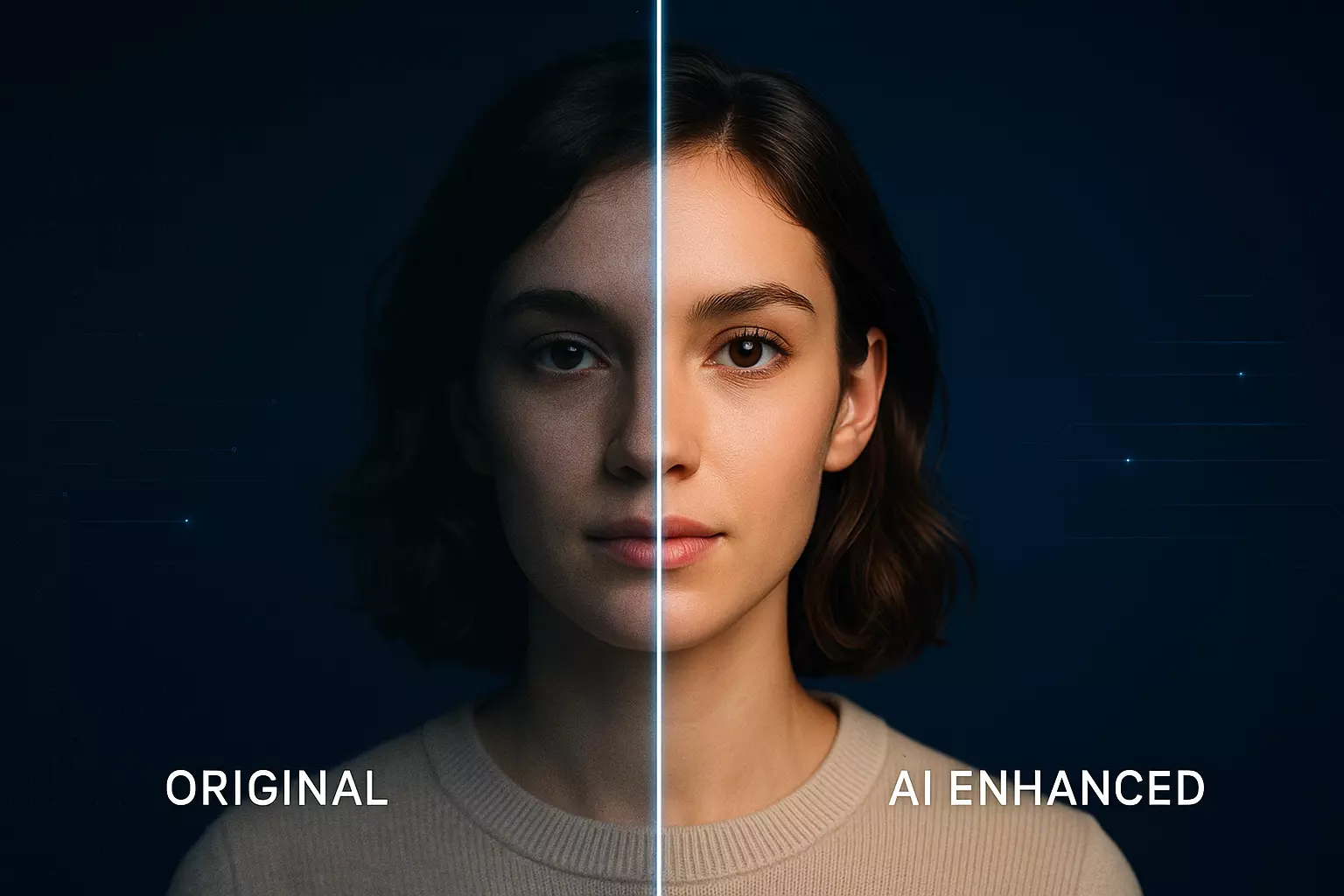
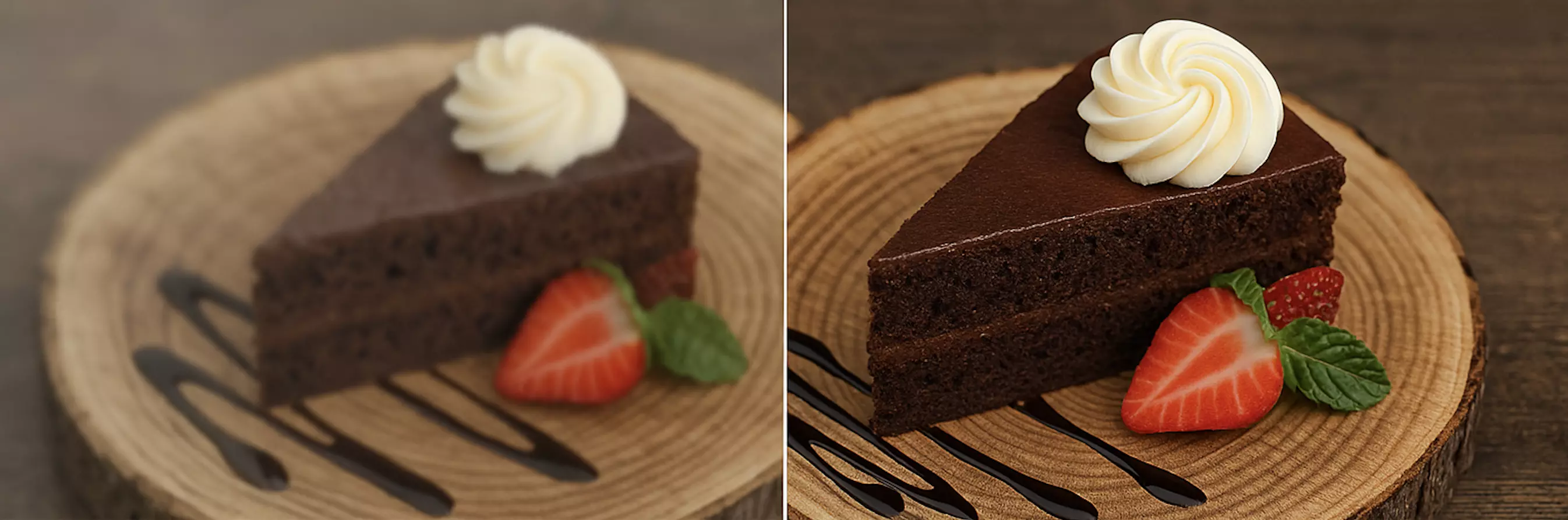
(See image: before/after comparisons of a product photo and a lifestyle image after AI photo enhancement.)
AI online tools vs. desktop editors
Sharpen image online or pull the file into desktop software? Here’s a practical trade-off:
- Time cost: Online AI enhancement is typically one-and-done—great for quick turnarounds and small teams. Desktop tools can be precise but slower to configure for each image.
- Learning curve: AI tools like Pixflux.AI minimize technical decisions. Desktop editors reward expertise but require more technical understanding of radius/threshold/deconvolution.
- Batch efficiency: Browser-based AI with batch upload can process multiple shots consistently. Desktop batch actions work, but setting them up and validating results per scene can be tedious.
- Quality control: AI models today are strong on mild blur and texture preservation; advanced desktop workflows excel when you need complex masking or multi-pass local adjustments.
- Collaboration: Teams increasingly prefer browser-based tools for predictable results and quick reviews—even across different locations—without plugin sprawl.
The emerging pattern: use AI enhancement first for speed and consistency; move to a desktop editor only when local, nuanced edits are needed.
Case studies: two quick rescues
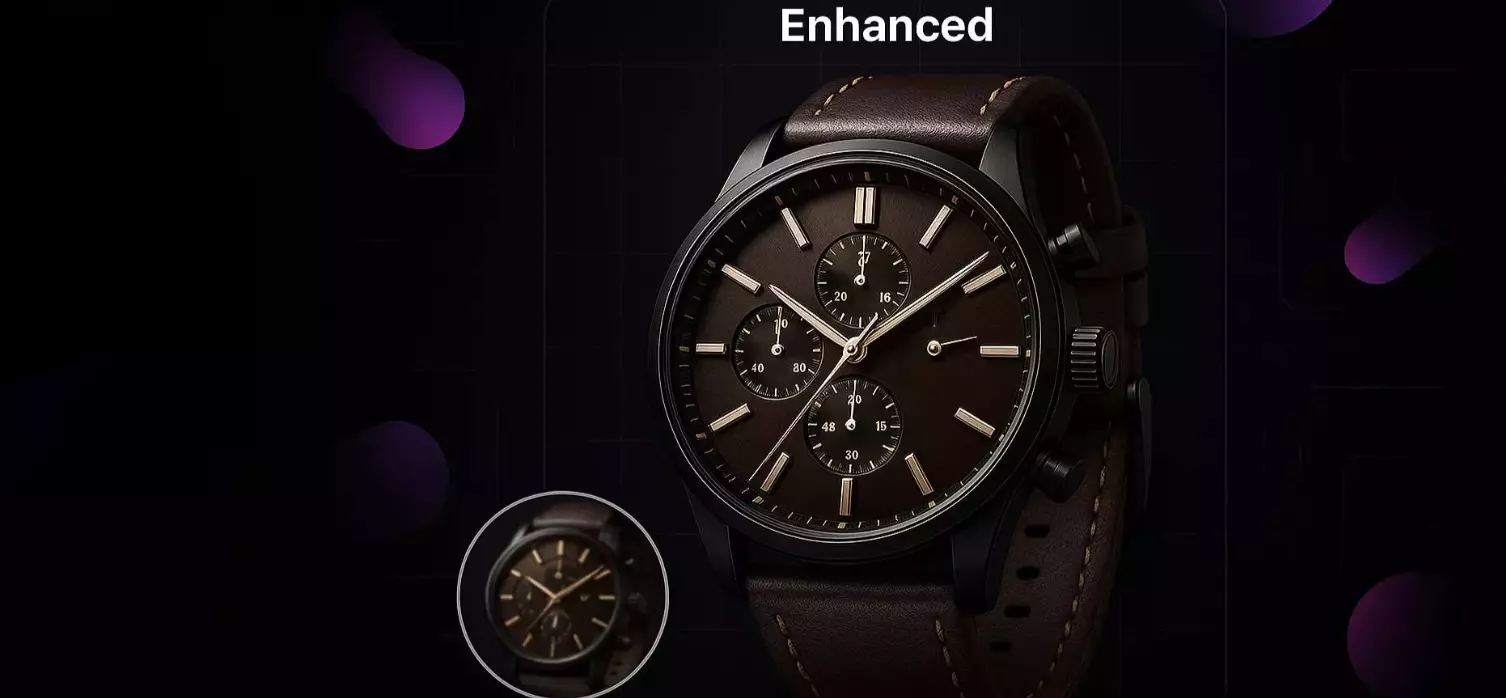
- Product close-up (watch bezel): Slight focus miss softened minute tick marks. A gentle AI enhancement restored crisp markers and brushed metal texture without bright halos on the bezel edge. Crop comparison showed a 20–30% perceptual lift in micro-contrast while keeping the sapphire highlights stable.
- Lifestyle portrait (indoor café): Motion blur from a 1/30s handheld shot smeared eyelashes slightly. A conservative pass improved lash definition and hair strands, with a minor reduction to avoid over-sharpening skin. The result preserved natural skin texture and eliminated telltale “crunch.”
Batch workflows for catalogs
When you manage dozens of SKUs or lookbook images:
- Group by lighting and lens. Images shot under similar conditions respond similarly—run them as sets.
- Apply consistent intensity. Pick a conservative enhancement level that works across the set to avoid outliers.
- Build a visual QA pass. Check representative crops (logos, seams, edges) from each batch at 100%.
- Log exceptions. If certain materials (e.g., glossy plastics) halo easily, note them and dial back for that subset.
Pixflux.AI’s batch upload helps you keep parameters consistent across a whole catalog, reducing retouch variance and rework.
Troubleshooting common artifacts
- Halos (bright outlines around edges): Reduce strength and radius; prioritize micro-contrast. Mask back the most contrasty edges if needed.
- Ringing (fine echo lines near edges): Back off deblurring; you may be overshooting. A light denoise before sharpening can help.
- Crunchy noise: Sharpening is biting into grain; add subtle denoise in darker tones, then re-apply minimal sharpening.
- Flat plastic look: You over-suppressed noise or used excessive smoothing. Reintroduce a touch of texture with lower radius sharpening.
- Uneven sharpness across the frame: Lens softness or field curvature. Selective masking or localized enhancement can balance it.
Ethics and authenticity
- Be truthful. Enhancement should recover clarity the lens/sensor captured—not invent detail. If the source is heavily blurred, consider reshooting rather than fabricating texture.
- Copyright and watermarks: Only edit and enhance images you own or have permission to use. If you remove watermarks or logos from your own assets, ensure you comply with brand and platform rules; never use watermark removal to infringe on others’ rights.
Export for delivery: formats, compression, and color
- Format: Use PNG or high-quality JPEG (85–92) for ecommerce product photos; JPEG is fine for lifestyle images where size matters.
- Color profile: Export sRGB for web and retail marketplaces to avoid dull colors.
- Dimensions: Follow platform guidelines (e.g., 2000–3000 px on the longer side for Amazon zoom). Avoid upscaling unless necessary; if you must, keep sharpening extra subtle after upscaling.
- Final check: Reopen the exported file, zoom to 100%, and confirm no new compression halos appeared.
Put it into practice with Pixflux.AI
You don’t need a complex setup to rescue soft images. With Pixflux.AI, you can upload, let the AI raise clarity, and download results that keep texture honest—ideal when listings are due and consistency matters. Try it now to enhance blurry photos online with a clean, fast workflow.
AI tool vs. manual retouching: when to choose which
- Choose AI first when speed and consistency are critical, the blur is mild, and you need batch-friendly results that satisfy marketplace checks.
- Choose manual retouching when specific areas need local treatment, or when the artifact profile is complex and you want granular control.
Either way, keep your before/after checklist close and preview at 100%. Small, careful gains beat dramatic overprocessing every time.
Ready to rescue your next set of images?
If you’re facing soft product or lifestyle photos and want pro-looking clarity without artifacts, start with a conservative pass and validate at 100% zoom. When you’re ready, use Pixflux.AI to fix soft images without artifacts and ship visuals your customers can trust.