Enhance Blurry Photos for Influencers Rescue Low Light Shots Without Looking Fake
Fix motion blur and low-light softness without plastic skin. Smart AI steps to keep hair edges crisp and your carousel consistent—plus quick Pixflux tips.
 Michael WalshMarch 5, 2026
Enhance Blurry Photos for Influencers: Rescue Low‑Light Shots Without Looking Fake
Night shoots, neon signs, and fast-moving moments look great on Reels and TikTok—but on your camera roll they often become a soft, noisy blur. If you’re pulling stills from short-form video or shooting handheld under streetlights, motion blur and high ISO noise can flatten features, smear hairlines, and make skin look plastic once you overcorrect.
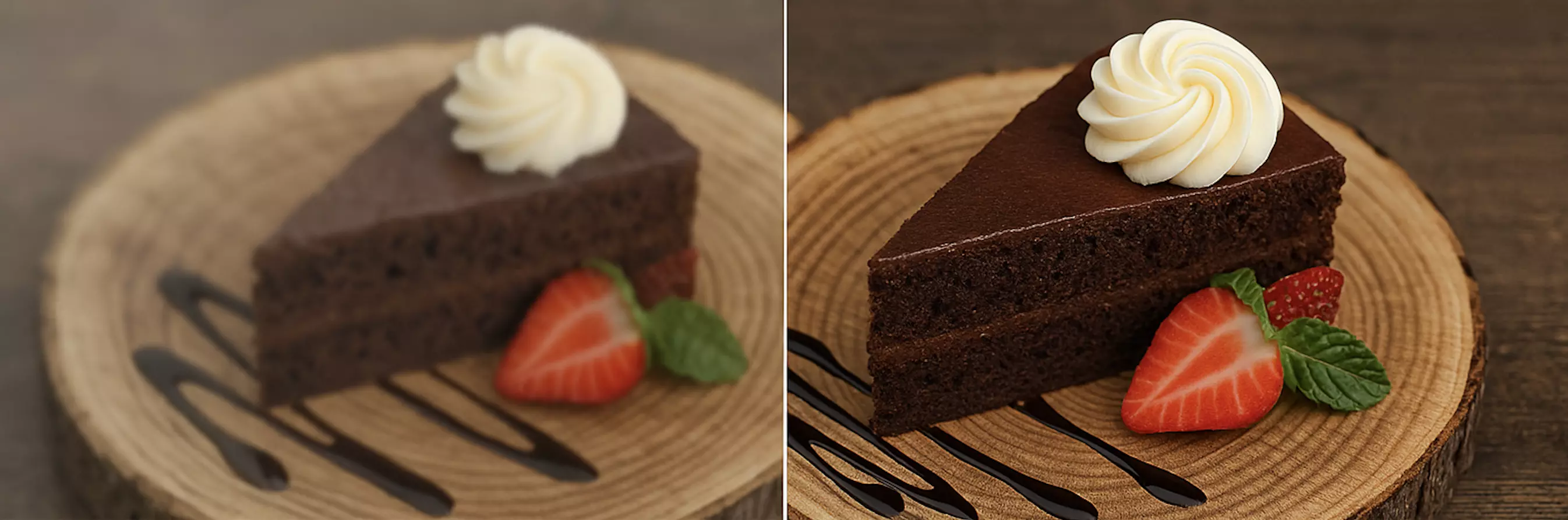
The good news: modern AI can enhance a blurry photo without that overcooked, waxy look. If you’ve tried cranking clarity and sharpening only to create halos and banding, it’s time to switch tactics. Online tools like Pixflux.AI make it easy to enhance blurry photo in minutes while keeping real skin texture and crisp hair edges intact.
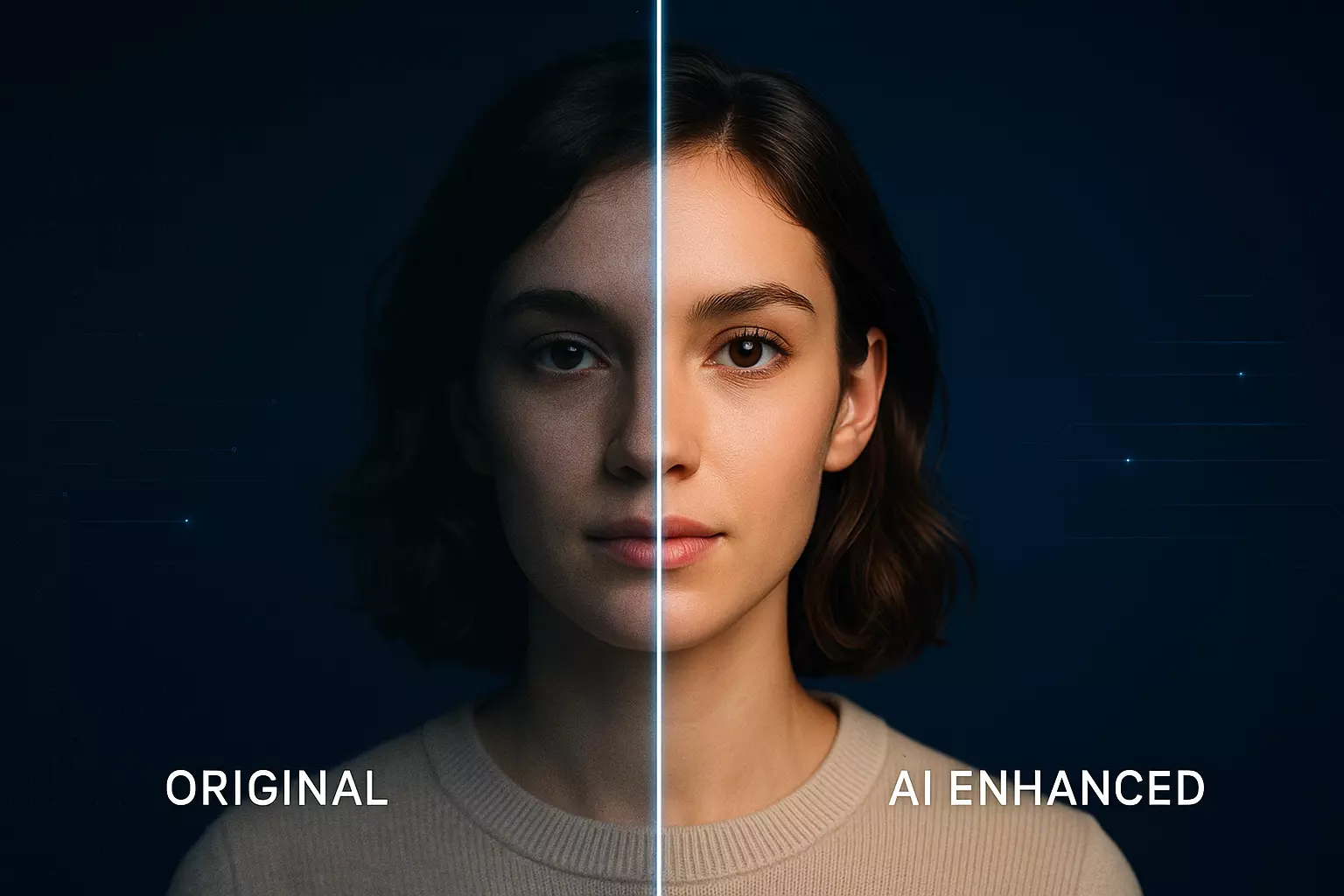
(See image: Before-and-after comparison of a motion-blurred street portrait restored with AI deblur and noise reduction while preserving skin texture.)
Why influencer photos blur in low light
Low light complicates the physics of a clean image. Three common culprits:
- Motion blur: A slower shutter speed (to compensate for darkness) meets subject or camera movement, stretching details across pixels—classic “ghost hands” or soft eyes.
- Noise: High ISO amplifies signal and sensor noise, creating grain that looks like sand, especially in shadow areas and smooth skin.
- Lens and focus limits: Wide-open apertures shrink depth of field. Slight misfocus on eyes or hair means detail is gone at capture.
Because many creators now repurpose video frames as photos, motion-blur fixes are rising—and subtlety matters. Audiences reward authenticity; they prefer clean edits that keep pores, fine hair, and true color over aggressive smoothing.
Choose the best source frame
No AI can repair what never existed. Start with the strongest base:
- Prioritize sharp eyes: If only one frame in a burst has catchlights and defined lashes, pick that one—even if the pose is 90% perfect.
- Minimize motion: Look for moments between steps or blinks; a natural micro-pause is your friend.
- Avoid smeared highlights: Neon streaks can be stylish, but if they overlap faces or eyes, choose a cleaner take.
- Natural pose and micro-expressions: A relaxed jaw and natural blink rate look less processed after enhancement.
Tip: When pulling from video, export at the highest frame size available (e.g., 4K) and choose frames with minimal compression artifacts.
How AI photo enhancers deblur and denoise without plastic skin
Classic sharpening boosts local contrast everywhere, which fattens halos and exaggerates noise. AI-based enhancers analyze patterns differently:
- Edge-aware deblur: Models estimate motion direction and restore edges (lashes, hair, brows) without over-accentuating pores in flat areas.
- Texture-preserving denoise: Instead of blanket blurring, AI distinguishes “real” micro-detail from random noise, reducing chroma speckle in shadows while keeping fine texture on skin.
- Frequency balance: Good enhancers keep low-frequency color and tone stable while restoring mid-frequency detail (texture) and protecting high-frequency edges to avoid crunch.
The result: a cleaner, sharper image that still looks like you.
Step-by-step: From camera roll to a cleaner, sharper post
Use this quick workflow before AI enhancement to set a strong foundation:
- Duplicate and crop for composition
- Work on a copy. Crop to your platform ratio (e.g., Instagram 4:5 portrait) so enhancements focus on the final frame.
- Correct white balance
- Neutralize tungsten or neon color casts. A clean base tone improves deblur and denoise results.
- Normalize exposure
- Lift shadows modestly and reduce clipped highlights; avoid extreme pushes that amplify noise.
- Soften harsh color noise first
- Apply a mild chroma noise reduction; leave luminance NR low to preserve skin texture you want to keep.
- Add micro-contrast selectively
- If your editor allows, add a small amount of structure/clarity only to eyes, hair, and clothing edges—not across the whole face.
- Export a high-quality intermediate
- Save a full-resolution JPEG or PNG for AI enhancement.
Rescue low-light shots with Pixflux.AI in three steps
When you’re ready to enhance a blurry image without artifacts, keep it simple. Pixflux.AI focuses on quality and speed:
- Upload your photo
- Open Pixflux.AI in your browser and drag in your frame from the camera roll.
- Let AI enhance
- The tool deblurs motion, reduces noise, and restores detail while protecting skin texture and hair edges.
- Download and post
- Preview the result; if it looks natural, save the enhanced file and move straight to your caption.
Try this flow now to enhance a blurry image. (See image: Pixflux.AI interface showing the 3-step flow: upload → AI processing → download of the enhanced image.)
Keep hair edges clean: halos, masks, and selective sharpening
Hairlines and flyaways are the first place over-sharpening looks fake. Protect them with these checks:
- Zoom to 100–200%: Inspect along the cheek-to-hair boundary; look for bright halos (overshoot) or dark outlines (undershoot).
- If halos appear, back off global sharpening: Let the AI’s native edge recovery stand on its own.
- Add selective sharpness to eyes and brows only: Use a soft brush at low opacity to nudge micro-contrast where it counts.
- Control glow around neon: If background lights halo into hair, reduce local highlights or burn slightly around edges to restore separation.
Preserve real skin texture: noise vs detail, grain, and micro-contrast
“Plastic” skin happens when luminance noise reduction smears texture. To keep it real:
- Prefer AI denoise over heavy NR sliders: AI tends to keep pores and tiny wrinkles intact.
- Reintroduce fine grain: A light, even grain overlay (1–3% strength) restores tactile texture on ultra-clean results.
- Use micro-contrast sparingly on skin: Apply structure/clarity away from cheeks and forehead; reserve it for fabric and hair.
- Keep saturation under control: Over-saturated skin exaggerates banding and blotches in low light.
Batch consistency for carousels: color, tone, grain, and export
Nothing breaks immersion like a carousel where each frame has a different white balance or sharpness. For a consistent set:
- Color and tone: Establish a reference frame; match other frames’ WB and exposure to it before enhancement.
- Batch enhancement: Upload the entire set to Pixflux.AI and let the AI process them together, so deblur and denoise are applied consistently across frames.
- Consistent grain: If you add grain, use the same amount and pattern type on all images.
- Export settings: Keep the same resolution, color space (sRGB), and JPEG quality for every frame.
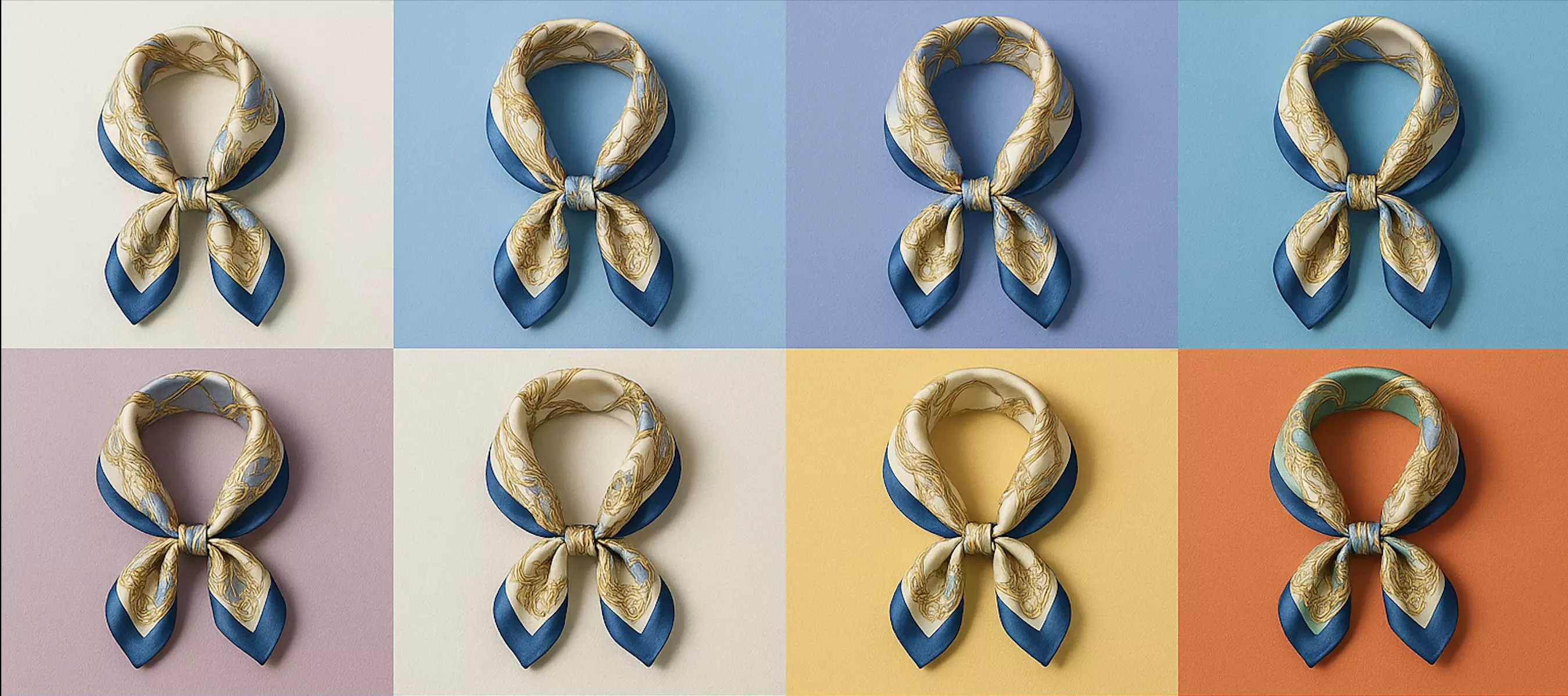
(See image: Carousel consistency example—same subject across five frames with matched color, grain, and sharpness after batch processing in Pixflux.AI.)
Remove distractions without flattening depth
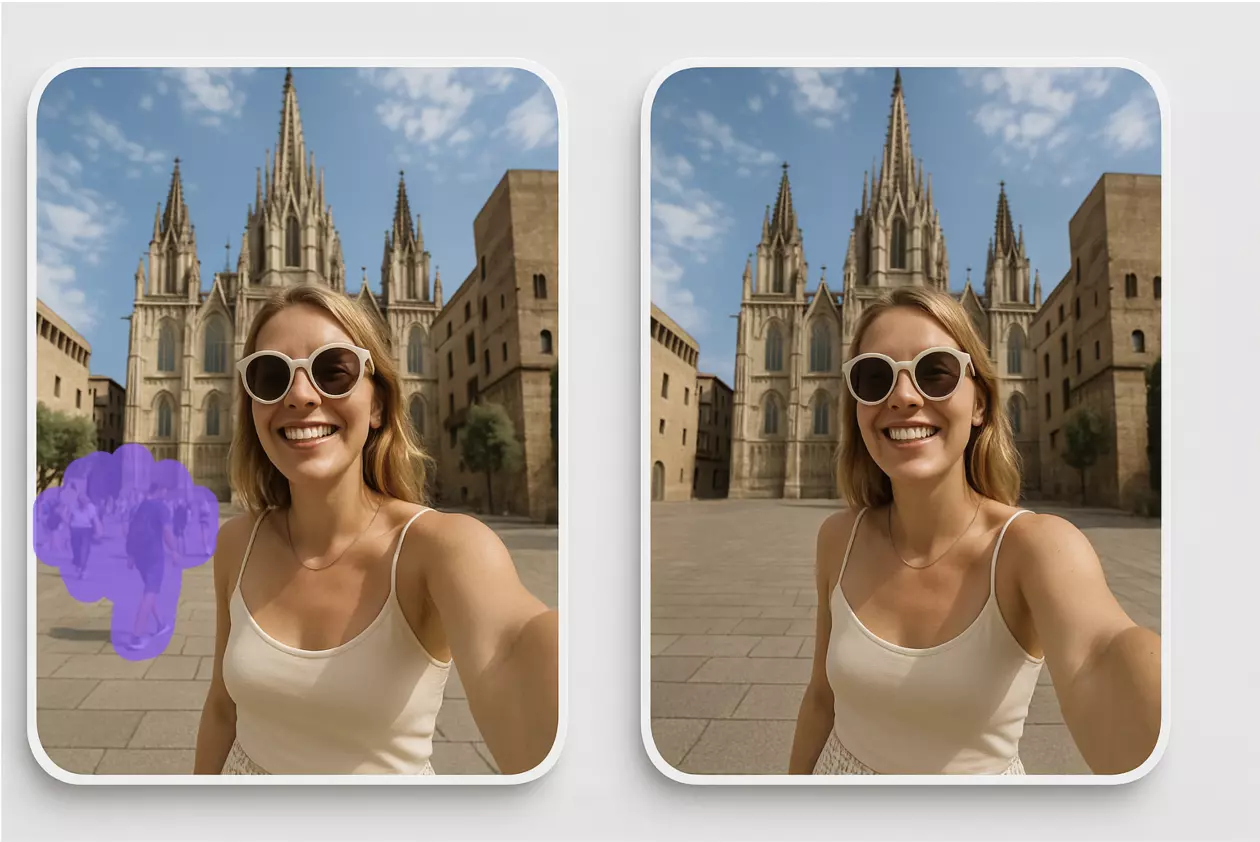
Stray passersby, cables, and garbage cans compete with your subject—especially in night scenes. Use an AI object remover to tidy the frame while preserving depth cues:
- Remove small, high-contrast distractions: Think distant phone screens, litter, or signage slivers near edges.
- Keep believable shadows: When removing an object, ensure the resulting area maintains natural gradients; avoid stamped, flat patches.
- Background cleanup: For tighter product or detail shots, consider replacing a messy background with a cleaner one that matches your color palette.
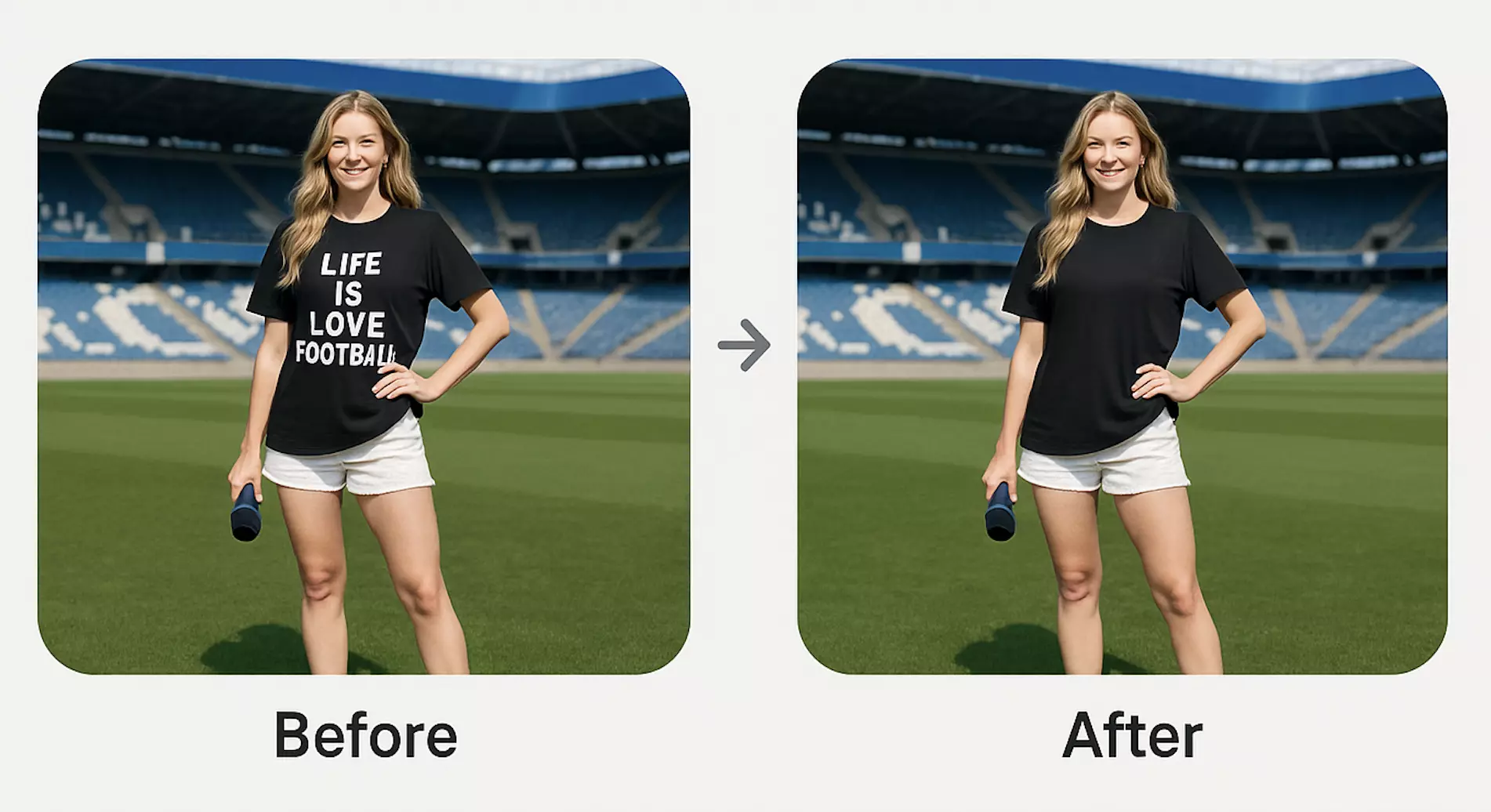
Legal note: Only remove watermarks, logos, or copyrighted marks if you own the content or have explicit permission. Do not use watermark removal to bypass creator rights or platform rules.
Troubleshooting common artifacts
- Waxy faces
- Cause: heavy luminance NR or aggressive global sharpening.
- Fix: back off NR, add a subtle grain layer, and apply sharpening only to eyes/hair.
- Color shifts
- Cause: extreme white balance or heavy denoise on chroma.
- Fix: neutralize WB first; reduce saturation slightly post-enhancement.
- Halos around hair and neon
- Cause: over-sharpening or high local contrast near edges.
- Fix: reduce sharpening sliders, burn down halo areas gently, and limit clarity to non-edge regions.
- Banding in gradients
- Cause: 8-bit compression meets heavy edits in shadows.
- Fix: add a tiny amount of dither/grain; avoid pushing shadows too far.
- Over-sharpen details turning crunchy
- Cause: sharpening stacked with AI restoration.
- Fix: let the AI result stand; add only targeted micro-contrast where needed.
Ethics and brand integrity: authentic edits and disclosure
Your audience trusts your taste. Keep edits aligned with your brand:
- Preserve identity: Avoid reshaping facial features; focus on clarity, exposure, and color.
- Keep it consistent: Apply the same treatment across a carousel so the story feels cohesive.
- Disclose when appropriate: If you materially alter images for sponsored content, follow local advertising and platform guidelines for transparency.
AI online tools vs. traditional methods
- Time to result
- AI online tools: Minutes from upload to post-ready, ideal for real-time content cadence.
- Traditional software: Manual masks, frequency separation, and multi-pass sharpening can take 20–60 minutes per image.
- Learning curve
- AI online tools: Intuitive, minimal setup; strong defaults do the heavy lifting.
- Traditional software: Requires advanced retouching skills to avoid halos, waxy skin, or color artifacts.
- Batch efficiency
- AI online tools: Batch uploads keep a whole carousel consistent with one pass.
- Traditional software: Actions and presets help, but manual spot fixes still consume time.
- Cross-team adaptability
- AI online tools: Creators, managers, and assistants can review the same previews quickly and make light tweaks before publishing.
- Traditional software: Project files, plugins, and versioning introduce friction.
FAQ: Enhance blurry photos for social without looking fake
How do I enhance a blurry photo without making skin look plastic?
Start with AI that preserves texture, then keep global sharpening low. Choose a frame with sharp eyes, neutralize white balance, and let an AI enhancer recover edge detail and reduce noise. If the result feels too clean, add a subtle, even grain and sharpen only eyes, brows, and hair tips.
Can AI deblur low-light images from my phone camera?
Yes, as long as there’s some underlying detail in the source frame. AI can correct mild-to-moderate motion blur and high ISO noise common in night phone shots. Pick the sharpest frame (eyes in focus, minimal movement) for the best outcome.
What if the motion blur is severe?
You’ll improve it, but you won’t fully restore lost detail. When blur smears across many pixels, recovery hits a ceiling. Look for an adjacent frame with less movement, or lean into the blur as a stylistic choice and enhance contrast and color instead.
How do I keep hair edges crisp without halos?
Sharpen selectively and reduce global edge contrast. Inspect hairlines at 100–200%. If you see bright halos, pull back global sharpening and add micro-contrast only to eyes and well-defined strands. Slightly darkening (burning) the halo area can also restore edge separation.
What export settings work best for Instagram or TikTok photos?
Export sRGB JPEG at consistent size and quality. For Instagram portrait posts, 1080 × 1350 (4:5) is a safe target; use quality 80–90 to balance size and fidelity. Keep the same settings across a carousel to avoid visible shifts. For TikTok thumbnails, maintain sRGB and similar sharpening across frames.
Can I batch process an entire carousel for a consistent look?
Yes, process the set together with the same enhancement approach. Uploading all frames at once to an AI enhancer helps apply deblur/denoise consistently. Then match white balance, grain, and export settings across images to lock in a cohesive aesthetic.
Is it okay to remove watermarks or logos from photos?
Only if you own the rights or have explicit permission. Use watermark or logo removal to clean your own content or licensed media. Do not remove marks to bypass creator credit or platform policies—this may violate copyright or terms of use.
Final quick-start: Pixflux.AI in five practical moves (optional deep dive)
If you want a slightly more hands-on pass before posting:
- Open the Pixflux.AI tool page in your browser.
- Upload your selected frame (full resolution if possible).
- Choose the enhancement tool and let the AI process the image.
- Preview at 100%—check eyes, hairlines, and skin texture; back off any extra sharpening in your editor if needed.
- Download the enhanced image and export your carousel with matched settings.
Conclusion and next step
Low-light photography isn’t going away—creators will keep shooting at blue hour, in clubs, and under neon. The winning look in 2024 is subtle: clean eyes, crisp hair, honest skin, consistent sets. With a solid source frame and an AI-powered workflow, you can deblur low-light images, reduce noise, and still keep it real—fast enough to post while the moment is hot.
Ready to clean up last night’s set? Use Pixflux.AI to fix blurry low-light photos in minutes, keep skin texture natural, and ship a consistent carousel today.