Erase Text from Picture Online for Deal Graphics: Keep the Background Natural
Clean discount badges and sticker text without wrecking the background. See step‑by‑step tools, checks, and Pixflux.AI tips for natural results.
 Richard SullivanJanuary 23, 2026
Erase Text from Picture Online for Deal Graphics: Keep Backgrounds Natural
Seasonal discounts come and go, but your product photos need to stay evergreen. If you inherit a catalog full of stickers, badges, and “-30%” overlays baked into the image, you face a familiar problem: remove the text without ruining the leather, glass, or fabric underneath. Do it poorly and you’ll get smudges, flat patches, and broken shadows that scream “retouched.”
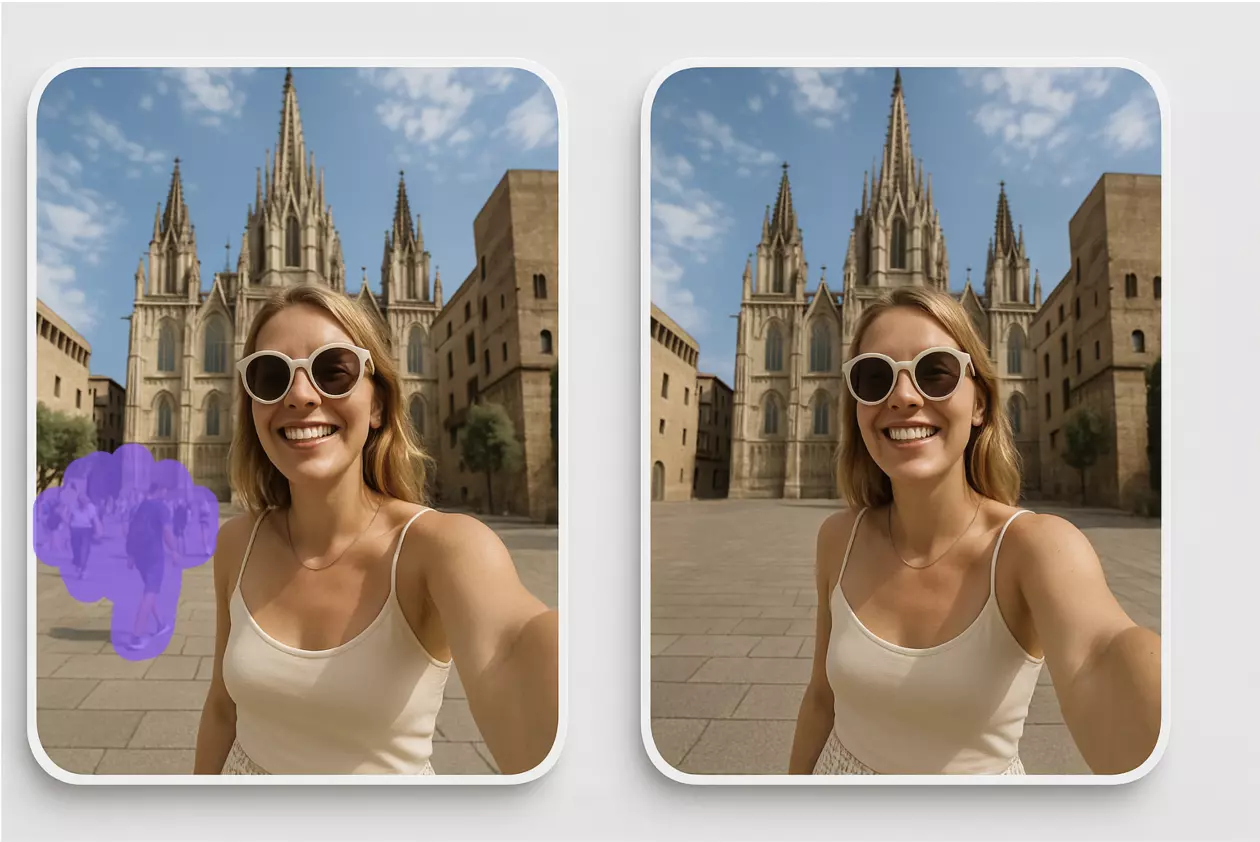
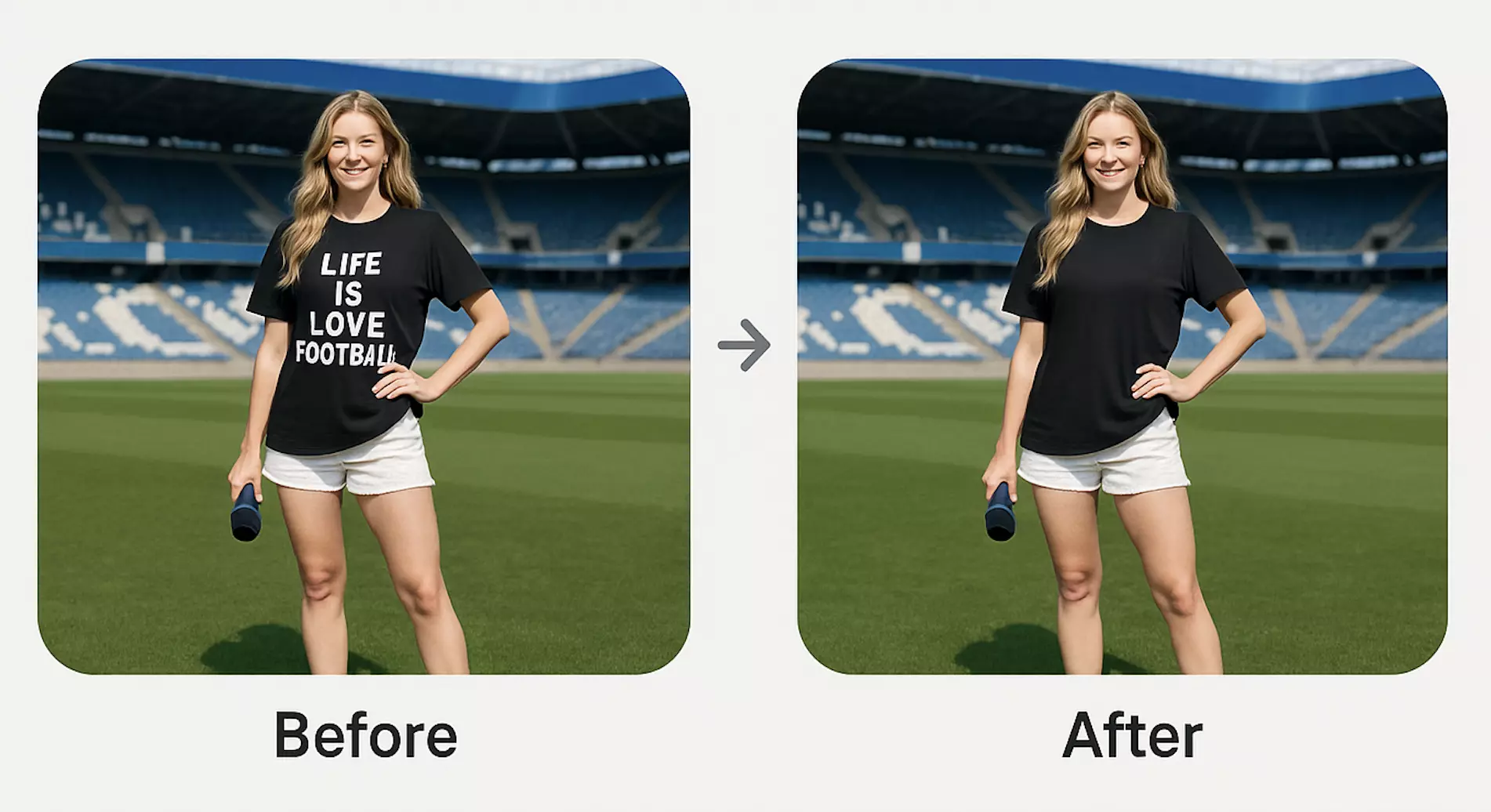
The good news is that modern browser-based editors make it fast to erase text from picture online while preserving gradients, materials, and soft shadows. If you’re updating templates for Amazon, Shopify, or social ads, try a focused workflow to erase text from picture online with an AI tool that’s built for texture-safe cleanup. Pixflux.AI is a practical example: it can remove promotional text or badges, keep background realism, and even handle multiple images when you’re working at catalog scale.
(Reference image suggestion: Before-and-after comparison removing a red discount sticker from a white sneaker while preserving leather grain and soft shadow gradients.)
Why cleaning badge and sticker text matters for evergreen deals
- Evergreen flexibility: You can swap a “Spring Sale” to “Holiday Savings” without re-shooting product photos.
- Brand consistency: Text removal that maintains original gradients, highlights, and material cues helps your catalog look coherent across seasons.
- Faster go-to-market: Retail teams operate on weekly refresh cycles; template-ready product shots reduce turnaround times by days.
- Better performance: Natural-looking images sustain trust. Over-smoothed areas or halos around removed text can reduce click-through rates.
This is why the goal isn’t just to erase text—it’s to preserve the underlying image structure so you can re-use assets again and again.
Key concepts behind clean text removal
A little vocabulary helps you debug results and improve consistency:
- Inpainting: The model “fills in” missing pixels by predicting textures and colors from surrounding areas. Good inpainting reconstructs wood grain, fabric weave, or leather pores without repetition or blur.
- Texture synthesis: AI recreates fine patterns (like knit fabric or brushed metal) where text used to sit, rather than smearing nearby colors.
- Edge-aware fills: Algorithms respect edges—product contours, label borders, or stitching—so you don’t lose crisp geometry.
- Gradient preservation: The fill keeps subtle transitions, such as bottle highlights or background falloff, free of banding.
Modern inpainting models are better at preserving specular highlights, material cues, and soft shadows, so you’re less likely to see the blotchy artifacts that used to plague older tools.
Choosing an online editor that won’t leave artifacts
When you erase text from a pic, results live or die by what happens to gradients and materials. Look for:
- Shadow-safe fills: Keeps soft shadows intact beneath removed badges.
- Material-aware reconstruction: Rebuilds leather pores, fabric textures, and glossy reflections.
- Edge sensitivity: Protects object contours, label borders, and typography edges that remain.
- Detail enhancement: Optional sharpening or clarity to unify the edited area with the original.
- Batch processing: When updating dozens of SKUs, the ability to process images back-to-back boosts throughput.
- Simple workflow: Upload, preview, refine, download—no steep learning curve.
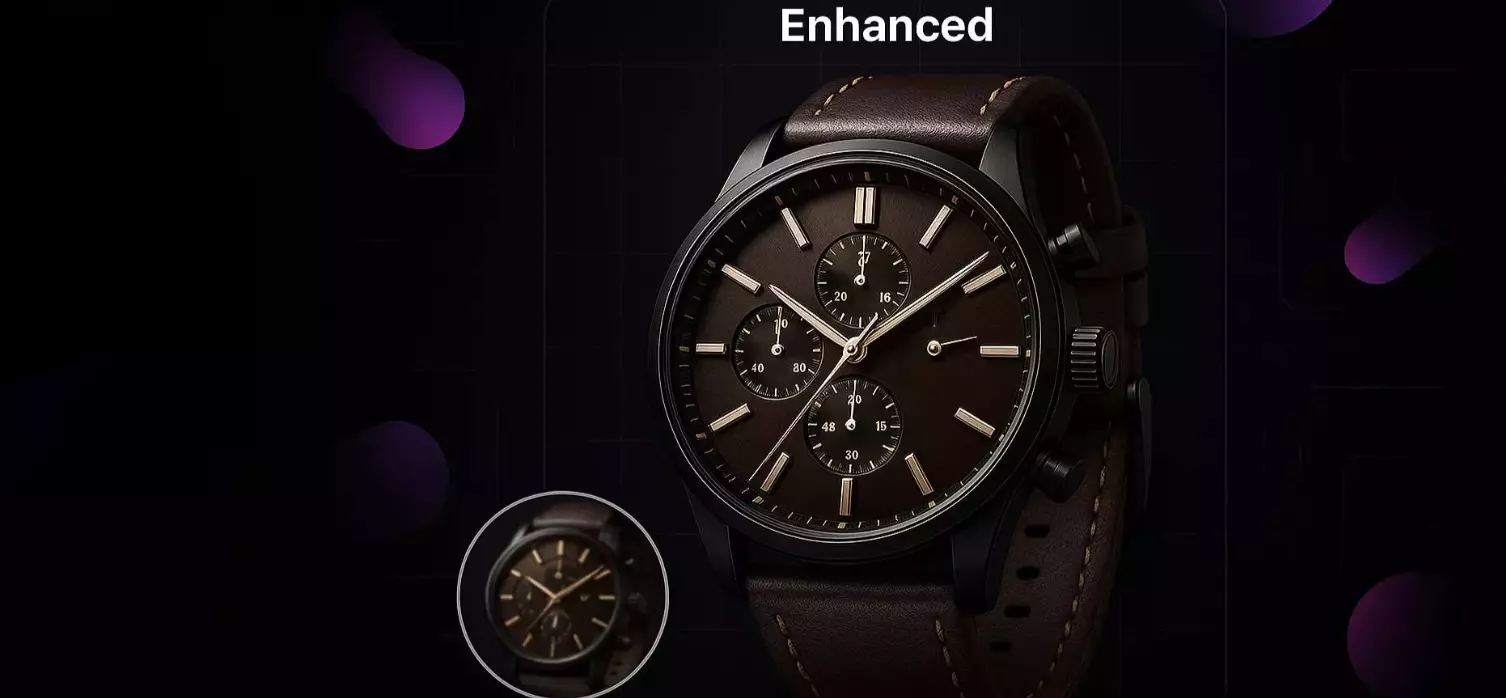
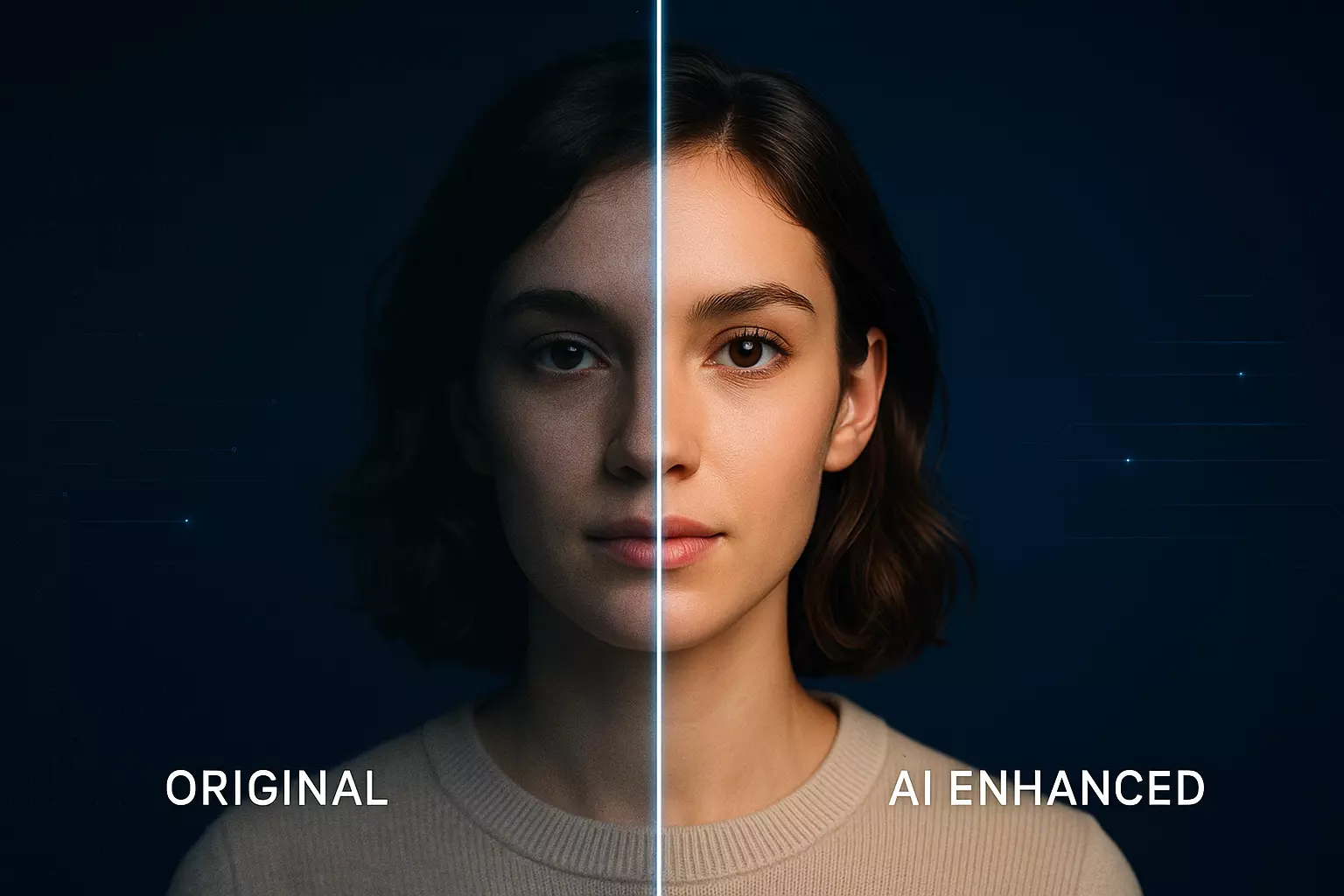
Pixflux.AI aligns well with these criteria. It’s designed to remove stickers and text, clean up watermarks when you have the rights, and preserve gradients and materials. You can also enhance the image after removal to harmonize contrast and detail.
How to erase text from picture online: a step‑by‑step workflow
Start with a straightforward, repeatable process you can roll out across a product line.
1) Duplicate your source files Work from copies so you can revert if needed. This protects your originals for future templates.
2) Identify the edit zones Zoom in and mark any text, sticker edges, or badge shadows that need removal. Note nearby textures you want to preserve.
3) Use a brush-based remover A brush-based “remove text” or “object remover” tool lets you paint over the text precisely, leaving the rest of the image untouched.
4) Inspect gradients and edges After the first pass, look closely at background falloff, soft product shadows, and material boundaries for banding or halos.
5) Refine and unify Feather the brush for a soft edge where gradients are delicate, or reduce brush size for tight corners. If needed, apply light enhancement to blend the patch.
To put this into practice, open a purpose-built tool and start to erase text from pic. In a clean, three-step flow, Pixflux.AI typically looks like this:
- Upload your image
- Let AI process the painted area
- Download the result
(Reference image suggestion: Pixflux.AI interface showing the three-step flow—upload image, AI processing preview, and download button.)
Using Pixflux.AI to remove discount badges while keeping gradients intact
When you want extra control—especially with glossy products or subtle shadows—use this detailed approach:
1) Open the Pixflux.AI remover Go to the tool page and upload your product image.
2) Paint only the text or sticker Use a medium, soft brush to cover the badge and its adhesive edge but avoid nearby product edges if they’re crisp.
3) Preview and micro-adjust Check for banding in soft backgrounds (e.g., studio gradients) and for texture continuity (leather, fabric, paper grain).
4) Blend shadows and highlights If the previous sticker cast a shadow, ensure the inpainted area shows a natural falloff. If highlights on a glossy bottle looked interrupted, refine with a smaller brush pass.
5) Enhance selectively Apply light enhancement to harmonize contrast and detail across the edited region, so it matches the rest of the image.
Pro tip: For labels on curved surfaces, do smaller overlapping strokes following the curve direction. This helps the fill respect the object’s geometry.
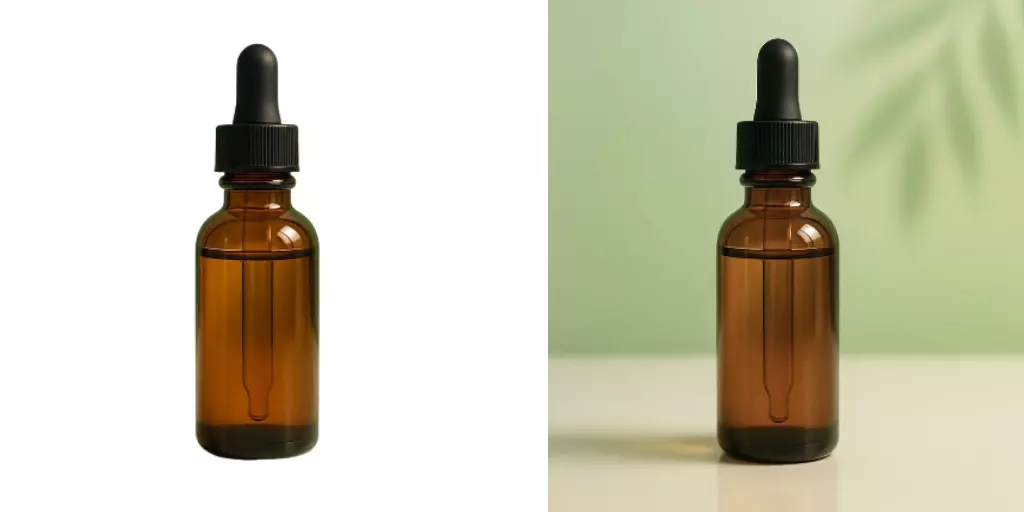
(Reference image suggestion: Side-by-side crop showing preserved gradients on a glossy bottle label after text removal.)
Hands-on checklist: isolate text, protect materials, blend shadows
- Mask precisely: Brush slightly inside the sticker or text edges to avoid touching product contours.
- Feather for gradients: Use softer edges on brushes where falloff is delicate (studio backgrounds, soft shadows).
- Work in passes: One broad pass, then smaller touch-ups for edges and highlights.
- Match grain: If the image has noticeable noise or grain, keep an eye on texture continuity.
- Zoom and pan: Review at 100% and 200% to confirm no halos, smudges, or repeated patterns.
- Before/after sanity check: Toggle the preview to confirm materials and shadows look unchanged.
Quality checks for remove text on image tasks
Evaluate results with simple, reliable criteria:
- Gradient continuity: Background transitions remain smooth with no steps or bands.
- Texture coherence: Leather pores, fabric weave, or paper fiber look consistent across the edited area.
- Edge integrity: Product edges and label borders stay crisp—no warping.
- Shadow realism: Shadows retain their soft edge and correct direction/intensity.
- Color match: The inpainted area’s hue and luminance fit the scene; no patchy tints.
- Scale of detail: Fills don’t look too sharp or too soft compared to the rest of the image.
Troubleshooting: banding, haloing, smudges, and mismatched grain
- Banding in gradients Conclusion: Re-run with a softer brush edge and minimize the painted area. Large, hard-edged masks can force harsh transitions. Try smaller, overlapping strokes and keep the mask tighter around the text.
- Haloing around removed text Conclusion: Feather your selection and avoid touching sharp product edges. Halos appear when the mask straddles high-contrast borders. Zoom in, reduce brush size, and work right up to the edge without spilling over it.
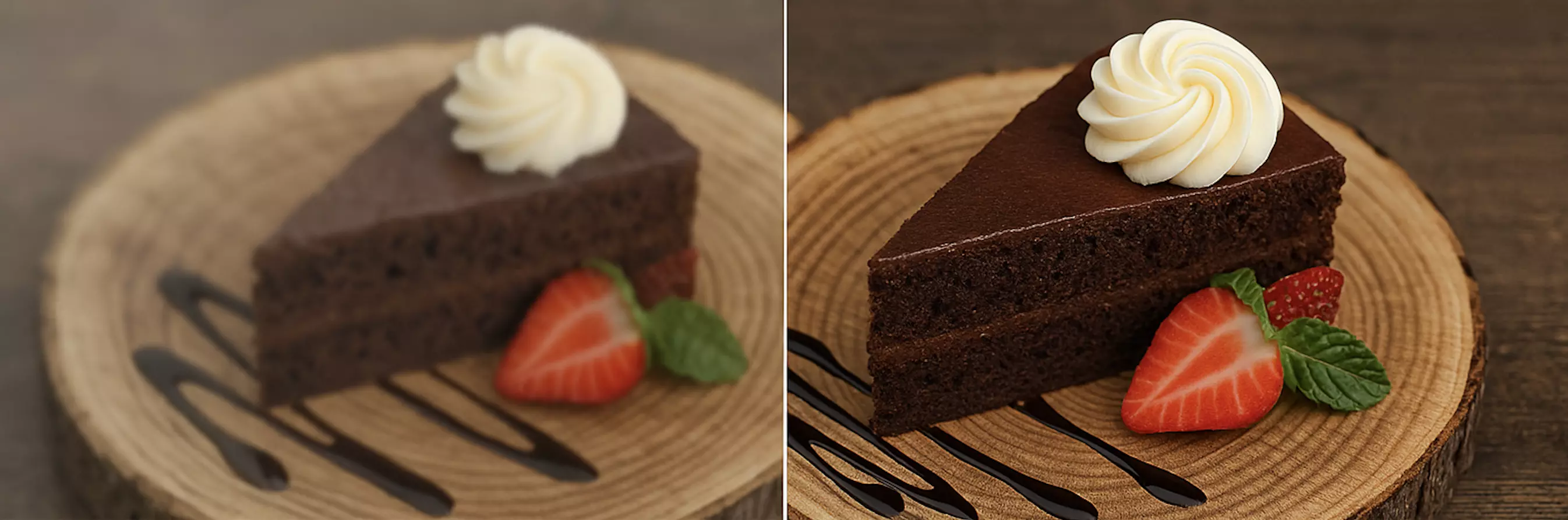
- Smudged or “plastic” texture Conclusion: Inpaint in smaller passes and add light enhancement after removal. Breaking the job into multiple strokes helps the model follow local texture flow. A subtle clarity bump can reduce plastic sheen.
- Mismatched grain or noise Conclusion: Harmonize detail by applying mild enhancement or noise to the patched area. If the original shot has visible grain, a perfectly smooth fill looks fake. A touch of uniform noise or sharpening can align textures.
Legal and ethical notes: watermark removal boundaries, rights, and disclosure
Only erase text from images you own or are authorized to edit. Removing watermarks or logos from third-party photos without permission may violate copyright, licensing terms, or platform rules. If you’re cleaning internal assets for resale or republishing, follow your company’s disclosure policy and keep documentation of rights.
AI online tools vs traditional methods
- Time cost AI online tools like Pixflux.AI deliver near-instant fills after you brush the area. Manual cloning or healing in desktop software can take 5–15 minutes per image, multiplied across catalogs.
- Learning curve Browser-based tools are point-and-paint. Advanced Photoshop retouching (warping, frequency separation, custom healing) requires specialized training.
- Batch readiness When you have many SKUs with similar stickers or text overlays, processing them sequentially online is far faster than manual retouching for each frame.
- Cross-team adaptability Non-design teammates (merchandisers, assistants) can safely run simple removals without complex file setup, freeing designers to handle edge cases and creative work.
FAQ: erase text from picture online — 7 common questions answered
What’s the fastest way to erase text from a picture without damaging the background?
Use an AI inpainting tool and paint only the text area with a soft-edged brush. Keep masks tight, work in small passes, and preview at 100% to ensure gradients and textures remain intact. Tools like Pixflux.AI are optimized for this kind of background-safe cleanup.
Will an online remover preserve gradients, textures, and specular highlights?
Yes—modern inpainting models can preserve gradients and material cues very well. Look for edge-aware fills and texture synthesis. After the first pass, check for banding in backgrounds and continuity in leather/fabric details, then refine with a smaller brush if needed.
Can I batch remove text on images across a product catalog?
Yes, you can process multiple images back-to-back to accelerate catalog updates. A repeatable brush-and-preview workflow lets teams move quickly through SKUs. Maintain a checklist so results remain consistent across products and seasons.
How do I avoid halos and smudges after removing sticker text?
Feather your brush and keep the mask just inside edges and contours. Halos appear when the mask crosses sharp borders; smudges come from painting too broadly. Zoom in, use smaller strokes, and refine highlights or shadows with targeted passes.
Is it legal to remove watermarks or brand logos?
Only if you own the rights or have explicit permission to edit the image. Removing protective marks from third-party content can violate copyright and platform policies. Always follow your organization’s legal guidance and keep proof of licensing.
What image formats and sizes work best for ecommerce and social after text removal?
High-resolution JPEG or PNG files are best; export at platform-recommended dimensions. For marketplaces like Amazon and social ads, keep file size efficient while preserving detail. Avoid over-compression, which can introduce artifacts visible around edited regions.
How does this compare to manual Photoshop retouching?
AI inpainting is faster for common sticker/text removals, while manual tools remain useful for edge cases. If a product has complex reflections or extreme macro textures, designers may still choose advanced manual techniques. For most catalog cleanup, AI achieves quality results in a fraction of the time.
Template-ready outputs: build reusable promo graphics with consistent materials
Once you remove discount text cleanly, you can overlay smart, reusable banners in your design tool of choice. Keep the product photo pristine and layer campaign text, date ranges, and prices as editable elements. Use consistent shadow and highlight styles across overlays so they match the preserved gradients beneath.
- Keep overlays separate from base imagery to avoid re-editing the photo each season.
- Define a small set of banner placements that don’t obscure brand-critical materials or label details.
- Document sizing and margin rules so any teammate can update the promo without touching the base photo.
Quick recap and a printable checklist
- Start with copies of your originals for safety.
- Paint only the text/badge area with a soft-edged brush.
- Inspect gradients, materials, edges, and shadows at 100% and 200%.
- Refine in smaller passes; harmonize detail with light enhancement if needed.
- Keep a consistent workflow to scale across product lines.
Printable checklist:
- Duplicate the source image
- Identify text/sticker and nearby sensitive gradients
- Brush inside edges; feather where needed
- Preview for banding, halos, smudges, or grain mismatch
- Refine passes; enhance lightly to unify result
- Export at the correct marketplace or social size
Conclusion and next steps
Evergreen promo assets depend on clean, believable edits. With modern inpainting and a disciplined workflow, you can erase text from a pic, keep gradients and materials natural, and refresh campaigns without re-shoots. Try Pixflux.AI to remove text on image and turn one-time sale photos into reusable, season-proof product assets.
(Reference image suggestion: A final before/after grid—sticker removed across multiple products with textures and shadows preserved.)