Remove Words from a Picture to Localize Listings Faster (Multi-Market Playbook)
Strip English text from product photos, then rebuild crisp ES/FR/DE labels fast. An AI-powered playbook with steps, batching, and QA tips.
 Richard SullivanJanuary 23, 2026
Remove Words from a Picture to Localize Listings Faster (Multi‑Market Playbook)
Cross‑border growth often stalls on one surprising blocker: product photos locked up with English labels, promo stamps, and legal copy that won’t fly in DE/FR/ES marketplaces. Design teams get stuck re‑compositing hero images in multiple languages, while sellers juggle deadlines, seasonality, and platform rules. The result is a slow, expensive localization treadmill.
The fix is simpler than a full redesign. Start by cleanly removing words from a picture—keeping product, shadows, and textures intact—then rebuild localized overlays that match your brand system. AI inpainting and object removal make this practical even at catalog scale. If you’re evaluating workflows, this guide shows how to remove words from a picture, rebuild localized versions, and push multi‑market launches faster without wrecking your margins.
Retailers are already shifting from text‑heavy hero images to localized, clean visuals because they convert better and fit marketplace policies. Meanwhile, AI‑powered inpainting is replacing manual PSD templating for multilingual assets—especially when you need ES/FR/DE variants by Friday.
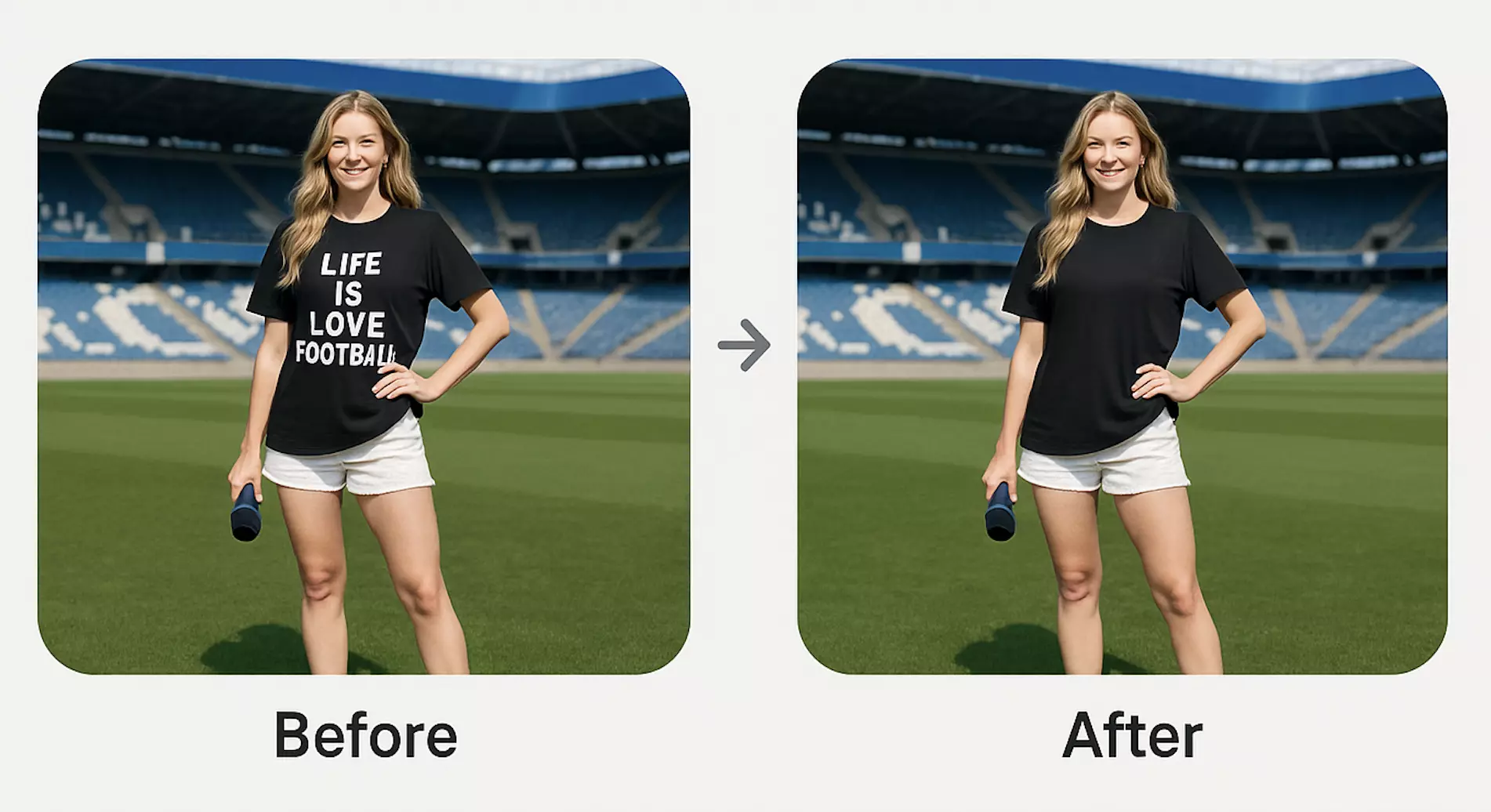
(See image: Before‑and‑after comparison of a product image—English promo text cleanly removed, then rebuilt with Spanish, French, and German overlays.)
Why text removal accelerates localization
- You preserve core creative: product, lighting, reflections, and background stay the same.
- You avoid re‑shoots: no need to book studios for every language rollout.
- You reduce production debt: instead of managing 12 Photoshop files, you maintain one clean master plus lightweight language layers.
- You meet platform policies: marketplaces often restrict dense claims or foreign‑language overlays—clean bases keep you compliant.
In practice, “remove text on image” becomes the first mile of localization. Once the base is clean, you can layer ES/FR/DE copy that’s native to each market’s typography and tone.
Key methods: inpainting, masks, and non‑destructive edits
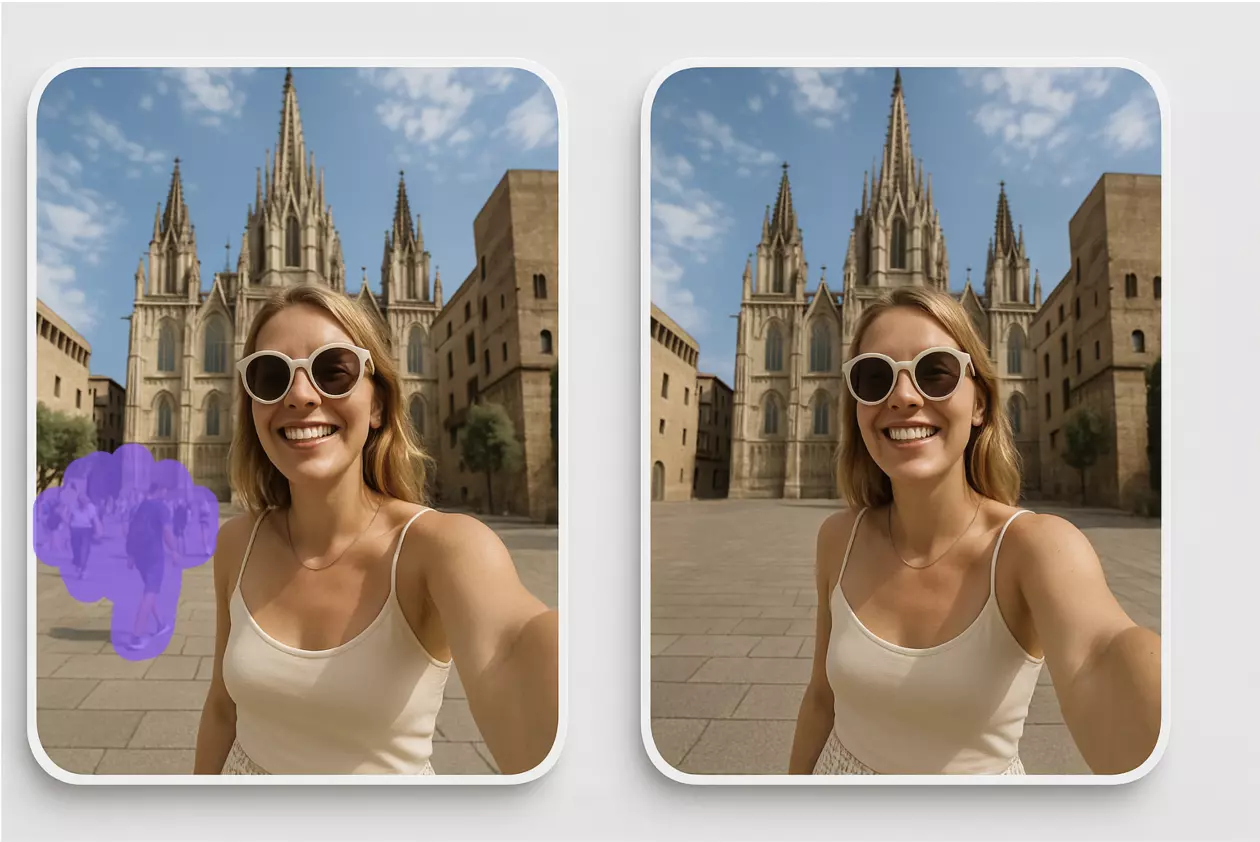
- Inpainting: AI predicts and fills the background under the removed text so textures and gradients look natural.
- Selection masks: Define exactly where to erase and protect product edges, shadows, and micro‑details.
- Non‑destructive workflow: Keep your clean master separate from localized overlays, so you can update translations without touching the base.
Tip: Aim for minimal edits in the product’s “critical zones” (logos, stitching, glass reflections). Use softer brushes at edges to avoid halos, and zoom in to check banding on flat backgrounds.
Toolset overview: online editors, desktop suites, and AI helpers
- Desktop suites: Powerful and precise, but can be slow for batch work and require advanced skills to inpaint complex textures convincingly.
- Online editors: Good for quick fixes, lighter learning curve, and team access from anywhere.
- AI helpers: Tools like Pixflux.AI focus on AI background removal, text/object removal, and enhancement—ideal when you need speed without sacrificing edge quality.
Pixflux.AI is particularly useful when text overlaps gradients, fabric, or semi‑transparent elements. It treats removal as an AI reconstruction task, then lets you refine and download a clean, reusable base.
Practical guide: remove words from a picture without harming product details
- Identify all text elements to remove. Include promo stamps, corner badges, legal copy, or overlapping captions that need language changes.
- Prioritize the clean master. Start with the largest, most visible text first; it sets the baseline for the inpainted background.
- Protect product edges. When text is near a bottle’s specular highlight or a shoe’s stitching, use tighter masks. Feather selections slightly to avoid hard seams.
- Match local texture direction. For wood grain, fabric weave, or brushed metal, inpaint with the grain to avoid visual “breaks.”
- Check shadows and reflections. Overlays often sit near shadow edges; reconstructing subtle gradients preserves realism.
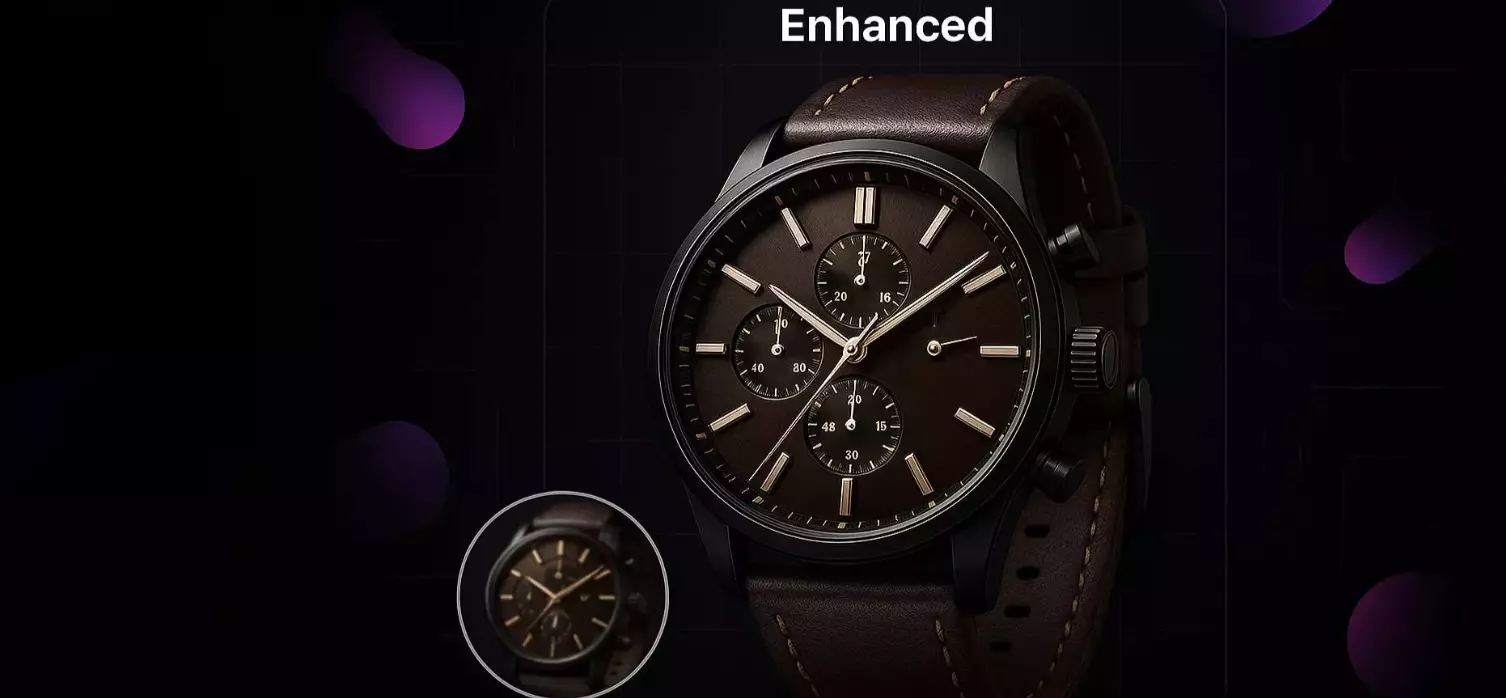
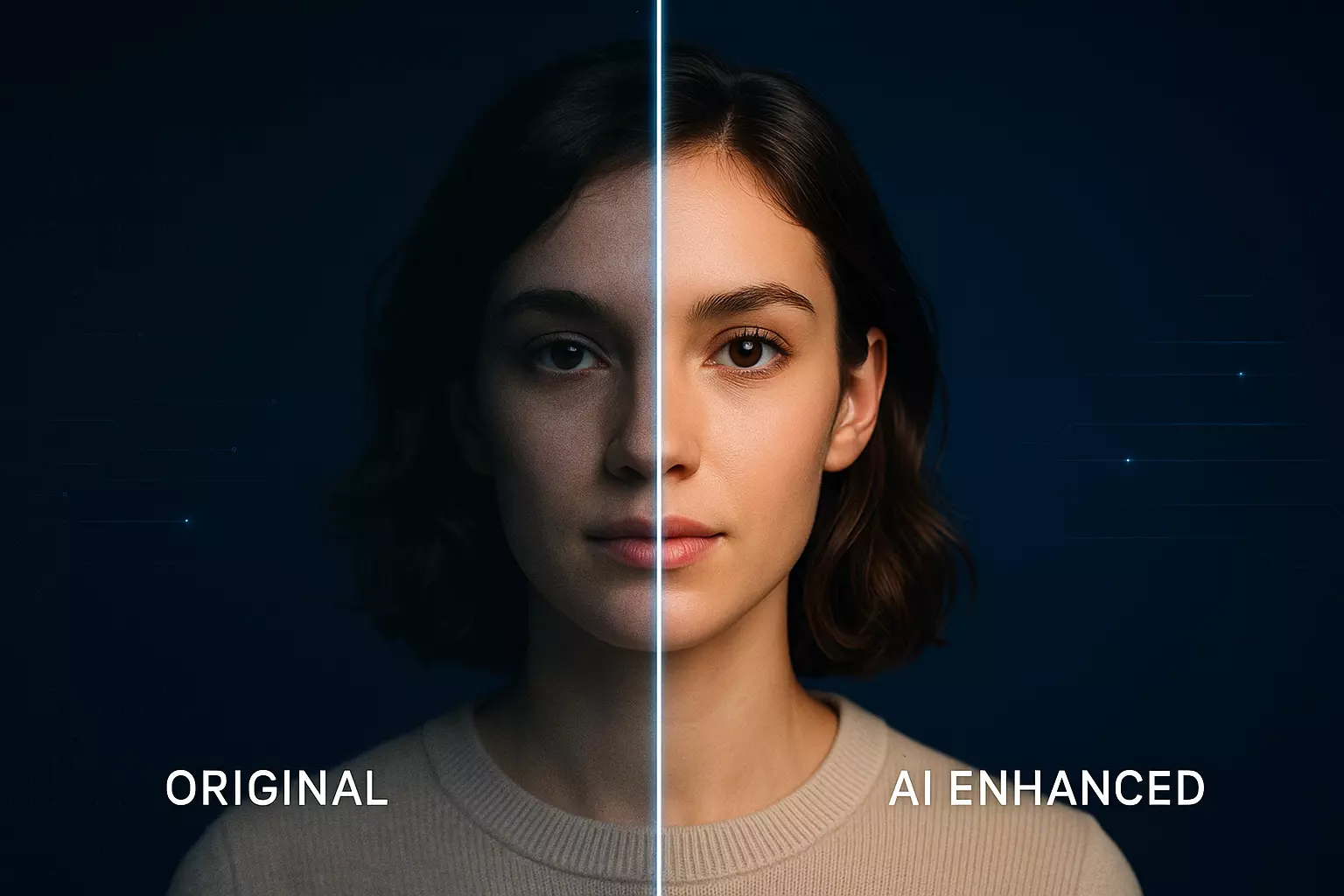
- Enhance as needed. After removal, apply AI photo enhancement for clarity and contrast so the image holds up on zoom and mobile screens.
- Optional: remove irrelevant watermarks or logos if you legally control the asset.
Compliance reminder: Only remove watermarks or logos when you own the rights or have explicit permission. Text or watermark removal must not be used to misrepresent a product or circumvent marketplace rules.
HowTo with Pixflux.AI: remove text on image in three steps
Use Pixflux.AI when you need a clean base fast for ES/FR/DE variants.
- Upload your source image. Choose the product photo with English text you want to localize.
- Let AI process the image. Select the text/object removal tool; the AI will inpaint the background and preserve nearby details. Preview the result.
- Download the clean version. Export the text‑free image as your master for localization.
If you need a quick starting point, try this flow to remove text on image and keep your product edges crisp for marketplace zoom.
(See image: Pixflux.AI interface showing the three‑step flow—upload, AI processing preview, and download highlighted.)
Advanced five‑step refinement: 1) Open Pixflux.AI; 2) Upload; 3) Choose text remover or object remover; 4) Preview and fine‑tune masked areas; 5) Download the final.
Rebuild localized labels for ES, FR, and DE: fonts, kerning, spacing, color
Once your base is clean, rebuild overlays that look natively designed—not translated afterthoughts.
- Typography fit:
- ES: Comfortable with bold promo text; watch accent marks (á, é, í, ó, ú), and ensure font supports glyphs.
- FR: Often prefers lighter tracking; respect thin spaces for prices (e.g., 9,99 € with correct spacing).
- DE: Words can be long; widen containers, adjust hyphenation rules, and balance line breaks.
- Kerning and tracking: Start with your brand’s Latin kerning pairs, then fine‑tune for diacritics and compound nouns (DE).
- Color and contrast: Keep WCAG‑friendly contrast. If the background is busy, add a subtle shadow or semi‑transparent panel behind text.
- Hierarchy: Mirror the English layout but adapt for reading flow and length; don’t cram text to fit the old box.
- Claims and legal: Translate with local compliance in mind (e.g., “hypoallergenic” or “clinically tested” may need proof or different wording per market).
Pro tip: Keep overlays in editable layers separate from the clean master. That way, price or copy changes only touch the local layer.
Batch processing for multi‑market catalogs using Pixflux.AI
For catalogs with dozens or hundreds of hero images, batch work is non‑negotiable. Pixflux.AI supports batch uploading and one‑click processing so you can:
- Remove recurring English badges across a series of lifestyle images.
- Clean old seasonal stamps before adding ES/FR/DE versions.
- Enhance clarity and contrast across a set so every market sees consistent quality.
Run a pilot on 20 images: measure average processing time, rework rate, and edge quality acceptance. You’ll likely see 60–80% cycle‑time savings compared to manual edits—especially when images share similar layouts.
Case study: turning EN hero images into ES/FR/DE in under an hour
Scenario: A U.S. skincare brand needs to localize six hero images for Amazon ES/FR and a DE marketplace. Each hero includes a “20% OFF” English badge and a small callout near the jar’s edge.
- 0–10 minutes: Batch upload into Pixflux.AI, select text/object removal, preview inpainted results, and accept the set. Two images need minor mask tweaks near reflections.
- 10–25 minutes: Run an AI photo enhancement pass to align sharpness and contrast across all six cleaned masters.
- 25–40 minutes: Add ES/FR/DE overlays in a design tool using brand fonts; adjust German line breaks and ensure French spacing around currency symbols.
- 40–55 minutes: QA pass on zoom for edge quality and readability; export platform‑specific sizes.
Outcome: Six localized hero variants per language published the same day, with visual consistency and no reshoot costs.
(See image: Close‑up grid of edge quality and typography checks—zoomed inpainted areas, kerning alignment, and background consistency across ES/FR/DE versions.)
Quality assurance checklist: sharpness, edges, brand consistency, readability
Use this rapid QA list before you ship:
- Edge integrity: No halos or jagged seams where text was removed, especially near specular highlights and fabric textures.
- Texture continuity: Wood grain, gradients, and patterns flow naturally through previous text areas.
- Shadow realism: Soft shadows and reflections aren’t clipped or repeated.
- Sharpness and contrast: Enhanced enough for zoom without looking oversharpened.
- Typography fidelity: Fonts support ES/FR/DE glyphs; kerning and tracking fit the locale.
- Color and contrast ratio: Overlays meet accessibility and platform guidelines.
- Claim compliance: Legal copy is accurate per market; no misleading or prohibited claims.
- Brand consistency: Logo clearspace, color palette, and style match your global system.
Legal and ethical considerations: watermarks, licenses, and claims
Only remove watermarks, logos, or printed text when you own the rights or have written permission. Removing third‑party marks from assets you don’t control can violate copyright or platform rules.
When translating claims, ensure they’re substantiated for each market. Some jurisdictions require specific phrasing or proof for terms like “dermatologist‑tested” or “organic.” Keep a localization log mapping claims to their approvals.
AI online tools vs. traditional methods
- Time cost:
- AI online tools: Minutes per image; batch runs handle series with similar layouts.
- Traditional desktop: High setup time; manual healing/inpainting per image.
- Learning curve:
- AI: Low; non‑designers can get clean bases and hand off to brand designers for typography.
- Traditional: High; precise masking, cloning, and texture reconstruction skills required.
- Batch efficiency:
- AI: Bulk upload and one‑click processing scale across catalogs.
- Traditional: Limited automation; templates help but still need hands‑on retouching.
- Cross‑team fit:
- AI: Works anywhere with a browser; easy to “clean then localize” without passing heavy project files.
- Traditional: Larger files and complex layers slow handoffs and reviews.
In short, AI removes the bottleneck so your team can spend time on brand‑correct overlays and compliance, not background reconstruction.
Reference image suggestions
- Before/after: English promo removed, then Spanish, French, and German overlays added.
- Pixflux.AI three‑step UI: upload, AI preview, download.
- Close‑up quality grid: edges, kerning, background consistency.
FAQ: remove texts from image for cross-border listings
What’s the fastest way to remove texts from image for localization?
Use an AI inpainting tool to create a clean, text‑free master and then rebuild overlays per language. AI tools reconstruct backgrounds under the text, so you avoid manual cloning and texture repairs. Once you have the clean base, typography for ES/FR/DE becomes a straightforward layer task.
Will AI removal damage product details or edges?
Not if you mask carefully and review previews before exporting. Protect edges around logos, stitching, and reflections with tighter selections and soft feathering. Always zoom to 100–200% to check for halos or repeated patterns before finalizing.
Can I batch remove words from a picture set for multiple markets?
Yes, batch processing can clean a series quickly when layouts are similar. Group images by layout (e.g., same badge position), run a batch pass, and then spot‑check edge cases. This dramatically cuts cycle time for multi‑market catalogs.
How do I ensure typography looks native in ES, FR, and DE?
Choose fonts with full glyph support and adjust kerning, spacing, and line breaks per language. French spacing around currency, Spanish accents, and long German compounds require micro‑adjustments. Keep overlays on separate layers so you can iterate quickly when copy changes.
Are there legal risks in removing watermarks or claims from images?
Yes—only remove elements on assets you own or have permission to edit, and ensure claims meet local rules. Unauthorized watermark removal can violate copyright or marketplace policy. Translating regulated claims also requires market‑specific approvals.
What image size and format should I export for marketplaces?
Export platform‑specific sizes in high‑quality JPEG or PNG with optimized compression. Check each marketplace’s listing guidelines for pixel dimensions, aspect ratio, and background rules. Maintain a master at higher resolution for future crops.
Can I use Pixflux.AI for both text removal and quality enhancement?
Yes, you can remove overlays and then enhance sharpness and contrast for a clean, consistent look. Run text/object removal first, confirm edge quality, then apply enhancement so your images hold up on zoom and mobile.
Conclusion and next steps
Localized imagery doesn’t require a full redesign. Cleanly removing English text, rebuilding language‑specific overlays, and batching the process can turn a week‑long effort into a same‑day launch. With AI inpainting and enhancement, you keep product realism intact while meeting platform rules and brand standards.
Ready to scale a multi‑market playbook? Use Pixflux.AI to clean your bases, then rebuild native overlays for ES/FR/DE with confidence. Start now and erase text from photos in minutes—then publish localized listings that convert.