Transparent Background Assets That Meet Marketplace Requirements A Simple Export Checklist
Your step-by-step checklist for crisp, lightweight transparent PNGs—edge cleanup, soft shadows, smart compression, and team-friendly file naming.
 Emily CremerMarch 4, 2026
Transparent Background Assets for Marketplaces: A Simple Export Checklist with a Transparent Background Generator
If you sell on Amazon, Walmart, Etsy, or run social ads, you’ve probably hit the same snag: your product looks great but your listing gets flagged for messy edges, gray halos, or a background that isn’t truly transparent. In 2026, marketplaces are tightening standards to improve catalog consistency, and teams are expected to deliver spotless, lightweight, and compliant files at scale.
The good news: AI background removal has matured. With a modern transparent background generator, you can get clean alpha edges, soft realistic shadows, and small file sizes—without opening a heavy desktop app. Tools like Pixflux.AI make this fast for solo creators and teams alike. If you’re ready to streamline, try a trusted transparent background generator to build a reliable, repeatable export flow.
Below is a practical checklist and workflow you can use today—covering format choices (PNG vs WebP vs SVG), edge cleanup, shadow strategy, file-size control, and team naming standards—so your transparent assets pass marketplace checks on the first try.
Why transparent backgrounds matter for marketplace listings in 2026
- Catalog consistency: Marketplaces standardize transparent background rules to keep listings uniform and scannable, boosting shopper confidence.
- Multi-channel agility: A single transparent PNG adapts to any background—marketplace white, seasonal promos, or social creative—without re-shoots.
- Faster pages, better UX: Leaner files mean faster product pages and higher conversion, especially on mobile.
- Scalable creative ops: With AI background removal now handling hair, glass, and semi-transparent materials more reliably, teams can batch more SKUs with fewer manual touchups.
Tip: If your hero images rely on a brand-colored backdrop, you can still keep your master assets transparent and apply backgrounds nondestructively in design tools or campaign builders.
File formats for transparency: PNG vs WebP vs SVG (and when to choose each)
- PNG (24-bit vs 32-bit):
- 24-bit PNG supports 16.7M colors but no alpha; it’s used for opaque assets.
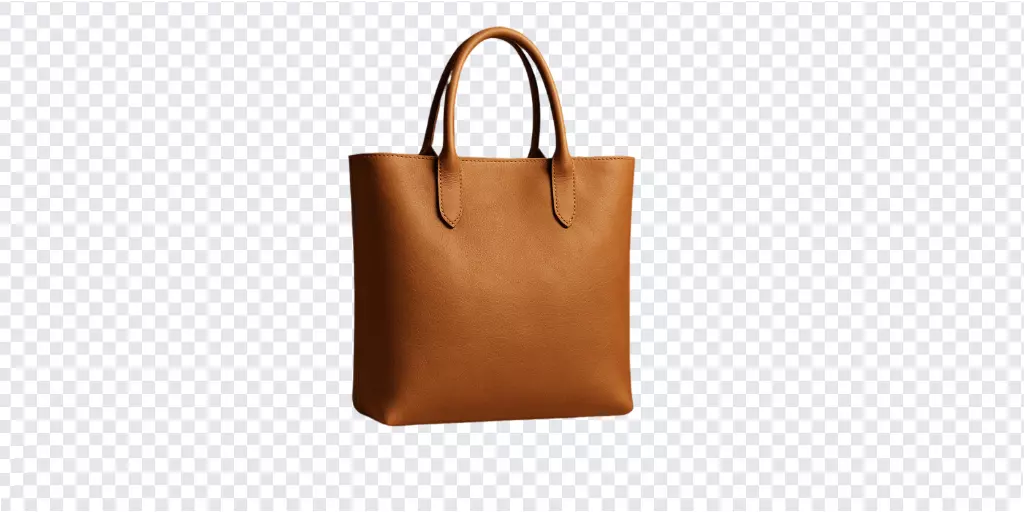
- 32-bit PNG adds an 8-bit alpha channel (transparency). This is the de facto choice for marketplace product images that need soft edges and drop shadows.
- Most marketplaces still expect PNG for transparent product shots.
- WebP (lossy/lossless + alpha):
- Modern browsers fully support WebP transparency, and file sizes are often smaller than PNG.
- Great for PDP modules, ads, and landing pages—but double-check platform guidelines; some marketplaces still prefer PNG uploads.
- SVG (vector + alpha):
- Ideal for logos, icons, and flat graphics.
- Not suitable for photographic products. Rarely requested by marketplaces for product imagery.
Rule of thumb: Use 32-bit PNG for listings (transparent PNG for marketplaces), consider WebP for your own site performance tests, and keep SVG for brand marks and UI elements.
(See image: export settings panel comparing 24-bit vs 32-bit PNG, with file sizes and alpha preview)
Preparing source images: lighting, edges, and color fringing prevention
Start with the cleanest possible source. AI is powerful, but garbage-in still equals garbage-out.
- Light evenly: Soft, diffused light reduces hard shadows and makes edges clearer for background removal.
- Separate subject from background: Avoid colors that mimic product edges; high-contrast separation helps AI detect fine details (hair, mesh, lace).
- Control color spill: Colorful backdrops can tint edges (green spill, blue spill). Use neutral backgrounds or flag spill areas in post.
- Keep focus tack-sharp: Motion blur and shallow depth of field can create soft zones that look like halos after removal.
Pro prep checklist:
- Wipe glossy surfaces (dust and fingerprints exaggerate edge artifacts).
- Remove distracting props if the marketplace discourages them.
- Shoot slightly wider to allow padding and straightening later.
Step-by-step: How to create a transparent background with a transparent background generator
Whether you’re cleaning a single hero or an entire SKU batch, the flow is the same:
- Import your source image(s) Use the highest-resolution version you have. Keep a copy of the original for reference.
- Remove the background Trigger background removal. Let AI run first; avoid premature manual masking.
- Inspect alpha edges on dark and light canvases Toggle previews against white, mid-gray, and black to surface halos, color fringing, and missing hair strands.
- Refine edges and shadows
- Use edge smoothing for hair and semi-transparent areas (glass, plastic).
- Apply soft shadows that match the product’s real-world geometry.
- Export with the right settings
- 32-bit PNG for marketplaces (true alpha).
- Use sRGB color profile.
- Keep physical dimensions and padding within marketplace requirements.
Using Pixflux.AI to remove backgrounds and refine edges in three steps
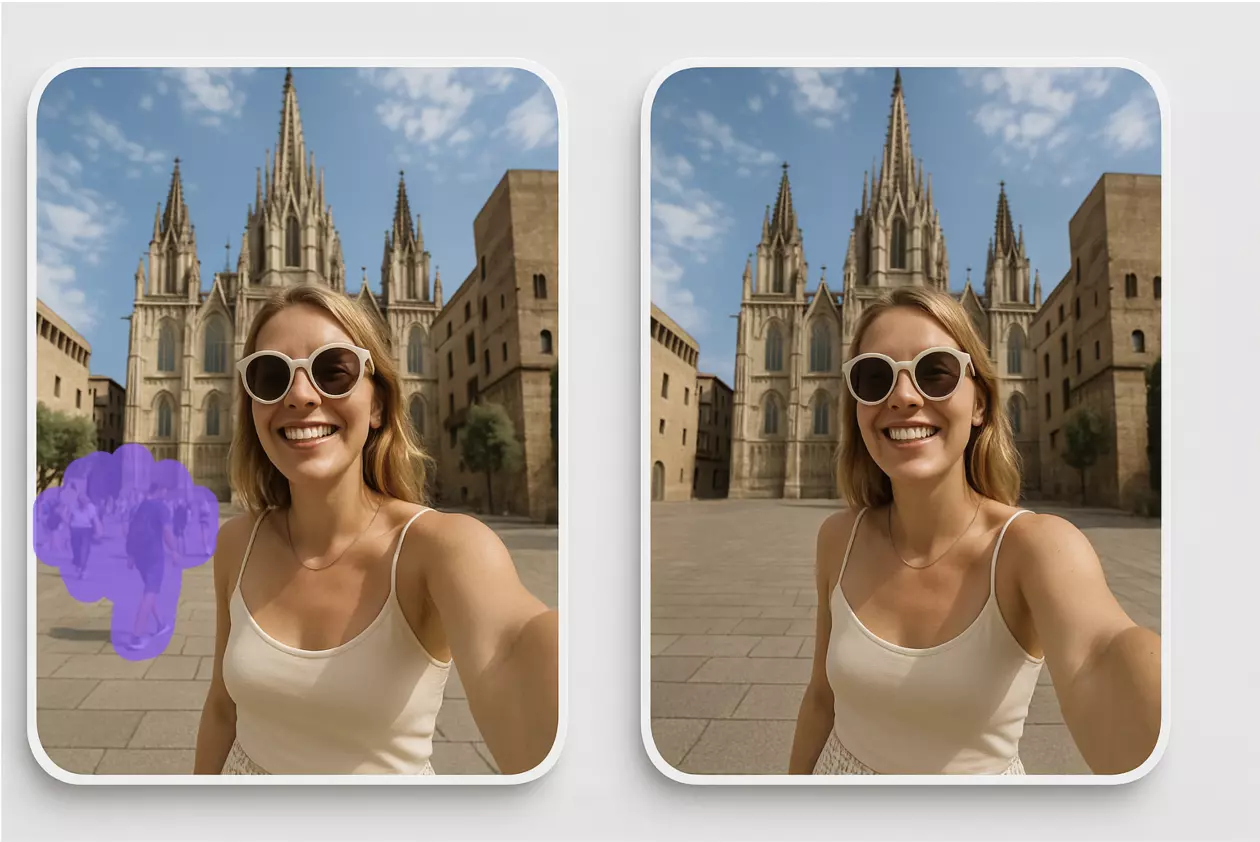
Pixflux.AI focuses on clean alpha edges, object removal, and batch-friendly exports—ideal for marketplace and social uses. Here’s the compact 3-step flow:
- Upload your original image Drag-and-drop a product shot (or bulk select multiple SKUs). Aim for crisp focus and neutral lighting.
- Let the AI process the background Pixflux.AI removes the background and retains fine details like hair, mesh, and semi-transparent materials. Preview on light and dark to catch halos or fringing. If needed, adjust edge strength or soft shadow.
- Download the processed PNG Export as 32-bit PNG for transparency. Save variants (e.g., with and without drop shadow) for different marketplace rules.
Try the flow with a fast transparent background maker to move from source image to store-ready PNG in minutes.
(See image: Pixflux.AI interface showing Upload → AI process → Download for background removal) (See image: Before-and-after of a sneaker: original photo vs clean transparent PNG with soft shadow and crisp edges)
Note on ethics and compliance: Only remove logos, watermarks, or marks from images you own or have explicit rights to edit. Don’t use watermark removal to bypass platform rules or infringe copyrights.
Shadow strategy on transparency: hard, soft, and drop shadows with alpha
Shadows bring objects to life—even on a transparent background. Choose a strategy that matches your brand and the marketplace context:
- No shadow: Sterile but safe. Many marketplaces accept (and some prefer) no-shadow hero images.
- Soft ground shadow: A subtle, diffused oval under the product to anchor it. Great for footwear, electronics, and home goods.
- Directional drop shadow: Adds depth when your creative guidelines require directionality. Keep it subtle and consistent across SKUs.
- What to avoid: Harsh, pixelated shadows or mismatched direction/light color. These trigger “looks fake” flags.
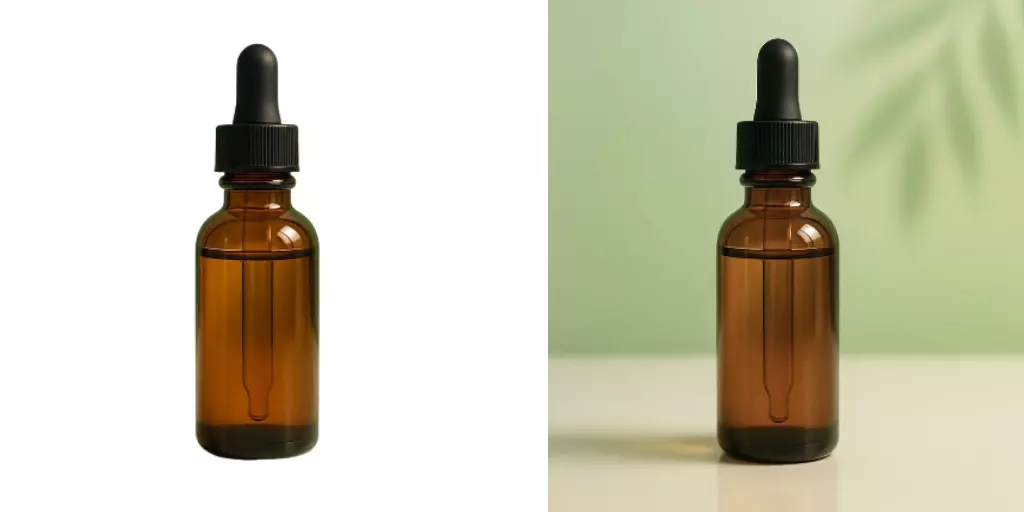
Pro tip: Use alpha-based soft shadows (not baked onto a colored background) so your PNG remains fully flexible on any page.
Edge cleanup techniques: hair, glass, semi-transparency, and halo removal
- Hair/fur: Increase edge sensitivity/strength slightly and preview on black/white. You’re aiming to keep flyaways without creating noisy halos.
- Glass, liquids, and gloss: Maintain partial transparency so objects feel real. Avoid hard masking; retain subtle reflections.
- Fine meshes and lace: Check at 100% zoom. Tiny fills can get lost; dial back smoothing or restore details selectively if offered.
- Halo removal: If you see a faint outline, reduce color spill or use a decontaminate-edge control. Manually trim only the worst offenders, then re-check on both light and dark canvases.
Always QA edges at 100% and 200% zoom. Halos often hide at fit-to-screen magnification.
File-size control: export settings, color depth, compression, and QA checks
Teams are prioritizing smaller transparent PNGs to speed up page loads and reduce storage costs. Keep size under control without sacrificing quality:
- PNG bit depth: Export 32-bit (RGBA) for transparency. If you maintain a non-transparent master, store a 24-bit version.
- Compression: Use lossless PNG compression. Test WebP with alpha for your own site if allowed; it can be 25–40% smaller at similar quality.
- Dimensions and padding: Don’t export bigger than you need. Follow marketplace pixel guidelines and apply consistent margins around the product (often 5–10%).
- Color profile: Use sRGB and embed the profile.
- QA:
- Preview on white, gray, and black canvases.
- Compare file sizes across variants (shadow vs no shadow).
- Spot-check for banding in subtle gradients (background shadows, clear plastics).
(See image: export settings panel comparison—24-bit vs 32-bit PNG with file sizes and alpha preview)
Naming conventions and versioning for teams and batch exports
Batch processing and organized filenames are critical for large SKU libraries in 2026.
- Suggested pattern: brand_sku-color_view_variant_transparency_version.png Example: atlas_1234-red_front_softshadow_rgba_v02.png
- Keep views predictable: front, side, 45deg, back, detail.
- Variants: noshadow, softshadow, hardshadow.
- Transparency flag: rgba or alpha.
- Versioning: v01, v02 to reflect feedback loops.
- Batches: Group by drop date or marketplace. Document naming in a shared style guide.
Pixflux.AI supports batch handling so you can process multiple images in one go and save consistent exports across a set. This reduces manual errors when shipping hundreds of transparent PNGs for marketplaces at once.
Marketplace compliance checklist: dimensions, padding, color profile, and do/don’t
Use this quick pass before upload:
- Dimensions: Meet each marketplace’s min/max pixel requirements (e.g., 1600 px shortest side for high-zoom).
- Aspect ratio: Match category norms (e.g., square for apparel hero shots).
- Padding: Maintain consistent margins; don’t crop too tight.
- Background: True transparency (no residual gray/gradient).
- Shadows: Subtle and consistent; remove if the platform discourages shadows.
- Color space: sRGB embedded.
- File type: PNG with alpha unless the marketplace specifies otherwise.
- Content rules: No offensive text, no promotional badges, no competitor logos.
- Watermarks/logos: Remove only if you own the rights. Don’t upload assets that violate marketplace IP rules.
AI online tools vs traditional methods
- Time cost:
- AI tools like Pixflux.AI remove backgrounds and output transparent PNGs in minutes, even for batches.
- Traditional software (manual pen paths) can take 10–30 minutes per image, longer for hair/glass.
- Learning curve:
- Online tools require minimal training; previews guide quick decisions.
- Desktop suites demand masking expertise and plugin know-how.
- Batch efficiency:
- AI excels at multi-image processing with consistent results.
- Manual workflows scale poorly and are prone to inconsistency across operators.
- Team adaptability:
- Lightweight web workflows adapt quickly across creative, merchandising, and retail ops—no heavyweight installs or license juggling.
- Outsourcing reduces your control and often increases turnaround variability.
Bottom line: Use AI for 90% of images, then reserve manual pixel pushing for rare edge cases and high-value editorials.
Troubleshooting
If you hit stubborn halos, fringing, or mismatched shadows, revisit source lighting, increase edge refinement slightly, and re-check on dark and light canvases. In many cases, a second pass with adjusted edge strength fixes micro-halos around hair and glass.
FAQ: Transparent PNGs and Background Removal
Why does my “transparent” PNG show a faint gray box on some pages?
You’re seeing leftover background or improper alpha. Verify you exported a 32-bit PNG with a true alpha channel. Preview the PNG on white, gray, and black backgrounds to confirm transparency. If a haze appears, run a halo cleanup or decontaminate edges and re-export in sRGB.
Should I use PNG or WebP with transparency for marketplace uploads?
Use PNG with alpha unless the marketplace explicitly supports WebP. PNG is still the most widely accepted for listings. WebP with alpha is great for your own site performance tests, but double-check platform guidelines to avoid upload rejections or automatic conversions.
How do I keep hair and fur looking natural after background removal?
Use fine-edge refinement and preview on both dark and light canvases. Increase edge sensitivity slightly to preserve flyaways, then reduce smoothing if strands look chunky. Inspect at 100–200% zoom and correct any halos before exporting the final 32-bit PNG.
My file size is too big—how can I shrink transparent PNGs without artifacts?
Right-size dimensions, keep sRGB, and apply lossless PNG compression. Avoid exporting larger than the marketplace needs and consider a no-shadow variant if soft shadows add weight. For your own site, test WebP with alpha for additional savings while validating visual parity.
Why do I see color fringing around glass or chrome edges?
It’s typically color spill from the original background. Use a decontaminate-edge control or slight edge contraction to remove the spill. When shooting, avoid saturated backdrops that tint reflective edges; neutral backgrounds and diffused light minimize the issue.
Are soft shadows allowed on all marketplaces?
Not universally—check each platform’s rules. Some categories prefer no shadow, while others accept subtle ground shadows. Keep them soft, low-opacity, and consistent. Maintain alpha transparency so shadows adapt to any page background.
Is it okay to remove watermarks or logos with AI?
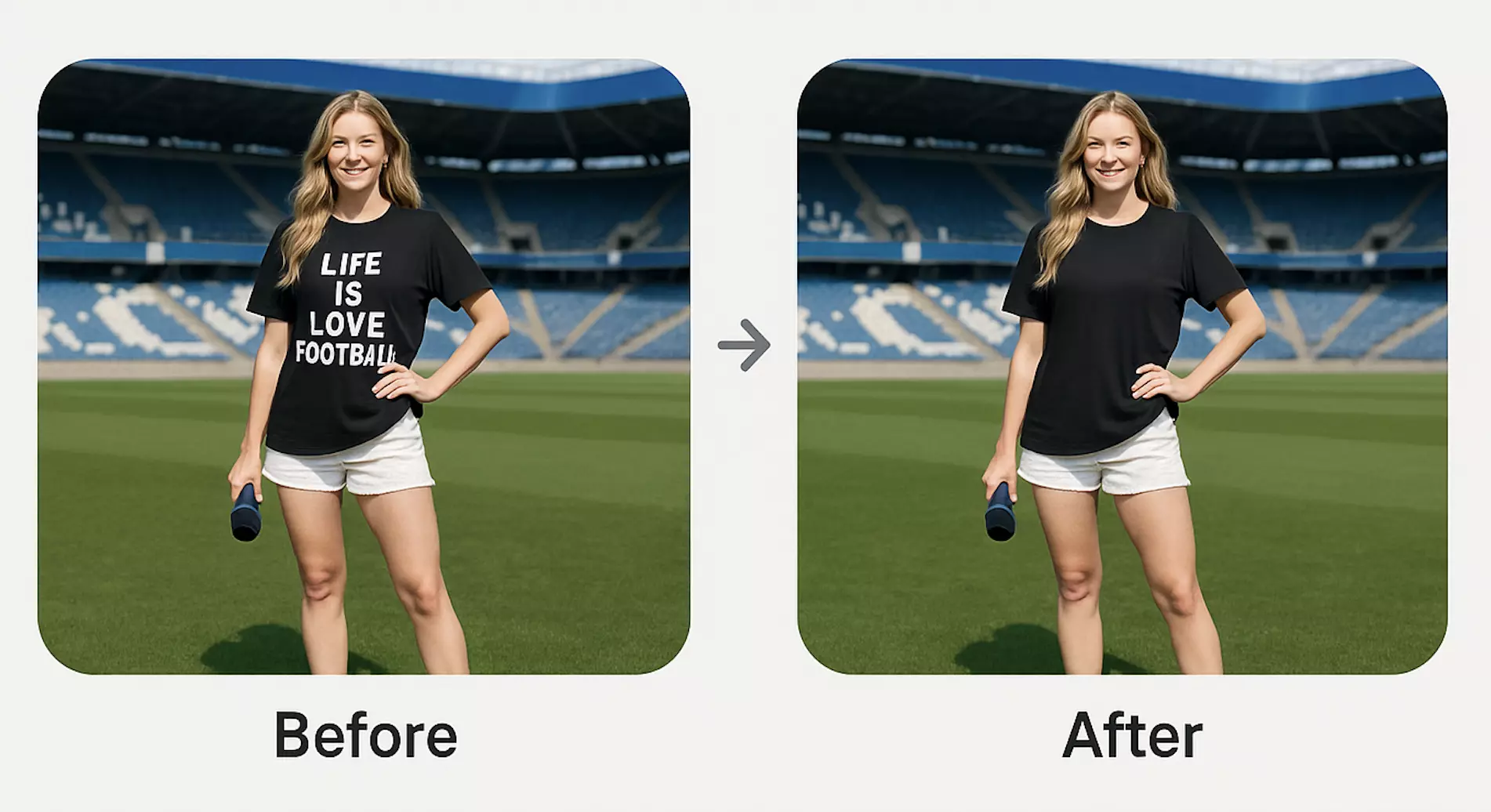
Only if you own the content or have explicit permission. Removing watermarks from assets you don’t own may violate copyrights and marketplace policies. Always follow IP rules and platform guidelines; use watermark removal strictly for your licensed content.
Conclusion and next steps
Transparent PNGs that “just work” across marketplaces come from a consistent process: clean source shots, a reliable transparent background generator, disciplined edge and shadow QA, and export settings tailored for speed and compliance. With trends moving toward stricter catalog standards, lighter files, and larger SKU volumes, now is the time to lock in your checklist.
If you want a fast, repeatable way to remove backgrounds, refine alpha edges, and export marketplace-ready assets, try Pixflux.AI. Start with the basics and create transparent PNG online to see how quickly your workflow levels up.