Youth and Wellness Travel Add AI Backgrounds to Spotlight Hidden Local Destinations
Show off hidden towns with believable AI backdrops. See how to keep edits authentic, match your brand style, and batch assets fast with Pixflux.AI.
 Richard SullivanJanuary 12, 2026
Youth and Wellness Travel: Add AI Backgrounds to Spotlight Hidden Local Destinations
Sunrise doesn’t wait for your content calendar. If you market youth and wellness travel, you’ve likely faced the same problem: the day you shoot is overcast, the town square is under scaffolding, or the mountain retreat looks flat on a phone screen. Meanwhile, Gen Z and Millennial travelers expect inspiring visuals that still feel real—especially in the 2026 domestic‑travel boom where “authentic, low‑edit” aesthetics outperform glossy stock.
This is where AI can help without breaking trust. Instead of rescheduling shoots or over‑editing in post, you can selectively add background elements that feel local—swapping a dull sky, cleaning clutter, or matching seasonality—while keeping the people, products, and core scene intact. Practical online tools such as Pixflux.AI streamline this work so you can quickly add background details that support your story and keep your visuals on brand.
(Reference image suggestion: “Pixflux.AI interface showing the three-step flow: upload → AI process → download.”)
Why domestic youth and wellness travel needs stronger visual storytelling
- Domestic wellness breaks are surging among Gen Z and Millennials in 2026, but lesser‑known towns and retreats don’t always have photogenic material ready for launch.
- Authentic, mobile‑first aesthetics dominate Instagram, TikTok, and Shorts. Travelers want real people, real places, and real light—yet they also need enough context to recognize what the destination offers.
- Teams are shifting from one‑off shoots to batch content pipelines. You need a fast, repeatable way to enhance photos and localize visuals for regional campaigns without waiting on perfect weather or a second shoot.
What “add background” means in travel photography: principles and pitfalls
“Add background” doesn’t mean inventing a different place. It means replacing or augmenting non‑essential background areas to improve clarity, mood, or context—while preserving the subject and overall believability.
Principles:
- Preserve perspective and horizon. Background lines must align with the camera angle and lens feel.
- Match color temperature, grain, and compression. Viewers trust images that share the same “texture of reality.”
- Keep the subject sacred. People, hotels, spas, and branded elements should remain accurate.
- Stay local in spirit. If you’re promoting a coastal US town, your added sky or dunes should match that coast’s character, not a tropical fantasy.
Pitfalls to avoid:
- Over‑perfect skies and symmetrical clouds that scream “AI.”
- Mismatched shadows or light direction.
- High‑frequency background detail that clashes with a shallow depth of field.
- Signs or architecture styles that belong to another region.
Choosing backgrounds that feel local: color, texture, and seasonality
- Color: Align to your brand palette but echo the region—think cedar and mist for Pacific Northwest, terracotta and sun‑washed neutrals for the Southwest, or cool blues and granite in New England.
- Texture: Cobblestones, boardwalks, stucco, and pine needles cue place subtly. Texture‑aware additions read as real on mobile screens.
- Seasonality: If your campaign is “fall wellness,” add background foliage with warm tones and long shadows. For spring, prioritize soft, cool daylight and new greens. Be mindful of local flora—palm trees in Vermont will jar the viewer.
- Weather honesty: Enhance mood, don’t misrepresent climate. “After rain” puddle reflections can be beautiful; a tropical sunset in a northern winter might mislead.
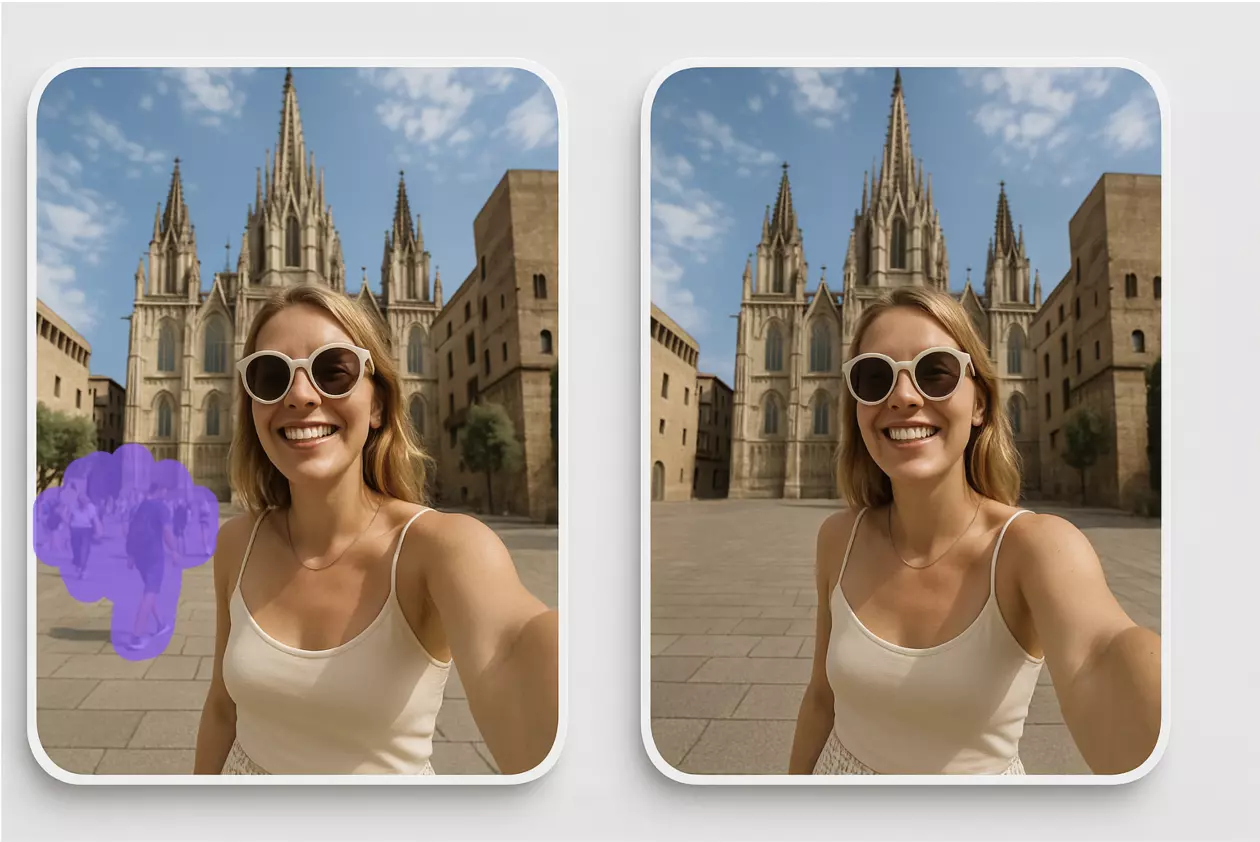
(Reference image suggestion: “Side-by-side in Pixflux.AI: original town square photo vs. after background removal and watermark removal with a new sky added.”)
Ethical and authenticity guidelines for AI‑augmented destination images
- Show what a traveler can reasonably experience. Enhancing a flat sky or removing a crane is fine; inventing landmarks is not.
- Label composites in press kits or B2B handoffs if they materially change the scene, especially for OTAs and editorial partners.
- Rights and watermarks: Only edit imagery you own or are licensed to use. Removing watermarks is allowed only when you hold the rights; do not use watermark removal to infringe copyright or bypass platform rules.
How to add background to travel photos without breaking believability
- Match light direction: If the subject’s key light hits from camera left, the added background should suggest the same source.
- Keep depth of field consistent: If your portrait is shot wide open, add a subtle blur to the new background to match bokeh.
- Maintain micro‑grain and compression: Add a light film grain or the same export settings across frames so they feel like one shoot.
- Align the horizon and vanishing lines: Use guides to keep lines true, especially for beach and mountain scenes.
- Blend edges carefully: Feather hair, tree branches, and fine details; avoid halos around subjects on high‑contrast edges.
Using Pixflux.AI to add or change backgrounds for hidden towns and retreats
When you need to change a sky, swap a cluttered street, or localize a wellness portrait fast, Pixflux.AI keeps the workflow simple. Here’s a straightforward way to change photo background online while keeping the subject authentic:
- Open Pixflux.AI and upload your travel photo
- Start with the cleanest shot you have—sharp subject, simple composition.
- Pick the background action that fits your need
- Remove a busy background to isolate the subject, or choose background replace/generate to audition local textures (e.g., misty pines, sandstone cliffs, or a moody coastal sky).
- Let the AI process the image
- In seconds, you’ll see a preview with the new background applied.
- Fine‑tune for realism
- Adjust brightness, contrast, and color temperature to match the original light. Apply subtle blur or grain to harmonize depth and texture.
- Download your final image
- Export high‑resolution for web or social, and keep a consistent file naming convention for campaign sets.
Tip: Use Pixflux.AI earlier in the pipeline to clean the shot—remove stray power lines, passersby, or signage you don’t have permission to display—before you add background. You can also lightly enhance clarity and contrast so mobile previews pop without looking over‑edited.
(Reference image suggestion: “Lighting-matched example: a wellness retreat portrait with shadows and color temperature aligned to an added mountain backdrop.”)
Workflow: remove distractions, enhance, then add AI backgrounds
A fast, repeatable sequence for travel teams:
- Clean distractions: Remove bystanders, trash bins, overhead cables, or temporary construction.
- Rights check: If any existing watermark is present on licensed content you own, remove it for a clean canvas; skip if you do not hold the rights.
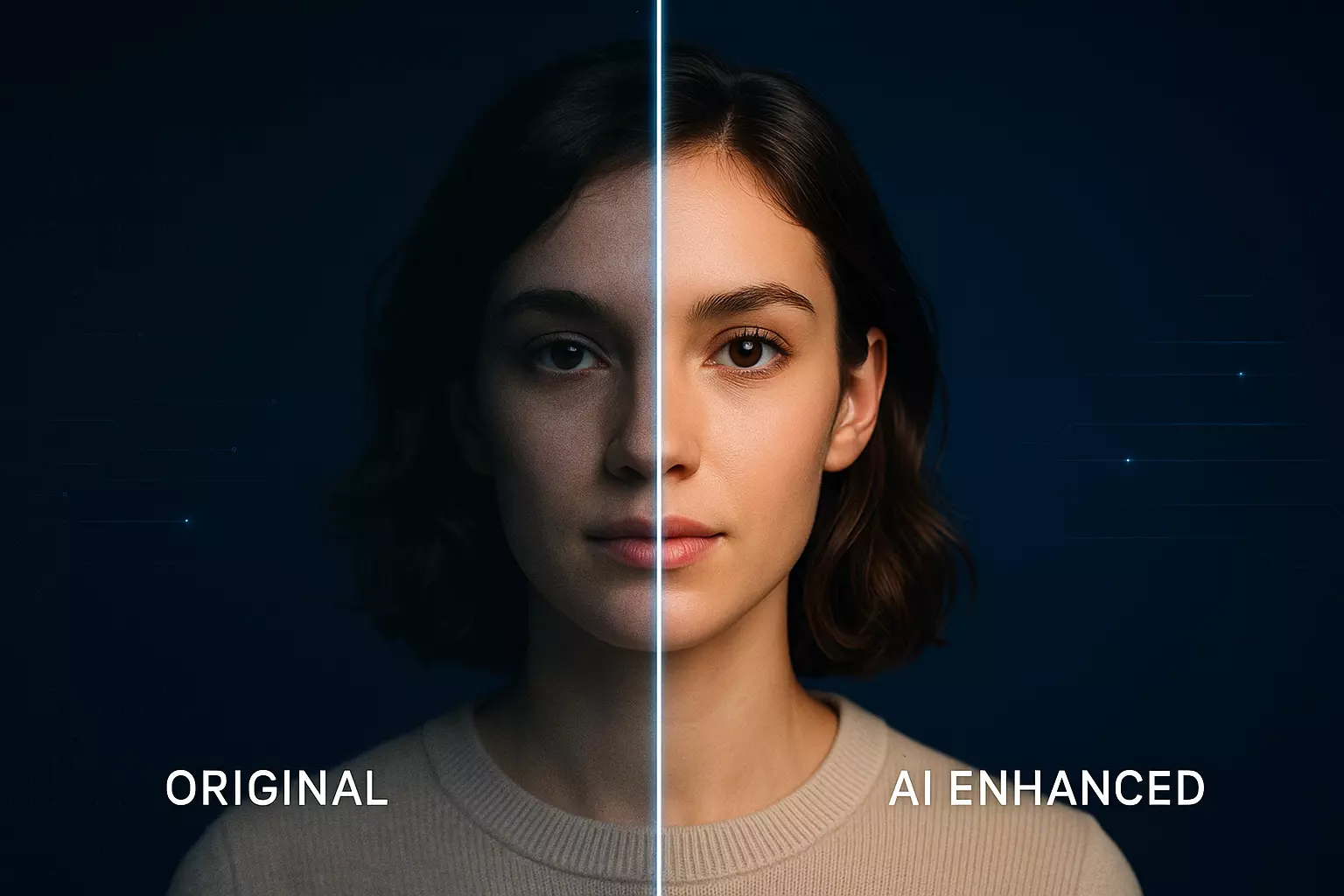
- Enhance the base: Apply gentle clarity, contrast, and color correction so the subject guides the background choice.
- Add or replace background: Choose looks tied to the destination’s season and palette; test a few options for tone.
- Finalize and export: Add light grain if needed, confirm horizon alignment, and export platform‑specific sizes.
This order protects believability and speeds approval: stakeholders can sign off on a “clean base,” then choose the background variant that matches the brief.
Style consistency: on‑brand palettes, grain, and lighting
- Palettes: Define a cool, neutral, or warm baseline for the season and stick to it across the set. Cohesion beats perfection in single images.
- Grain: Add a consistent micro‑grain across all edits so composites feel shot on the same day.
- Light: Standardize the “golden hour” intensity you allow in wellness travel photos. A subtle warm shift often reads aspirational without feeling staged.
- Skin tones: When portraits are involved, prioritize accurate skin tones; adjust backgrounds to them, not the other way around.
Batch processing campaign assets with Pixflux.AI for multi‑channel use
Regional pushes rarely ship with one hero image. You might need 40+ assets for Instagram carousels, TikTok covers, YouTube Shorts thumbnails, Pinterest pins, and OTA listings. Batch processing in Pixflux.AI lets you upload multiple photos, apply similar background changes and clean‑ups, and download consistent outputs in one go.
- Prepare a naming scheme per market and channel: e.g., US‑PNW‑Fall‑Spa‑001.
- Establish platform targets: 1080 × 1350 (IG portrait), 1080 × 1920 (TikTok/Reels), 1200 × 628 (link previews).
- Keep variants small: 2–3 background options per scene is plenty for A/B testing without overwhelming the team.
Case studies: beach, mountain, and thermal spa
- Hidden beach town: The original sky was flat; the boardwalk felt empty. After removing stray signage and enhancing the deck’s wood texture, a soft coastal sky with distant gull silhouettes was added. The result reads like “late afternoon by the sea,” ideal for IG ads targeting weekend getaways.
- Mountain wellness retreat: A portrait outside the lodge had patchy snow and dull pines. Replacing the background with low‑contrast, mist‑covered evergreens and slight backlight warmth aligned with the brand’s calm aesthetic, boosting CTR in Pinterest pins.
- Thermal spa in a lesser‑known town: Steam vents looked impressive in person but vanished in the camera. Cleaning the frame, then adding a muted, stone‑walled backdrop and faint steam layers implied warmth and mineral texture, improving homepage hero performance.
Troubleshooting and quality checks before publishing
- Edges and flyaway hair: Zoom to 200% and look for halos, jagged strands, or unnatural blur.
- Shadow logic: Make sure shadows are falling in the same direction, with believable softness.
- Scale cues: Background elements (windows, rocks, waves) should not dwarf or miniaturize the subject.
- Color banding: Smooth gradients in skies to avoid stripes on mobile displays.
- Accessibility: Add alt text that describes the locale and activity; keep filenames descriptive.
- Ethical review: Double‑check that edits do not misrepresent the destination or imply unavailable experiences.
AI online tools vs traditional methods
- Time cost: Online AI tools like Pixflux.AI can clean and localize dozens of images in an hour; manual masking and compositing in traditional software can take that long for a handful.
- Learning curve: You don’t need expert‑level retouching skills. The workflow is guided and preview‑based.
- Batch efficiency: Applying consistent edits across a set is simpler than juggling complex actions or outsourcing briefs back and forth.
- Consistency: Shared presets and repeatable steps help multi‑market teams match looks across platforms.
- Budget flexibility: Save your high‑touch agency or in‑house expert time for hero assets; use AI tools to scale the rest.
FAQ: add background, licensing, and workflow questions answered
What does “add background” mean in travel marketing?
It means replacing or augmenting non‑essential background areas to improve clarity and mood without changing the subject or misrepresenting the place. In practice, you might swap a dull sky, remove temporary construction, or add region‑appropriate textures like pines or dunes. The goal is to support the story your photo already tells, not invent a different destination.
Will AI‑added backgrounds make my photos look fake?
Not if you match light, color, depth, and texture to the original shot. Keep light direction consistent, apply subtle blur to match depth of field, and add micro‑grain so composites share the same “camera feel.” Avoid over‑perfect skies and background elements that don’t exist locally.
Can I batch process wellness travel photos for multiple channels?
Yes, batch processing is ideal for campaign sets across IG, TikTok, and OTAs. Prepare a naming convention, define platform sizes, and apply consistent background and enhancement settings to groups of images. This keeps looks aligned and shortens approvals.
Is removing a watermark allowed?
Only if you own the rights or have explicit permission to use and edit the image. Watermark removal is a convenience for legitimate workflows (licensed stock, owned archives, creator handoffs). Do not remove watermarks to infringe copyright or bypass platform requirements.
Are AI‑enhanced photos acceptable on OTAs and social platforms?
Generally yes, provided they remain truthful and do not misrepresent the destination or services. Most platforms prioritize authenticity. Disclose composites in B2B contexts if the background materially changes the scene, and follow each platform’s content policies.
How do I keep edits authentic for lesser‑known towns?
Use local color cues, textures, and seasonality; avoid landmarks you can’t guarantee. Keep your subject and key features accurate, and limit changes to clutter removal, sky replacement, or subtle environmental additions that could plausibly be seen by visitors.
What export settings work best for mobile‑first wellness content?
Export at platform‑native sizes with balanced compression and light grain. For example, 1080 × 1350 for Instagram portrait and 1080 × 1920 for TikTok; use slightly higher quality for ad placements and keep consistent color profiles (sRGB).
Does this workflow support portraits at retreats and spas?
Yes, but prioritize skin tones and lighting continuity. Make backgrounds adapt to the portrait, not vice versa. Add gentle blur and warmth to keep faces natural and on‑brand.
How to get started in minutes
If you’re new to AI‑assisted editing, try a quick pass on a single image—clean distractions, test two local background options, and export for mobile preview. In most cases, that’s enough to validate whether the mood aligns with your brand and whether the scene reads as real to your audience.
- Start with a calm portrait or a simple landscape where the subject is clear.
- Favor subtlety: a believable sky or texture change often beats a dramatic overhaul.
- Build a small set of presets for fall, winter, and shoulder season looks to speed future campaigns.
Conclusion and next steps
Domestic youth and wellness travel is booming, but standing out requires fast, authentic visuals that honor local character. AI helps you scale responsibly: you can clean distractions, enhance clarity, and add background elements that reflect real seasonality and style—without reshooting or overspending. With a streamlined workflow in Pixflux.AI, you’ll move from “good photo in bad weather” to “on‑brand campaign asset” in minutes.
Ready to try it on your own image? Use Pixflux.AI to add AI background details that match your destination’s vibe, keep your story believable, and ship a complete set for social, ads, and landing pages today.