Enhance Image Like a Pro: How AI Fixes Low-Quality Photos in Seconds
Soft, noisy, or dim shots? See how AI can enhance image quality in seconds, when to auto vs tweak, plus Pixflux.AI tips and real before–after examples.
 Sierra CappelenDecember 2, 2025
Enhance Images Like a Pro: How AI Fixes Low‑Quality Photos in Seconds
Your photo looked fine on your phone, but on a laptop screen it’s soft, noisy, or simply too dim. Maybe the product label feels fuzzy. Maybe skin tones look gray after a night shoot. In 2025, audiences expect crisp and bright visuals everywhere—from Instagram Reels to Amazon listings—and platforms increasingly reward clarity.
The good news: modern AI can analyze your image in context, repair noise and blur, correct tone and color, and upscale details in seconds. Tools like Pixflux.AI offer a streamlined, browser-based workflow so you can use an AI photo enhancer without juggling plug-ins or steep learning curves.
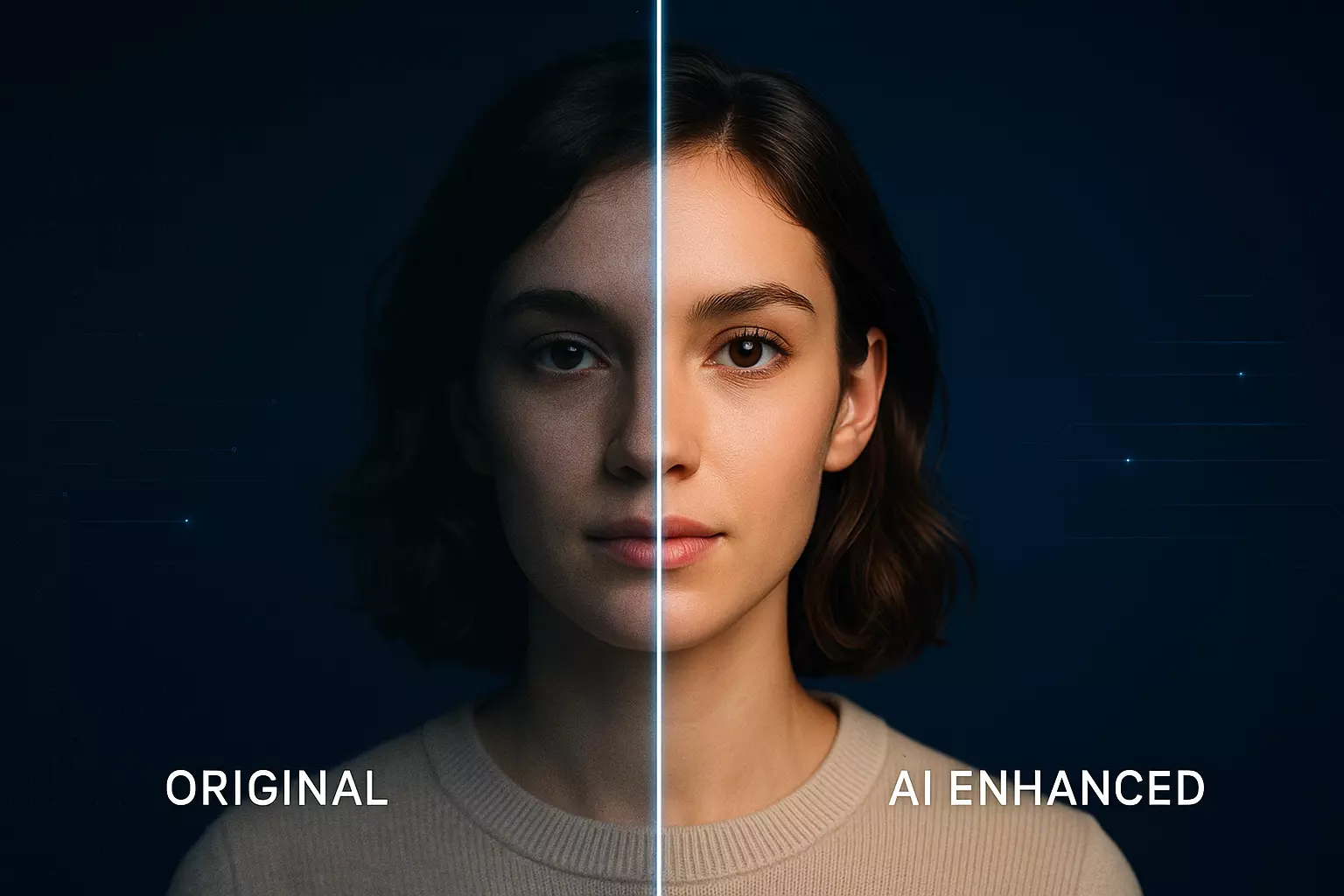
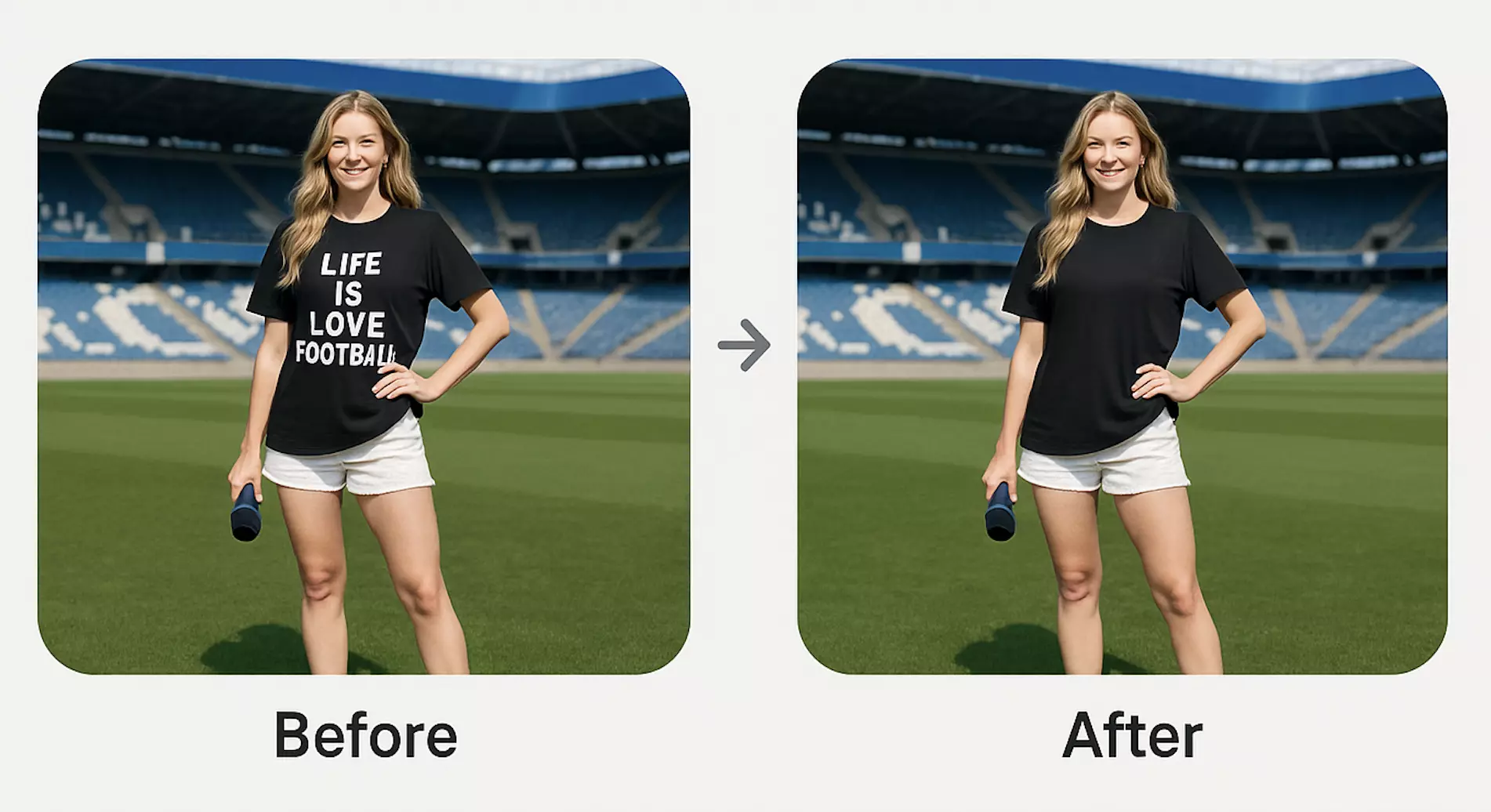
(See image idea: Before-and-after collage of a dim, noisy indoor portrait becoming brighter with reduced noise and sharper details. Captions note auto enhancement vs minor manual tweaks.)
What “enhance image” really means in 2025
Enhancement today goes beyond a generic “sharpen” slider. It’s a layered process that typically includes:
- Denoise and deblur: Separate real edges from grain and motion blur, restoring clean contours.
- Super-resolution upscaling: Rebuild fine textures (hair, fabric, product labels) at higher resolution.
- Tone and color correction: Fix exposure, contrast, and white balance; recover shadow and highlight detail.
- Local contrast and texture: Improve micro-contrast without haloing, keeping skin and smooth surfaces looking natural.
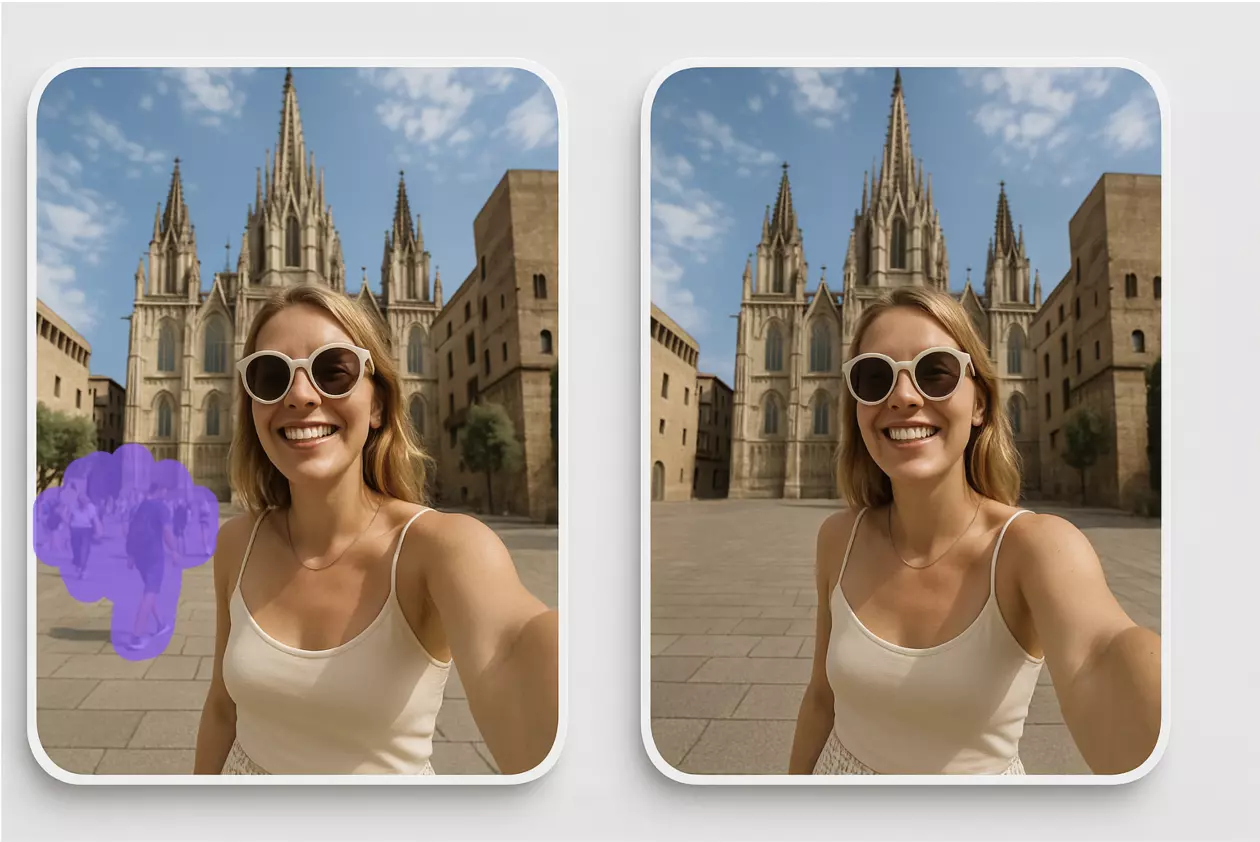
- Distraction cleanup: Remove small artifacts or intrusive objects; for ecommerce, this often includes a clean background.
The trend line is clear: on-device NPUs and cloud models make real-time fixes common, social platforms reward bright, crisp content, and ecommerce teams prioritize readable textures at thumbnail sizes. “Enhance image” is now a compact verb for a full corrective workflow—fast, consistent, and scalable.
How AI enhancement works (without the jargon)
Here’s the short version of what happens under the hood:
- The model predicts noise vs. signal. It reduces grain while protecting true edges, so the photo doesn’t look smudged.
- It estimates proper sharpness. Instead of naïve sharpening, it uses edge-aware methods to reconstruct believable detail.
- It balances exposure and color. AI evaluates faces, sky, product surfaces, and scene lighting to apply targeted tone curves and white balance.
- It upsamples. Super-resolution recovers texture lost to compression or low-res sensors, improving readability in small thumbnails.
Pixflux.AI packages these steps behind a simple flow, so you get professional-grade results without fiddling for hours.
Auto enhance vs. manual controls
Auto enhance is great for:
- Low-light phone shots that are noisy or flat
- Quick social posts where you need consistent brightness
- Batch product photos that require uniform clarity
Switch to manual tweaks when:
- Skin tones skew warm/cool and need a subtle white balance correction
- Textures (e.g., denim, wood grain) need slightly more or less micro-contrast
- You see artifacts like halos from over-sharpening
- The subject needs targeted exposure (e.g., lifting faces without blowing the background)
A good rule: start with auto, then nudge sharpness, noise, and tone by small increments. In many cases, one minute of targeted adjustments beats 20 minutes of trial and error.
Quick How-To: Fix a soft, noisy, or dim photo in three steps
Use Pixflux.AI’s photo enhancer to clean up most images in under a minute.
- Upload your original image
- Tip: Use the highest-resolution version you have.
- Let the AI process the photo
- Start with auto enhancement to denoise, sharpen, and correct tone in one go.
- Download the enhanced result
- If needed, make quick manual tweaks for skin tone, color cast, or micro-contrast, then export.
Want a faster start? Open Pixflux.AI and click to enhance image with a single pass, then fine-tune only if required.
(See image idea: Pixflux.AI interface showing upload → AI processing preview → download flow.)
Hands-on with Pixflux.AI: from upload to download in five steps
For tighter control, run this slightly expanded workflow:
- Open the Pixflux.AI photo enhancer.
- Upload your original file (preferably high-res).
- Choose “Auto Enhance” to denoise, deblur, and rebalance tone/color.
- Preview and micro-adjust:
- Reduce or increase sharpness as needed
- Tweak noise reduction for clean vs. textured look
- Adjust white balance to correct warm/cool casts
- Download the enhanced image for your use case (social, ecommerce, print).
Note: Pixflux.AI also helps when you need clean backgrounds for catalogs, need to remove a small distracting object, or want to clear a watermark from your own assets. For watermark removal, ensure you have rights to edit the image; do not use the tool to violate ownership or platform policies.
Case studies: everyday photos, social posts, and marketing visuals
- Everyday phone shot (indoor portrait)
- Before: ISO noise in shadows, slightly soft eyes, yellowish cast from indoor lighting.
- After: Noise suppressed, eye detail restored, balanced white balance with a touch more contrast. Auto did most of the work; manual tweak reduced sharpening by ~10% to keep skin natural.
- (See reference image note above for a visual pairing.)
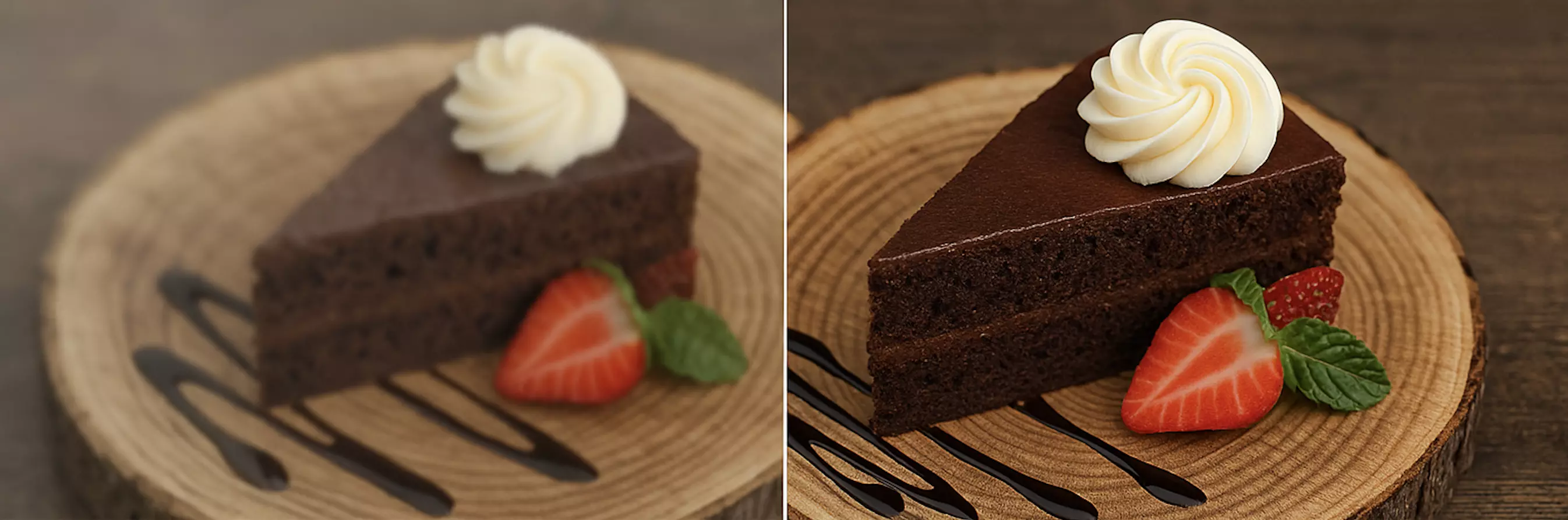
- Social content (food photo for Instagram)
- Before: Dull midtones, compression artifacts on plate edges, color cast under mixed lighting.
- After: Punchier midtones, clean edges, neutral whites. A small saturation bump makes ingredients pop without overshooting.
- Marketing visuals (product flat-lay for ecommerce)
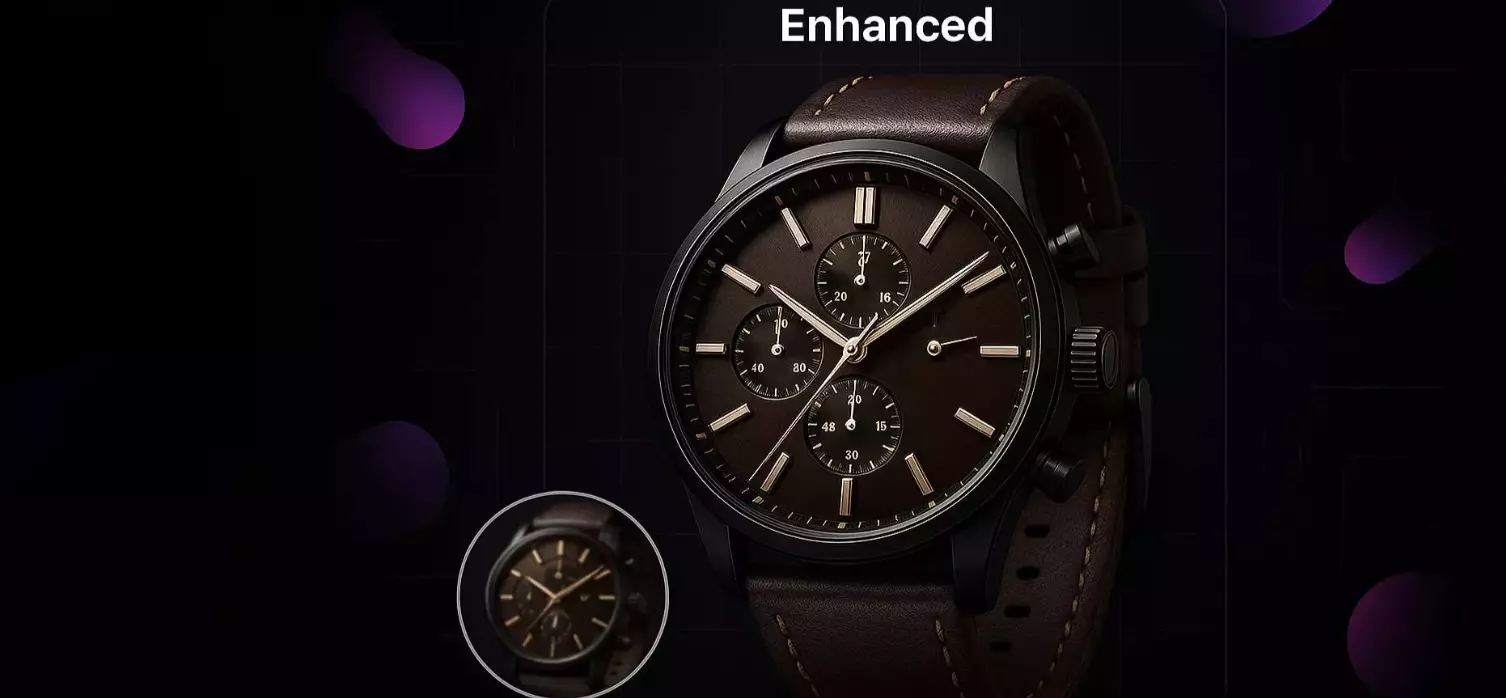
- Before: Slight blur on small text, subtle watermark overlapping the background, grayish whites.
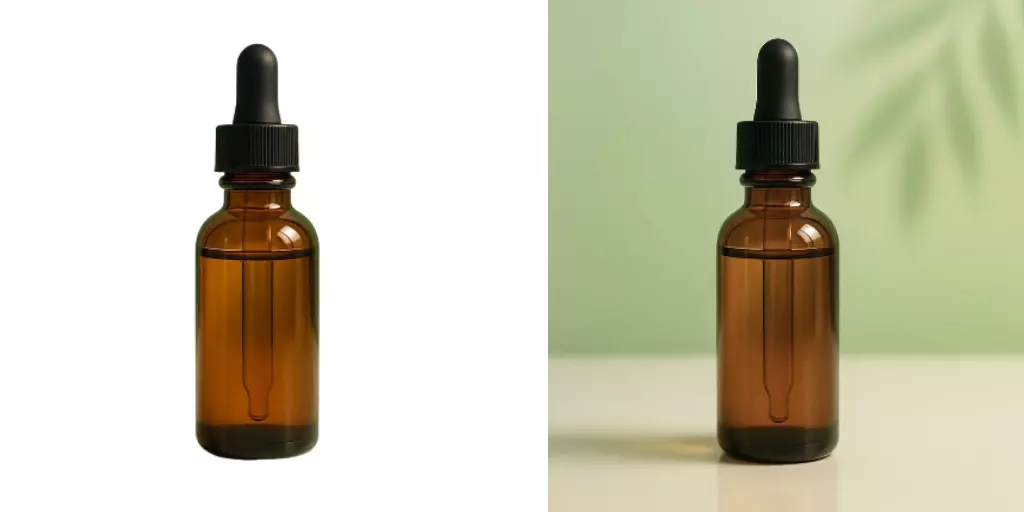
- After: Crisp label text after super-resolution, watermark removed from the background, bright neutral backdrop. This creates a catalog-ready image that reads perfectly in thumbnails.
- (See image idea: product photo comparison with watermark removal and clarity enhancement for a clean catalog look.)
Advanced tuning: detail recovery, color cast removal, and light shaping
When the auto pass gets you 90% there, consider these quick refinements:
- Detail recovery: If hair or fabric looks too smooth, dial back noise reduction by 5–15%. Reintroduce a touch of grain if needed for a natural look.
- Micro-contrast: Increase local contrast slightly to define edges without halos. If you see bright fringes around high-contrast lines, reduce sharpening strength.
- Color cast removal: Nudge white balance toward blue to counter indoor yellows or add slight magenta to offset green fluorescents.
- Light shaping: Lift shadows by 5–10% to reveal texture without flattening contrast. For faces, a small midtone boost often improves perceived brightness.
Batch processing for campaigns and social calendars
Consistency is everything across a campaign. With Pixflux.AI, you can:
- Upload a set of product photos and apply the same enhancement settings for uniform clarity.
- Run a week of Reels covers through one preset so thumbnails stay bright and on-brand.
- Standardize exposure and contrast across UGC that varies wildly in quality.
Batch enhancement reduces repetitive work and makes cross-platform assets (Instagram, TikTok, Amazon, Etsy) feel like a coherent set.
Troubleshooting: halos, oversharpening, banding, and plastic skin
Even the best models can be pushed too far. If you notice:
- Halos around edges: Reduce sharpening or micro-contrast; consider a small noise reduction increase.
- Oversharpening or “crunchy” textures: Back off detail sliders by 10–20% and add a subtle denoise pass.
- Banding in gradients (skies, backdrops): Export at higher quality or switch to a lossless format; avoid aggressive contrast on smooth areas.
- Plastic skin: Lower noise reduction on faces, then add a tiny bit of texture to restore realism.
Aim for “clean but natural.” The best enhancements are the ones no one notices.
Quality checks and export settings
Lock in your final output with these quick checks:
- Resolution: For ecommerce thumbnails and hero images, consider super-resolution if text or micro-details are critical.
- Format:
- Social: JPEG or WebP at ~80–90% quality; sRGB color profile is safest across platforms.
- Ecommerce: PNG for transparency, JPEG/WebP for photos with no alpha; keep sRGB unless you control the full color pipeline.
- Print: Use higher resolution and minimal compression; confirm color settings with your print provider.
- Compression: If gradients band, raise quality or export as PNG/WebP with higher settings.
- Color management: Stick to sRGB for predictable rendering on most devices. If your team works in display P3, convert to sRGB for final web delivery.
AI online tools vs. traditional methods
When you weigh Pixflux.AI against desktop software or outsourcing, three differences stand out:
- Time cost: AI enhancement usually lands a great baseline in seconds. Manual retouching can take 10–30 minutes per image—even longer for noise and color fixes.
- Learning curve: You don’t need pro-level masking, layer stacks, or plug-ins to get clean results. Pixflux.AI keeps the workflow simple.
- Batch efficiency: Turning around 50 product photos is realistic in a single sitting with batch settings. Doing that by hand invites inconsistency and fatigue.
- Team adaptability: A lightweight, browser-based flow makes it easy for marketers, creators, and coordinators to produce consistent visuals without deep design experience.
For specialized composites or complex retouching, advanced desktop tools still have a place. But for everyday “enhance image” needs—denoise, sharpen, tone/color, upscaling—Pixflux.AI is faster, more repeatable, and easier to standardize.
Compliance and ethics: watermark remover and retouch boundaries
Use watermark removal responsibly. Only remove watermarks, logos, or marks on assets you own or have permission to edit. Do not use watermark removal to evade licensing or platform rules. Similarly, keep retouching truthful for products—clarify, de-noise, and correct color without misrepresenting features.
Why Pixflux.AI stands out for everyday creators and teams
Beyond enhancement, Pixflux.AI can also clean backgrounds for ecommerce listings, remove small distracting objects from a scene, and run batch processes to standardize a campaign—all within a simple three-step flow. For creators and marketers, that means fewer tools to juggle and more time to ship content.
Recap: the fast path to reliable quality
- Start with auto, then tweak lightly for skin, texture, and color casts.
- Keep export settings aligned with your platform—sRGB and sensible compression.
- Batch process for consistency across campaigns and posting calendars.
- Use watermark removal only on authorized assets.
When you need speed and consistency, Pixflux.AI delivers pro-grade clarity without the friction.
Get started in seconds
Ready to upgrade your next post or product set? Open Pixflux.AI and use the enhance image workflow to clean noise, sharpen detail, and balance tone—fast.
Want a simple way to improve low-quality photos for social, ecommerce, or print? Try Pixflux.AI today and turn “almost good” into “publication ready” in minutes.