Turn Blurry Frames into Shareable Posts Enhance Blurry Photos with AI
Got motion blur? Use AI to rescue detail without plastic skin, then export crisp posts, thumbnails, and hero images fast in Pixflux.AI.
 Emily CremerJanuary 10, 2026
Turn Blurry Frames into Shareable Posts: Enhance Blurry Photos with AI
You finally nailed the moment—a mountain biker mid‑air, a singer under spotlights, a kid sprinting at a birthday party—only to find the frame is soft and smeared on closer look. On mobile, that softness gets worse. In 2026, crisp, mobile‑first visuals rule feeds, and small thumbnails reward clean edges and readable detail. The good news: today’s AI photo enhancers can salvage more motion‑heavy shots than old-school sharpening ever could.
Instead of giving up on your favorite frames, you can restore perceptual sharpness, reduce noise, and even upscale for social and hero placements. Tools like Pixflux.AI make this a three‑to‑five‑minute task—start with an enhance blurry photo workflow and you’ll be posting instead of reshooting.
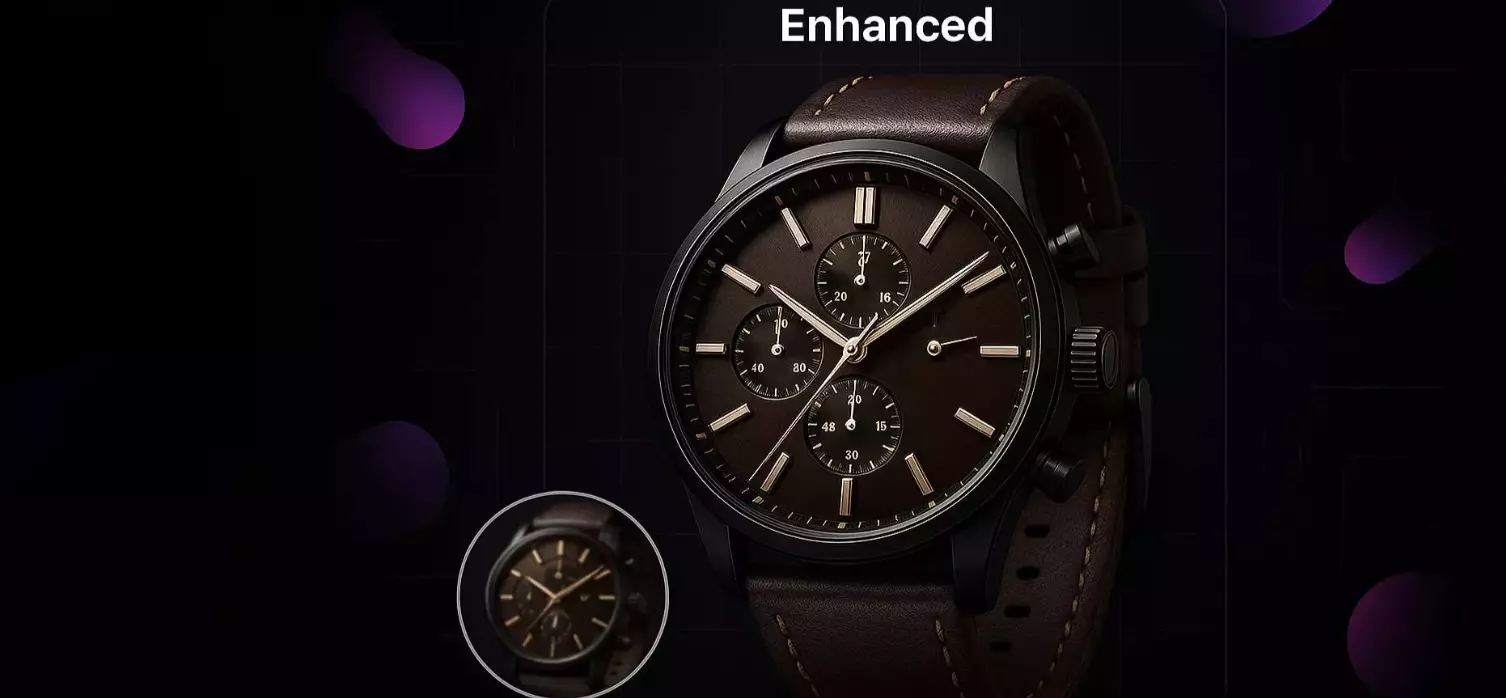
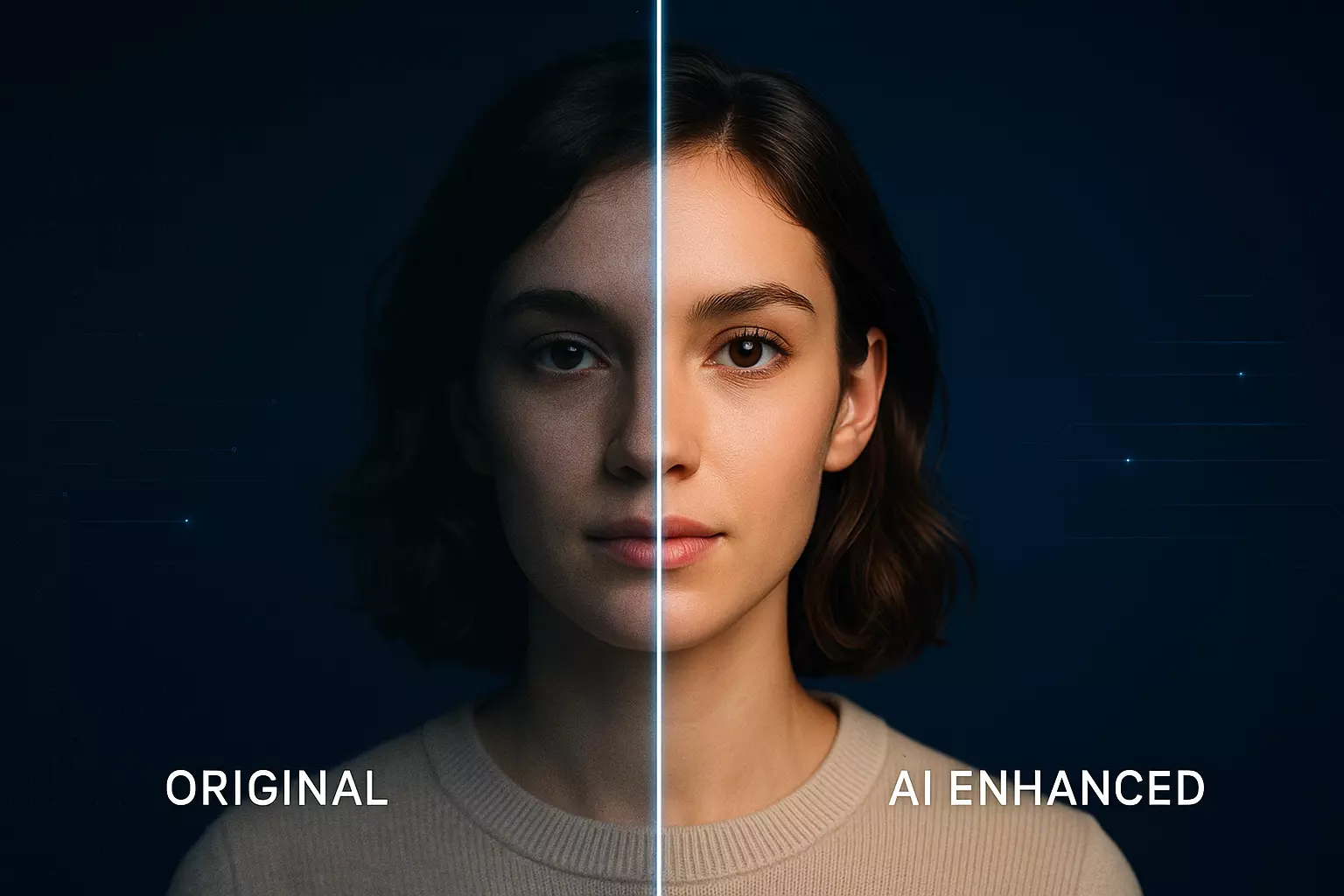
(See image: Side‑by‑side before/after of a motion‑blurred street photo restored with AI deblurring and enhancement)
Why motion blur ruins detail—and how AI restores it
When a subject or camera moves during exposure, pixels blend along the direction of motion. This smear destroys high‑frequency detail (eyelashes, fabric weave, typography edges) and raises low‑frequency mush. Traditional unsharp masking boosts contrast at edges but can’t invent missing detail and often amplifies noise and halos.
Modern AI deblurring, denoising, and super‑resolution models are trained on vast pairs of sharp/blurry images. They learn motion patterns and textures, then reconstruct “perceptual detail” that looks natural at normal viewing sizes. While AI can’t truly resurrect photons never captured, it can produce results that read as crisp in feeds, thumbnails, and hero banners—exactly where it matters for engagement.
Key concepts to get the best results
- Sharpness vs. noise: More aggressive deblurring exposes noise; pair deblur with measured denoise so texture remains believable.
- Artifacts: Overprocessing can create halos, ringing around edges, or waxy skin; always check at 100% zoom.
- Perceptual quality: Aim for realistic texture and accurate edges, not maximum crispness; “looks right” beats “looks processed.”
- Upscaling: Modest upscales (1.5–2×) can improve apparent detail in small displays; avoid extreme upscales unless essential.
- Color integrity: Strong deblur/denoise can shift hues; finalize with a quick color check in sRGB.
Choosing an AI photo enhancer vs. manual sharpening tools
Manual methods (Unsharp Mask, High Pass, Deconvolution) demand time and expertise, and they struggle with complex motion like diagonal swipes or rotational blur. An AI photo enhancer evaluates global and local context—faces, fabrics, hair, typography—and applies tuned corrections per region.
Pixflux.AI, for example, combines AI deblurring, denoising, and upscaling in one pass with sensible defaults. You spend less time nudging sliders and more time publishing. If you prefer control, you can fine‑tune strength to avoid artifacts, then export directly to social‑ready formats.
A clean, repeatable workflow to enhance blurry photos
Keep your pipeline simple to avoid overprocessing:
- Start with the highest‑resolution original (RAW → export to high‑quality JPEG/PNG or TIFF).
- Run AI deblurring first; preview faces and key edges at 100%.
- Apply denoise if grain pops out; keep skin texture intact.
- Upscale only as needed to meet your output size.
- Export for the destination (social, thumbnail, hero) with sRGB and balanced compression.
Hands‑on: Enhance blurry photos in Pixflux.AI
Follow this five‑step flow to go from soft to shareable in minutes:
- Open the Pixflux.AI tool page. Load the editor in your browser—no heavy software or plugins required. (See image: Pixflux.AI interface showing Upload → AI processing → Download three‑step flow for a sample image)
- Upload your original image. Prefer the largest, least‑compressed file you have for best recovery.
- Choose the AI enhancer and run the process. Select the AI enhancer for blurry images to deblur, denoise, and optionally upscale in one pass.
- Preview and fine‑tune. Check eyes, text edges, and textured fabrics; nudge deblur strength or denoise to keep details natural.
- Download the enhanced result. Save in your target format and proceed to export recipes below.
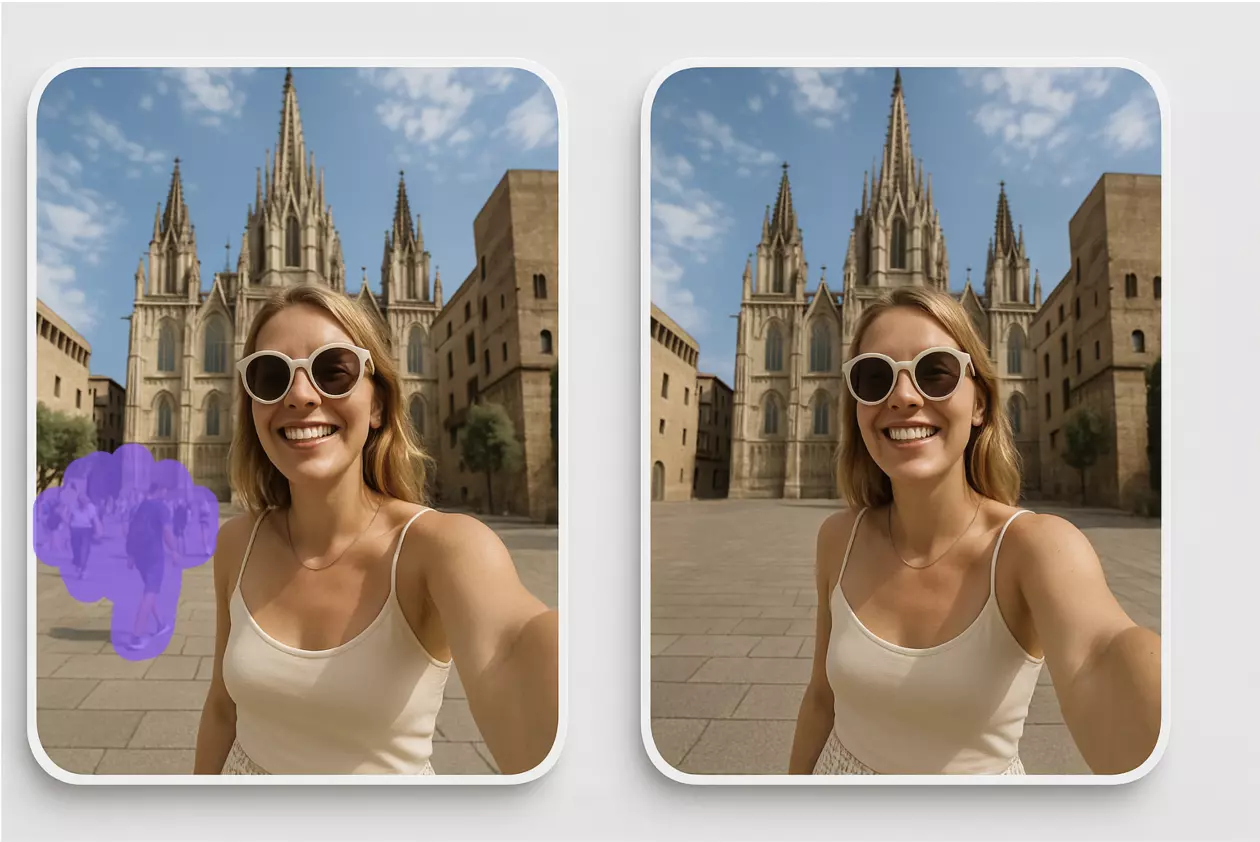
Tip: If your shot also needs cleanup for social—like removing a stray object or smoothing a chaotic background—Pixflux.AI can help you remove distractions or adjust backgrounds after you’ve restored sharpness. Keep edits subtle so the image still feels authentic.
Motion-heavy settings that keep results natural
- Deblur strength:
- Moderate motion (handheld portraits, mild subject movement): 35–55%
- Heavy action (sports, quick pans): 55–75%
- Test in small increments; if halos appear along high‑contrast edges, step down.
- Denoise level:
- ISO 800–1600: Low to medium
- ISO 3200+: Medium to high, but watch for “plastic” skin; lower if pores vanish.
- Upscaling:
- Social feeds: 1.5× is often enough for crisp thumbs and carousels
- Thumbnails or hero banners: 2× for added clarity; avoid >2× unless necessary
- Face priority: Enable when available; it balances sharpness and skin texture to avoid the “waxy” look.
- Color preservation: Keep sRGB; if colors shift, dial back denoise or run a quick levels/white balance pass after export.
Case studies: Action sports, low‑light concerts, and panning
- Action sports A downhill rider shot at 1/120 sec shows streaking on the jersey text and tire treads. With AI deblur at ~65% and denoise medium, text becomes legible and tire edges regain definition. A 2× upscale turns it into a clean website hero without jaggies. (See image: Side‑by‑side before/after showing jersey text and tread restored)
- Low‑light concerts A singer under blue LED lighting is soft with visible ISO grain. Deblur at ~45% plus careful denoise makes eyes and mic grille crisp while preserving stage atmosphere. Slight color check restores skin tone under colored lights.
- Panning shot A car panned at 1/30 sec has intentional background streaks but a soft logo on the door. Targeted deblur (~50%) recovers logo edges while leaving background motion lines intact, maintaining the sense of speed.
Export recipes for social posts, thumbnails, and hero images
Aim for formats and sizes that fit platforms while keeping file sizes lean:
- Instagram feed and carousel
- Size: 1080 × 1350 (portrait) or 1080 × 1080 (square)
- Format: JPEG or WebP, Quality 80–85
- Color: sRGB
- Notes: Keep edge detail clean for mobile zoom; avoid over‑contrasty sharpening that causes halos in feed compression.
- TikTok and Reels cover frames
- Size: 1080 × 1920
- Format: JPEG or WebP, Quality 80
- Notes: Make text overlays sharp and high‑contrast; check legibility at thumbnail size.
- YouTube thumbnail
- Size: 1280 × 720 (or 1920 × 1080 for future‑proofing)
- Format: JPEG at Quality ~85 or WebP
- Notes: Faces and typography must pop at small sizes; AI‑enhanced edges boost click‑through.
- Homepage hero
- Size: 1920–2560 px width (2× for high‑density displays if needed)
- Format: WebP for balance of quality/size; PNG only for graphics with flat colors
- Notes: Keep gradients smooth to avoid banding; test at full‑width on desktop and tablet.
If your image includes unwanted signage, stray cables, or passersby, clean them up after deblurring. And if you plan to remove a watermark or logo, do so only when you own the rights or have documented permission. Don’t use watermark removal to infringe on others’ copyright or bypass platform policies.
Troubleshooting common issues
- Halos around edges Cause: Deblur too strong or combined with high local contrast. Fix: Reduce deblur strength, slightly lower contrast or clarity, and recheck at 100% zoom.
- Waxy skin Cause: Over‑denoising or face smoothing. Fix: Decrease denoise level; prioritize skin texture retention; consider a subtle grain re‑add to restore natural look.
- Jittery or double edges Cause: Mixed motion directions or partial camera shake. Fix: Try a slightly lower deblur and add a modest upscale (1.5×) to improve the perceived edge without exaggerating artifacts.
- Banding in gradients Cause: Heavy compression or aggressive edits in 8‑bit color. Fix: Export with higher quality, use WebP, and avoid extreme contrast moves after enhancement.
- Color shifts Cause: Strong denoise/deblur altering local contrast. Fix: Toggle color preservation; run a quick WB/tint correction; ensure final output is sRGB.
AI online tools vs. traditional methods
- Time cost
- AI online tools: One pass deblur + denoise + upscale in minutes, directly in the browser.
- Traditional software: Multiple filters and masks, test‑and‑tweak cycles per image.
- Learning curve
- AI: Sensible defaults; a couple sliders to tune.
- Manual: Understanding of spatial frequency, deconvolution, and halo control required.
- Batch efficiency
- AI: Batch upload and one‑click processing handle whole shoots; perfect for social calendars and product drops.
- Manual: Repeating steps across sets is slow and inconsistent.
- Cross‑team adaptability
- AI: Editors, marketers, and creators can use the same workflow presets and get predictable outputs without design‑tool expertise.
- Manual: Requires specialist hands for consistent results and QA time.
Pixflux.AI fits the “fast, consistent, batch‑friendly” category, letting teams turn a folder of soft shots into platform‑ready assets—without bottlenecking on expert retouchers.
FAQ: Enhancing blurry photos with AI
Can AI fully fix heavy motion blur?
AI can restore perceptual sharpness but cannot recover detail that was never captured. For deep smears across key features (e.g., eyes fully streaked), you can often make the image usable for social, but print‑level fidelity might still require a reshoot. Use moderate settings and preview at 100% to judge real‑world results.
Will AI enhancement introduce artifacts like halos or plastic skin?
It can if you push settings too far. Keep deblur and denoise balanced, and use face‑aware options when available to protect texture. Always check edges with high contrast (signage, hair against sky) and skin areas at 100% zoom before exporting.
What’s the difference between motion blur and out‑of‑focus blur—and does it matter?
Yes—motion blur smears detail along a direction; focus blur softens uniformly. AI deblurring targets directional smears, while super‑resolution and edge‑aware sharpening help with soft focus. Identify the issue by zooming in: directional streaks suggest motion; uniform softness suggests focus. Adjust your approach accordingly.
Can I batch‑process a full shoot to save time?
Yes, batch processing is ideal for consistent results across sets. Group similar images (lighting, motion level) and apply the same settings to maintain a uniform look. Pixflux.AI supports batch uploads and multi‑image processing so you can prep an entire drop quickly.
Are there legal or ethical issues with removing watermarks or logos?
Only remove watermarks from content you own or have explicit permission to edit. Watermark removal should not be used to infringe copyright, mislead viewers, or bypass platform rules. Keep a record of permissions when working on client assets.
What export settings work best for social media and thumbnails?
Use sRGB color, optimized sizes, and balanced compression. For feeds, 1080‑wide JPEG/WebP at 80–85 quality looks crisp; for YouTube thumbnails, 1280 × 720 or 1920 × 1080 with clean edges improves CTR. For heroes, consider WebP at larger widths (1920–2560 px) to keep gradients smooth and file sizes efficient.
Ethics and limits: when to reshoot and how to disclose
AI enhancement should preserve the truth of a moment, not fabricate a different event. If critical details are unrecoverable—like a player’s number or a license plate in motion—plan a reshoot or capture alternative angles. For journalism, documentary, or product accuracy, disclose any significant enhancements that could alter interpretation. And for watermark or logo removal, act only within your rights or client permissions.
Conclusion and next steps
In a feed where sharp details drive clicks and trust, AI deblurring gives you a second chance at moments you can’t recreate. With Pixflux.AI, you can restore clarity, tame noise, and export platform‑ready assets in minutes—whether you’re polishing action shots, concert frames, or panned motion.
Try it on a handful of your near‑miss frames today. Start with the AI enhancer for blurry images to dial in a balanced look, then use the export recipes above to publish confidently. When you’re ready to push more content live, open Pixflux.AI again and sharpen motion‑blurred photos in batches so your social calendar never slips.
(See image: Export comparison board with Instagram post, YouTube thumbnail, and homepage hero variants of the same photo)