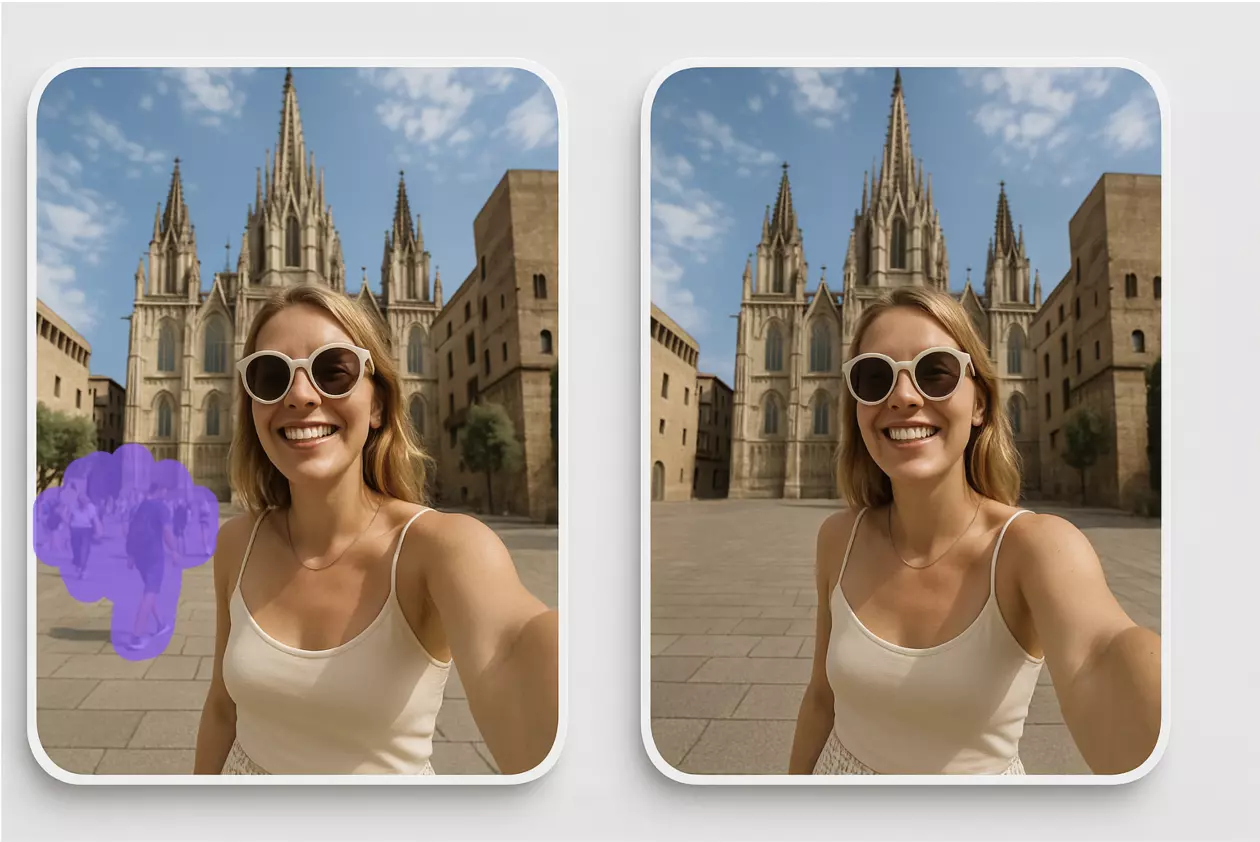
Top 5 Free Tools to Remove Text from Photos Online
Want to erase captions or watermarks in seconds? Compare the top free online tools, see what to expect, and try Pixflux.AI’s simple three-step cleanup.
 Richard SullivanNovember 12, 2025
Top 5 Free Tools to Remove Text from Photos Online
If you sell on Amazon or Etsy, manage social feeds, or refresh old archives, you’ve probably run into the same headache: a great image ruined by an overlaid date, bold caption, or stubborn watermark. You want a clean shot—fast—without opening a complicated desktop editor.
In 2025, browser-based inpainting rivals desktop tools for casual edits. That means you can handle most cleanup tasks—like removing a date stamp on a landscape or a promo caption on a product pack—in minutes. If your goal is to quickly remove text from photo with consistent quality, modern AI editors such as Pixflux.AI make the process simple and reliable.
Below, we’ll look at how text removal works, the criteria that matter when you compare free tools, and a side-by-side pick of five popular options. We’ll then walk through a quick How-To you can follow in any browser, plus a focused tutorial using Pixflux.AI.
What “remove text from photo” really means
“Remove text from photo” typically covers three situations:
- Overlays: promo banners, captions, or stickers added in a design app.
- Watermarks: logos or repeated text marks used to claim ownership.
- Date stamps or camera-generated text: those yellow corner stamps from older devices.
Each case requires reconstructing the pixels that should exist behind the text. That’s not just erasing; it’s filling in textures, shadows, and gradients so the edit looks natural.
Use cases by role:
- Ecommerce and marketplaces: remove date stamps, promo text, or old sale tags to comply with listing policies and improve conversion.
- Social media managers: clean up memes or UGC, standardize visuals across platforms.
- Photographers and archivists: restore older images for portfolios or reprints.
How text removal works: the tech in plain English
Most modern online editors rely on a blend of:
- Inpainting: The tool predicts what should replace the masked area, sampling from nearby pixels.
- Patch match: It finds and reuses similar textures to fill gaps, great for consistent surfaces like sky, grass, or fabric.
- Diffusion guidance: Generative models reconstruct complex detail (wood grain, hair, fabric weave) more convincingly than older methods.
Together, these techniques make it possible to remove text on both simple and complex backgrounds. The latest diffusion models excel at preserving texture continuity—avoiding smudges or repeated patterns that “give away” a retouch.
How to compare free online tools
Before you choose a tool, check:
- Output quality: Are edges clean? Do textures line up? Does the fill respect lighting and shadows?
- Limits: Free tiers often cap image count, output resolution, or daily credits.
- Speed: Time-to-result matters when you’re fixing dozens of product photos.
- Privacy: Look for short retention policies and on-page previews to minimize uploads. Many “privacy-first” editors keep edits ephemeral or allow quick purges.
- Convenience: Browser-based, no installs, light learning curve.
- Extra helpers: Background cleanup, object removal, or light enhancement can save time if you do more than text removal.
Top 5 free tools to remove text from photos online
Here’s a quick, no-link tour of popular choices in 2025. Try a couple on the same image to compare texture reconstruction and edge fidelity.
1) Pixflux.AI
- Strengths: Fast inpainting, watermark and text cleanup, plus handy extras like background removal/modification and object removal for stray items. Good for ecommerce batches and social content polish.
- Free-tier notes: Typically offers a straightforward trial path for single-image edits.
- Ideal for: “Remove text from photo” in three simple steps, with options to enhance or retouch afterward.
2) Cleanup.pictures
- Strengths: Simple brush-based inpainting; quick for casual edits.
- Free-tier notes: Resolution limits may apply.
- Ideal for: Small overlays on uncluttered backgrounds.
3) Adobe Express (remove background/inpaint features)
- Strengths: Polished UI, broad toolset for social creatives.
- Free-tier notes: Account requirements and limits vary.
- Ideal for: Occasional edits within a broader design workflow.
4) Fotor (object and text remover)
- Strengths: User-friendly controls, extra editing features.
- Free-tier notes: Watermarks or export limits can appear.
- Ideal for: Basic cleanup plus quick graphic touch-ups.
5) Inpaint (classic browser-based inpainting)
- Strengths: Longstanding tool with familiar brush masking.
- Free-tier notes: May limit output size or add constraints.
- Ideal for: Simple fills on uniform backgrounds.
Tip: For complex scenes (e.g., bold text over patterned fabric), test two tools. Diffusion-based fills often win on realism.
Step-by-step: remove text from a photo in any browser-based editor
Use this general workflow with almost any online inpainting tool:
- Open the editor and upload your image.
- Choose the “remove text,” “eraser,” or “object remover” tool.
- Brush over the text area. Slightly expand the selection so edges blend naturally.
- Run the AI fill or “clean” action.
- Inspect texture alignment. If you see repeating artifacts, undo and re-try with a slightly larger or smaller mask.
- Use refine/retouch tools to nudge edges, clone small details, or re-run the fill on sub-areas.
- Export your edited image at the highest allowed resolution.
Pro tip: Work from large to small. First remove the main text block, then fix tiny remnants like dots or shadows.
Using Pixflux.AI to remove watermarks or text: upload → AI process → download
Here’s the focused, three-step Pixflux.AI workflow for fast cleanup:
- Upload your original photo.
- Let the AI remove text, watermarks, or overlays. Preview and—if needed—lightly adjust the selection to cover the entire text area.
- Download the cleaned result.
If you prefer a bit more control, follow this five-step path: 1) Open the Pixflux.AI tool page. 2) Upload your image. 3) Pick the remover, then run the AI cleanup. 4) Preview and fine-tune: adjust mask size, re-run on tricky edges, and zoom in to check textures. 5) Download your final image.
Want to try it now? Use this quick link to remove text from image online and follow the three-step flow above.
Also handy inside Pixflux.AI:
- Remove extra objects that overlap the text area (like price tags or stickers).
- Clean backgrounds or replace them with something product-friendly if the original looks messy.
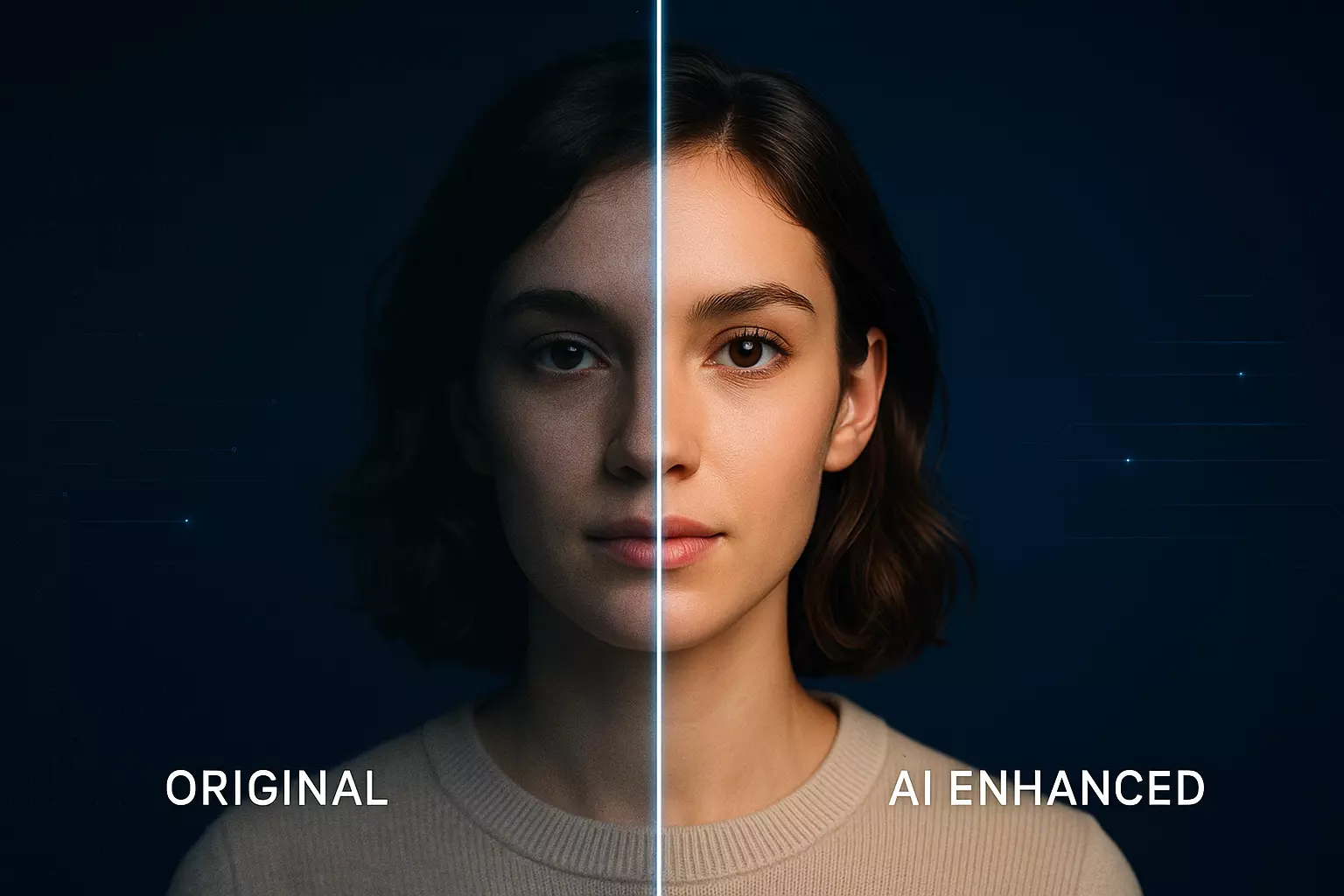
- Lightly enhance sharpness and contrast after cleanup so the result looks consistent with the rest of your catalog.
(See image: Pixflux.AI interface—upload → AI process → download, three-step workflow.)
Case studies: what to check in your results
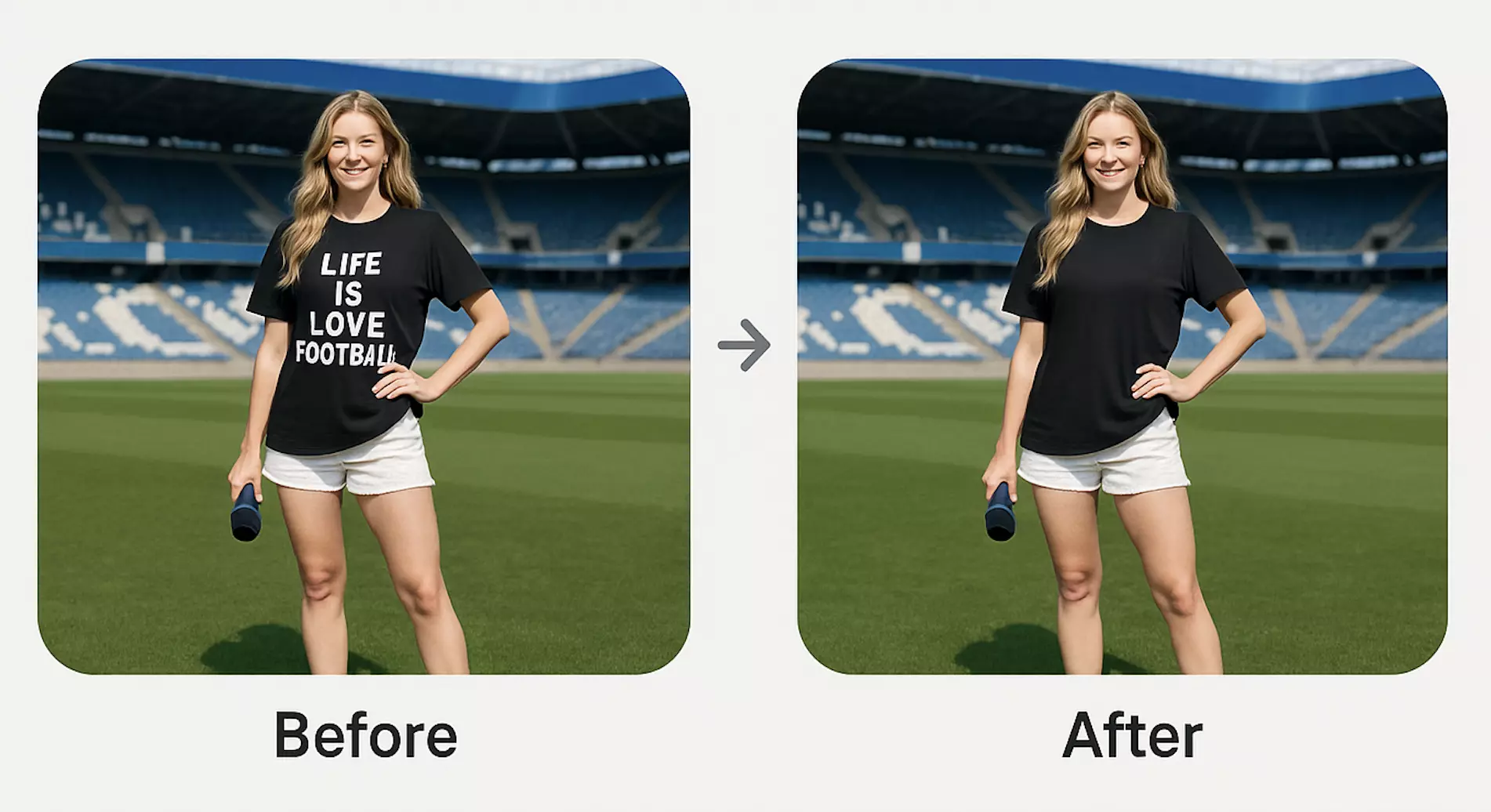
- Date stamp on a landscape: After removal, look for smooth sky gradients and continuous horizon lines. Banding or “echoes” of the text mean you should re-run with a wider mask. (See image: before-and-after date stamp removal on a landscape.)
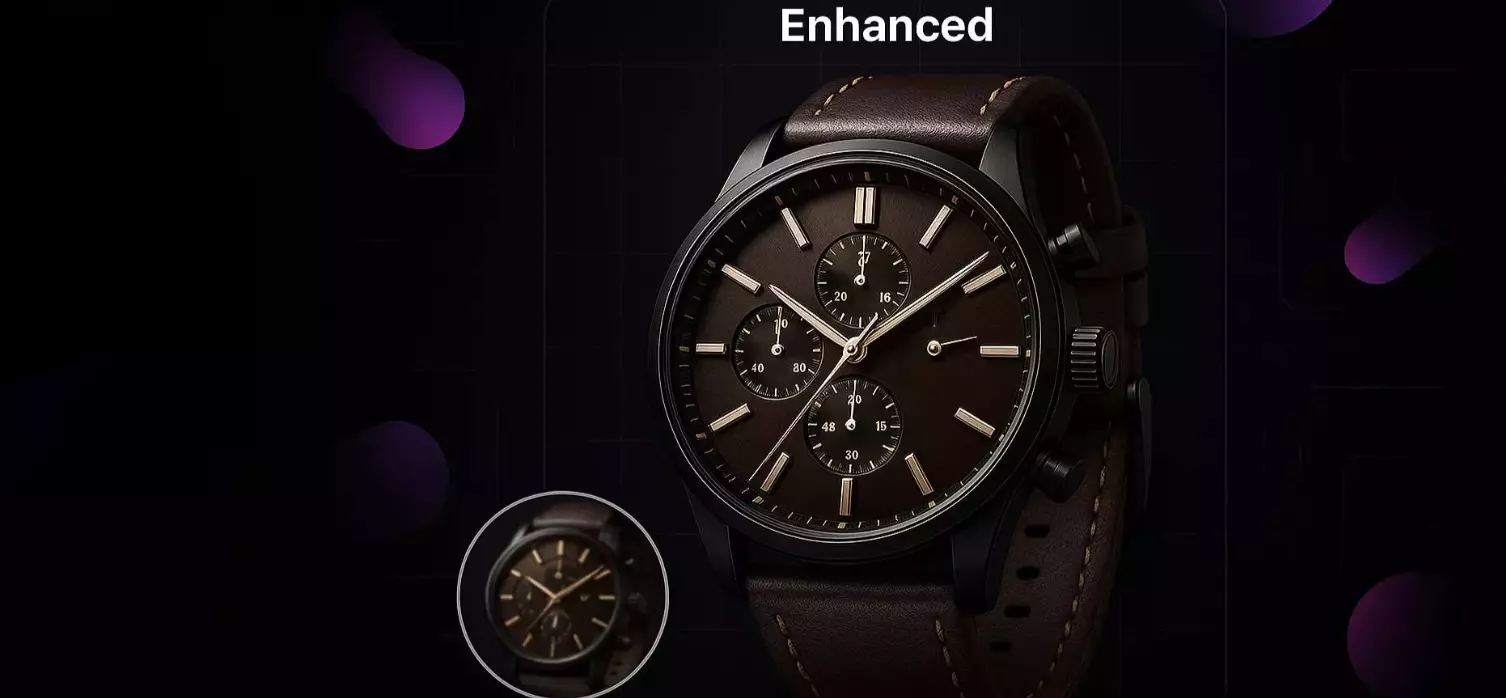
- Bold caption on a product shot: Inspect edges where text overlapped labels, seams, or fabric texture. The fill should preserve micro-detail without blurring typography or stitching. (See image: close-up crop checking texture continuity after erasing a bold caption.)
- Watermark across complex background: If the watermark ran over wood, metal, or hair, ensure the grain or strands look natural and non-repetitive. Try another pass with a different mask size if you see repeating tiles.
Troubleshooting artifacts
- Jagged edges: Increase feathering or slightly enlarge the selection so transitions are softer.
- Repeating patterns or “checkerboard” fills: Run a second pass with a different brush size; break the area into two or three smaller passes.
- Shadows or halos remain: Include the shadow in your mask so the AI rebuilds both the text and its shadowed region.
- Fonts imprinted into texture: On highly textured surfaces, try a smaller brush and multiple passes to rebuild fine detail.
- Color cast mismatch: After removal, nudge brightness/contrast or hue/saturation for that region to match surrounding tones.
Ethics and copyright: when removing text is allowed—and when it isn’t
- Only edit images you own or are fully authorized to modify.
- Removing watermarks from images you don’t have rights to is not permitted and may violate platform rules or copyright law.
- For client work, keep a record of licenses or permissions, and follow marketplace policies (e.g., Amazon, Etsy) on image manipulation.
Power tips: batch cleanup, backgrounds, and subtle enhancement
- Batch mindset: For a catalog refresh, group similar photos (same lighting and background) to speed through consistent edits. Pixflux.AI can process multiple images one after another and is especially useful when you’re cleaning both text and stray objects across a set.
- Background tuning: After text removal, you may notice the background could use a tidy-up. Pixflux.AI can remove or modify backgrounds, or generate a clean, on-brand setting for ecommerce and social.
- Gentle enhancement: A touch of sharpening and contrast helps integrate the filled area. Avoid heavy filters that call attention to the edit.
- Keep originals: Save a versioned backup so you can revert or make alternative crops later.
AI online tools vs. traditional methods
- Time cost: Online tools like Pixflux.AI provide near-instant fills. Manual cloning/healing in desktop software can be precise but slower, especially for complex textures.
- Learning curve: Browser-based editors favor simple brushes and one-click fills. Traditional software (e.g., pro desktop suites) offers deep control but requires more skill and setup.
- Batch efficiency: With online tools, you can run a series of images back-to-back without heavy project files. Outsourcing can work, but it introduces turnaround time, feedback loops, and minimum order constraints.
- Cross-team fit: A lightweight browser workflow is easy for marketers, sellers, and creators to adopt without training designers for every small fix.
Conclusion and next step
Removing unwanted text, watermarks, or date stamps no longer requires a big toolkit or a pro retoucher. With today’s browser-based inpainting—especially the latest diffusion-guided models—you can get clean, natural-looking results in minutes. For a fast, dependable workflow that also covers background cleanup, object removal, and gentle enhancement, Pixflux.AI is a practical choice for both one-offs and catalog work.
Ready to clean up your visuals today? Head over to erase text from photos and try the three-step Pixflux.AI process on your next image.