How to Improve a Blurry Product Photo: Quick Fixes Before You Re-Shoot
Soft product shots? Learn quick triage to sharpen, upscale to HD online, and know when to re-shoot—ideal for cross-border sellers on a deadline.
 Richard SullivanJanuary 26, 2026
How to Improve a Blurry Product Photo: Quick Fixes Before You Re‑Shoot
Soft, hazy product photos cost clicks, returns, and ad waste—especially when you sell across markets with different listing standards. Maybe your supplier shot at low light, or you rushed a new SKU with a handheld phone. Either way, the image isn’t crisp enough for zoom or ad placements, and your budget doesn’t love a re-shoot.
Before you book a studio, run a fast triage. Many mildly blurry images can be rescued in minutes by enhancing sharpness, cleaning backgrounds, and upscaling for marketplace zoom. If you’re wondering how to improve a blurry photo without learning heavy software, start with an online enhancer that’s purpose-built for e‑commerce. See a practical path here: how to improve a blurry photo.
Note: Keep your originals. Never overwrite edits. Work on duplicates so you can revert if an edit introduces artifacts.
Who needs this triage (and why now)
Cross-border sellers on Amazon, Walmart, Shopify, Etsy, TikTok Shop, and Mercado Libre are facing two converging trends:
- Marketplaces are raising image quality thresholds and zoom requirements in 2026.
- AI upscalers with deconvolution and diffusion-based enhancement are becoming standard in everyday workflows.
If your team spans US and ES markets, you’ve probably asked “como mejorar una foto borrosa” or “convertir imagen borrosa a HD online” more than once this quarter. This guide helps you decide what’s salvageable, what’s not, and the quickest path to a listing-ready image today.
Why product photos look blurry: the usual suspects
Blur doesn’t come from a single cause. Identify it correctly and you’ll pick the right fix:
- Focus errors: The camera focused on the background or the wrong plane. Edges look soft but not streaked.
- Motion blur: Subject or camera moved during exposure. Look for directional smearing or double edges.
- Noise and low light: ISO pushed too high; grain reduces edge definition and texture credibility.
- Compression: WhatsApp, email, or platform downloads re-compressed the file; details become blocky or mushy.
- Lens softness: Budget optics or shooting wide open (f/1.8–2.8) can soften corners.
Rapid diagnosis: 60 seconds to classify repairable vs hopeless
Here’s a quick, practical check:
- Zoom to 100% on the product’s sharpest edge (e.g., label text, stitching).
- Look for directionality. If you see consistent streaking in one direction longer than ~3–4 pixels, that’s motion blur and harder to fix cleanly.
- Check micro-contrast. If edges exist but are “flat,” mild deconvolution/sharpening often helps.
- Inspect noise. Heavy color speckling requires denoise first, then sharpening; otherwise you sharpen the noise.
- Assess compression. Blocky halos around edges mean the source is heavily compressed; upscaling may help, but avoid aggressive sharpening.
Green light: Mild soft focus, slight noise, modest compression. Yellow light: Moderate motion blur or heavy compression—salvageable for thumbnails or secondary images. Red light: Severe motion streaks, the subject is out of focus everywhere, or the file is extremely small (e.g., <600 px longest side). Plan a re-shoot.
Repair or re-shoot: thresholds that keep you efficient
Use this decision matrix:
- If the product’s critical text (e.g., size, brand) is readable at 100% zoom after gentle enhancement, proceed with a quick fix.
- If edge halos or double images persist after light sharpening and denoise, limit usage to small placements or re-shoot.
- If the longest side can upscale to your platform’s recommended size (e.g., 2000–3000 px) with clean edges, continue; if not, re-shoot or request the original file.
- If more than 30% of the photo’s area shows directional smearing, you’ll likely spend more time fixing than reshooting.
Remember, “listing-ready” differs by channel. Hero images for Amazon need clean zoom; Instagram reels can tolerate a bit more softness because motion masks minor issues.
Quick fixes that improve blur without fake-looking artifacts
Think “perceived sharpness,” not just “edge halos.”
- Denoise first, then sharpen: Reduces grain so sharpening targets real edges.
- Prefer deconvolution-style sharpening: It restores edge definition more naturally than high-radius sharpening.
- Boost local contrast subtly: Micro-contrast in textures (fabric, metal) increases perceived detail.
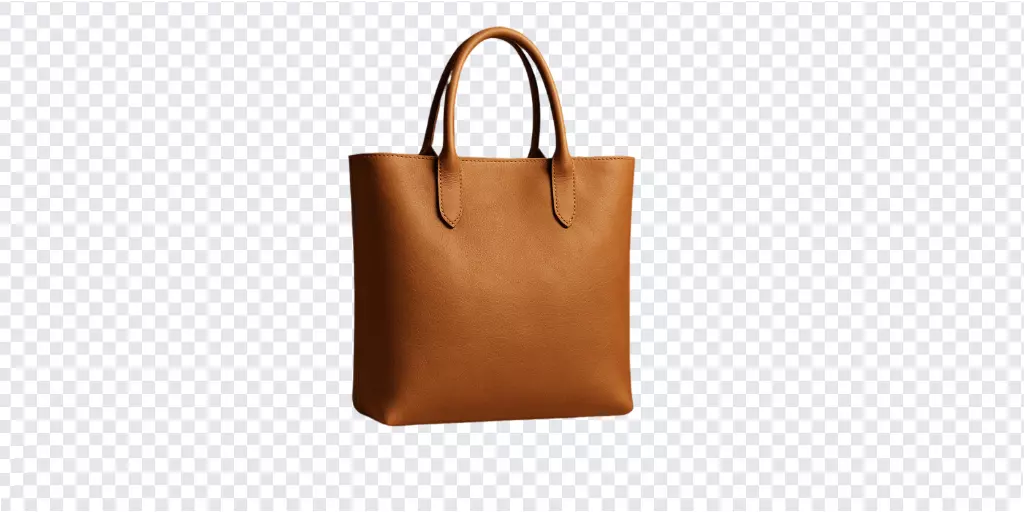
- Clean the background: A neutral, consistent backdrop makes the subject feel crisper by contrast. Background removal also eliminates busy distractions.
- Remove micro-distractors: Dust, stray hairs, cables, or reflections draw the eye and make images feel messy.
- Crop smarter: Tighten framing to minimize areas where blur is most visible; keep marketplace safe margins.
- Respect color and lighting: Correct white balance and exposure; good tonal separation “reads” as sharp.
Avoid aggressive halos, oversaturated colors, and plastic-looking skin or surfaces. Subtlety sells credibility.
How to convert a blurry image to HD online (super-resolution basics)
Wondering how to convertir imagen borrosa a HD online without installing software? Modern AI enhancers upscale and restore detail in one pass. They estimate lost edge information, reconstruct textures, and reduce compression artifacts. For e‑commerce, target 2000–3000 px on the longest side to satisfy most marketplace zoom requirements while balancing file size.
If the source is very small (e.g., 500 px), expect diminishing returns. Upscale gently (2×), denoise, then add light sharpening. Stop when artifacts appear.
Using Pixflux.AI to quickly improve a blurry product photo
If you want a fast, low-learning-curve path, Pixflux.AI combines AI enhancement with background cleanup so you can fix mild blur and present a clean hero image.
Three-step workflow:
- Upload your original product image.
- Let the AI enhance the photo to boost sharpness, reduce noise, and optionally clean the background.
- Download the processed result for your marketplace or ads.
Try it now to improve blurry photos online.
(See image: a screenshot sequence in Pixflux.AI showing upload, AI processing, and final download for a product photo.)
Pro tips for better results:
- Start with the highest-resolution file you have (avoid screenshots or chat-compressed versions).
- Preview at 100% to check labels, stitching, and edges.
- If your background is complex, use background removal to simplify and increase perceived sharpness on the subject.
- Keep the original file safe; export enhanced versions separately.
Advanced fine-tuning (5 steps) when you need more control:
- Open Pixflux.AI in your browser.
- Upload the original image (prefer uncompressed formats if available).
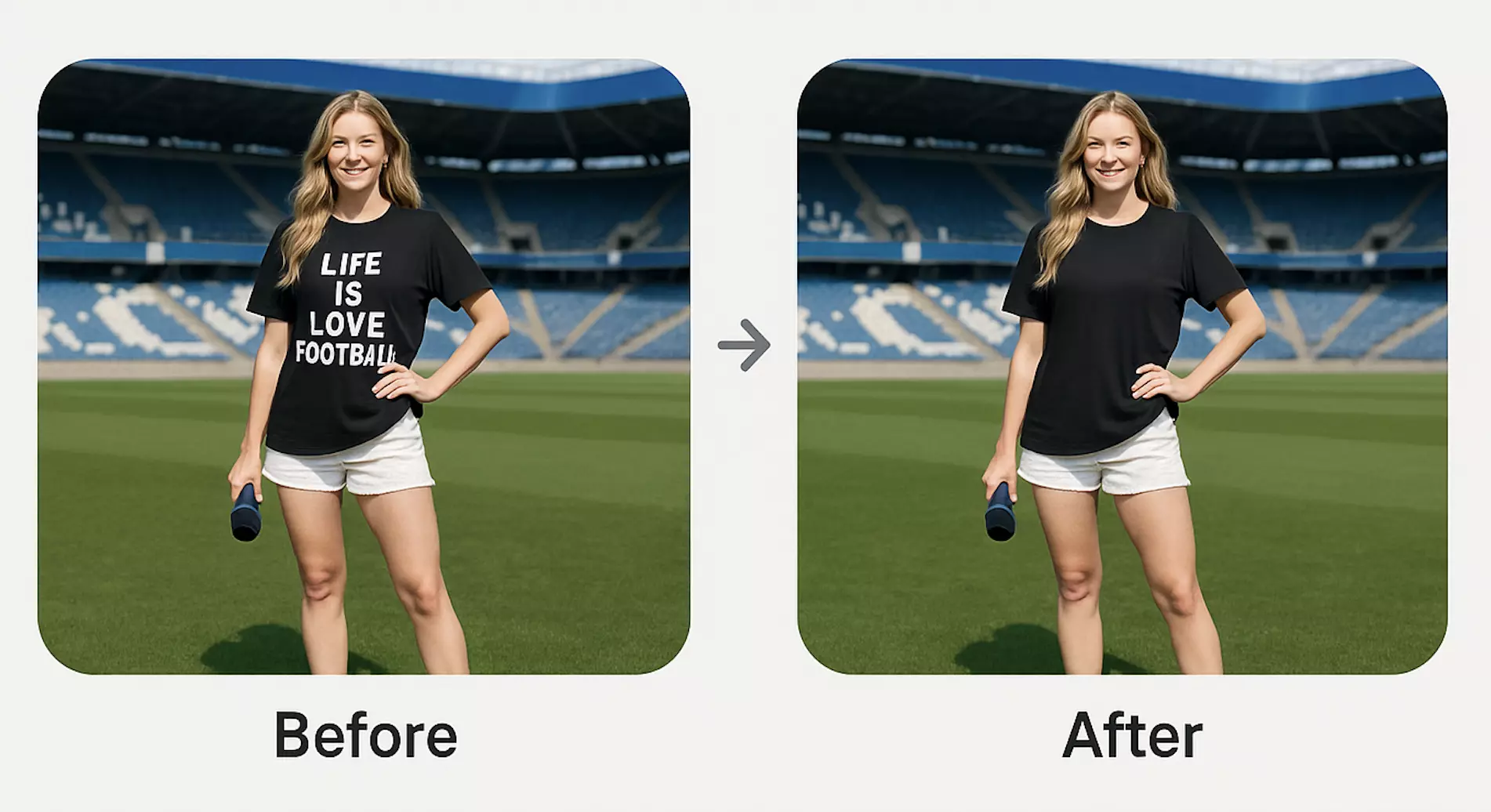
- Choose the enhancement tool, apply deblur and denoise; optionally use background removal or object removal to clean distractions.
- Preview at 100% and adjust intensity to avoid halos; confirm edges and labels remain natural.
- Download the enhanced image in your target size.
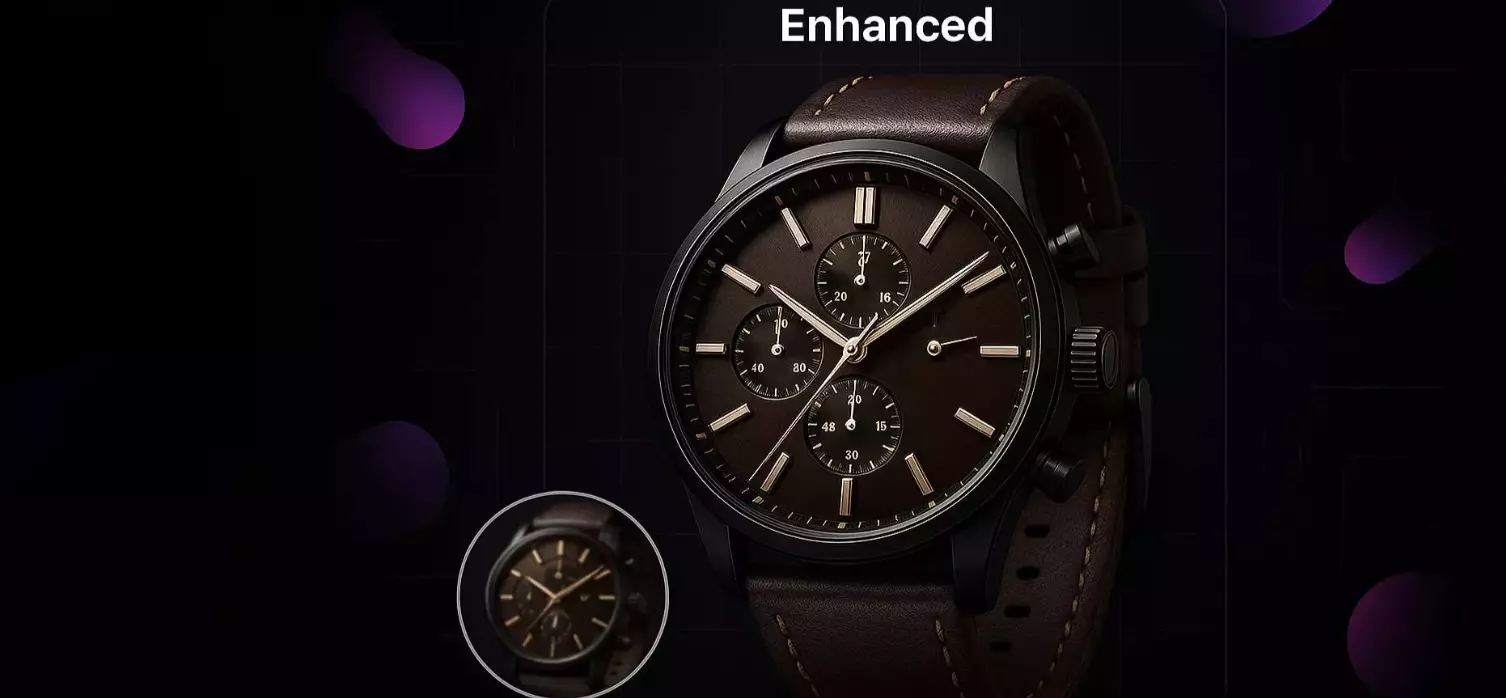
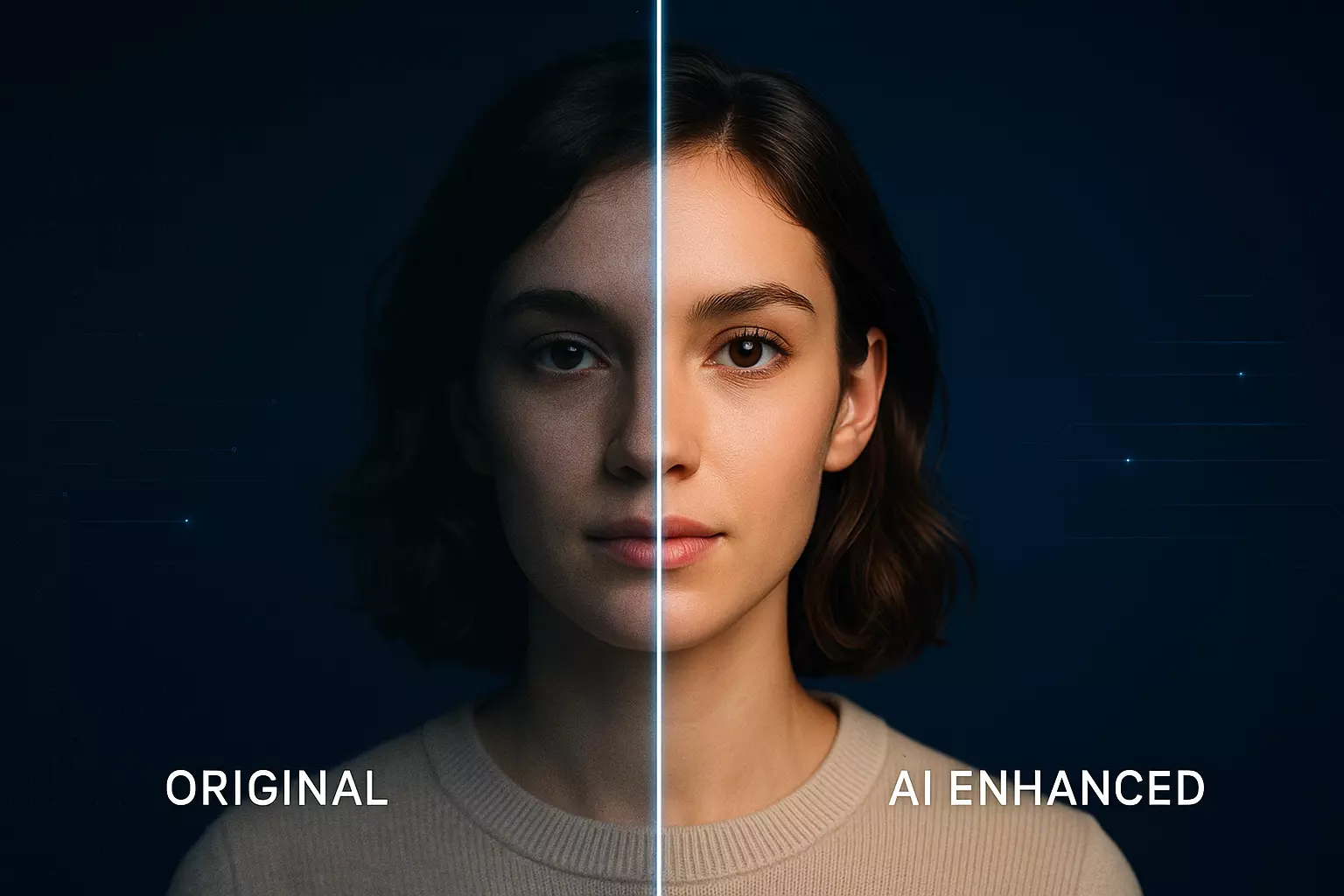
(See image: before-and-after comparison—original blurred image versus enhanced with Pixflux.AI’s photo enhancer and background remover.)
Batch workflows for large catalogs
When you manage dozens or hundreds of SKUs, consistency matters as much as clarity:
- Batch upload and process sets of product images to apply consistent enhancement across a collection.
- Standardize backgrounds: Use background removal to unify catalog visuals and speed up retouching.
- Remove stray objects at scale: Clean reflections, cables, or packaging wrinkles that repeat across supplier shots.
- Create a simple checklist for your team: input size, enhancement intensity, background style, and export dimensions per marketplace.
Pixflux.AI supports batch image processing so your cross-border team can deliver consistent quality in less time—without deep editing expertise.
(See image: 100% crop grids highlighting edge contrast and texture detail before and after deblurring and denoising.)
Quality, ethics, and rights: when to remove watermarks and when to re-shoot
Watermark removal is appropriate when you own the content or have explicit permission (e.g., you licensed the image and the license allows watermark removal). It is not appropriate for unlicensed supplier images or content you don’t have rights to. Follow your marketplace rules and your brand’s legal guidelines.
If removing a watermark would mislead customers about the origin of the image or violates platform policies, request a licensed, unwatermarked asset or schedule a re-shoot. Ethical editing preserves trust and protects your store from takedowns.
Case study: two quick rescues and what we learned
Case 1: Soft apparel shot (mild blur + noise)
- Issue: Supplier sent a 1500 px image with slight soft focus and ISO noise.
- Fix: Denoise first, then moderate deconvolution; background removal to a neutral gray.
- Result: Label text became crisp at 100% zoom, fabric texture regained micro-contrast, and the product “popped” against the clean backdrop. Team approved for PDP hero and A+ content modules.
Case 2: Small electronics (compression + slight motion)
- Issue: 1200 px image, visible compression blocks and tiny directional smear.
- Fix: Gentle upscale to 2400 px, compression cleanup, light sharpening, removal of a distracting cable in the background.
- Result: Edges on ports and icons became readable without halos. Good for secondary images and ads; for the hero, a controlled re-shoot was scheduled.
Lessons:
- Denoise-before-sharpen remains the safest path to avoid crunchy edges.
- Cleaning backgrounds often delivers the biggest perceived sharpness boost with minimal risk.
- If directional streaks dominate, enhancements are fine for thumbnails and ads, but don’t force it for zoom-heavy placements—plan a re-shoot.
AI online tools vs traditional methods
Choosing the right approach depends on time, skill, and scale.
- Time cost:
- AI online tools like Pixflux.AI deliver ready-to-publish results in minutes, ideal for rapid triage across SKUs.
- Traditional software (e.g., desktop editors) can match quality but often takes longer per image.
- Learning curve:
- Online enhancers require minimal setup and no plugins.
- Pro editors allow deep control but demand expertise to avoid artifacts.
- Batch efficiency:
- Online tools streamline batch processing and keep settings consistent across a catalog.
- Manual workflows risk inconsistency and are slower to scale.
- Cross-team adaptability:
- Browser-based tools fit freelancers, marketers, and coordinators without installing software.
- Pro pipelines suit specialized retouchers but can bottleneck when multiple teams need quick turnover.
For cross-border sellers, a hybrid makes sense: use Pixflux.AI for rapid fixes, then reserve traditional retouching for premium hero shots that need artisan-level polish.
FAQ: Improve blurry photos, HD conversion online, and troubleshooting
Can every blurry product photo be fixed?
No—severe motion blur and out-of-focus shots are usually beyond clean repair. Mild soft focus, light noise, and modest compression respond well to AI enhancement, denoise, and background cleanup. If you see long directional streaks or unreadable labels at 100% zoom after gentle edits, plan a re-shoot.
Does converting a blurry image to HD online actually help?
Yes, if the source quality is decent and the upscale is modest (2× is common). AI super-resolution can reconstruct edges and suppress compression, improving perceived sharpness. If the original is very small or heavily compressed, set expectations: use the result for thumbnails or ads, and aim to re-shoot for zoom-critical placements.
How do I enhance sharpness without adding halos or artifacts?
Use denoise-before-sharpen, keep sharpening intensity moderate, and review at 100% zoom. Avoid large-radius “crunchy” sharpening, and watch high-contrast edges like logos and labels. If artifacts appear, reduce intensity or step back one level.
Is background removal acceptable for marketplaces?
Yes—clean backgrounds are widely recommended and often required. Most platforms prefer white or neutral backgrounds for hero images because they highlight the product and improve zoom clarity. Check each marketplace’s current guidelines and keep consistent margins.
Can I remove watermarks from supplier photos?
Only if you own the rights or have explicit permission in writing. Watermark removal should never be used to bypass licensing or platform rules. When in doubt, request proper assets or re-shoot to avoid compliance issues.
How fast can I process a full catalog with an online enhancer?
In minutes per batch for typical SKUs, depending on file size and network speed. Batch image processing helps teams standardize enhancements, backgrounds, and object cleanup across multiple products without deep editing skills. Always review a sample before applying settings catalog-wide.
Conclusion and next steps
Not every blurry product photo needs a re-shoot. With a simple triage, denoise‑before‑sharpen, smart upscaling, and background cleanup, you can rescue mild blur and meet 2026 marketplace standards—fast. When directional motion, unreadable labels, or heavy compression dominate, move on quickly and plan a new capture.
If you’re ready to turn soft images into credible, listing-ready assets today, try Pixflux.AI. It’s a straightforward way to enhance sharpness, clean backgrounds, remove small distractions, and process batches without a steep learning curve. Start here with como mejorar una foto borrosa for your next upload.
Keep your originals, export clean versions, and iterate with a light touch. Your catalog—and conversion rate—will thank you.