Social Media Transparency Share AI Prompts Without Exposing Personal Data
Posting prompt screenshots? Learn to quickly redact names, addresses, and UI overlays with clean removals, a simple checklist, and Pixflux.AI tips.
 Michael WalshJanuary 12, 2026
Social Media Transparency: Share AI Prompts Without Exposing Personal Data (How to Remove Text from Images)
You want to show your work—prompt screenshots, model settings, workflow wins—without leaking personal details. But modern screenshots are dense: names, addresses, email handles, IDs, and UI overlays pile up in chat apps, dashboards, and browser bars. A quick blur feels fast, yet it’s easy to miss a line or leave artifacts that still hint at identities.
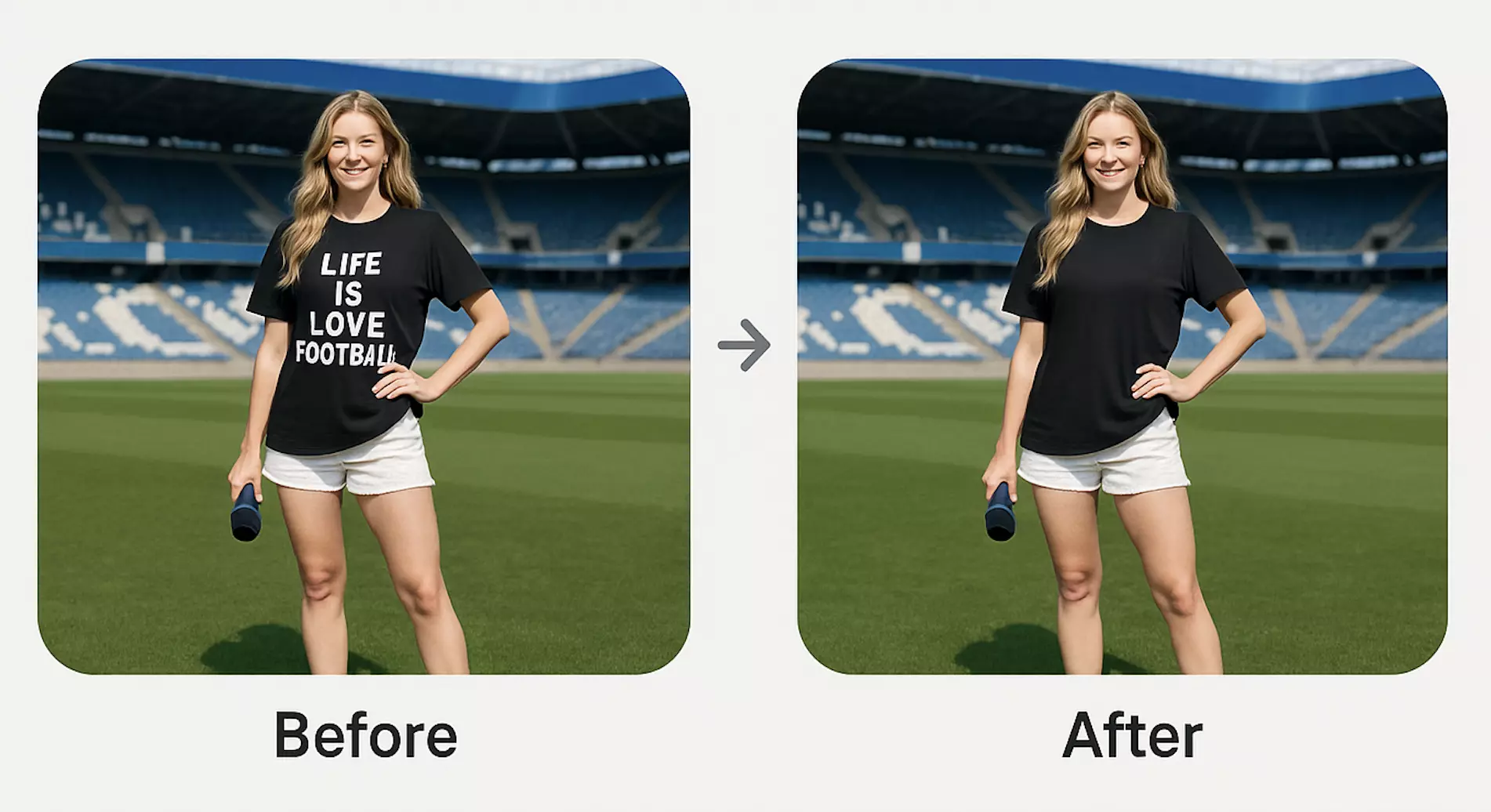
A safer approach is to remove or redact sensitive text, not just hide it. That’s where a focused online AI tool helps you systematically remove text from image with cleaner edges and fewer artifacts than manual brushwork. If you’re ready to streamline this step, try a purpose-built flow to remove text from image before you post.
Privacy expectations are getting stricter, and communities now publish redaction guidelines for transparency posts. Meanwhile, AI image tools have improved at semantic removal—understanding what’s text, what’s UI, and what should remain—so creators can share responsibly without over-editing.
Why prompt and screenshot sharing can expose personal data
- Screenshots often capture more than content: window titles, notification toasts, tab labels, and profile photos appear in the frame.
- Chat logs, CRM dashboards, and analytics views include names, addresses, customer IDs, and internal labels.
- Simple blur filters remain reversible in some contexts (for example, pattern or color hints can reveal a name), and blurring a dozen areas per screenshot is error-prone.
The risk compounds when your post goes viral. A missed handle or partial address can be scraped, cross-referenced, and archived.
Redaction vs. erasure: what “remove text from image” really means
- Redaction replaces sensitive text with a neutral fill that matches surrounding pixels, so context remains but identifiers are gone.
- Erasure removes the text entirely and reconstructs background content so the area looks as if the text was never there.
When to use each:
- Use redaction when the surrounding context is needed to understand the workflow (e.g., keeping a chat bubble while hiding the name).
- Use erasure when text sits on a patterned background or UI where reconstructing the original look maintains clarity.
In practice, you may mix both within a screenshot: erase a username in the title bar, redact a line inside a table, and remove a notification overlay altogether.
Tool choices: manual blur, desktop editors, and online AI removers
- Manual blur or brush: fast but brittle. It’s easy to miss small labels or leave partial characters visible. Quality varies per area, and batch work is tedious.
- Desktop editors (e.g., clone stamp): powerful but time-consuming. You need layer management and patience, especially for complex UI removing and edge consistency.
- Online AI removers: purpose-built for semantic text and object removal with cleaner edges, consistent fills, and simple repeatability. Tools like Pixflux.AI offer targeted removal, artifact control, and batch-friendly workflows you can run without a steep learning curve.
A policy-style “sanitization checklist” creators can follow
Before sharing any screenshot or prompt:
- Identify sensitive fields: names, emails, phone numbers, IDs, order numbers, street addresses, and geotags.
- Check UI chrome: browser tabs, window titles, notification toasts, timestamps, and profile photos.
- Remove text overlays: watermark-like labels, beta markers, build numbers, and environment tags (dev/staging).
- Preserve meaning: keep non-sensitive context (layout, headings) so readers can understand your process.
- Perform a second pass: zoom to 200% and scan edges and corners.
- Save a clean version: store the redacted copy separately from your source.
How to sanitize screenshots: step-by-step for names, addresses, and IDs
Follow these steps when auditing any screenshot for social media privacy:
- Map sensitive zones
- Mark every instance of PII or internal IDs. Pay attention to breadcrumb trails, table headers, and subtext in tooltips.
- Prioritize high-risk items
- Names, emails, phone numbers, street addresses, and unique IDs go first. Then clear UI chrome like tab titles and notifications.
- Choose redaction vs. erasure
- Redact identifiers inside content blocks; erase UI text overlays and noisy labels for a cleaner result.
- Process with an AI remover
- Use a targeted remove-text workflow to clear text while reconstructing the background.
- Run artifact checks
- Zoom in to verify edges, ensure no partial letters remain, and confirm backgrounds look natural.
- Export at platform resolution
- Resize or crop for X, LinkedIn, or Reddit specifications while preserving detail and legibility.
Use Pixflux.AI to remove text from image and UI overlays in three steps
Pixflux.AI focuses on removing text and unwanted overlays while keeping the rest of the image intact. Here’s the quick path:
- Upload your screenshot
- Drag and drop your file into Pixflux.AI.
- Let the AI process the image
- Choose the remove-text or object removal tool to clear names, addresses, and labels in one pass.
- Download the result
- Export the cleaned screenshot at full resolution and share safely.
(See image: Pixflux.AI interface illustrating the upload → AI process → download three-step flow)
If you’re ready to try it on your next post, open Pixflux.AI and use the dedicated flow to redact text in screenshots with minimal effort.
Quality checks: artifact control, edge consistency, and context preservation
- Artifact control: ensure there are no ghost shapes or color smears where text used to be. Re-run removal on stubborn spots or refine selection.
- Edge consistency: look closely where UI lines cross removed text (table borders, divider rules). The fill should extend those lines naturally.
- Context preservation: keep labels and signatures that are non-sensitive and key to understanding the workflow. Over-redaction can make a walkthrough confusing.
Tip: If a background is complex (e.g., gradient cards or patterned panes), use a second pass to harmonize the fill. Pixflux.AI’s image enhancement can subtly improve clarity and contrast after redaction without over-sharpening.
Real-world examples: before-and-after on app and chat screenshots
- Chat screenshot: remove the sender name, phone number, and timestamp while keeping the chat bubbles and message order intact.
- App dashboard: erase an email address in the header, redact customer IDs in table rows, and remove a tooltip overlay that includes an internal alias.
(See image: before-and-after of the same chat screenshot with names and addresses removed; comparison of manual blur vs. semantic remove-text output on a mobile app UI)
Advanced techniques: watermarks, objects, and background adjustments
Sometimes the privacy problem isn’t just text:
- Watermark removal for compliance: clear internal “confidential” stamps or auto-generated test labels before sharing. Only remove watermarks you own or are authorized to modify; do not use this to violate copyright or platform rules.
- Object removal: erase profile avatars, notification badges, or stray UI elements that reveal identity.
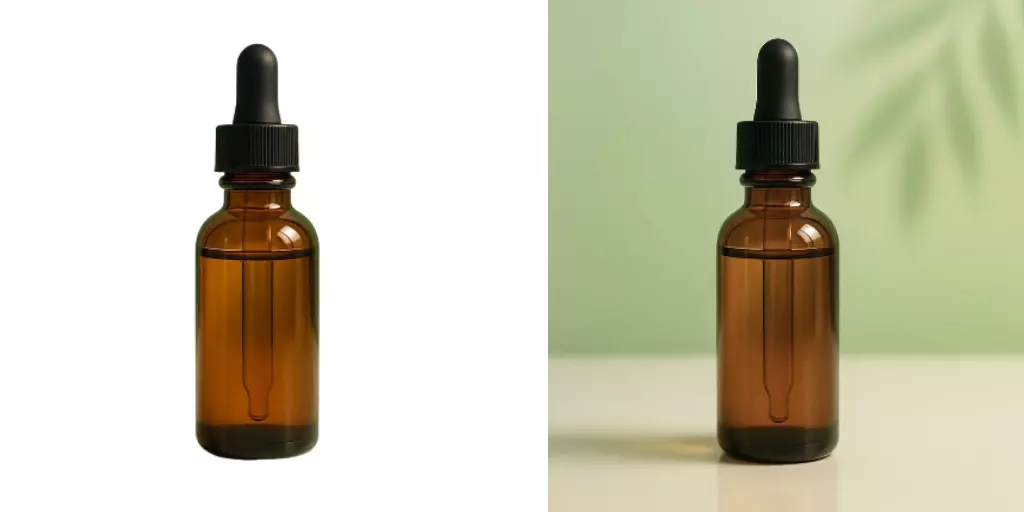
- Background changes: if your screenshot includes a real-world photo (e.g., product shot inside a UI), consider replacing or simplifying the background to avoid location cues.
Pixflux.AI supports all three—text and watermark removal, object cleanup, and background edits—so you can keep the focus on the workflow, not the noise.
Batch workflows for multiple screenshots with Pixflux.AI
Creators often share threads or carousel posts. Rather than cleaning each file by hand:
- Batch upload your set of screenshots
- Apply remove-text and object removal across the set
- Do a quick visual pass, tweak any outliers, and export in one go
This helps teams maintain consistent privacy standards for recurring content like weekly updates or tutorial series.
AI online tools vs. traditional methods
- Time cost
- AI online tools: minutes for multiple images; consistent results per pass
- Traditional editors: manual selection and cloning per area; scales poorly
- Learning curve
- AI online tools: minimal; targeted remove-text and cleanup
- Desktop software: layers, masks, and clone tools require skill and practice
- Batch efficiency
- AI online tools: batch uploads and repeatable settings for uniform outcomes
- Outsourcing: possible, but slower feedback cycles and variable quality
- Cross-team fit
- AI online tools: non-designers can run a reliable sanitization workflow
- Traditional methods: typically centralized to a design team with limited bandwidth
Pixflux.AI balances quality and speed, making privacy-first posts practical for creators, marketers, and support teams.
Legal and ethical boundaries: consent, logos, and watermark considerations
- Only redact images you own or are authorized to edit. Do not remove third-party watermarks or copyright marks to evade rights management or platform policies.
- Get consent before sharing screenshots that include other people’s information or messages, even if redacted.
- When in doubt, over-redact identifiers; clarity can be restored with additional captions or annotations in your post.
FAQ: remove text from images for social media privacy and safe sharing
Is blurring enough to protect personal data in screenshots?
No, blurring is not reliably safe. Blur can leave patterns, colors, or partial shapes that still signal identities, and in some cases it’s partially reversible. Redaction or erasure with an AI remover provides cleaner, more reliable privacy protection.
What’s the difference between redacting and erasing text?
Redaction replaces text with a neutral fill; erasure reconstructs the background as if the text never existed. Use redaction inside content where structure matters (tables, chat bubbles) and erasure for UI chrome or overlays. Mixing both typically yields the clearest, safest result.
Can I remove multiple names and IDs at once?
Yes, you can process multiple areas or run a batch across images. Identify all sensitive zones first, then apply removal to each area. For multi-image sets, batch processing keeps quality consistent and speeds up your workflow.
Will removing text damage the rest of the image?
Proper removal preserves context while clearing targeted text. Use tools that maintain edge consistency and avoid smearing. After removal, zoom in to confirm lines, borders, and gradients look natural, and re-run on any stubborn artifacts.
Can I remove watermarks or logos?
Only if you own the image or have explicit permission. Watermark removal is intended for your own content (e.g., internal “confidential” stamps) or authorized edits. Do not use it to infringe on others’ copyrights or bypass platform rules.
How do I prepare images for different platforms after redaction?
Export at the platform’s preferred dimensions and compression. For X, LinkedIn, or Reddit, keep text legible and avoid over-compressing. Cropping away empty margins can further reduce the chance of overlooked identifiers.
What about non-text identifiers like profile photos or icons?
Remove or mask them just like text. Object removal is effective for avatars, notification badges, and unique icons that can reveal identity. Combine text and object cleanup for a comprehensive privacy pass.
Five-step advanced flow in Pixflux.AI (for meticulous edits)
- Open the Pixflux.AI tool
- Upload your screenshot(s)
- Select the remove-text or object removal tool and run the AI pass
- Preview results and refine tricky areas (edges, dividers, gradients)
- Download the cleaned image(s) at full resolution
This method gives you a tighter quality loop when screenshots include complex UI or patterned backgrounds.
Conclusion and next steps
Transparency posts educate your audience, but they shouldn’t risk anyone’s privacy. With a repeatable remove-text workflow, you can share prompts, settings, and results confidently—no guesswork, no artifact roulette. Communities are already moving this way, and AI removers now make it fast and consistent.
Run your next share through Pixflux.AI and keep your content both useful and safe. Start now and erase text from a picture in minutes.