Remove Text in Image for Privacy and Compliance: Protect Data Before You Hit Publish
Need to share screenshots without exposing emails, IDs, or plates? See how Pixflux.AI removes text in images cleanly—and scales with batch redaction.
 Sierra CappelenDecember 10, 2025
Remove Text in Image for Privacy and Compliance: Protect Data Before You Hit Publish
A product screenshot with customer emails. An Instagram Story where a license plate sneaks into the frame. A support ticket export showing order IDs and internal notes. These visuals are everywhere in marketing, CS, and ops—and they’re easy to share without noticing the personal data embedded in them. If you don’t remove text in image assets before publishing, you risk doxxing customers, violating policy, or failing an audit.
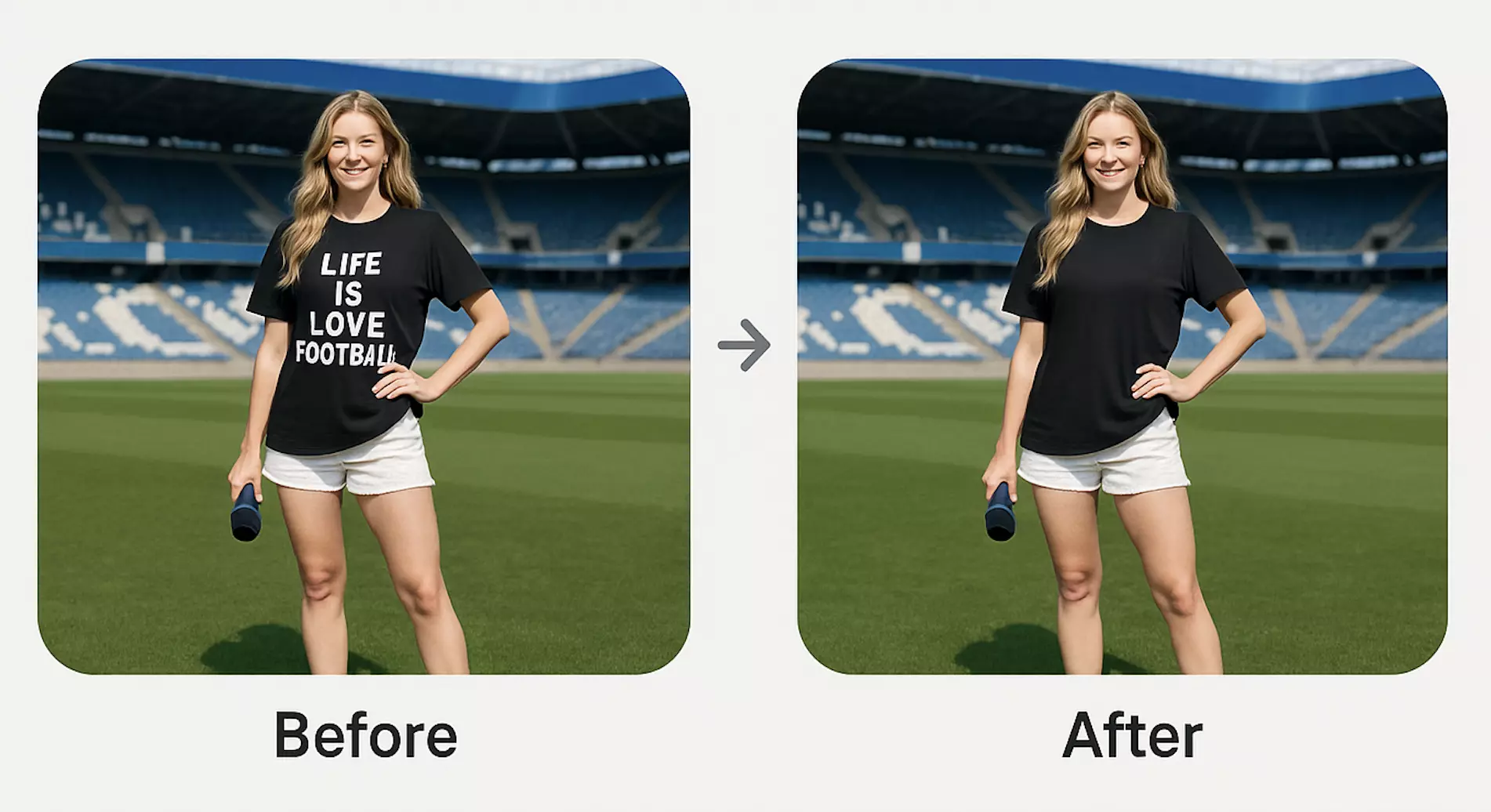
The good news: you don’t need to draw clunky black boxes or rework every file in slow desktop software. Modern AI inpainting makes clean, on‑brand redaction straightforward. Tools like Pixflux.AI let you quickly remove text in image while preserving the surrounding design and texture, so your final asset still looks professional.
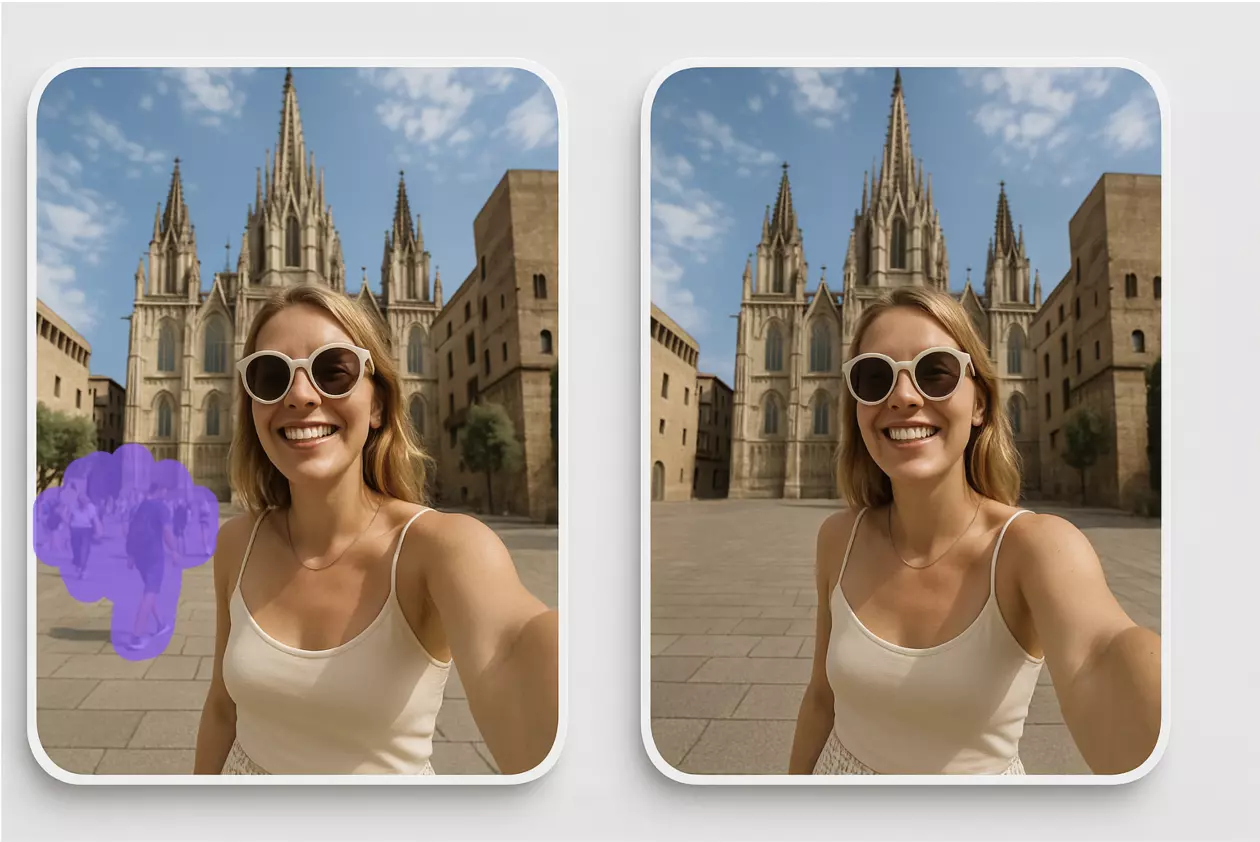
(See image suggestion: “Before-and-after comparison where internal notes on a product screenshot are removed cleanly using an AI object remover.”)
Why image text redaction matters for privacy and compliance
- Visual PII is now in scope. Privacy-by-design has expanded from PDFs and emails to screenshots, social posts, and product imagery.
- Regulations enforce care. GDPR and CCPA expect data minimization and proper handling of personal data in any format—including images.
- Risk lives in the details. An order number, email handle, or partial address is enough to tie a person to an account, a location, or a purchase.
- Public trust is fragile. Clean visuals that don’t expose private context protect customers and your brand.
What counts as PII in visuals?
Common elements that require redaction before sharing:
- Emails and chat handles inside dashboards or inbox screenshots
- Order IDs, tracking numbers, and invoice references
- License plates in product lifestyle shots or event photos
- Customer names, phone numbers, addresses, and avatars
- Internal notes visible in CRM or help desk captures
- Face blurs where consent is missing or unclear
Pro tip: treat any text that can identify a person or a specific account as in-scope for redaction.
Methods compared: black boxes, blur, clone/heal vs AI object remover
- Black boxes (solid rectangles)
- Pros: Fast, obvious.
- Cons: Visually loud, breaks layout, screams “redacted.” Often unacceptable for brand-first marketing assets.
- Blur or mosaic filters
- Pros: Simple.
- Cons: Not always sufficient; text can remain partly legible. Patchy results on sharp UI screenshots.
- Clone/heal in legacy editors
- Pros: Precise in skilled hands.
- Cons: Slow, manual, steep learning curve; hard to scale for teams and batches.
- AI object remover (inpainting)
- Pros: Reconstructs background behind text, keeps grids, gradients, and textures intact. Ideal for public-facing assets.
- Cons: Requires a quick selection and review, but minimal training.
Teams increasingly prefer inpainting because it preserves brand aesthetics and doesn’t telegraph the redaction itself.
(See image suggestion: “License plate redaction example: original street photo vs. inpainted plate where text is replaced seamlessly.”)
Build a privacy‑first “redact then share” routine
A simple, repeatable routine helps marketing, CS, and ops move fast without leaking data.
- Spot: Add “PII scan” to your pre-publish checklist for screenshots, customer stories, demo decks, and social posts.
- Decide: If any visible text could identify a person or account, redact it.
- Redact: Use AI inpainting to remove sensitive text while keeping the layout intact.
- Review: Do a 10-second artifact check at 100% zoom. Confirm nothing remains legible.
- Ship: Publish only the redacted version. Store an original for records, not for sharing.
This workflow keeps compliance front-of-mind without slowing your team.
Remove text in image with Pixflux.AI: upload → AI process → download
When you need a quick, reliable clean-up, Pixflux.AI makes it a three-step flow:
- Upload your image or screenshot.
- Let the AI remove the selected text and reconstruct the background.
- Download the polished result, ready for public use.
If you’re looking for a simple walkthrough on how to remove text from an image, this 3‑step approach covers most routine cases—like hiding emails in a UI, stripping order numbers from invoices, or replacing a license plate with seamless texture.
(See image suggestion: “Pixflux.AI interface showing the three-step flow: upload image → AI processes → download result.”)
Step-by-step: precise masking, edge cleanup, and inpainting
Use this five-step technique when you need pixel‑level control (for example, mixed fonts and tight UI elements):
- Open Pixflux.AI and upload your file.
- Select the AI object remover tool and loosely highlight the text you want to remove. Aim for complete coverage but avoid excess margin to reduce distortion.
- Run the AI pass. Inspect edges around the redacted area—lines, grid borders, buttons, or dividers.
- Micro‑adjust. If needed, refine the selection and run a second pass. Use smaller selections for complex areas like overlapping icons, shadows, or gradients.
- Confirm and download. Zoom to 100% and 200% to ensure the redaction looks natural and the original text is 100% unreadable.
Tips for clean results:
- Feather selections slightly for soft backgrounds; use sharper edges for flat UI elements.
- For patterned areas (e.g., data tables), inpaint in smaller chunks along the grid lines.
- Avoid over-selecting; tighter masks yield more faithful reconstruction.
Batch redaction for recurring tasks and templates
Support ops and customer education teams often process dozens of nearly identical screenshots or photo sets per day. Pixflux.AI supports batch upload and one‑click processing so you can:
- Redact the same types of fields across multiple images (e.g., order IDs on invoices, emails in dashboards).
- Maintain consistent visual quality across a campaign or knowledge base update.
- Clear a backlog fast before compliance reviews or seasonal campaigns.
Create a short playbook: what to redact, acceptable artifacts, and naming conventions (e.g., filename suffix “_redacted”). This keeps multi‑person teams aligned without heavy training.
Quality checks and documentation
A quick QA loop reduces rework and audit friction:
- Artifact scan: Look for ghosting, warping of lines, or mismatched textures.
- Legibility test: Ensure the original text is impossible to infer at any zoom level.
- Accessibility and clarity: If you removed labels essential for comprehension, add a neutral caption or annotation elsewhere.
- Versioning: Save the original and the redacted export with clear filenames and timestamps.
- Audit trail: Keep a lightweight log (who redacted, what was removed, and why). It’s helpful for GDPR/CCPA inquiries and internal reviews.
Legal and ethical guardrails
- Process only images you own or are authorized to edit. Never use redaction to disguise misuse of copyrighted material.
- Watermark removal: Use responsibly. Removing a watermark from an asset you don’t own or don’t have rights to is illegal and against most platform rules.
- Consent: If an individual can be identified, obtain consent or ensure an approved basis for processing (e.g., legitimate interest) before publishing.
- Regional rules: Under GDPR/CCPA, treat image‑based PII like any other personal data—minimize exposure, secure storage, and honor deletion requests.
Troubleshooting tricky inputs
- Low‑resolution screenshots: Zoomed or compressed grabs can break text edges. Re‑capture at native scale or request the original file when possible.
- Complex patterns and textures: Inpaint in smaller areas and preserve nearby lines. Consider two passes: first remove text, then refine artifacts.
- Heavy compression (social downloads): JPEG artifacts make lines wobble. A quick AI enhancement pass before redaction can improve reconstruction.
- Mixed overlays (icons + text): Remove overlapping elements separately, starting with the top layer.
AI tools vs traditional methods
Time, scale, and quality often decide the workflow:
- Time cost: AI redaction is seconds per element versus minutes in clone/heal tools.
- Learning curve: No expert retouching required; teams can align in one short training.
- Batch power: Upload and handle many images in one go—ideal for recurring support ops and large content calendars.
- Aesthetics: Inpainting preserves brand look and layout better than black boxes or mosaics.
- Collaboration: Output is consistent across different team members, reducing back‑and‑forth and design bottlenecks.
Pixflux.AI gives non‑designers premium‑looking results, which frees creative teams to focus on higher‑value work instead of routine cleanup.
Real-world use cases
- Marketing: Product UI screenshots for blog posts, ebooks, and webinars where customer emails and account IDs appear.
- Customer Support: Knowledge base articles, ticket exports, and internal guides that show real data structures without exposing PII.
- Operations: Vendor invoices, shipping labels, and logistics photos with order numbers or addresses visible.
- Social and UGC: Community highlights where license plates, badges, or bystander details need to be removed before posting.
Quick recap: a practical “redact then share” checklist
- Identify potential PII in any image.
- Redact with AI inpainting instead of black boxes.
- Run a fast artifact and legibility check.
- Save both versions and log what changed.
- Publish only the redacted image.
Get started now
Protect customers, keep your brand polished, and reduce compliance risk with a workflow your whole team can follow. Use Pixflux.AI to learn how to remove text from an image in minutes, then scale it across your content and support operations.
Ready to operationalize privacy-by-design without sacrificing aesthetics? Try Pixflux.AI for fast, clean image text removal for privacy and make “redact then share” your new default.