Watermark Remover Image Online Free: Legit Ways to Clean Your Own Assets
Learn legit, brand-safe ways to clear old marks from your own photos, refresh licensed assets, and speed edits online with Pixflux.AI's free remover.
 Richard SullivanJanuary 23, 2026
Watermark Remover Image Online Free: Legit Ways to Clean Your Own Assets
Outdated store badges on last season’s product photos. Licensing overlays on images you’ve re-licensed. A faint agency watermark left on a batch of social images you already own. If you manage brand visuals in 2026, you’ve probably inherited a library that’s part gold mine, part clutter—and you need clean, campaign-ready files now.
Browser-based editors and AI retouching make it tempting to search for an “image watermark remover online free” and be done. That can be legitimate when you own or have the right to edit the images. Tools like Pixflux.AI offer a fast, brand-safe workflow to clear overlays, fix backgrounds, and prep assets for Amazon, Instagram, or your next retail campaign—without deep retouching skills. If you’re ready to try a brand-safe option, start with a watermark remover image online free.
In this guide, we’ll explain when watermark removal is allowed, how to audit your rights, and how to clean your images—step by step—using AI while keeping quality and compliance in check.
When watermark removal is legitimate for brands and creators
Removing a watermark can be entirely appropriate when:
- You own the copyright (e.g., your in-house photo shoot)
- You have a license that allows edits and derivatives
- You’re refreshing your own store badge or legacy overlay on owned images
- You’re adapting licensed assets for new channels, consistent with the license terms
Common brand scenarios:
- Replacing old marketplace badges or seasonal price stamps on product photos you shot in-house
- Cleaning agency proof marks from images after final payment and delivery, with edit rights confirmed
- Updating licensed hero shots for new ad specs where overlays are no longer needed
Compliance note: Only remove watermarks from content you own or are authorized to modify. Don’t use watermark removal to infringe third-party rights or bypass platform rules.
Legal basics: rights, licenses, and edit permission
Before you touch an image, confirm:
- Copyright ownership: Is it yours or your company’s?
- License scope: Does the license permit modifications and derivatives?
- Duration and territory: Is the license current and valid for your market(s)?
- Attribution and restrictions: Is attribution required? Are there “no edit” clauses?
For photos with people or recognizable properties, ensure you have model and property releases covering your intended use and channels.
Audit your assets: documentation you should gather
A quick proof pack helps legal and brand ops sign off:
- Contract copies or license agreements that include edit rights
- Invoices and delivery notes confirming final payment and transfer terms
- Model/property releases for any image featuring people or private spaces
- Version history or filenames tying the original to your cleaned output
Keep these in your DAM or shared drive alongside the final image. If you ever need to prove you had the right to remove a watermark, you’ll be ready.
Methods overview: manual retouching vs. free online tools
You have three typical options:
- Manual retouching (Photoshop, GIMP, or similar): Fine-grained control with clone/heal or content-aware fill, but high skill/time cost.
- Outsourcing to retouchers: Solid results for complex cases, but slower turnaround and per-image costs.
- AI-powered, browser-based tools: Fast, low-friction cleanup for most overlays. In 2026, generative inpainting is significantly better at preserving texture, edges, and lighting—ideal for routine brand maintenance.
A pragmatic approach: use AI for the bulk of images (logos, light overlays, text stamps) and reserve manual or outsourced retouching for the 10–20% of complex cases (dense patterns, heavy compression damage, or critical hero shots).
Using an image watermark remover online free: best practices and limits
- Start with the highest-resolution file available; AI performs best with more detail
- Remove one overlay at a time if the watermark is complex or spans materials with different textures
- Inspect edges, shadows, and repeating patterns (e.g., fabric, hair, wood grain) to ensure realism
- Export in a non-destructive workflow: keep your original, archive a cleaned master, and output channel-specific versions
Remember, “free” tools often have file size or resolution caps. For flagship assets, confirm you can export at the quality your channels require.
Step-by-step: Clean a watermark with Pixflux.AI in minutes
Here’s a simple workflow designed for brand-safe cleanup using a free online image watermark remover:
- Open Pixflux.AI’s watermark remover
- Launch your browser and go to the tool page.
- Upload your image
- Drag-and-drop or select the file from your computer; use your highest-res version.
- Let AI remove the watermark
- Choose the watermark removal tool and start the process; for multi-element marks, repeat until clean.
- Preview and fine-tune
- Zoom in to check edges and textures; if needed, run a second pass or lightly adjust the area.
- Download the clean result
- Save the cleaned image, then create channel-specific exports (e.g., Amazon PDP, Instagram feed, TikTok video cover).
Compliance reminder: Only process images that you own or are authorized to edit. Don’t use watermark removal on third-party content without permission.
(See image: a three-step Pixflux.AI interface walkthrough—upload, AI processing preview, and download result.)
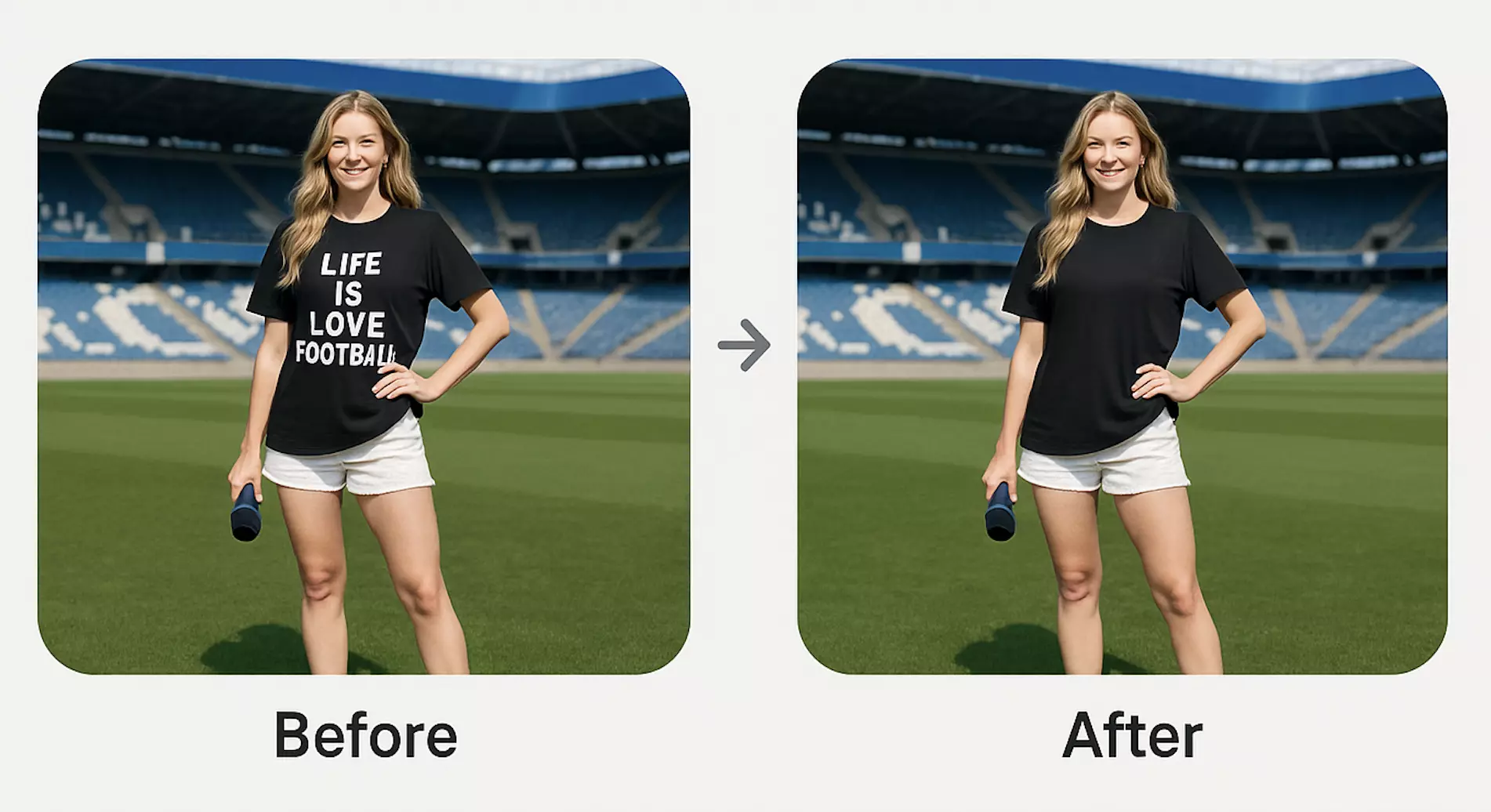
(See image: before-and-after of a branded product photo with a watermark removed by Pixflux.AI while preserving texture.)
Background cleanup for campaigns: go beyond watermarks
Most brand teams don’t just remove watermarks—they refresh visuals for multi-channel use:
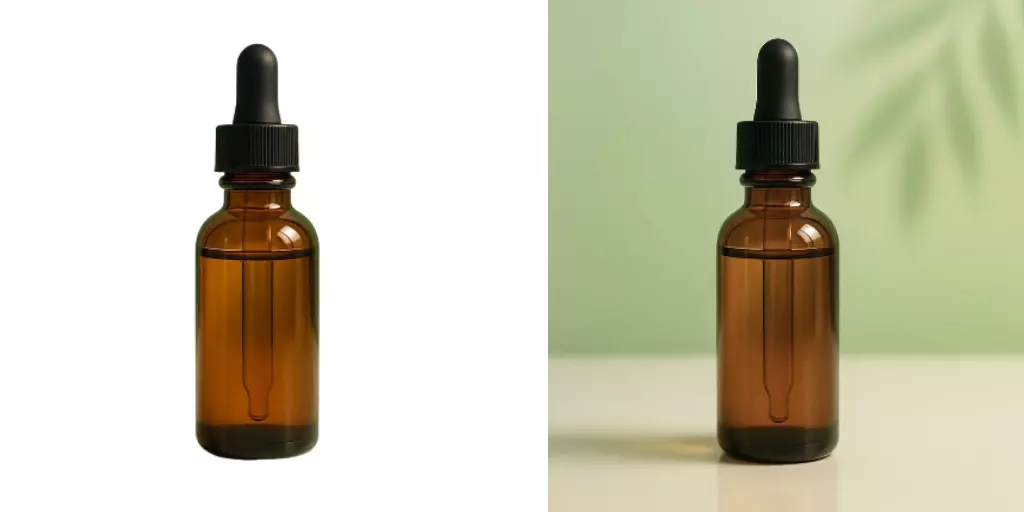
- Remove a busy background to a clean white for marketplace standards
- Generate a simple on-brand backdrop for social or ads
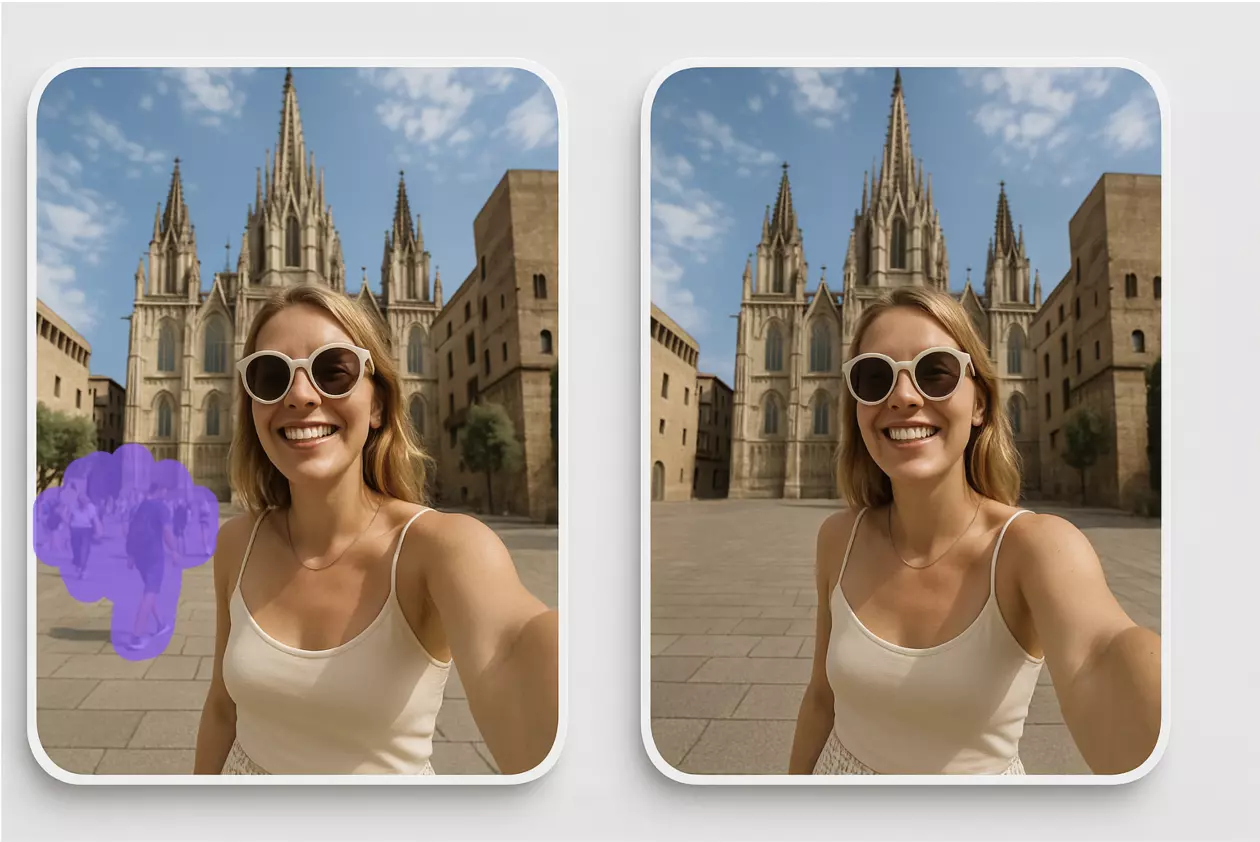
- Erase stray reflections, cables, or passersby from on-location shots
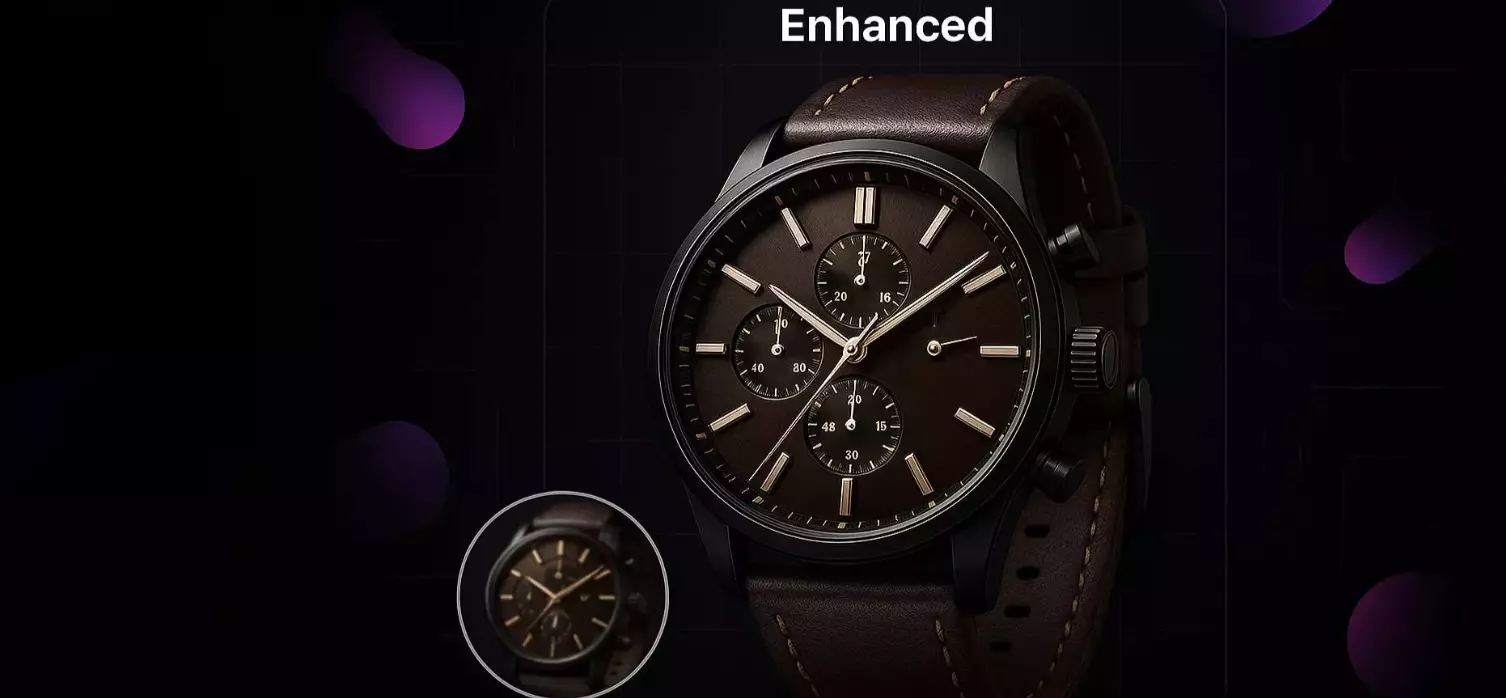
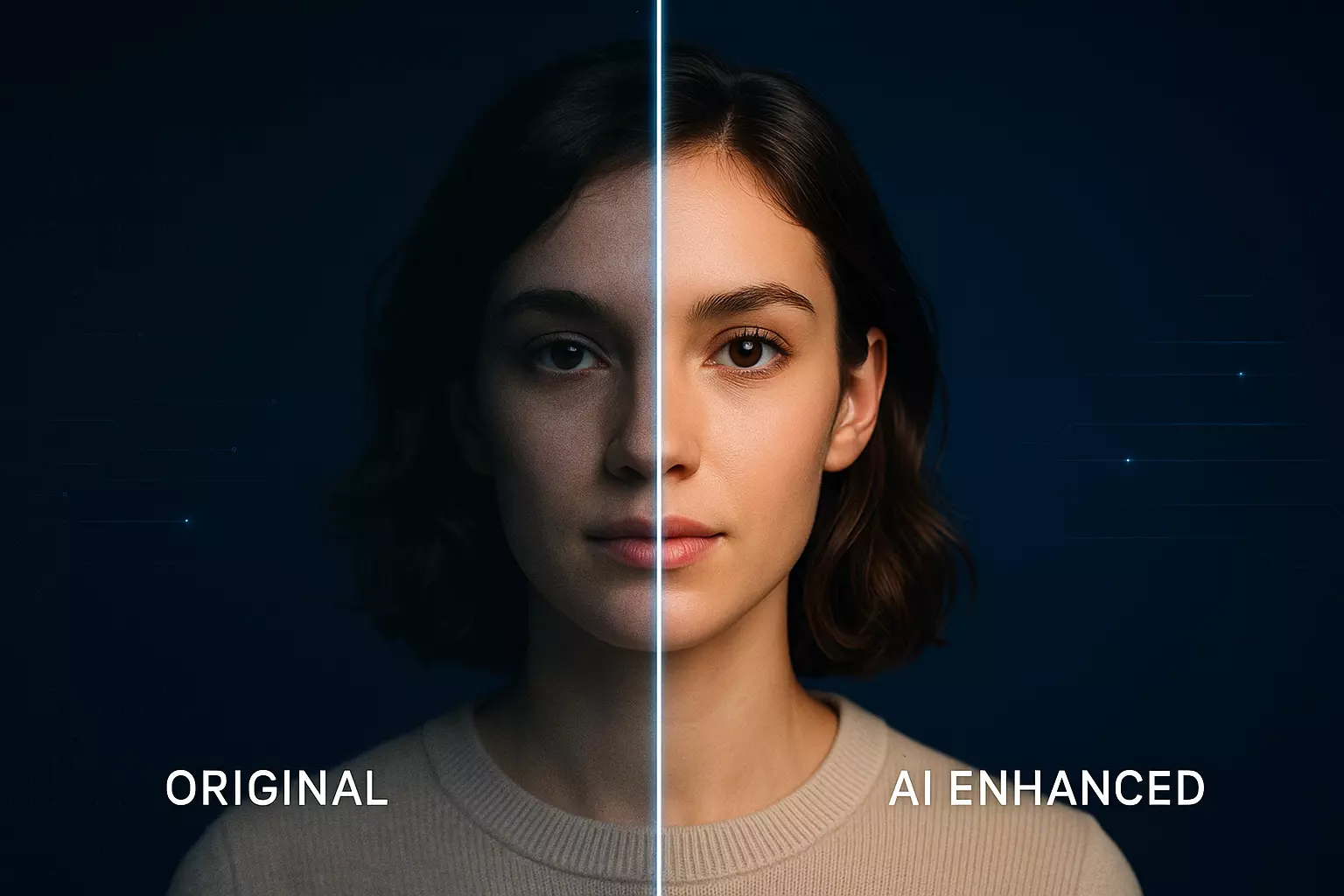
- Enhance clarity and contrast to restore detail after compression
Pixflux.AI supports these adjacent tasks so your team can keep a consistent, campaign-ready look across Amazon listings, DTC PDPs, and social carousels without bouncing between tools.
Quality checklist: edges, textures, text overprints, artifacts
Before you publish, run this quick review:
- Edges: Do contours look natural, with no halos or cutout edges?
- Texture: Is surface detail (fabric weave, leather grain, brushed metal) intact?
- Overprints: If a watermark crossed letters or logos, does the brand type look untouched?
- Lighting: Are shadows and highlights consistent after removal?
- Artifacts: Any ghosting, banding, or blockiness from prior compression?
(See image: a quality-control collage showing edge cleanup, texture restoration, and removal of faint ghosting.)
Batch work, responsibly: speed up without cutting corners
Campaigns often involve dozens of images. With Pixflux.AI, you can upload multiple photos and process them in one go, then spot-check the results. Best practices:
- Group images by similarity (same product/material) for consistent results
- Keep filenames meaningful so you can trace back to originals
- Use a simple approval pass: visual check at 100% zoom, then channel-specific export
- Document licenses and releases alongside the final files
Again, ensure you have rights for every image in the batch—ownership doesn’t transfer just because assets sit in the same folder.
Risk mitigation and ethics: attribution, edit logs, non-permitted cases
- Respect attribution: If a license requires credit, keep it in captions or metadata as needed—even after removing a visible watermark
- Keep an edit log: Filename versioning or a simple change note helps internal review
- Decline non-permitted requests: If an asset lacks edit rights or has “no derivatives” terms, don’t remove the watermark—source a suitable alternative
Troubleshooting: ghosting, patterns, and low-res sources
- Faint ghosting remains
- Run a second pass and slightly expand the selection area; zoom to 200% to catch residue on gradients.
- Patterned overlays across complex textures
- Tackle in segments (e.g., handle the fabric area separately from reflective metal); verify texture continuity.
- Low-resolution inputs
- Clean first, then consider gentle enhancement; avoid aggressive upscaling that invents details your brand can’t stand behind.
- Over-sharpening after cleanup
- If artifacts appear, dial back sharpening and export at a balanced quality setting (e.g., JPEG 85–90 for web).
- Text or logo distortion
- If a watermark crossed your product logo, use a reference image to confirm letterforms and alignment.
AI online tools vs. traditional methods
- Time cost
- AI cleanup is minutes per image (or faster in batches); manual retouching can be 10–30 minutes each, longer for complex scenes.
- Learning curve
- Browser tools like Pixflux.AI require no retouching expertise; pro suites demand training and practice.
- Batch efficiency
- Online tools handle bulk uploads and repeatable workflows; manual methods scale poorly without significant production overhead.
- Cross-team agility
- With a browser-based editor, brand managers, social producers, and ecom coordinators can all make quick, compliant fixes—no heavy software installs.
A hybrid approach still wins: use online AI for routine cleanups; escalate hero assets or edge cases to senior retouchers when perfection is paramount.
FAQ: watermark remover image online free, licensing, and brand workflows
Is it legal to use an online watermark remover on my brand’s photos?
Yes—if you own the images or have a license that permits edits and derivatives. Review your contracts and license terms to confirm edit rights, duration, territory, and any attribution requirements. Avoid removing watermarks from images you do not own or are not authorized to modify.
Will removing a watermark reduce image quality?
Not necessarily, especially with modern AI inpainting. Work from the highest-resolution original you can access and inspect edges and textures at 100% zoom. If artifacts appear, run a second pass or lightly adjust the selection area before exporting.
Can I process many images at once for a campaign?
Yes, batch processing is supported in browser-based editors like Pixflux.AI. Group similar images for consistent results and build a quick review step to catch ghosting or artifacts. Always ensure you have rights to edit every file in the batch.
How do I handle platform-specific specs (e.g., Amazon, Instagram)?
Export channel-ready versions after your master cleanup. Keep a clean master file, then output versions that match each platform’s size, background, and compression standards. For marketplaces, confirm background requirements (e.g., pure white) before publishing.
What if the watermark covers detailed textures or crosses my logo?
Handle complex areas in segments and compare against a reference visual. If the watermark spans fabric, hair, or reflective metal, process those zones carefully and verify texture continuity. For logos or typography, cross-check letterforms to ensure brand integrity.
Are there privacy or security concerns when using online tools?
Choose reputable tools and follow your company’s data policies. Avoid uploading sensitive or confidential images and store the final files in your approved DAM or shared drive. Review the tool’s privacy policy and delete files from the editor if your workflow requires it.
Can I also clean backgrounds or remove distractions while I’m at it?
Yes, background cleanup and object removal pair well with watermark removal. Use AI to remove or generate clean backdrops, erase stray objects, and enhance clarity so your visuals feel consistent across PDPs and social placements.
Conclusion and next steps
In 2026, brands refresh licensed visuals more frequently across channels, and AI-powered inpainting has matured to the point where fast, brand-safe cleanup is practical for everyday work. When you have the rights, a focused workflow can remove watermarks, tidy backgrounds, and enhance clarity in minutes—freeing your team to ship campaigns, not chase retouching tickets.
Ready to clean up your owned assets? Start now with a watermark remover from image free, and use Pixflux.AI to preview, refine, and export campaign-ready files with confidence.