Remove Text from Photos for E-Commerce Reuse: Refresh Creatives Without Re-shooting
Refreshing creatives? See how to remove old promo text without blurring fabric texture—plus batch workflows and a five-step Pixflux.AI walkthrough.
 Richard SullivanJanuary 23, 2026
Remove Text from Photos for E‑Commerce Reuse: Refresh Creatives Without Re‑shooting
Old promo badges, sale dates, and corner banners can lock great product photos into a single campaign. When the promotion ends, you’re left with strong assets that can’t be used on Amazon, Shopify, or ads without distracting text. Re-shoots are slow and expensive, especially when you need to refresh across multiple SKUs and channels in a week.
In 2026, teams are moving to edit-first workflows: clean up what you already have, keep textures sharp, and relaunch creatives quickly. AI can now remove text from image overlays while preserving fabric weave, metal reflections, and glossy plastics. If you’re aiming to remove text from photos reliably, a focused online tool is often the fastest route—see how to remove text from photos and reuse assets without compromising quality.
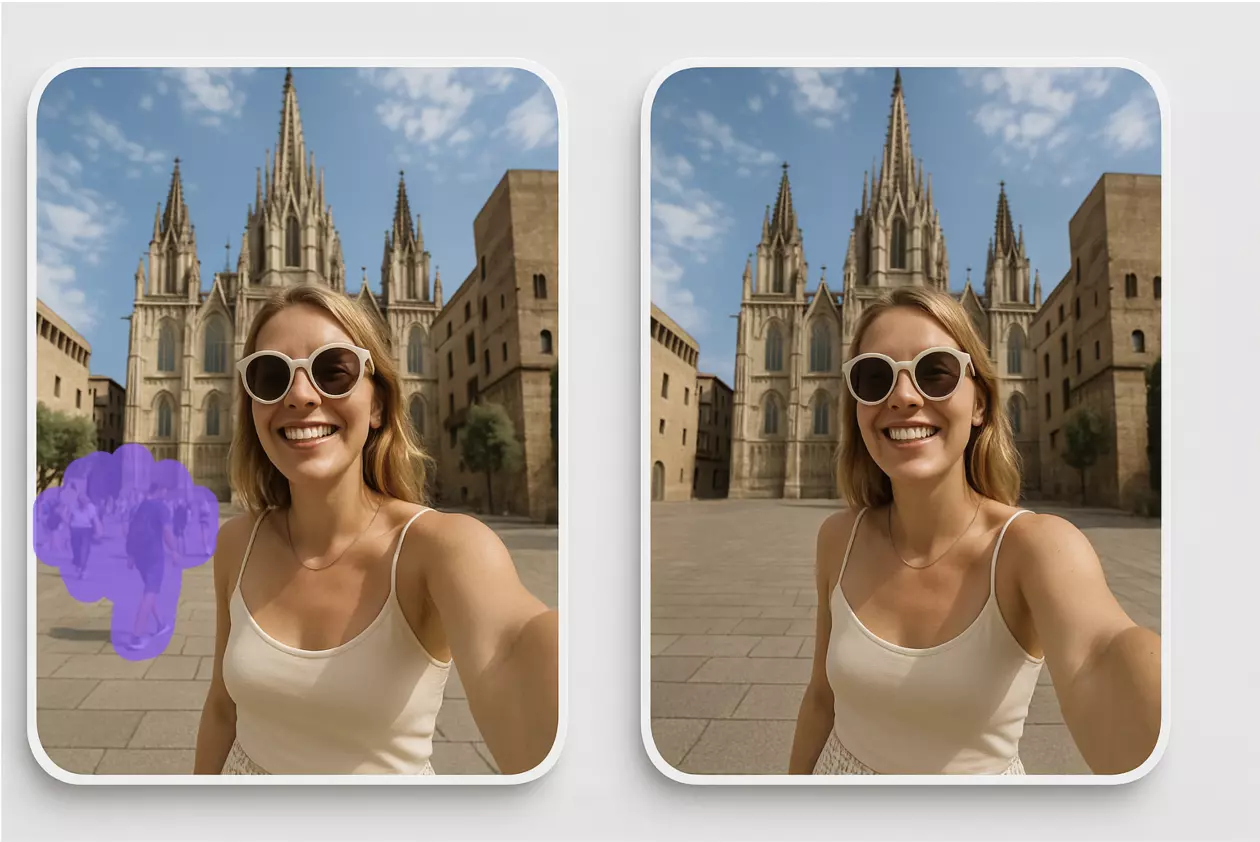
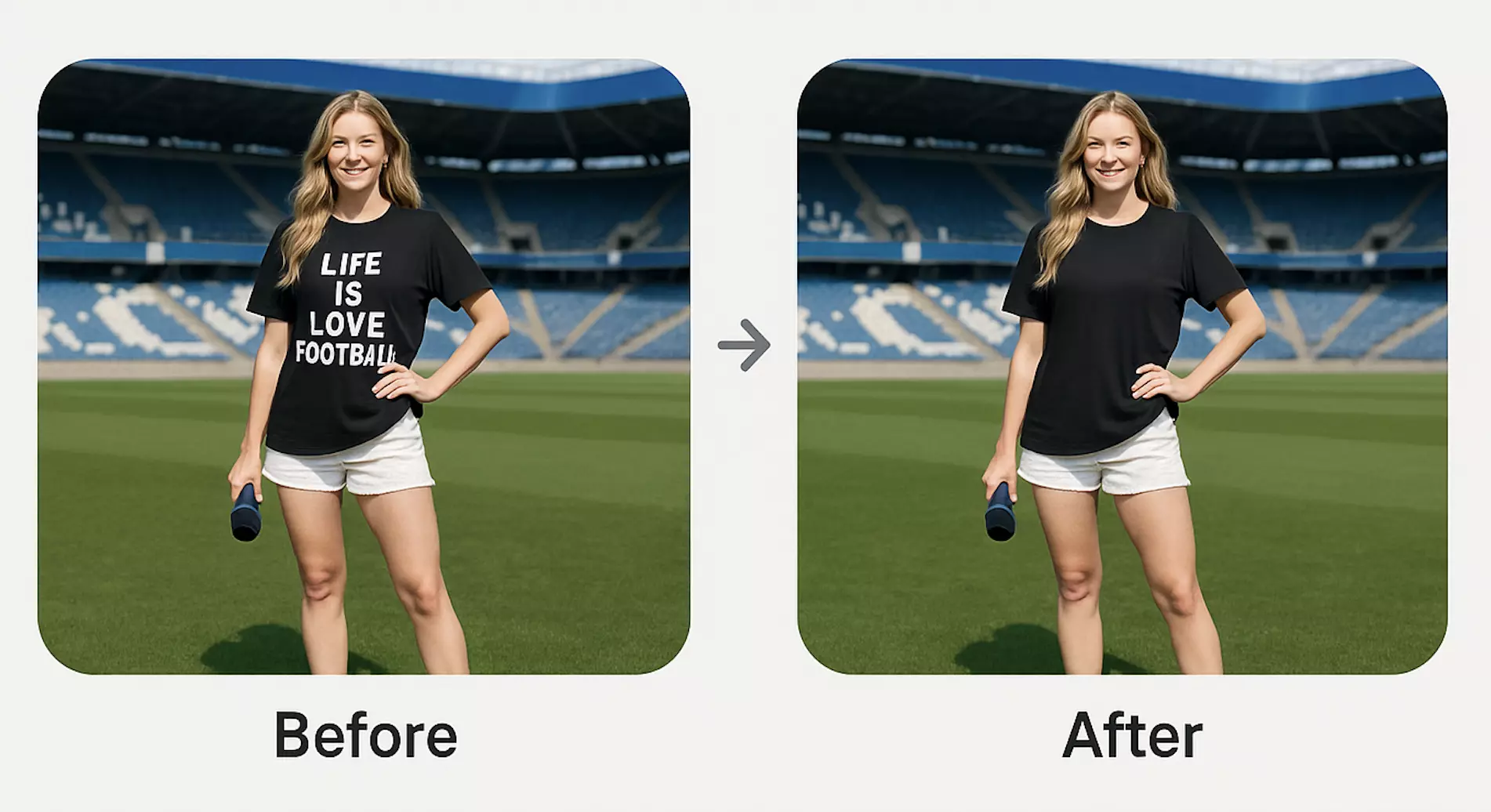
(See image: Before-and-after comparison of a product hero image where a sale date overlay is removed while fabric weave remains sharp.)
Why removing promo text matters for faster e‑commerce refreshes
- Accelerate launches without re-shoots: Clean, text-free assets let you swap copy and pricing in your ad platforms and PDPs without new photography.
- Maintain brand consistency: Reuse the same lighting, angles, and color grading while updating messaging for seasons, bundles, or geo-specific promos.
- Comply with marketplace rules: Amazon and other marketplaces increasingly prefer distraction-free main images with consistent backgrounds.
- Scale across channels: One master set can feed PDP galleries, Amazon A+ content, Shopify collections, and paid social—without embedded text that goes out of date.
What counts as a text overlay (and why it’s tricky)
Text overlays aren’t only crisp vector fonts:
- Rasterized text and compression: When exported from previous designs, text becomes pixels that blend with background textures. JPEG compression introduces halos and blocky artifacts around letters.
- Color bleed and anti-aliasing: Edge smoothing means letters spill into nearby pixels. Removing text must reconstruct what was underneath those softened edges.
- Texture disruption: On complex surfaces—fabrics, brushed metals, glass, glossy bottles—text overlays distort reflections, weave patterns, or grain that must be rebuilt convincingly.
The goal is to remove text from image areas without flattening texture, bending highlights, or leaving cloning repeats.
Methods to remove text from image: what to use when
- Clone/Heal tools: Good for small, uniform areas. Downsides: visible repeats, warped lines, and time-consuming manual brushwork.
- Content-aware fill (classic): Faster than manual, OK for matte, uniform backgrounds. Struggles with periodic textures (knits, tiles), glass, and labels with gradients.
- Generative fill (desktop): Powerful, but requires licenses, a learning curve, and careful prompts. Can over-smooth materials or invent textures that don’t match the product.
- AI online tools focused on cleanup: Purpose-built to remove text from photos while preserving materials and lighting. Fast for single images and practical for batch sets in campaign refreshes.
When time and consistency matter, AI remove text from image tools are a strong default, especially on textured or reflective materials.
Choose the right approach by material
- Fabrics (knits, weaves, denim): Prioritize texture continuity and seam alignment. Over-blur creates muddy areas; cloning repeats look artificial.
- Brushed metals and aluminum: Watch for directionality in the grain. Reconstructed areas must keep the same micro-scratches and highlight roll-off.
- Plastics and matte finishes: Maintain subtle shading and color uniformity to avoid banding.
- Glass and glossy bottles: Preserve specular highlights and label curvature; small inaccuracies become obvious on reflective surfaces.
- Printed labels: If text sits on a label, make sure the label’s edges, paper texture, and any embossing remain intact.
Tip: Zoom to 200–400% and toggle before/after frequently. If the fix is invisible at 100% and honest at 200%, you’re on the right track.
(See image: Side-by-side results on fabric, metal, and glass showing clean reconstruction and preserved reflections.)
How to remove text from photos with Pixflux.AI in five steps
Pixflux.AI is an online tool designed for AI image cleanup—ideal when you need to remove text from image overlays while keeping texture fidelity and color consistent across SKUs. Start here to remove text from image online and follow the steps below.
- Open Pixflux.AI
- Go to the tool page in your browser. No complex setup required.
- Upload your original image
- Drag-and-drop or select the photo with promo text, dates, or corner banners.
- Choose the Text Removal tool and let AI process
- Select the AI text removal option. The model identifies letters, halos, and blended edges, then reconstructs the underlying texture.
- Preview and refine
- Inspect edges at 200–300%. If needed, re-run with a tighter selection or adjust strength to reduce over-smoothing on fabrics or highlights on glass.
- Download the cleaned photo
- Export the final image and save your master in a lossless format (PNG or high-quality JPEG) for further layout.
(See image: Pixflux.AI interface showing the flow—upload → AI processing preview → download cleaned photo.)
Pro tip: When addressing multiple text zones (e.g., top corner badge plus a footer banner), remove them in separate passes to maintain local texture control.
Batch refresh without re‑shooting
Campaigns rarely need one image; they need fifty. With Pixflux.AI, you can upload and process multiple images in one go to:
- Strip old promo dates from a full category set
- Remove corner badges while preserving product edges
- Standardize cleaned assets for PDP galleries and ad variations
Batch editing helps you deliver consistent results across SKUs, saving days of manual retouching and avoiding re-shoots. Combine batch text removal with background cleanup or enhancement for a complete creative refresh.
Quality checklist and metrics to trust your results
Use this quick QA pass before publishing:
- Edge fidelity: Curves and seams should remain smooth; no jaggedness where text overlapped.
- Texture preservation: Fabrics keep weave detail; metals retain directional grain; glass highlights look natural.
- Color consistency: No sudden hue shifts in the cleaned area. Check neutrals and skin tones (if applicable).
- Compression footprints: Avoid new JPEG halos or banding. For critical assets, export to PNG or high-quality JPEG (90–100).
- Scale check: View at 100% and 200–300%, and also zoom out to the intended display size (mobile PDP, desktop ad).
- Variant parity: If a hero and its color variants were all cleaned, compare them side-by-side for identical quality.
AI online tools vs traditional methods
Time, learning curve, and batch efficiency are where online AI tools stand out compared to manual retouching or outsourced edits.
- Speed
- AI tools: Seconds to minutes per image; batch runs in parallel.
- Manual retouch: 10–45 minutes per image depending on complexity.
- Outsourcing: 24–72 hours turnaround, plus revisions.
- Learning curve
- AI tools: Point-and-click. No advanced mask crafting or brush settings required.
- Desktop pro apps: Powerful but require training, plugins, and careful layer management.
- Batch processing
- AI tools: Built for multi-image workflows; consistent settings across sets.
- Manual/outsourcing: Variability between editors; harder to keep texture behavior identical.
- Consistency and quality risk
- AI tools like Pixflux.AI: Trained to preserve materials; predictable results across common surfaces.
- Manual: Quality depends on the retoucher; repeated patterns and over-smoothing are frequent pitfalls.
(See image: Side-by-side results—manual clone stamp cleanup vs AI remove text from image on a glossy bottle label, highlighting preserved reflections and label curvature.)
Compliance and ethics: watermarks, trademarks, and usage rights
- Only remove text or watermarks from images you own or are authorized to edit.
- Do not use watermark removal to bypass licensing terms, platform rules, or brand guidelines.
- For trademarks and product labels, ensure your edits do not misrepresent the product. Marketplaces may reject assets that appear deceptive.
Note: Use remove text from photos capabilities responsibly. Keep an original copy and document your edits for brand and marketplace audits.
Troubleshooting: common artifacts and how to fix them
- Over-smoothing on fabric
- Symptom: The cleaned area looks soft or plastic-like.
- Fix: Re-run with lower strength; perform removal in smaller selections; add a subtle grain layer if needed to match the surrounding weave.
- Repeating patterns from cloning
- Symptom: Tiled artifacts along the cleaned region.
- Fix: Favor AI removal over manual clone; if cloning is necessary, sample from varied areas and rotate the source.
- Halo edges on high-contrast text
- Symptom: A faint outline where letters used to be.
- Fix: Expand the selection slightly beyond the text edge before removal; apply a gentle feather; reprocess.
- Bent reflections on glass or glossy labels
- Symptom: Warped highlight paths after text removal.
- Fix: Remove text in smaller curved segments; refine with a soft brush; ensure highlight continuity across the curve.
- Color shift on matte surfaces
- Symptom: The cleaned area is warmer/cooler than the rest.
- Fix: Sample and apply a selective color correction; match luminance and saturation; export to a higher-quality format.
Visual examples you can replicate
- Before/after: Remove a sale date overlay from a fabric hoodie hero shot while keeping the weave crisp. (See image.)
- Interface view: Pixflux.AI three-step workflow from upload to download. (See image.)
- Comparison: Manual clone-stamp vs AI on a glossy bottle label. (See image.)
FAQ: Remove text from image for Amazon, Shopify, and ad placements
Can I reuse product images on Amazon after I remove text from photos?
Yes, provided the final images meet Amazon’s image policies. Ensure your main images are distraction-free with clean backgrounds and no promotional text or watermarks. Verify size, DPI, and cropping match Amazon’s guidelines. Keep an original copy and your edited version for internal QA.
Will AI remove text from image while preserving fabrics and glossy materials?
Yes, modern AI removal tools can reconstruct textures and reflections convincingly. For fabrics, check weave continuity at 200–300% zoom; for glass and glossy labels, ensure highlight paths look natural. If you notice over-smoothing, re-run removal with lighter strength or smaller selections to protect micro-detail.
Is batch photo editing supported for large creative refreshes?
Yes, you can process multiple images in one session for consistent results. Batch removal is ideal for clearing promo badges and dates across a full SKU lineup. After processing, perform a quick side-by-side QA pass to confirm parity across variants and colorways.
What image formats work best when I remove text from image overlays?
Use the highest-quality source available and export to PNG or high-quality JPEG. Lossless or lightly compressed sources help the AI reconstruct cleaner textures with fewer halos. For final delivery, match platform specs (e.g., pixel dimensions and background requirements) and avoid aggressive compression.
Is it acceptable to remove watermarks or logos from photos?
Only if you own the rights or have explicit permission to do so. Watermark removal should never be used to bypass licensing or platform policies. If an image contains third-party branding or marks, secure authorization before editing and publishing.
How do I avoid halos or color shifts after text removal?
Slightly expand your selection and reprocess, then verify color at 100% and 200% zoom. If halos persist, re-run with a softer edge or adjust local color balance to match surrounding pixels. Export in a higher-quality format to minimize compression artifacts.
Will the cleaned images be accepted on Shopify and ad platforms?
Yes, as long as they meet each channel’s size and content rules. Shopify is flexible on supporting images without embedded text, and most ad platforms prefer text-free product photography for clarity. Always check platform templates and test on mobile to validate legibility.
Case snapshot: A refresh workflow that scales
- Monday: Clear last season’s “20% OFF” badges from 60 category images.
- Tuesday: Replace backgrounds for hero shots where needed and enhance clarity for PDP zoom.
- Wednesday: Final QA for edge fidelity and color consistency; export master set for Amazon, Shopify, and paid social.
This edit-first approach aligns with the current trend: AI text and object removal has matured, enabling frequent creative refreshes without studio bottlenecks.
Conclusion and next steps
Removing outdated promo text is the fastest way to extend the life of your best product photos—no re-shoots, no delays, just clean assets ready for Amazon, Shopify, and cross-channel ads. With Pixflux.AI, you can preserve textures, maintain color accuracy, and scale edits across entire collections in minutes.
Ready to reuse your assets without compromise? Open Pixflux.AI and start with AI remove text from image to refresh your catalog today.