Ethical AI Editing Building Trust with Watermark Removal and Transparency
What does ethical AI image editing look like? See when watermark removal is okay, how to disclose edits, and a simple workflow you can trust.
 Emily CremerJanuary 10, 2026
Ethical AI Editing: Building Trust with Watermark Removal and Transparency
If your brand publishes product photos, UGC roundups, or social ads, you’ve probably faced this dilemma: you need consistent, on-brand visuals, yet many assets arrive with watermarks, logos, or distracting marks that don’t fit your creative. In 2026, audiences expect clarity about what’s real, what’s edited, and why. The fastest way to lose trust is to “clean up” images without permission or disclosure.
This article lays out a practical, ethical path for using AI image editing—especially watermark removal—without compromising credibility. We’ll cover licensing, disclosure, acceptable use, and how to run a reliable workflow at scale. If you want a hands-on way to do this, AI tools like Pixflux.AI make it easy to implement ethical watermark removal within a transparent, documented process you can defend publicly.
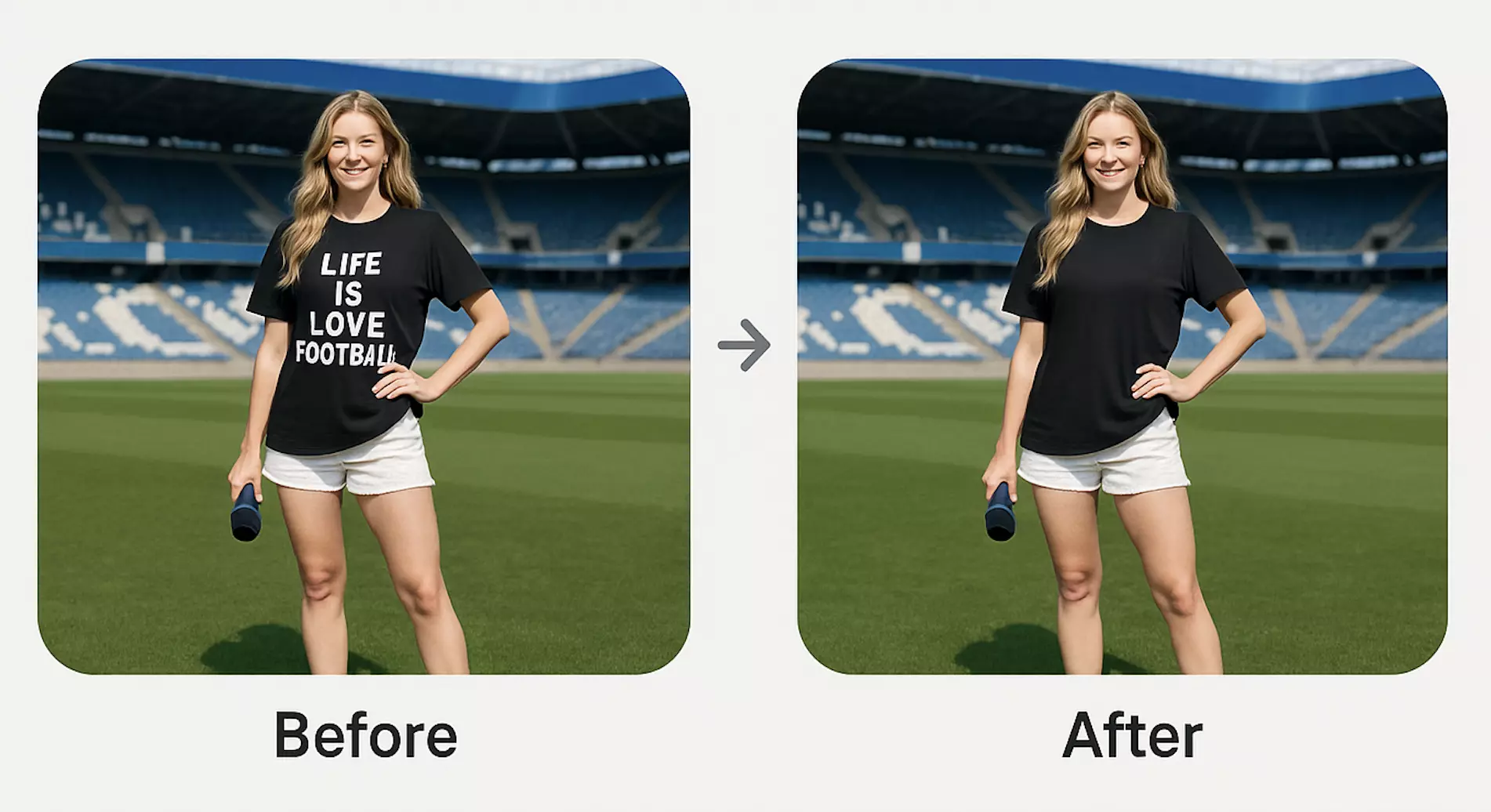
(Reference image suggestion: Before-and-after comparison of a brand-owned product image showing a visible watermark versus a clean result after responsible removal with a disclosure caption.)
Why ethical AI image editing matters in 2026
Two shifts define today’s environment:
- Transparency is a brand differentiator: Shoppers and followers reward content that explains edits plainly—especially AI-assisted changes.
- Provenance is becoming standard: Content credentials and similar methods are gaining adoption, making edit histories and origins traceable across teams and platforms.
When you deliberately choose an ethical workflow, you reduce legal risk, streamline approvals, and build audience trust. It also makes your creative team faster: you can clear legitimate watermarks, preserve product truth, and document the change once—rather than re-litigating every edit.
Watermarks, ownership, licensing, and disclosure: the essentials
A quick decode of the terms that drive the policy:
- Ownership: If your brand created the image or acquired it under a work-for-hire agreement, you own it. You can typically remove your own watermark for distribution variants.
- Licensing: If you licensed a stock photo or influencer asset, check the license. Many licenses restrict watermark removal or require attribution. When in doubt, don’t remove.
- Watermark: Any overlay (text, logo, pattern) intended to signal ownership or license status. Removing it without authorization can violate copyright or contracts.
- Disclosure: A clear note that an image was edited (e.g., “Watermark removed; brightness adjusted”). It may go in the caption, alt text, or content notes.
- Content credentials/C2PA: An emerging ecosystem that embeds edit history and provenance into files. It supports transparent storytelling and auditability, even if your audience never inspects the metadata.
Acceptable vs. unacceptable watermark removal: real examples
Acceptable:
- You remove your own brand’s watermark from a product image before uploading to your ecommerce CMS.
- Your photo team shot a campaign; raws contain a temporary watermark. You clear it for the final, published cut and note the change in your asset log.
- You commissioned a creator, and the contract grants editing rights and watermark removal. You document the removal as part of the delivery.
Unacceptable:
- You grab a watermarked stock photo without a valid license, remove the mark, and publish. This is a copyright and contract risk, and it breaks audience trust.
- You scrape UGC from Instagram, remove the creator’s handle from the image, and run it in ads without consent. This violates platform rules and image rights.
- You alter competitor or partner assets without written permission to remove marks or identifiers.
Bottom line: Only remove watermarks from assets you own or are explicitly licensed to edit, and disclose edits where appropriate. Never use a watermark remover to bypass licensing or attribution.
Selecting a watermark remover with ethics in mind
Look for features and safeguards that support responsible use:
- Transparent results: A preview and reversible workflow help you evaluate edits before export.
- Fine control: Brush-based or region selection keeps the rest of the photo intact, preserving product truth.
- Quality: Smart inpainting that restores textures and edges without telling artifacts.
- Batch capability: Teams often need to clean multiple variants; batch flows save hours without cutting corners.
- Privacy and security: Choose a trusted editor and follow your organization’s data policies. For sensitive shoots, limit who can access originals and outputs.
- Documentation: Keep a simple change log; when possible, retain metadata or a versioned file.
Pixflux.AI is a practical choice for teams that want speed and control—fast previews, adjustable edits, and consistent outputs—without a heavy learning curve.
AI online tools vs traditional methods
- Time cost: AI online tools handle complex removals in seconds; manual retouching in desktop software can take minutes per image, multiplied across product lines.
- Learning curve: Traditional software is powerful but steep. Modern AI editors surface the right controls—erase, restore, refine—so non-designers can contribute confidently.
- Batch efficiency: Clearing a set of product images or campaign variations is far faster with AI batch flows than manual lasso-and-clone workflows.
- Collaboration: Browser-based tools make it simple for marketers, designers, and retouchers to align on a single result preview without swapping heavy files.
- Control trade-offs: Desktop editors offer offline control; they’re ideal for sensitive shoots that can’t leave your local environment. Online tools shine when speed, simplicity, and shared review are the priority.
Choose the path that fits the asset’s sensitivity and the team’s SLA. Many organizations use both: desktop for confidential work, an online editor like Pixflux.AI for day-to-day production.
A best-practice checklist for ethical watermark removal
- Verify rights: Confirm you own the image or the license explicitly allows watermark removal.
- Preserve product truth: Don’t change dimensions, labeling, or features that could mislead buyers.
- Document the edit: Log “watermark removed,” date, editor, and purpose.
- Disclose where appropriate: Use a caption or production notes in ads, PDPs, or press kits.
- Keep versions: Store the original and the edited output to back up claims.
- Respect platform rules: Social platforms and marketplaces may require attribution or disallow certain edits—follow them.
How to remove a watermark responsibly (and transparently)
The goal is a repeatable workflow that’s easy to train and audit.
1) Confirm permission
- Check ownership or license terms. If unclear, hold the edit and ask legal or the rights holder.
2) Isolate what you’ll change
- Identify only the watermark region. Decide if you’ll make any additional corrections (e.g., dust removal, slight enhancement).
3) Run the edit and preview
- Use an AI editor to remove just the watermark, then zoom in to check edges, textures, and brand elements.
4) Disclose and document
- Depending on context, add a caption note, keep a change log, and retain the original file.
5) Export for channel specs
- Save files in the right size and format for your ecommerce, ads, or social platform.
(Reference image suggestion: Screenshot sequence of the Pixflux.AI interface illustrating the three-step flow: upload original image, AI processing preview, and download.)
Pixflux.AI in practice: a responsible watermark remover in three steps
Here’s the streamlined path for assets you own or are licensed to edit:
- Upload your original image
- Open Pixflux.AI’s watermark remover and drop in your file. Keep the original safely stored.
- Let the AI process and refine
- The AI clears the marked area. Use on-canvas controls to refine the selection, restore if needed, and preview at 100% to ensure textures look natural.
- Download and note the change
- Export the cleaned image, add a brief note (e.g., “Watermark removed, no other edits”), and file both the original and the final to your asset library.
That’s it—no long retouching sessions, no risky shortcuts. For larger shoots, Pixflux.AI also helps with batch cleanup so teams can process multiple images consistently in one pass.
Extending edits ethically: backgrounds, objects, and enhancement
Most brand images need more than watermark cleanup. You might need a neutral background for an Amazon PDP, to remove a stray cable, or to brighten a dim studio shot. The same ethical rules apply: edit with permission, preserve product truth, and disclose where needed.
- Background adjustments: Use AI to swap a cluttered backdrop for a clean studio tone that fits your marketplace guidelines.
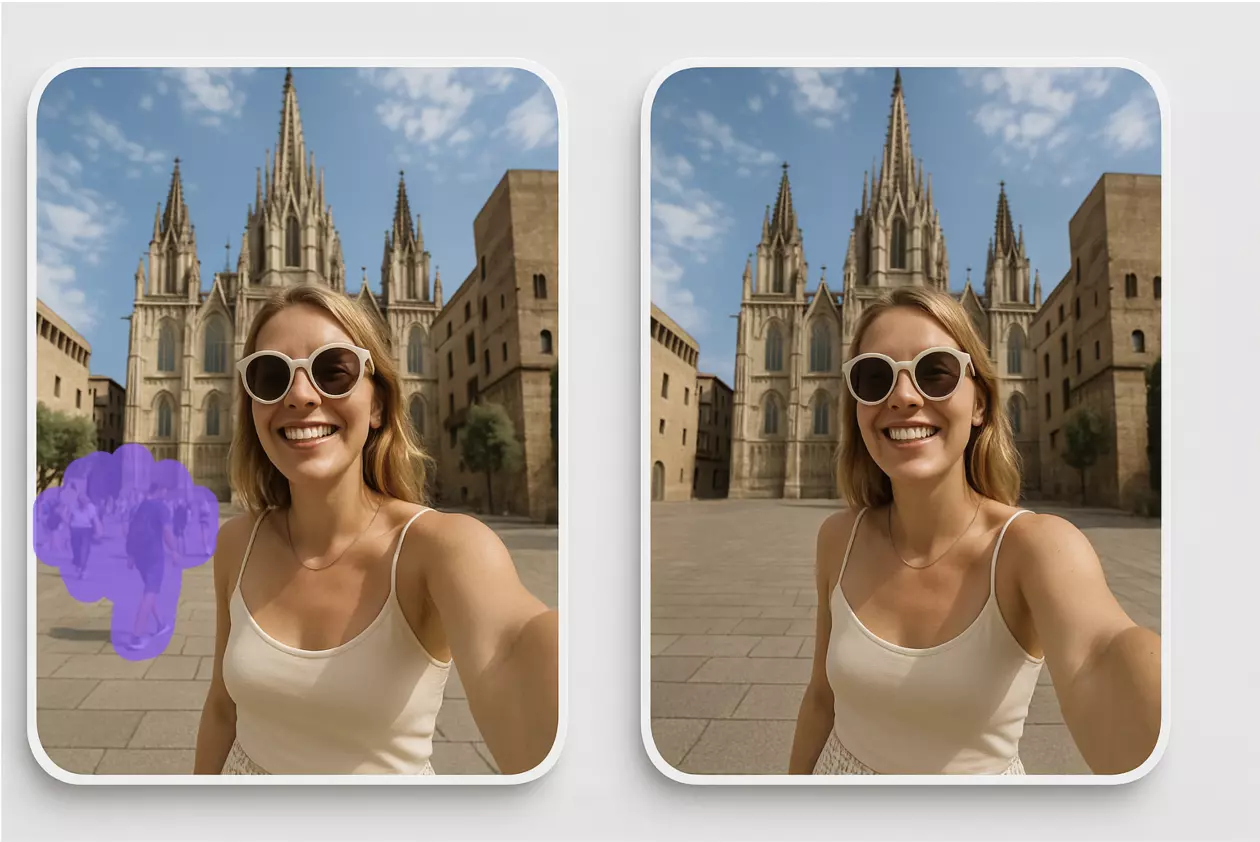
- Object removal: Clear distracting items—like a hand in a corner or a label from a prop—without altering the product’s features.
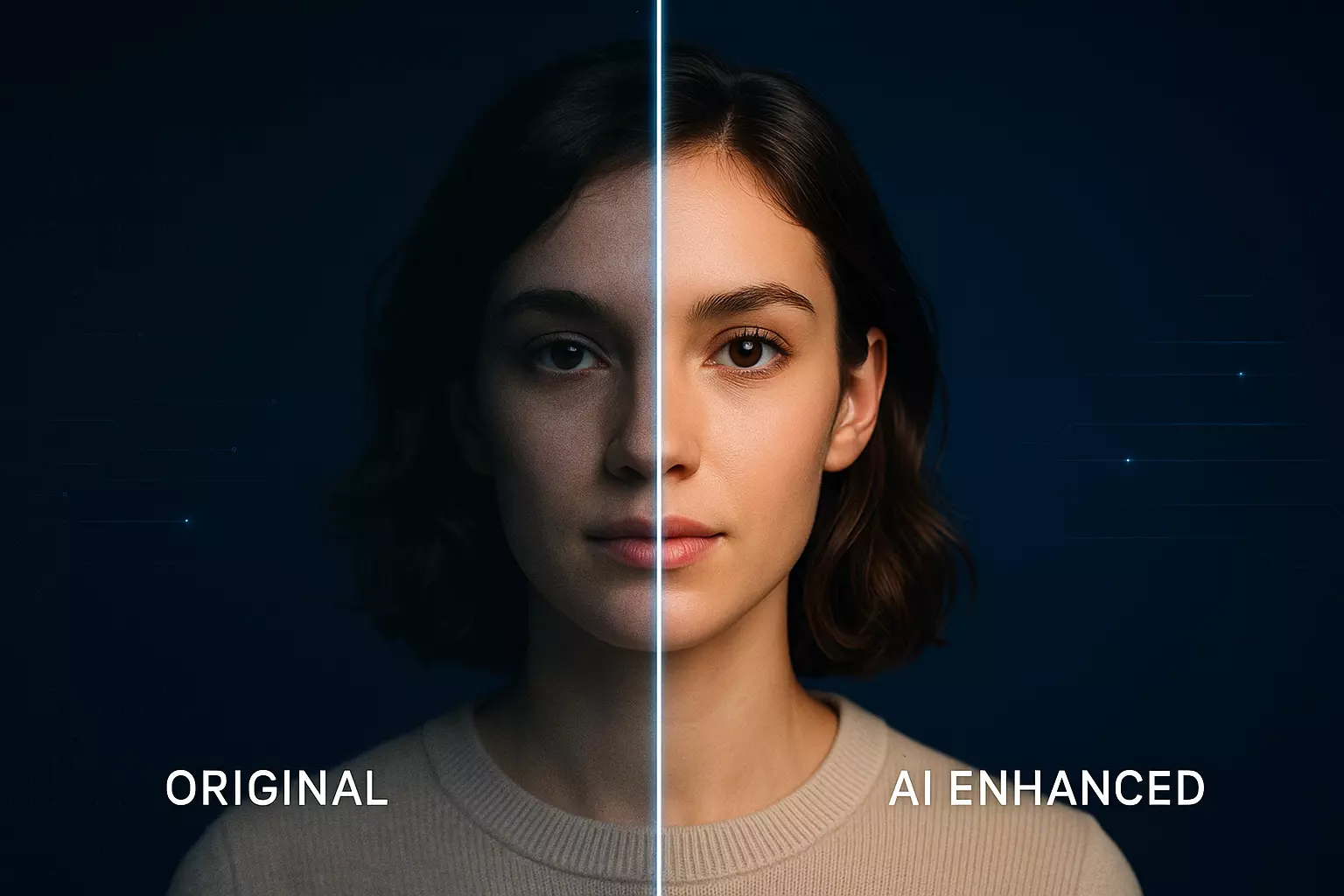
- Enhancement: Improve clarity, contrast, or sharpness so materials and colors read accurately.
Pixflux.AI makes these edits straightforward and consistent across campaigns. You can remove backgrounds, eliminate unwanted objects, and enhance details while keeping the product honest and the workflow efficient.
(Reference image suggestion: Side-by-side example of a product photo showing background removal and object removal that preserve the product’s appearance.)
Quality and accountability: audit trails, metadata, and versioning
To maintain trust as you scale edits:
- Keep originals and finals: Versioning is your simplest audit trail.
- Maintain a change log: Record edit type, date, and approver. Even a spreadsheet beats guesswork.
- Retain metadata when possible: Include credits, licensing notes, and edit context. As content credentials and C2PA practices mature, they’ll help verify provenance across platforms.
- Review before publish: Build a quick checklist—rights verified, edits accurate, disclosure included if appropriate.
This level of accountability not only protects your brand, it also speeds approvals and reduces rework.
Compliance boundaries: copyright, attribution, and platform rules
- Copyright and licensing: Only remove watermarks on assets you own or are clearly licensed to modify. Watermark removal must not be used to infringe copyright or evade licensing fees.
- Attribution and credit: If your license requires attribution, keep it—either in captions, credits, or metadata—even if you remove a watermark from the image itself.
- Platform policies: Marketplaces and social networks may restrict image edits or require disclosure. Align with those rules to avoid takedowns or penalties.
Reminder: Always follow local laws and company policies. When in doubt, get a written OK.
FAQ: Ethical watermark removal and transparency, answered
When is it acceptable to remove a watermark?
It’s acceptable when you own the asset or your license explicitly allows watermark removal. Confirm the rights in contracts or license terms before editing. If you’re unsure, don’t remove the mark and seek permission. Keep a record of the authorization and the edit.
Do I need to disclose that a watermark was removed?
Yes, disclose when the context benefits from clarity or when policies require it. A brief caption (“Watermark removed; colors unchanged”) or a production note is usually enough. In product pages or ads, prioritize disclosures that impact buyer understanding and platform compliance.
Can I remove watermarks from stock photos I haven’t paid for?
No—removing a watermark to bypass licensing is a copyright violation and a trust risk. Purchase the appropriate license or use alternatives that allow editing under their terms. Never use a watermark remover to circumvent payment, attribution, or usage limits.
What if user-generated content (UGC) includes a creator’s logo or handle?
Get explicit permission and follow the creator’s terms; otherwise, do not remove it. UGC often comes with implicit attribution in the image. If you license the content, specify whether watermark or logo removal is allowed, and credit the creator per agreement.
How do I ensure the result looks natural after removal?
Use an AI remover with precise controls and always zoom to inspect textures and edges. Avoid over-smoothing; restore fine details where needed. Compare against the original to ensure you preserved product truth—labels, materials, and colors should remain accurate.
Is batch watermark removal safe for brand workflows?
Yes, if rights are verified in advance and results are reviewed for quality and accuracy. Batch is ideal for your own catalog images or licensed shoots. Set a review step for random samples, log the edit, and keep original files for auditability.
Are online editors safe for sensitive images?
They can be, but follow your company’s data policies and choose tools you trust. For highly confidential shoots, use stricter access controls or a desktop workflow. For everyday catalog or social content, reputable online tools with previews and controlled sharing simplify collaboration.
Final notes on privacy and fair use
Only process images you own or are authorized to edit. Watermark removal is never a substitute for a proper license or creator permission. Respect platform rules and credit obligations, and avoid edits that may mislead audiences.
Conclusion and next steps
Ethical AI editing isn’t complicated: verify rights, make targeted changes, disclose as needed, and keep a simple record. This builds trust with shoppers and creators alike—and it makes your team faster and more consistent.
If you’re ready to put this into practice, open Pixflux.AI’s AI watermark remover, run the three-step flow, and document your result. From there, expand to background cleanup, object removal, and gentle enhancement—always with permission, accuracy, and transparency.