Ethical AI Editing Building Trust with Watermark Removal and Transparency
Curious if removing watermarks can ever be ethical? Here’s a clear framework, a Pixflux.AI how-to, and a trust-first checklist for brands and creators.
 Emily CremerJanuary 10, 2026
Ethical AI Editing: Build Trust with a Watermark Remover and Transparent Disclosure
Speed matters in ecommerce and social media. But so does trust. Brands and creators often receive images with watermarks—from vendor catalogs, agency proofs, or licensed stock—and need to produce clean visuals fast. The pressure to “just remove it” clashes with rising expectations for transparency, clear ownership, and platform compliance.
The good news: ethical AI editing is not only possible, it’s practical. With a thoughtful framework for when removal is permitted, plus the right tooling, you can protect brand credibility while moving quickly. Tools like Pixflux.AI make it easy to execute ethical watermark removal while maintaining image quality and leaving a clear audit trail. If you need a reference to get started, here’s an overview of ethical watermark removal you can apply immediately.
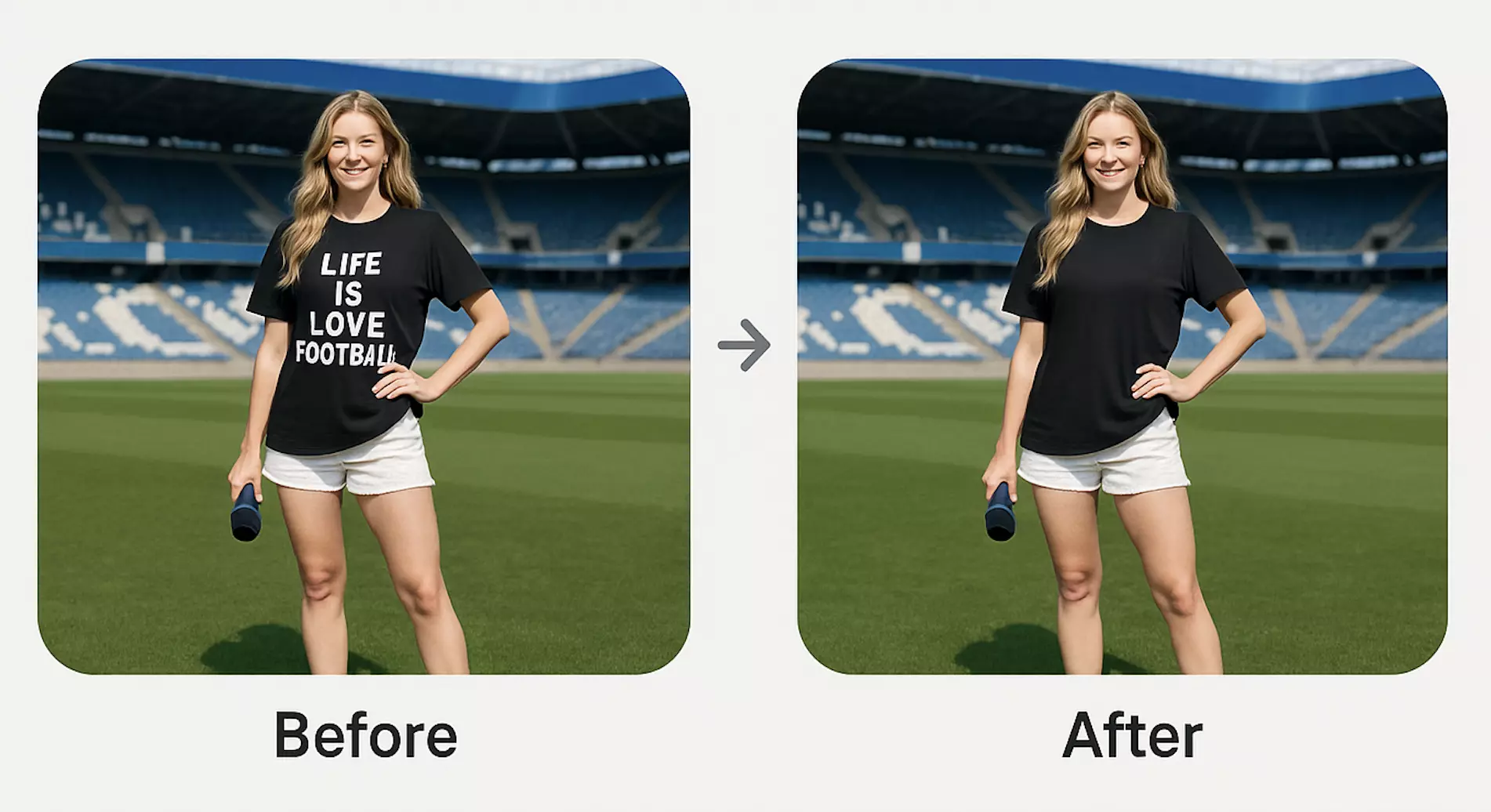
(See image: side-by-side before/after of a product photo where the watermark is lawfully removed and the background is cleaned, labeled with a short disclosure line.)
Why ethical AI editing matters for brand trust in 2026
Two trends define 2026 visual content workflows:
- Consumers expect transparent labeling for AI-edited visuals. Audiences reward brands that tell them what was edited, why, and with what permission.
- Platform policies are stricter about watermark removal and attribution. Many marketplaces and social platforms actively enforce policies against removing watermarks from unlicensed content and require proper credit.
Ethical AI editing connects the dots:
- It signals that your brand respects creators, rights-holders, and platform rules.
- It reduces takedown risks (DMCA claims, account flags) and the cost of rework.
- It converts better. People are more likely to buy from brands that label edits and cite ownership clearly.
Watermark basics: purpose, ownership, and fair use boundaries
Watermarks exist to:
- Indicate ownership or licensing status (e.g., stock agencies).
- Signal editorial provenance (e.g., newswire stamps).
- Protect drafts and proofs before client approval.
Before using a watermark remover, confirm:
- Ownership: Do you own the image (shot in-house) or have documented rights?
- License scope: Does your stock or partner license explicitly allow watermark removal?
- Use case: Are you creating a commercial asset (ads, PDPs) or editorial content (news, reviews), which may carry additional attribution rules?
Fair use rarely covers removing watermarks for commercial purposes. When in doubt, secure the clean source file or a license upgrade rather than editing around the rights.
Compliance note: Only remove watermarks from images you own or are authorized to edit. Do not use watermark removal to bypass copyright, attribution, or marketplace rules.
When is a watermark remover acceptable? A decision framework and red flags
Use this quick decision path:
Green lights (generally acceptable):
- In-house photos where a temporary watermark was added for internal review; you control the original files.
- Partner or supplier images where you have written permission to publish the clean version.
- Licensed stock where the license explicitly permits removal of watermarks or provides a clean download option you can access.
Yellow lights (requires extra checks):
- User-generated content (UGC) provided by customers or influencers. Confirm consent, terms, and whether the watermark is an artist’s mark that must remain.
- Editorial images. Check platform policies—many require visible credit or prohibit tampering with editorial marks.
Red flags (do not proceed):
- Unlicensed stock or images scraped from the web.
- Artist signatures or logos used as part of the artwork (not just a security overlay).
- Platform-specific watermarks (e.g., social app overlays) where terms prohibit removal.
If your answer is “I’m not sure,” don’t edit. Ask for rights documentation or use a different, clearly licensed asset.
Responsible tools: choosing an AI watermark remover and ethical alternatives
What to look for in a responsible AI watermark remover:
- Quality: Clean fill with realistic texture and consistent lighting.
- Control: Ability to review and adjust results before publishing.
- Non-destructive workflow: Save versions; keep an original for audit.
- Batch options: Handle multiple assets efficiently while maintaining consistency.
Ethical alternatives when removal isn’t allowed or needed:
- Ask for the clean file from the creator or partner.
- Purchase or upgrade a license that includes access to unwatermarked versions.
- Crop strategically if it doesn’t mislead viewers or alter meaning.
- Replace the asset with one you own or that’s properly licensed.
How to remove a watermark responsibly with Pixflux.AI
Pixflux.AI offers a practical, quality-first workflow for ethical removal when you have the rights to do so. Before you start, confirm ownership or permission and prepare a short disclosure note for the final asset if needed. For a refresher on process and pitfalls, see our quick guide to AI watermark remover best practices.
Three-step workflow: 1) Upload your original image
- Drag and drop your file directly into Pixflux.AI.
2) Let the AI process the watermark removal
- The tool analyzes the region and reconstructs the background to maintain realistic texture and lighting.
3) Download the result
- Review for artifacts. If needed, re-run or adjust the area for a cleaner fill, then export the final image.
Advanced five-step workflow (for nuanced edits): 1) Open the Pixflux.AI tool page 2) Upload the original image 3) Choose the watermark removal tool and run the AI 4) Preview and fine-tune
- Zoom to 100% to check edges and shadows; if the fill is too smooth, reprocess with a tighter selection.
- If the watermark crosses complex textures (like fabric weaves), try enhancing details with Pixflux.AI’s image enhancement option after removal. 5) Download the edited image
- Save both the edited version and the untouched original.
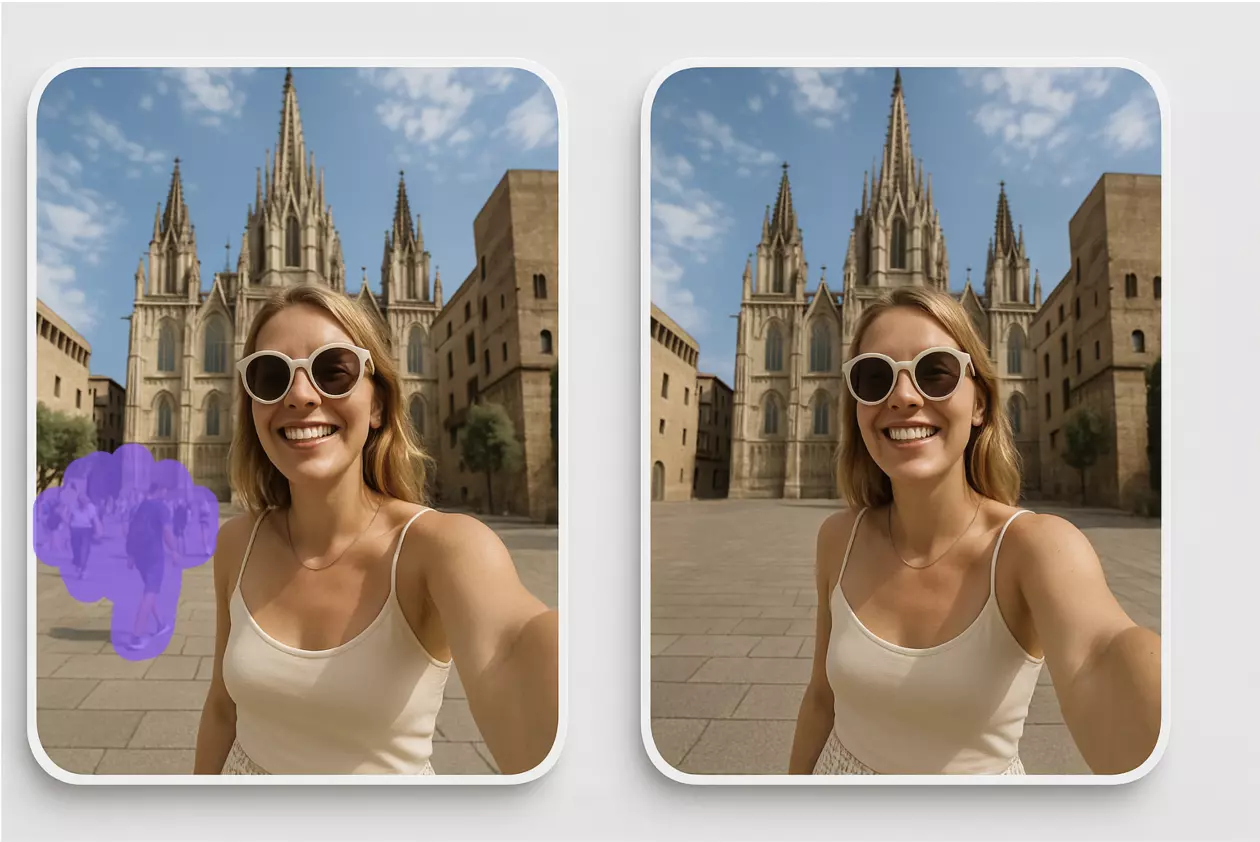
Tip: If the image has other distractions (e.g., tape, stray cables), use the object remover after watermark cleanup to finish the scene without over-editing.
(See image: Pixflux.AI interface with the three-step flow—upload → AI processes → download.)
Disclosure and provenance: labels, captions, and metadata that build trust
Visible label options:
- “Watermark removed with permission”
- “Edited for clarity: watermark removed”
- “AI-assisted edit; original available upon request”
Caption templates (use any that fits your brand tone):
- “Edited with AI. Watermark removed under license from [Agency/Creator].”
- “Retouched for product clarity; no changes to product shape or color.”
Metadata basics to store provenance (within your asset manager or file properties):
- Source/Creator: Who captured or owns the image.
- Rights/License: License ID, expiration, or partner contract reference.
- Edit Notes: “Watermark removed (Pixflux.AI), background cleaned, color unchanged.”
- Contact: Brand legal or content ops email for inquiries.
Always keep the original. Save a read-only copy of the untouched image alongside your final export to satisfy audits or platform reviews.
(See image: infographic of a disclosure template—visible label + credit line + concise edit notes.)
Beyond watermarks: ethical use of background removal, object remover, and photo enhancer
Watermark ethics extend to other AI edits that change context:
- Background removal and generation: For ecommerce, use a clean neutral background to highlight the product. Avoid scenes that imply endorsements or locations you don’t have permission to claim.
- Object removal: It’s acceptable to remove non-essential distractions (wires, dust, packaging creases) that don’t change the product’s features. Avoid removing defects that materially affect what a buyer receives.
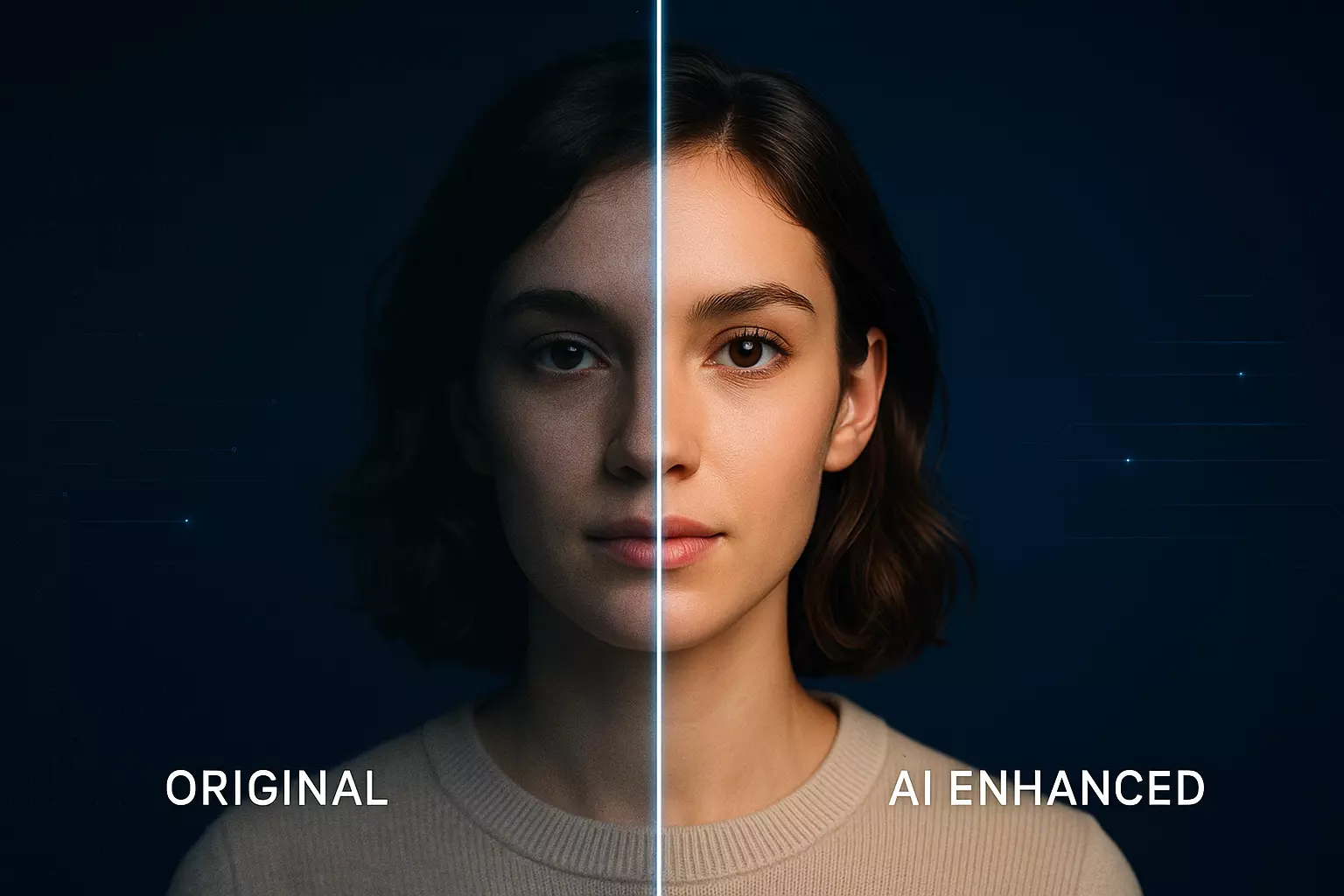
- Image enhancement: Sharpening and exposure corrections are fine; do not misrepresent color or texture beyond what the buyer will see.
- Batch processing: If you’re prepping a full PDP gallery or social rollout, Pixflux.AI can handle bulk operations to keep a uniform, compliant look across all assets.
Example scenarios:
- Amazon or Etsy listing: Remove studio watermark overlays, clean the background to pure white, and apply a consistent lighting enhancement for all images in the set.
- Instagram or TikTok Shop campaign: Remove proof stamps, generate an on-brand background, and add a disclosure line in the caption.
Risk assessment: legal considerations, platform policies, and consent checks
Legal and policy checklist:
- Ownership: Document license or partner permission before editing.
- Platform rules: Confirm marketplace and social policy on edited images, attribution, and watermark removal.
- Consent: For UGC with creator watermarks, get express written consent to remove it. Offer credit alternatives if required.
- Claims: Prepare a lightweight process for handling takedown notices (e.g., respond, replace with a licensed asset, update captions).
Risk tiers:
- Low risk: In-house content with internal watermark; quick green light to remove.
- Medium risk: Licensed stock; verify license scope before editing.
- High risk: Scraped images, artist signatures, editorial stamps; do not edit, replace instead.
Best-practice checklist for brands and creators
- Start with rights: Own it, license it, or get written permission.
- Keep originals: Store untouched files and document your edits.
- Label clearly: Add a short visible note and metadata for provenance.
- Edit minimally: Remove only what’s necessary; preserve product truth.
- Check platforms: Align with Amazon/Etsy/Pinterest/Instagram rules.
- Standardize: Use a repeatable workflow and naming convention for edited assets.
- Review at 100%: Inspect textures, edges, shadows before publishing.
- Train your team: Share this policy with designers, marketers, and freelancers.
- Escalate edge cases: If uncertain, pause and request a clean source or legal review.
AI online tools vs traditional methods
When comparing online AI tools like Pixflux.AI with traditional software or outsourcing, consider:
- Time to result
- Online AI: Seconds to minutes for high-quality fills, plus batch options for large sets.
- Traditional software: Requires manual cloning/healing; more time per image, especially on complex textures.
- Outsourcing: Turnaround can be hours to days; communication adds overhead.
- Learning curve
- Online AI: Minimal; three-step flow works for non-designers.
- Traditional software: Requires advanced skills to avoid visible artifacts.
- Outsourcing: Less learning, but you must manage briefs, revisions, and QA.
- Consistency at scale
- Online AI: Easy to apply uniform standards across hundreds of assets in one session.
- Traditional software: Consistency depends on individual editor skill and time.
- Outsourcing: Variable quality; style guides reduce but don’t eliminate drift.
- Collaboration
- Online AI: Anyone on the content team can use the same workflow without installing heavy software.
- Traditional software: Tied to specific machines and trained operators.
- Outsourcing: Coordination and review cycles add friction.
For fast-moving ecommerce or social campaigns, a streamlined, rights-aware tool like Pixflux.AI is usually the most practical option.
FAQ: ethical watermark removal, transparency, and content rights
Q1: When is it legal to use a watermark remover? A: When you own the image or have a license or written permission that allows removal. Examples include in-house photos with temporary watermarks or partner content approved for publication. Do not remove watermarks from unlicensed stock, artist signatures, or editorial marks.
Q2: Will AI removal degrade image quality? A: A good AI tool reconstructs texture and lighting convincingly. Still, review at 100% zoom for artifacts around edges or patterns. For complex surfaces (fabric, wood grain), run a second pass or lightly enhance detail after removal to match surrounding texture.
Q3: How should I disclose edits to maintain trust? A: Add a brief visible label (e.g., “Watermark removed with permission”), include a credit line if required, and store edit notes in metadata. Keep the original file for audit and platform reviews.
Q4: Can I batch-process images with watermarks? A: Yes. Pixflux.AI supports batch handling so you can clean multiple images in one session. Always confirm rights for each image in the batch and spot-check results before publishing.
Q5: What about platform-specific rules? A: Marketplaces and social platforms vary. Many prohibit removing their own watermarks or require attribution for editorial images. Check the latest policy pages for Amazon, Etsy, Instagram, TikTok, and others before you edit or publish.
Q6: What if a creator’s watermark also serves as a signature? A: Treat signatures and artist marks as integral to the work. Unless the creator explicitly authorizes removal, do not edit them out. Ask for a clean version or use a credited image instead.
Q7: How can I protect privacy and security when using an online tool? A: Use reputable tools, review their privacy documentation, and avoid uploading images you aren’t authorized to process. Keep local backups of originals and final exports. If needed, remove sensitive metadata before sharing publicly.
Q8: What if removal isn’t allowed but I still need a clean visual? A: Request the clean source, purchase a license that includes unwatermarked downloads, crop without misrepresenting the image, or replace it with an asset you own. Never remove a watermark to bypass rights.
Conclusion and next steps
Ethical AI editing isn’t a constraint—it’s a trust multiplier. By combining a clear decision framework, practical disclosure, and a reliable workflow, you can deliver clean, on-brand visuals that respect creators and policies.
When you have the rights to do so, use Pixflux.AI to remove watermarks cleanly, refine backgrounds, eliminate distractions, enhance clarity, and process entire sets consistently—all while keeping your originals and labeling edits. Ready to put this into practice? Start with a rights-checked image and an approachable watermark remover workflow that fits your team’s pace.
Notes:
- Only edit images you own or have explicit permission to modify.
- Label edits and maintain provenance to protect trust and compliance.
- Keep originals and document changes for internal audits.
(See image: a simple disclosure template with a visible label, a credit line, and a one-line edit note—ideal for ecommerce PDPs and social captions.)