Remove Object from Image: Turn Noisy Product Photos into High-Converting Creatives
Tired of props and price tags ruining product shots? See how AI object removal with Pixflux.AI cleans images fast and keeps listings consistent.
 Sierra CappelenDecember 11, 2025
Remove Object from Image: Turn Noisy Product Photos into High‑Converting Creatives
If you shoot product photos long enough, clutter sneaks in. A reflection in glossy packaging. A price tag taped to the box. A stray prop, wire, or stand you missed on set. Those “minor” distractions cost you majorly: they fragment your creative across marketplaces, confuse shoppers, and dampen ROAS when you scale paid social.
In 2025, marketplaces like Amazon and social ad platforms are stricter about distraction‑free imagery, and studio teams are expected to deliver volume and consistency. The good news: AI tools now make it practical to remove objects from images in seconds, not hours. With Pixflux.AI as your editing hub, you can quickly remove object from image to keep every SKU on‑brand and channel‑ready—without rebuilding your workflow.
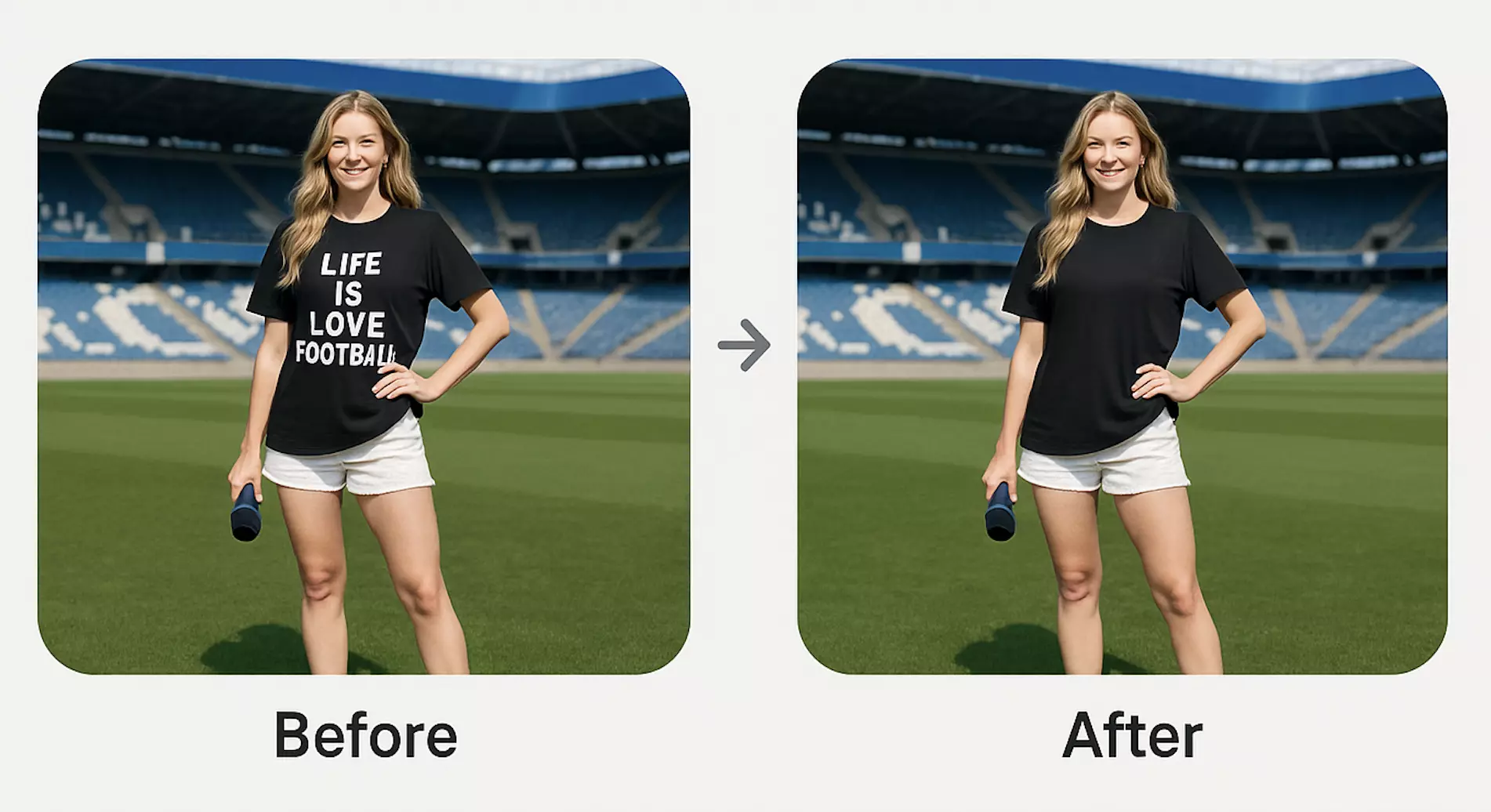
(See image: A before‑and‑after of a product shot where Pixflux.AI removes a price tag and glass reflections while preserving surface texture and label edges.)
Why object removal lifts ROAS and conversion on marketplaces
Clean visuals reduce cognitive load and decision friction:
- Fewer distractions increase focus on the product’s value drivers.
- Consistent imagery improves trust scores on Amazon, reduces returns, and stabilizes CTRs in Meta ads.
- Tidying reflections and scuffs often lifts perceived quality, impacting AOV for premium SKUs.
In performance terms:
- Paid social: Fewer visual distractions often yields higher thumb‑stop and a more efficient CPC.
- Marketplaces: Clear primary images more easily pass listing standards, reducing rework and launch delays.
- CRO: Cleaner hero shots reduce bounce and lift add‑to‑cart rates.
For teams running dozens or thousands of SKUs, cutting edit time per image from 10–20 minutes to under 1 minute compounds into real savings—and gives designers time back for creative that moves the brand forward.
What “remove object from image” really means
A quick vocabulary to align your team:
- Object removal: Deleting unwanted elements (tags, stands, wires, logos, people in background) while reconstructing the scene behind them.
- Inpainting: The AI technique that fills in missing pixels based on surroundings and learned patterns.
- Content‑aware fill: A traditional approach in tools like Photoshop that samples nearby areas to patch over regions.
- Quality metrics in practice:
- Edge integrity (no jagged contours)
- Texture continuity (wood grain, fabric weave, specular highlights)
- Color consistency (no banding or blotches)
- Shadow realism (softness and direction match the light in your scene)
Pro tip: Evaluate object removal at 100% zoom and at thumbnail size. If it looks natural in both, it’s ready for listing or ads.
Photoshop content‑aware vs AI object removers: speed, control, accuracy
Photoshop remains powerful for pixel‑level control and complex composites, but today’s AI object removers shine for day‑to‑day production.
- Speed
- Photoshop: Selection, patching, cloning, healing—often multiple passes per object.
- AI object removers: One brush selection and generate. Great for repetitive cleanup.
- Control
- Photoshop: Surgical with the right skills; manual masking and layer work required.
- AI object removers: Intuitive controls, strong defaults; quick re‑generations if the first pass isn’t perfect.
- Accuracy
- Photoshop: Excellent when handled by a senior retoucher, but time consuming.
- AI object removers: Impressive at reconstructing textures and patterns; especially strong on flat backgrounds, product stands, and small props.
When a studio is under deadline pressure or handling a batch, AI wins on throughput without sacrificing commercial quality. Where you need pixel‑precise compositing for hero campaigns, traditional tools still have a place—often in combination with AI.
Choose the right workflow: batches vs one‑off fixes
- Studio batches (catalog updates, Amazon image spec cleanups, seasonal refreshes)
- What matters: speed, consistency, bulk handling.
- Recommendation: Use an AI tool like Pixflux.AI for object removal, light background cleanup, watermark removal (for your own assets), and small retouches in one pass. The batch mindset reduces toggling and revisions.
- One‑off hero fixes (campaign key visuals, packaging launches)
- What matters: immaculate detail and art direction.
- Recommendation: Start with AI removal for speed, then fine‑tune edges, shadows, and gradients in your editor of choice if needed.
Pixflux.AI also covers adjacent tasks—like removing busy backgrounds, enhancing clarity, or erasing stray watermarks—so your team doesn’t bounce between tools for routine cleanup.
How to remove objects from images with Pixflux.AI (upload → AI → download)
Use this five‑step flow whenever you need to clear props, wires, or small defects quickly.
- Open Pixflux.AI.
- Upload your original image (JPEG or PNG works best).
- Select the object removal tool, brush over the unwanted area, and let the AI process. If you’re new, try it now to remove unwanted objects from photos in seconds.
- Preview the result and fine‑tune:
- Re‑brush tight edges if the first pass leaves halos.
- Nudge the brush size to better match the object’s boundaries.
- Use image enhancement to sharpen details if the fill area looks too soft.
- Download the cleaned image and save a versioned file name (e.g., SKU1234_main_clean_v2.jpg).
That’s the core workflow. For background fixes or product cutouts, repeat with the background removal or background generation tools to get ad‑ready scenes.
(See image: Pixflux.AI interface—upload → AI processing → download—demonstrating the simple three‑step flow.)
A repeatable cleanup checklist (props, tags, wires, scuffs, reflections)
Run this checklist before you publish on Amazon, Shopify, or Meta:
- Price tags and stickers: Remove them, then check label typography nearby—ensure no smeared edges.
- Product stands and wires: Clear them and confirm shadows look realistic without floating products.
- Scuffs and dust: Heal small marks on packaging, glossy lids, or screens.
- Stray brand marks: If you’ve used sample packaging with old logos, remove or replace appropriately to match the final SKU.
- Specular reflections: Reduce or remove hotspots on glass, foil, or gloss coats while preserving true material cues.
- Background distractions: Eliminate wrinkles, seams, or objects outside the hero.
- Watermarks on your owned assets: Remove legacy overlay marks from your content libraries.
- Final consistency pass: Ensure light direction, grain, and color match the rest of the gallery and creative set.
QA for marketplace and ads consistency
- Amazon:
- Primary image: Pure white background; no additional props or text. Ensure edges are crisp and shadows subtle or removed as required.
- Alternate images: Lifestyle allowed; keep object removal honest to the depicted product.
- Shopify PDP:
- Maintain consistent cropping/aspect ratio across variants; verify object removal doesn’t change perceived size.
- Keep file sizes optimized for fast load without visible compression in filled areas.
- Meta ads:
- Test clean product‑only versions vs minimal lifestyle backgrounds.
- Watch thumbnails: AI fills should look natural at small sizes and in motion if used in video carousels.
Tip: Build a one‑page spec with do/don’t examples and share it with your retouching team so every editor aims for the same finish.
Advanced object removal techniques that sell the effect
- Edge refinement
- Zoom to 200% to check for soft halos. Re‑brush narrower selections or run a slight contrast boost on the edge region to match surrounding sharpness.
- Shadow continuity
- If removing a stand eliminates a shadow the eye expects, draw a very soft replacement shadow on a separate layer in your editor, matching the scene’s light angle and softness.
- Texture cloning for tricky fills
- On patterned surfaces (wood grain, fabric, tile), after AI removal, clone a small patch to reintroduce micro‑texture where the fill looks overly smooth.
- Background continuity for gradients
- On sweeps or seamless backgrounds, ensure the gradient remains smooth. If banding occurs, add slight noise or use a gradient overlay at very low opacity to blend.
(See image: Side‑by‑side comparison—manual Photoshop retouch vs an AI object remover on a cluttered tabletop product photo.)
Risks, rights, and disclosure
- Watermarks and trademarks: Only remove watermarks, logos, or marks from images you own or have explicit rights to edit. Do not use removal to misrepresent product origin or violate marketplace rules.
- Product accuracy: Object removal should not change the product’s features or claims. Keep edits truthful and consistent with what the customer receives.
Compliance note: Removing watermarks from third‑party content without permission can infringe copyrights and platform policies. Use Pixflux.AI’s watermark removal only on assets you own or are authorized to modify.
KPI tracking in 2025: A/B, time saved, cost per cleaned image
Tie editing to measurable results:
- A/B tests:
- Compare control vs cleaned hero images in Meta ads and measure CTR, CPC, and ROAS.
- On PDPs, test conversion rate and time on page with clean imagery.
- Edit time saved:
- Track average minutes per image before and after adopting AI removal. Multiply by hourly rates for true cost impact.
- Cost per cleaned image:
- Combine tool cost and labor time; compare to external retouch quotes and historical Photoshop hours.
- Throughput and SLA:
- Measure images cleaned per day and revision rates. Aim for >90% first‑pass acceptance with Pixflux.AI’s preview‑and‑rebrush loop.
When metrics improve, standardize your checklist and templates so new team members replicate wins quickly.
AI tools vs traditional methods: what teams actually save
- Time cost
- AI object removers like Pixflux.AI: seconds to minutes per object, reliable on repetitive issues across batches.
- Traditional retouch (Photoshop/manual): 10–20 minutes per object, longer for complex textures.
- Learning curve
- AI: Brush and generate; minimal training, consistent results across junior and senior editors.
- Traditional: Requires advanced selection, cloning, and healing skills; prone to variability.
- Batch efficiency
- AI: Designed for quick, repeated cleanup across many SKUs without task switching.
- Traditional: Repetitive steps eat time; scaling is hard without more headcount.
- Collaboration
- AI: Easy to share before/after previews and align on acceptance criteria.
- Traditional: More back‑and‑forth and layered file handoffs.
In practice, many studios adopt a hybrid approach: run Pixflux.AI for the bulk of object removal, then reserve manual polishing for flagship creatives. That balance protects quality while maximizing throughput.
Quick start: from problem to publish in minutes
When a product image fails spec due to a tag, wire, or glare:
- Use Pixflux.AI’s object remover as your first pass.
- Apply the checklist above.
- Reexport and upload to your marketplace or ad platform.
You’ll move issues from “reshoot” to “ready” fast—without derailing the rest of the production schedule.
Conclusion and next step
Cleaner product images are not just prettier—they’re measurable performance levers. In a market where AI object removal is now standard, brands and agencies that systemize cleanup will ship faster, stay compliant, and win more efficient ROAS.
Try it on your next batch: open Pixflux.AI and use its object remover for product images to clear tags, wires, and distractions in seconds. Remove the noise, keep the truth, and let your product do the selling.