Remove object from image: A Practical AI Workflow for E-commerce Sellers
Upload, paint, and poof—distracting objects vanish. Follow this quick AI workflow to clean up product, travel, and lifestyle photos without Photoshop.
 Emily CremerDecember 3, 2025
Remove object from image: A Practical AI Workflow for E‑commerce Sellers
Messy edges, a stray hand in a product shot, a power cable running through a travel scene—small distractions can quietly hurt conversions and trust. If you’re selling on Amazon, Etsy, Shopify, or promoting on Instagram and TikTok, you need fast, repeatable ways to remove object from image without booking a retoucher or learning complex desktop tools.
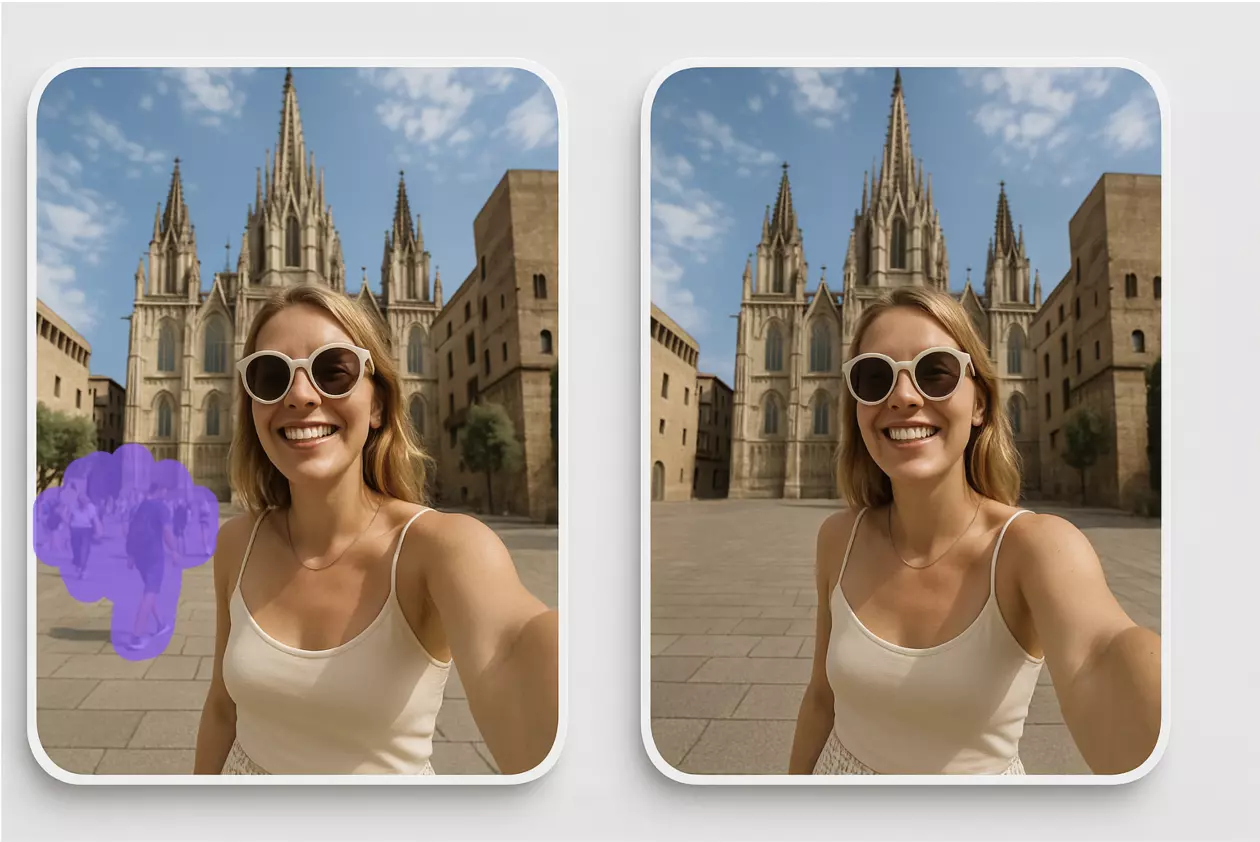
Browser-based AI editors now make this routine cleanup almost instant. Instead of repainting pixels manually, you can let AI rebuild the background with realistic textures and shadows. With Pixflux.AI, you can quickly remove object from image, review at zoom, and export marketplace‑ready files—even when you have dozens of photos to update.
(Visual cue: Side-by-side product photo before/after where a distracting hand is removed from a coffee mug shot, with the wood tabletop cleanly reconstructed.)
Why clean object removal matters
- Clarity boosts conversions: Shoppers scan fast. The fewer visual distractions, the quicker the product value lands.
- Compliance: Marketplaces increasingly favor distraction-free images with clean, consistent backgrounds.
- Brand consistency: Removing clutter keeps your storefront cohesive across categories and seasons.
- Production speed: When you can fix small issues in seconds, you save reshoots and keep launches on schedule.
How modern AI removal works: masks, edge-aware fill, and generative vs clone
- Masks: You roughly outline or brush the unwanted object. The mask tells the model what to remove.
- Edge-aware fill: AI analyzes nearby edges and perspective so replacement pixels align with the scene.
- Generative remove vs clone/patch: Traditional clone tools copy nearby pixels, which can smear patterns or repeat textures. Generative remove synthesizes new pixels that match lighting, grain, and material—a more realistic fix for complex surfaces like wood grain, fabric weave, or gradients.
AI online tools vs traditional software
- Time to results
- Online AI: Seconds per image for routine cleanup, no installation or heavy learning curve.
- Desktop suites: Powerful but slower for small fixes; require practice and frequent tool-switching.
- Learning curve
- Online AI: Brush, lasso, remove—minimal steps.
- Desktop suites: Multiple tools (clone, patch, healing, content-aware fill) and blending know‑how.
- Batch efficiency
- Online AI: Quick repetition for product sets; consistent edits across similar angles and lighting.
- Outsourcing: Quality can be strong but slow for rapid tests; communication adds cycles.
- Cost and accessibility
- Online AI: Pay only for what you need; runs in the browser on any machine.
- Desktop suites: Subscription + high-spec hardware for heavy workflows.
A reliable workflow: plan, select, remove, refine, review, export
- Plan the frame: Decide if a tighter crop can eliminate some distractions before editing.
- Select the object: Use a brush or lasso; keep a small margin outside the object edge for cleaner blending.
- Remove: Run AI removal; let it rebuild background textures and shadows.
- Refine: If needed, run a second pass on tiny leftovers or adjust mask edges.
- Review at 100–200%: Inspect edges, textures, and reflections for telltale artifacts.
- Export: Choose format, compression, and color profile that suits web or marketplace requirements.
Hands-on with Pixflux.AI: remove object from image in 3 steps
You can complete a typical cleanup in under a minute.
- Upload your original image
- Open the object remover tool.
- Drag in your product, travel, or lifestyle photo.
- Let AI process the removal
- Brush or lasso over the unwanted object (e.g., a cable, hand, price tag).
- Hit Remove. Pixflux.AI reconstructs the background with edge-aware, texture-consistent pixels.
- Download your result
- Preview at 100–200% zoom and run a second pass if you see small artifacts.
- Download the processed image in your preferred format.
(Visual cue: Pixflux.AI interface showing the three-step flow: upload the image, AI processes object removal, and download the result.)
Pro tips
- Work in passes: First remove the large object, then tidy tiny remnants or halos.
- Feather slightly: A soft edge (2–5 px depending on image size) blends better around fine details.
- Keep selections tight: Avoid masking huge areas you don’t want altered; the best fills start close to the object.
Selection techniques that work
- Brush sizes: Use a larger brush for broad shapes, then a smaller brush to trace near edges or tight corners.
- Lasso paths: For cables or straps, a polygonal lasso gives cleaner coverage around straight edges.
- Feathering: 1–3 px on small images, 3–8 px on high‑res product photos—enough to blend, not blur.
- Multi-pass edits: Remove the big distraction first; revisit subtle highlights, tag holes, or shadow fragments next.
(Visual cue: Close-up of brush and lasso selection around an unwanted cable on a desk scene, plus a 200% zoom inspection of edges after removal.)
Quality checks for marketplaces
Before you export, run a quick checklist—especially for Amazon, eBay, Etsy, and Walmart listings:
- Shadows: Are natural shadows preserved or subtly rebuilt? Overly flat fills look artificial.
- Reflections: Check glass, glossy plastics, and metal; repeated patterns or smeared reflections are a giveaway.
- Textures: Wood grain, fabric, paper fibers, and gradients should look continuous, not tiled.
- Edges: Zoom to 100–200%. Look for halos, color bleed, or sharpness mismatches near the removed area.
- Color consistency: The fill should match the scene’s white balance; tweak global temperature if needed.
Beyond object removal with Pixflux.AI
Once you’ve cleaned up a shot, you can continue refining visuals in one place:
- Change or generate backgrounds to fit channel guidelines (e.g., clean white for marketplaces, on-brand scenes for social).
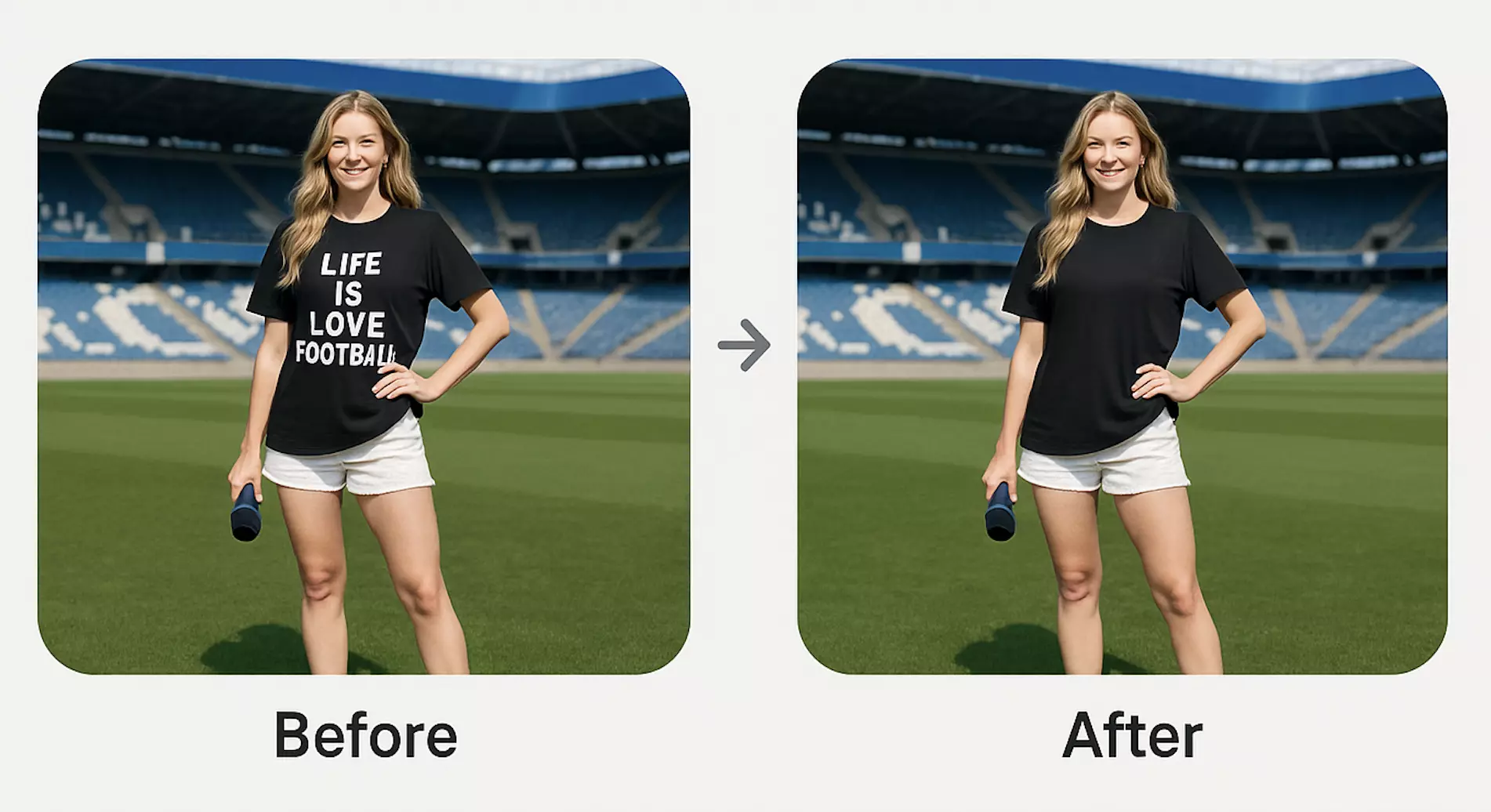
- Remove watermarks or logos you added earlier when preparing a final delivery.
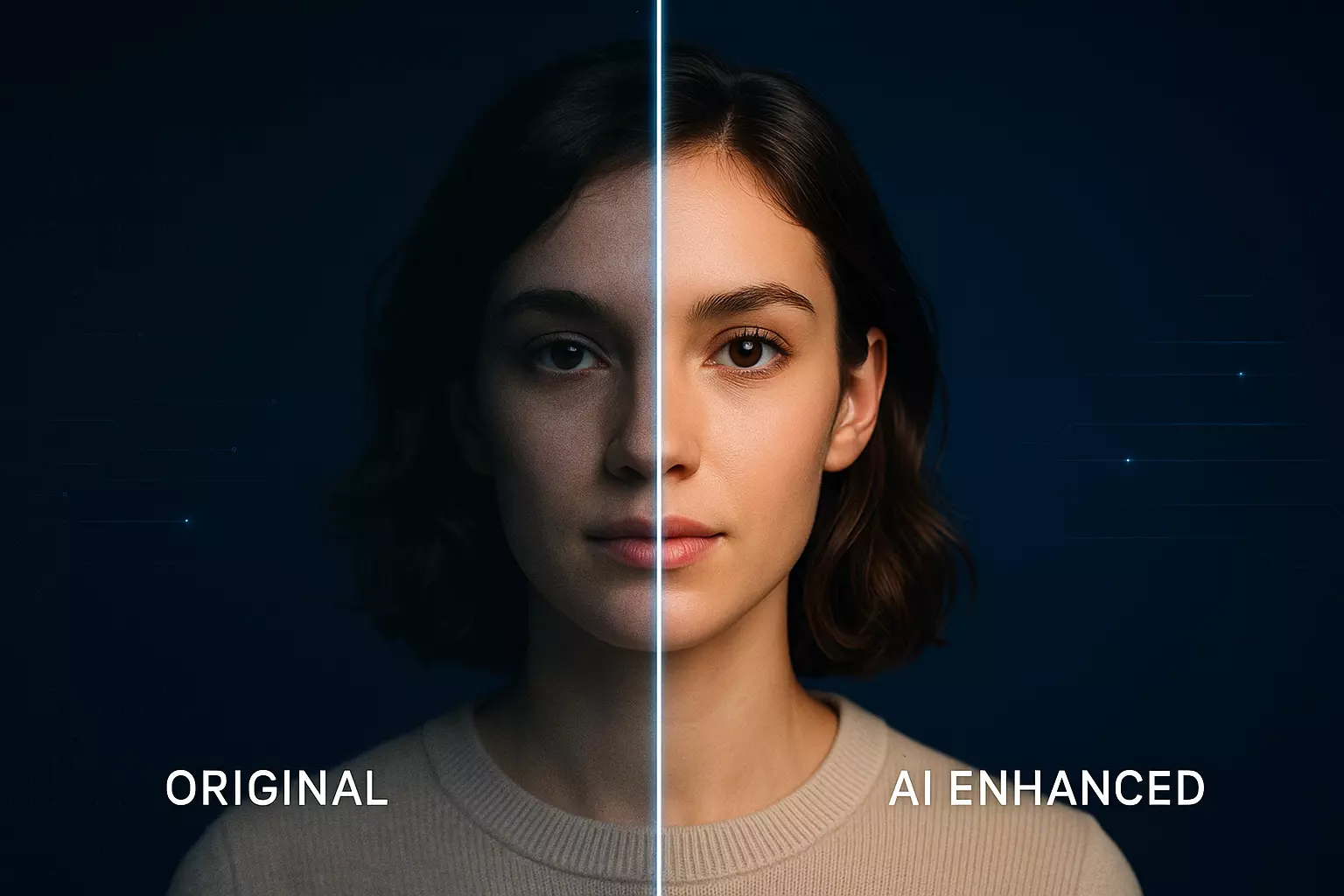
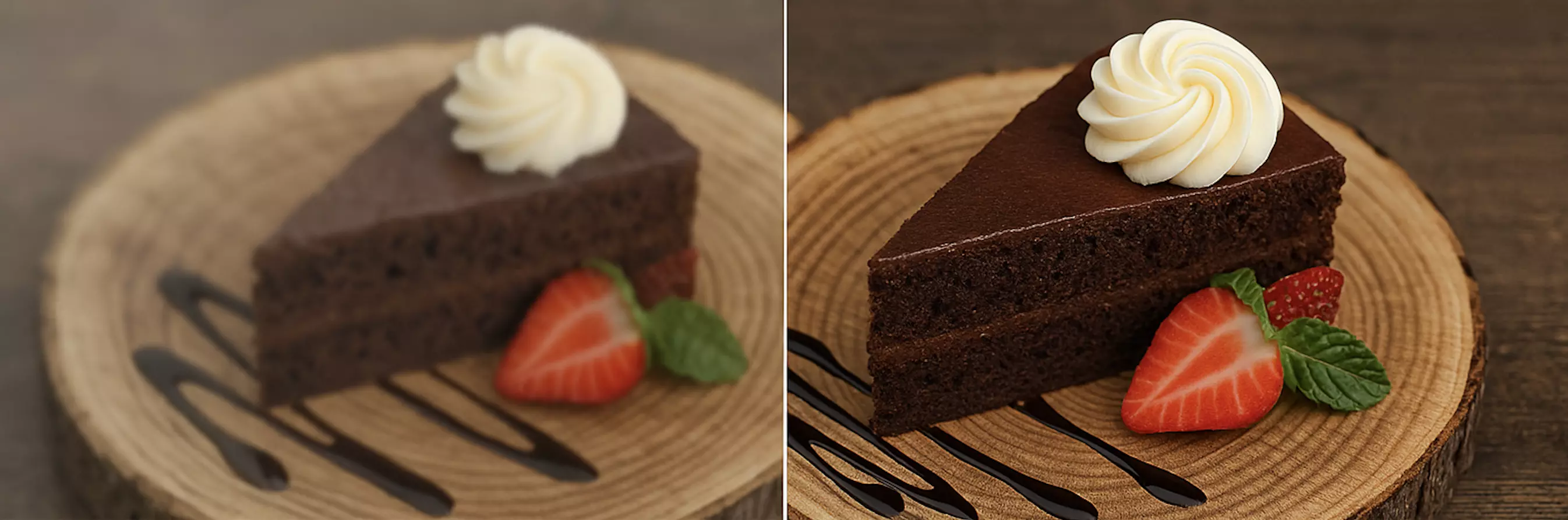
- Enhance clarity and contrast to make materials and details pop.
- Remove extra distractions such as stray wires, passerby, or dust.
Compliance note: Only edit images you own or are authorized to use. Watermark removal should never be used to infringe copyrights or bypass platform policies.
Batch cleanup for product catalogs with Pixflux.AI
When you’re updating a product line or seasonal collection:
- Batch mindset: Upload a set of similar angles or lighting conditions and process them in sequence for speed and consistency.
- Consistent masking: Apply the same selection approach across variants (brush size, feather) for uniform edges.
- Naming and versioning: Use SKU-based filenames (e.g., SKU_color_v1.jpg) so you can compare versions and roll back if needed.
- Style notes: Keep a short checklist (shadow depth, contrast target, background tone) to lock your brand look.
Troubleshooting artifacts
- Smudged textures: Re-select a tighter mask and rerun. If needed, remove in smaller sections to preserve patterns.
- Warped edges: Zoom in and repaint the selection closer to the true contour. A slight feather helps blend.
- Repeating patterns: Break the selection into irregular shapes; avoid masking large uniform zones at once.
- Color casts: If the filled area is too warm/cool, nudge white balance or apply a subtle global correction to unify the frame.
Export for web and marketplaces
- Format: JPEG for most product images; PNG for transparency needs; WebP for modern web performance.
- Compression: Aim for 150–300 KB for marketplace thumbnails and 800 KB–1.5 MB for zoomable hero images, depending on platform.
- Dimensions: Follow platform specs (e.g., 1600–2560 px on the longest side for crisp zoom).
- Color profile: sRGB for web and marketplaces to ensure consistent color across devices.
- Metadata: Strip heavy metadata for smaller files. Keep essential rights info if your workflow requires it.
AI online tools vs traditional methods: a quick comparison
- Speed: AI removal delivers near‑instant results for everyday edits; manual cloning is slower and more error‑prone.
- Learning: Minimal training vs advanced retouching skills for patch/clone/heal workflows.
- Consistency: Generative fills keep materials and lighting coherent across a catalog.
- Collaboration: Easy for non-design teammates to contribute image cleanup with simple, guided steps.
Conclusion and next steps
Clean, distraction-free photos convert better and meet marketplace standards. With a simple, repeatable workflow, you can remove object from image, verify quality at 100–200% zoom, and export files tailored to each channel—no heavy software required.
Try it on a product or lifestyle shot now: open Pixflux.AI and remove unwanted objects in photos. In a few guided clicks, you’ll turn near‑miss shots into publish‑ready assets.