Remove object from photo online free: A Practical AI Workflow for Freelance Designers
 Sierra CappelenDecember 3, 2025
Remove Object from Photo Online Free: A Practical AI Workflow for Freelance Designers
Clients rarely send perfect images. A product shot arrives with a wrinkled backdrop tape, a lifestyle photo includes a stray trash can, or a travel image captures an accidental bystander. You need clean visuals, fast—without blocking a day for manual masking in heavy software or waiting on a retoucher.
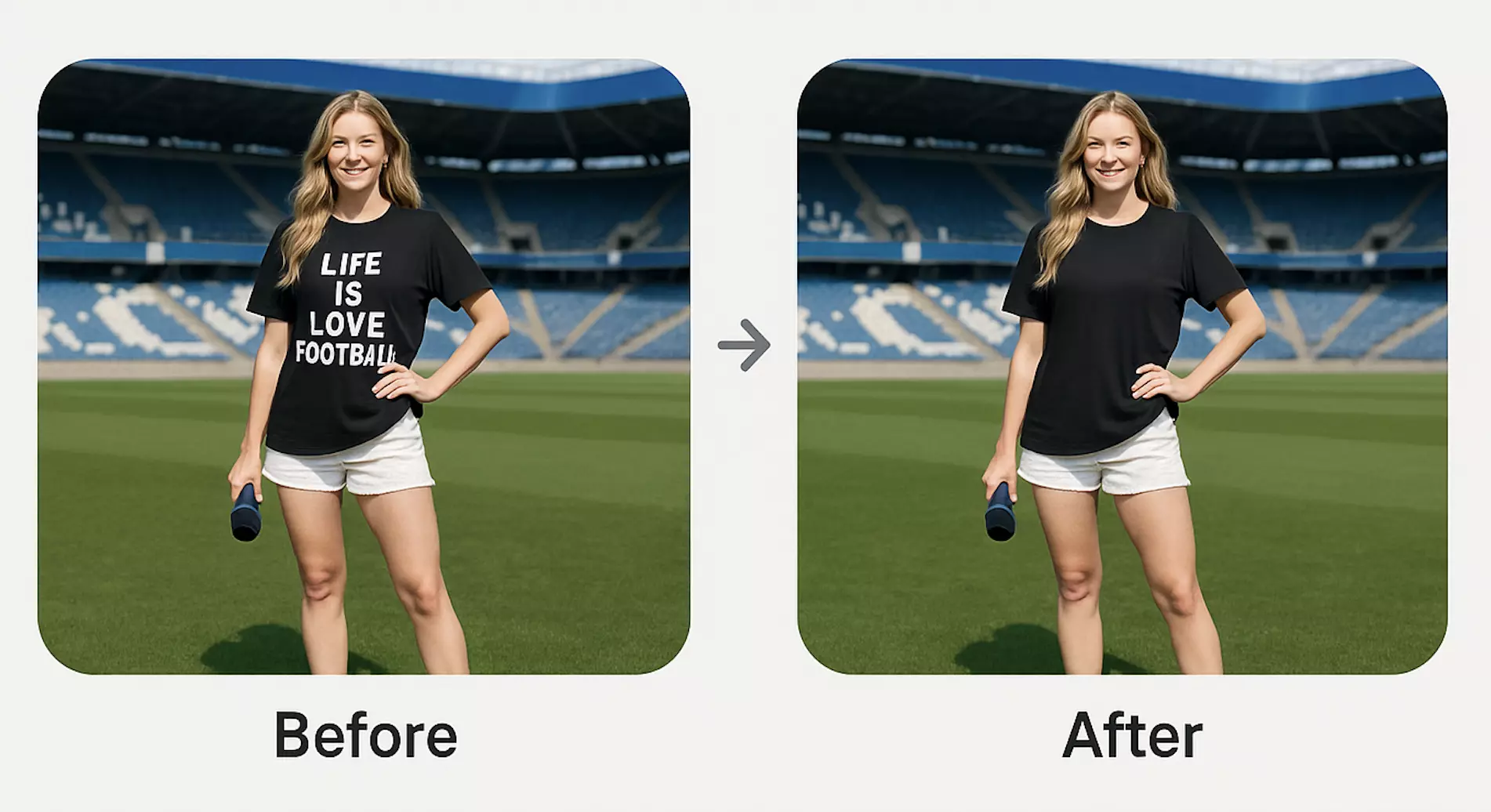
In 2025, browser‑based AI retouching has matured. Modern inpainting preserves textures, edges, shadows, and even repeating patterns with fewer artifacts. Tools like Pixflux.AI make it realistic to deliver client‑ready edits in minutes—not hours—so you can confidently remove object from photo online free and keep projects on schedule.
Below is a practical, client‑safe workflow you can use today—whether you’re cleaning product photos for Amazon listings, preparing mood boards for a pitch, or polishing social content for Instagram and TikTok.
Why freelancers choose an online, free object remover for quick turnarounds
- Zero install, zero lock‑in: Open a browser tab, edit, and export. Perfect for remote sessions or quick client reviews.
- Predictable speed: AI object removal takes seconds, so you can iterate with clients on the call.
- Built for real‑world photos: Current inpainting models handle shadows, hairline edges, and textured surfaces far better than earlier generations.
- Budget‑friendly: Keep small changes in‑house and use your retouching budget on the few images that truly need hand craft.
Trend to note: freelance designers increasingly rely on lightweight, browser‑based tools to meet same‑day deadlines. Background generation and batch editing now help land consistent brand looks without booking a studio for every variation.
Key concepts: inpainting, selections, masks, and fills
- Inpainting: The AI predicts what should appear behind or instead of the object you remove by sampling surrounding pixels (context).
- Selection tools: Brush or lasso tools define your “remove” mask. A soft‑edge brush blends better on organic surfaces; a hard edge suits flat product edges.
- Context window: The nearby area the AI uses as a reference. Expanding your selection slightly beyond the object gives the model more context.
- Fills and refinements: One pass often gets you 80–90% there. A second, smaller pass usually cleans the edge or fixes a repeating pattern.
Tip: Experiment with multiple brush sizes. For seamless fills, include a margin of clean texture around the object so the AI can “learn” the background.
Online vs. desktop workflows: speed, quality, and client‑ready deliverables
- Time cost: Online AI removes objects in seconds. Desktop software can match quality, but the manual steps (pen tool, clone/heal, dodge/burn) add up.
- Learning curve: Browser tools require minimal training. Photoshop‑level edits demand advanced retouching skills.
- Batch efficiency: Many online tools accelerate processing of 10–200 images for campaigns or A/B tests.
- Collaboration: Edits are easy to preview, re‑export, and hand off without sending large project files.
Bottom line: For routine removals and background fixes, an online AI removes friction. For edge cases (extreme composites or high‑end beauty retouching), you may still shift to a specialist.
Step‑by‑step: remove object from photo online free with a clean selection
Use this generic workflow with any modern browser‑based editor:
- Upload your image
- Start with the highest‑resolution version you have.
- Convert to sRGB if you’re coming from a wide‑gamut file to match web previews.
- Make a precise selection
- Choose Brush or Lasso. Begin with a mid‑size brush; adjust smaller for edges.
- Cover the object fully and include a small margin of surrounding texture.
- Run object removal (inpainting)
- Apply the “Remove” or “Heal” command.
- If you see smearing, undo and try a cleaner selection with more surrounding context.
- Perform edge refinements
- Zoom to 200–300%. Soften or re‑run small sections where textures repeat unnaturally.
- If shadows were removed, paint a faint gradient to restore believable depth.
- Quality check at 100% and fit‑to‑screen
- Textures: Brick, fabric, wood grain should continue naturally.
- Lines: Floor seams or wall grout should stay aligned across the edited area.
- Shadows/reflections: Should match scene direction and intensity.
- Export the right format
- E‑commerce: PNG for transparency, JPEG/WebP for hero images.
- Social: JPEG/WebP at platform‑specific sizes to avoid recompression artifacts.
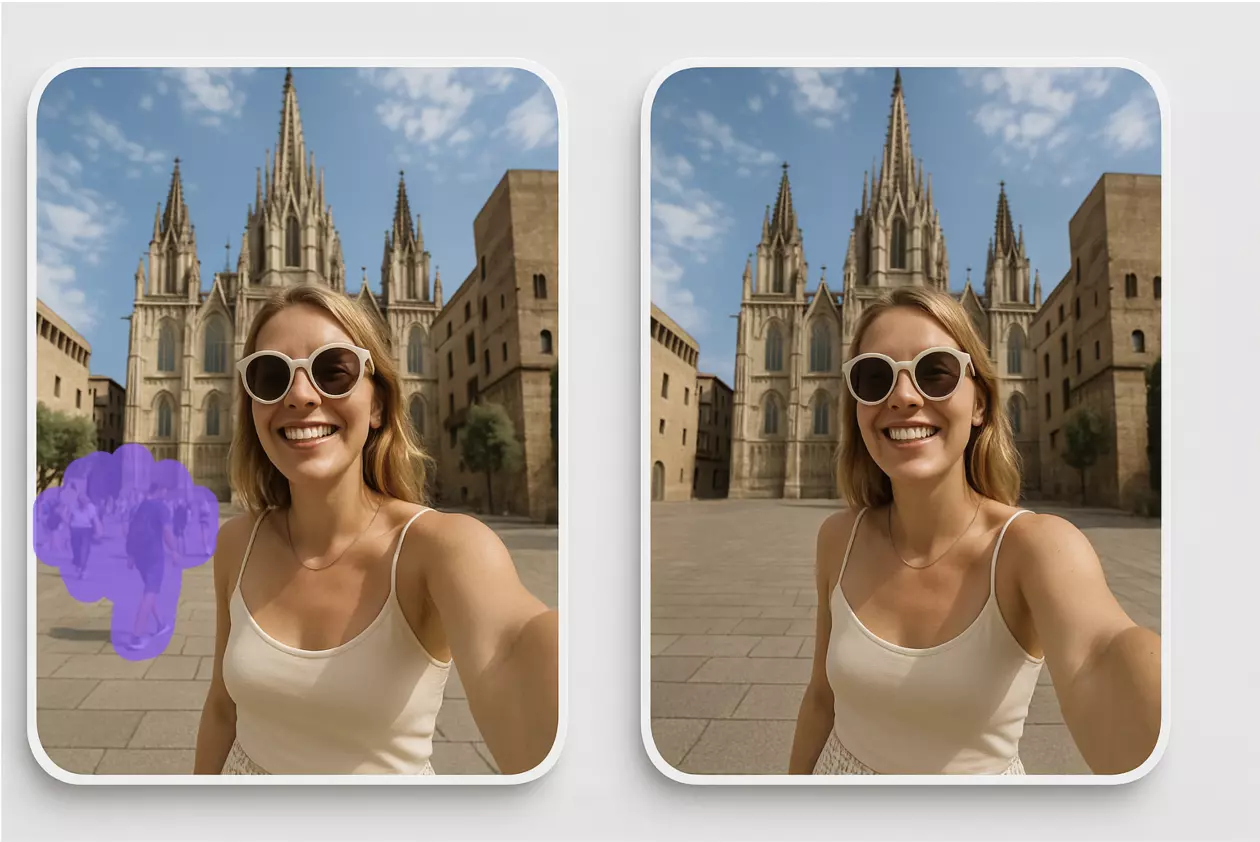
(See image: Side‑by‑side before/after where a street trash can is removed and clean pavement is reconstructed.)
Using Pixflux.AI to remove objects and change backgrounds in three steps
Pixflux.AI streamlines common edits—object removal, background cleanup or replacement, watermark cleanup, and enhancement—without heavy setup. Here’s the fast track:
- Upload your image
- Go to Pixflux.AI and add your photo to this free online object remover.
- Larger images give the AI more context; use the best version you have.
- Select and let AI do the work
- Pick the Object Removal tool, brush or lasso around the unwanted item, and run the AI.
- If needed, slightly expand your selection to include clean textures. Re‑apply for micro‑areas (e.g., edges, grout lines).
- Download your result
- Preview at 100% to confirm edges, patterns, and shadows blend naturally, then export in your preferred format.
(See image: Pixflux.AI interface sequence—upload image → AI processes object removal → download result.)
Pro tip: If the background is chaotic, consider a two‑step approach: remove the object, then use background removal or generation to rebuild a clean, brand‑consistent scene.
Quality checks: edges, textures, shadows, and reflections
- Edges: Hairlines, product rims, and thin cables should not “melt.” Re‑run small passes with a smaller brush.
- Textures and patterns: Wood grain, fabric weave, or tiles must align and avoid obvious repeats. Adjust selection and retry.
- Shadows: If you removed an object casting a shadow, ensure the space doesn’t look “overlit.” Restore a subtle shadow to match direction.
- Reflections: Glass and polished surfaces should reflect nearby elements consistently; add a faint gradient if the area feels flat.
Advanced use cases with Pixflux.AI: background removal, generation, and watermark cleanup
- Background removal or change: Strip busy backdrops from product images and swap in clean, on‑brand scenes for marketplaces or ads. Great for Amazon hero images or Etsy thumbnails.
- Background generation: Build cohesive lifestyle scenes that match your brand’s palette and mood—useful when a full studio set is out of scope.
- Watermark removal: Clean logos or text from your own assets, old mockups, or templates when you own the rights or have permission.
Compliance note: Only edit images you own or are licensed to modify. Do not use watermark removal to bypass copyright or platform rules.
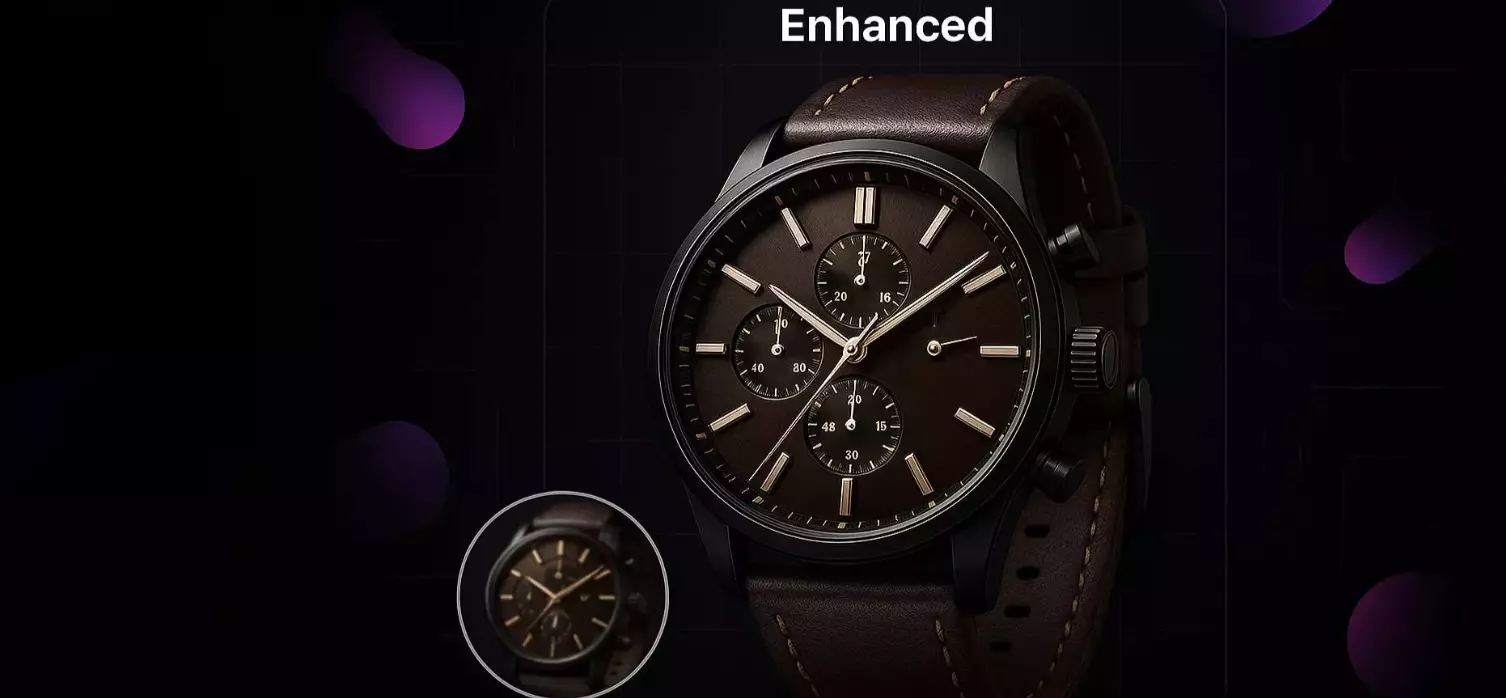
(See image: Product photo comparison in Pixflux.AI before/after—background removed and watermark cleaned.)
Batch processing tips for catalogs and lifestyle sets
When you need a consistent look across dozens of images:
- Start with a “hero” reference: Edit one image until you love the background, contrast, and crop. Use it as the visual benchmark for the set.
- Keep brush sizes consistent: Similar selections yield consistent edge softness across images.
- Repeat the same background style: After removal, use the same generated or chosen background style to maintain a cohesive grid and PDP gallery.
- Final pass: Run a quick sharpen or clarity boost for web delivery so details pop at thumbnail sizes.
Pixflux.AI supports quick multi‑image workflows so you can clean, restyle, and export sets efficiently without bouncing between complex panels.
Troubleshooting artifacts: lighting, patterns, and repetitive textures
- Mismatched lighting: If the filled area looks brighter/darker, add a soft burn/dodge or re‑run the fill with a slightly larger selection that includes true midtones.
- Broken patterns: Realign linear textures (tiles, siding, fence lines) by refining selections along seams.
- Repetitive “AI tiles”: Reduce selection size and process in overlapping passes to avoid obvious repeating patches.
- Over‑smooth surfaces: Restore a touch of grain or texture so the patch blends with the surrounding noise profile.
Export formats, compression, and a client handoff checklist for 2025 projects
- Formats: PNG for transparency, JPEG/WebP for balanced quality and small file size. For social ads, WebP often delivers better compression at the same visual quality.
- Resolution: Deliver at 1.5–2× the largest expected display size to counter platform compression.
- Color: Convert to sRGB for web consistency.
- File naming: Include SKU/client/project plus versioning (e.g., acme_mug_sku123_bg-clean_v2.jpg).
- Delivery: Provide both “web‑ready” and “master” exports. Include notes on any background changes so clients understand what was altered.
AI online tools vs. traditional methods
- Time to result
- AI online tools: Seconds per image for straightforward removals and background fixes.
- Traditional software: 10–30 minutes+ per image depending on complexity.
- Skill and onboarding
- AI online tools: Minimal learning curve; easy for assistants or clients to preview.
- Traditional software: Requires expert retouching skills and consistent technique.
- Batch and consistency
- AI online tools: Faster repetition for catalogs and social sets; consistent backgrounds and crops.
- Outsourcing: Quality can be excellent but adds turnaround time and project management overhead.
- Cost control
- AI online tools: Keep routine fixes in‑house and reserve budget for complex composites.
- Outsourcing: Worth it for hero images but rarely necessary for day‑to‑day cleanup.
Quick Pixflux.AI how‑to (5‑step pro pass)
For tighter control on client hero images:
- Open Pixflux.AI and upload the highest‑quality image.
- Choose Object Removal, then brush/lasso around the item with a small edge margin.
- Preview and refine micro‑areas (edges, seams, reflections) with smaller brush passes.
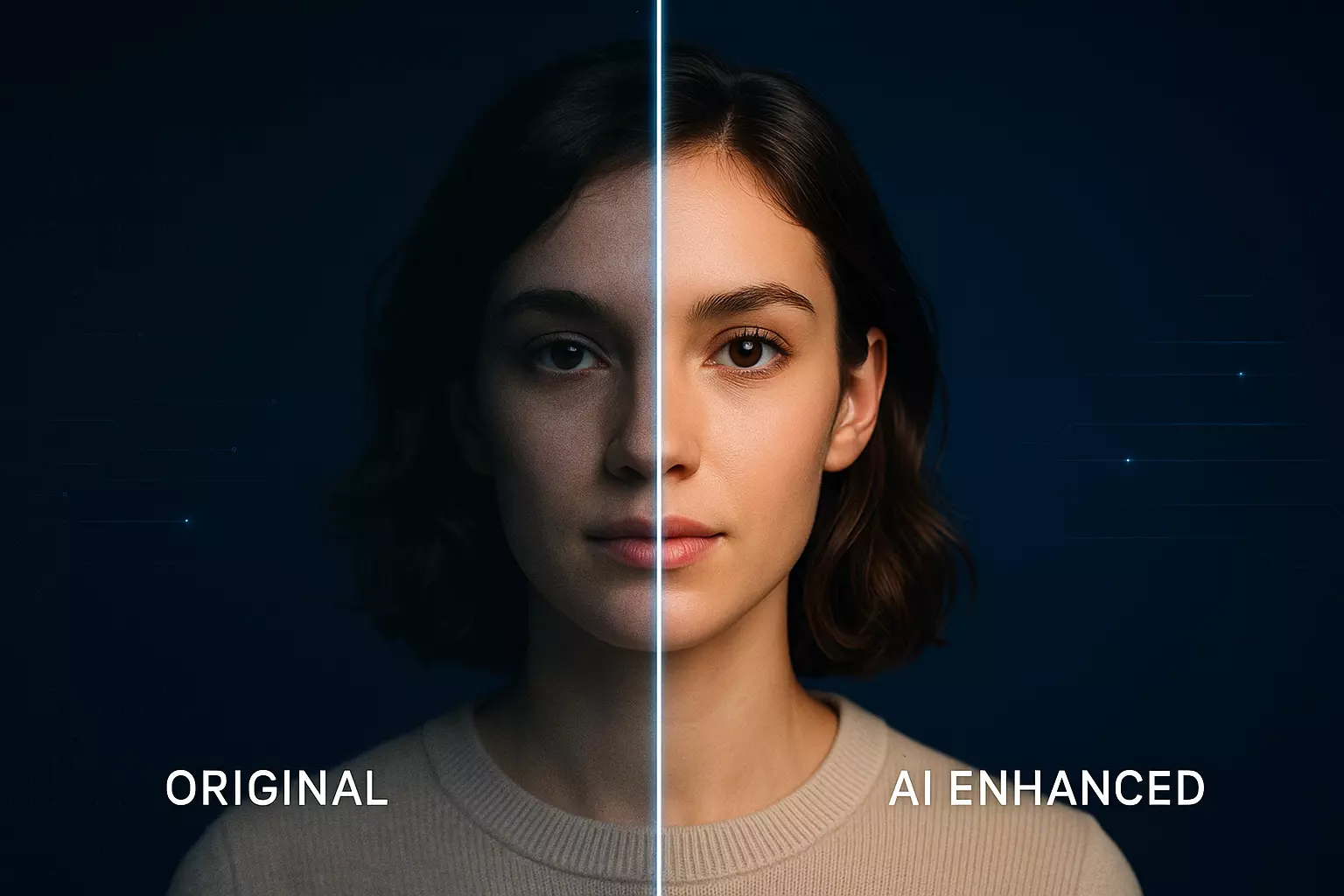
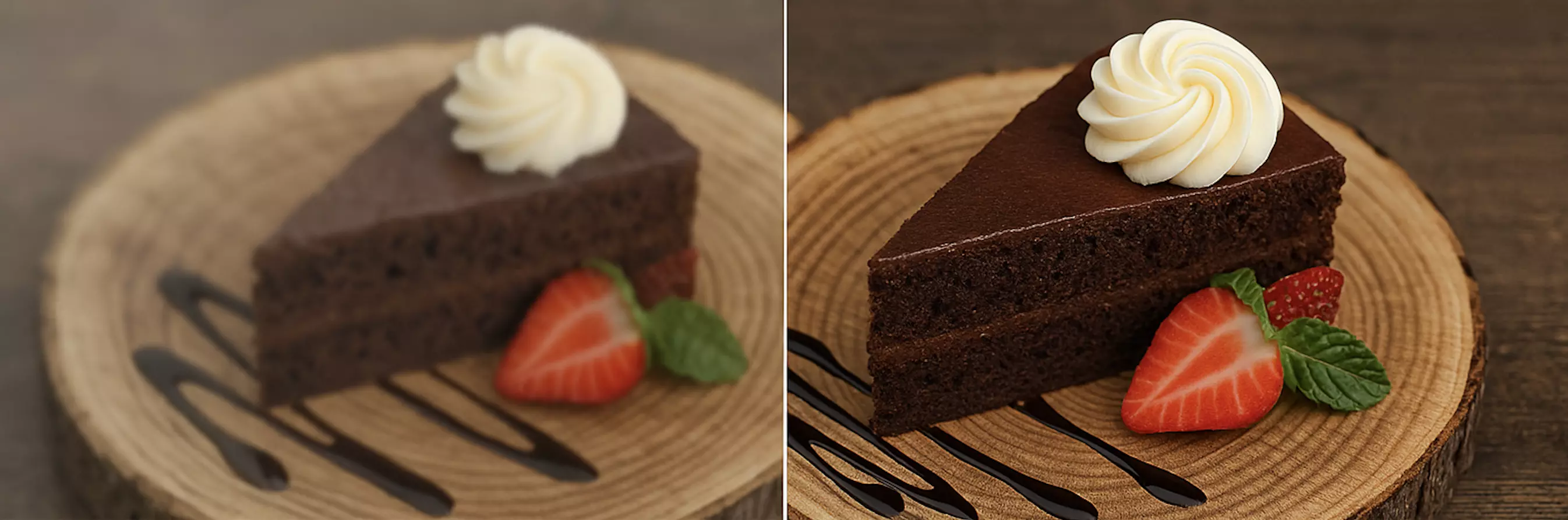
- If needed, switch to Background tools to remove, change, or generate a clean scene; enhance clarity for crisp details.
- Download the result in PNG, JPEG, or WebP, depending on the deliverable.
Conclusion and next step
Clean, client‑ready edits don’t have to be a bottleneck. With modern inpainting and background tools, you can rapidly fix distractions, align visuals to brand, and move creative work forward. Try Pixflux.AI on your next set and see how quickly you can remove unwanted objects from photos online with consistent, professional results.
If you’re mid‑project and need to move fast, open Pixflux.AI now—use the object removal flow, then expand into background cleanup or generation for a complete polish. It’s a practical way to deliver better images today and keep your deadlines tomorrow.