AI Travel Storytelling Clean Up Screenshots and Photos for Better Guides
Turn busy screenshots into distraction-free travel visuals with AI—erase overlays, dates, and labels fast, then batch polish maps and itineraries.
 Emily CremerJanuary 10, 2026
AI Travel Storytelling: Clean Up Screenshots and Photos for Better Guides
Your readers don’t have time to decipher cluttered screenshots or photos. When maps are covered in labels, itineraries carry outdated notes, or beach shots include distracting date stamps, your travel guides become harder to follow. In 2026, creators repurpose visuals across websites, newsletters, reels, and carousels—so the same asset must be clean, readable, and on-brand wherever it appears.
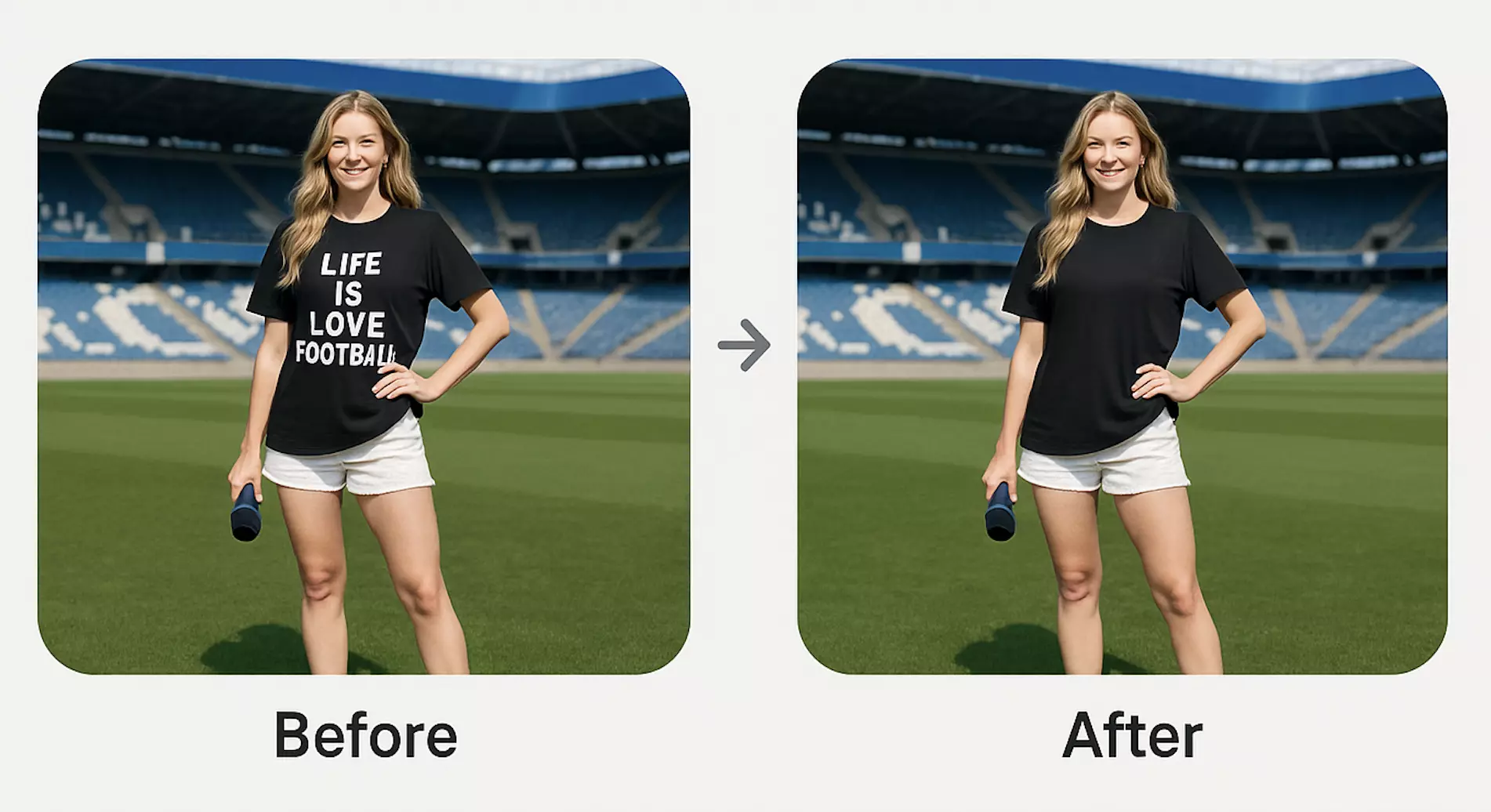
Instead of wrestling with clone tools or cropping away useful context, AI can remove text, stickers, and watermarks precisely while preserving textures and map legibility. If you’re looking for a quick way to remove text overlays from screenshots and photos, start with this fast workflow to remove text from image and standardize the look and feel of your travel blog visuals.
Why cleaner screenshots and photos make travel guides easier to follow
- Maps without clutter help readers trace routes, timings, and transfers at a glance.
- Ticket and booking screenshots look more professional when personal data and date stamps are stripped.
- Landmark photos without signage, logos, or accidental captions keep attention on the subject.
- A consistent visual style—colors, framing, clean backgrounds—reduces cognitive load and boosts completion rates for long itineraries.
The payoff: higher reader trust, better time-on-page, and more shares across social platforms where distraction-free visuals outperform.
What “remove text from image” covers: overlays, watermarks, dates, and labels
“Remove text from image” spans a wide set of real-world artifacts:
- Screenshot overlays: map labels, route hints you added during planning, or captions from annotation apps
- Watermarks and logos: stock placeholders, app badges, or photographer marks
- Date stamps and time codes: from camera settings or downloaded media
- Sticky notes and callouts: arrows, highlights, or banners from drafts you shared with collaborators
Compliance note: only remove watermarks or logos from images you own or have rights to edit. Watermark removal can’t be used to infringe copyrights or violate platform rules. When a watermark signals creator attribution, keep it or obtain permission.
Methods compared: manual clone and heal vs AI object and watermark remover
Traditional approach (clone/heal/patch):
- Pros: pixel-perfect control; you can paint around complex details
- Cons: time-intensive, steep learning curve, and difficult to maintain consistency across dozens of images
AI object and watermark remover:
- Pros: high-quality results in seconds; texture-aware inpainting; works well even on gradients and patterns
- Cons: extreme cases (complex overlays on tiny details) may need a quick manual touch-up
For travel creators who manage itineraries, reels, and blog posts at scale, AI wins on speed and consistency while staying approachable for non-designers.
Choosing tools for travel creators: online editors vs desktop suites
Desktop suites offer deep control but come with installation, licensing, and a heavy learning curve. Online AI editors are faster to try, easier to share across a small team, and better suited for repeatable workflows.
Pixflux.AI fits the online-first approach for travel content because it combines:
- AI watermark remover and object remover for overlays, date stamps, and unwanted text
- Background removal or changes to align product-style shots (e.g., packing lists or travel gear) with your brand
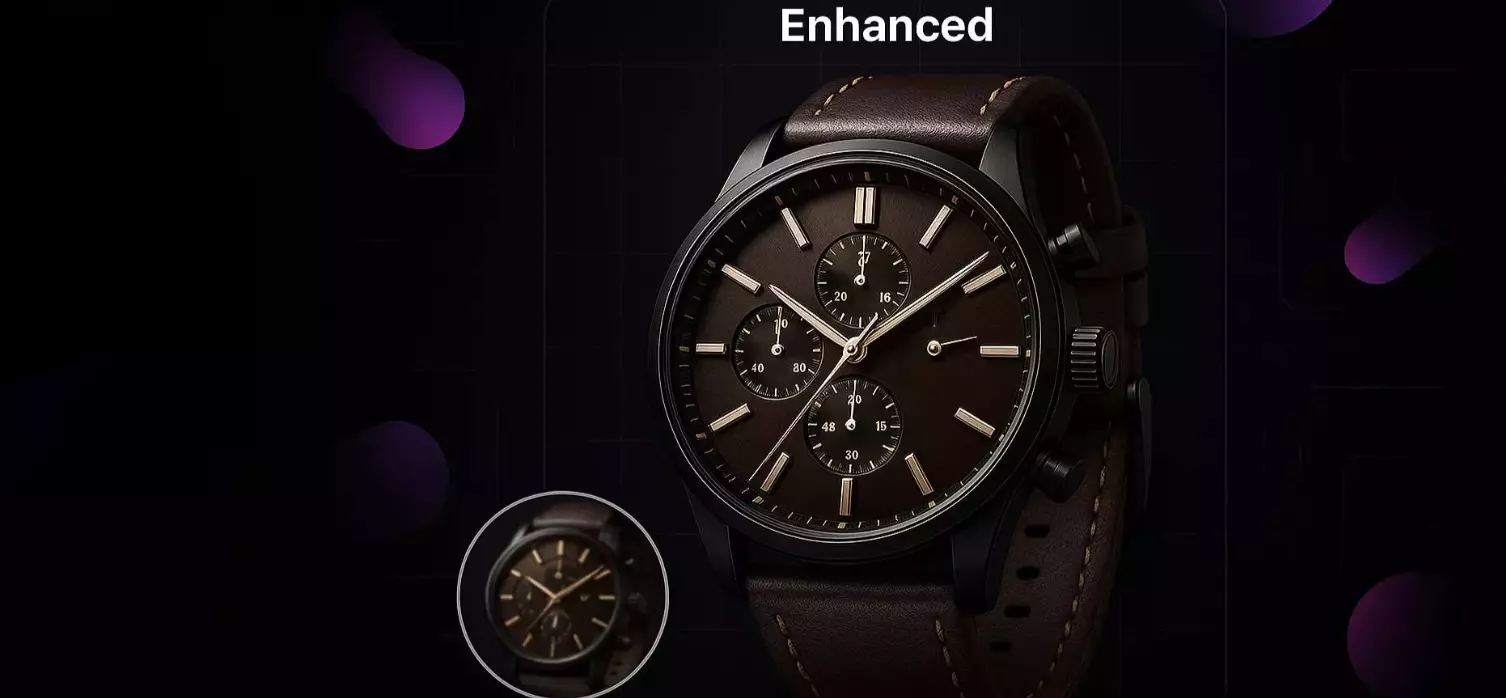
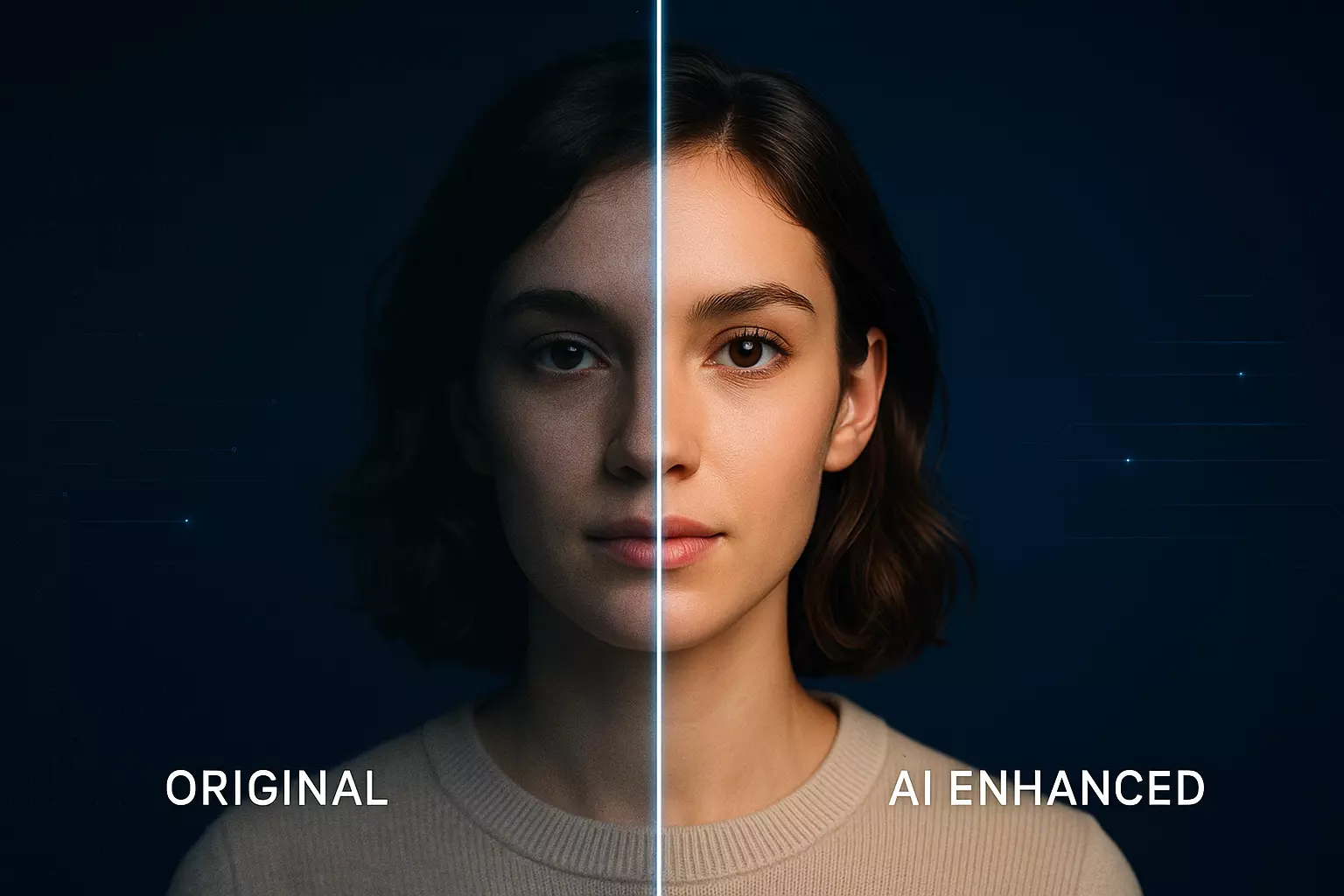
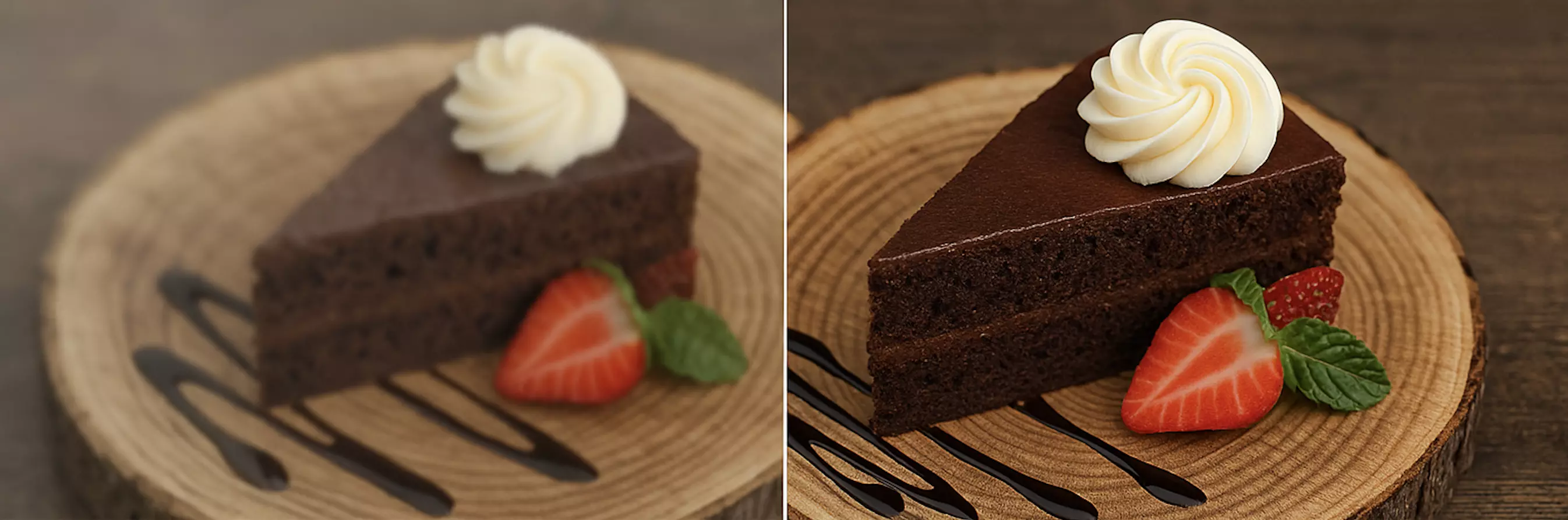
- Image enhancement to boost sharpness and clarity after cleanup
- Batch processing to standardize a set of screenshots and photos for a multi-stop itinerary
Step-by-step: remove text from travel screenshots with Pixflux.AI
The fastest way to clean screenshots and photos is a simple three-step flow. You can start from the dedicated page to remove text in image.
- Upload your image Add a map screenshot, ticket photo, or landmark shot with date stamps or captions.
- Let the AI process the image Choose text or watermark removal. The AI detects overlays and reconstructs the background, preserving textures and lines.
- Download the clean result Save the edited image for your guide, reel, or blog. If needed, repeat for the next asset or switch to batch mode.
Tip for tougher shots: if removing text reveals banding or artifacts, run a quick enhance pass (denoise and sharpen) to restore detail without adding halos.
(See image: Pixflux.AI interface showing the three-step flow—upload, AI processing preview, and download result.)
Batch-friendly workflow for itineraries, maps, and blog visuals at scale
When you’re prepping a 7–14 day guide, you’ll likely process dozens of visuals: daily route maps, transit screenshots, accommodation confirmations, and hero photos. A batch-first mindset speeds this up:
- Group by type: maps together, tickets together, landmarks together
- Apply consistent removal: strip labels from maps, delete date stamps from camera JPGs, clear app watermarks from transit screenshots
- Standardize look: after cleanup, lightly enhance clarity and color-balance the whole set for a unified style
- Final pass for accessibility: ensure map labels you intentionally keep are legible on mobile, and contrast meets basic readability standards
Pixflux.AI’s batch processing helps you perform the same removal and enhancement steps across multiple files so you can publish the entire itinerary with a consistent finish.
(See image: a batch gallery view of itinerary maps cleaned of labels and notes for a consistent travel guide.)
Quality checks after text removal: edges, textures, and map legibility
Before you publish:
- Edges: zoom to 100–200% to confirm no haloing around where text was removed
- Textures: confirm that skies, water, sand, and foliage look natural (not smudged)
- Lines: on transit maps, ensure routes and boundaries remain crisp
- Faces and small details: if removing a sticker near a subject’s face, ensure skin textures or architectural patterns look plausible
If you catch issues, a small brush touch-up or a second pass with AI usually resolves them.
Enhance readability: denoise, sharpen, and color-balance without artifacts
After you remove text from image overlays, finish with subtle enhancements:
- Denoise high-ISO night shots to reduce grain
- Sharpen lightly to restore fine edges lost during cleanup
- Adjust white balance for consistency across a post (e.g., keep blues and greens consistent for coastal itineraries)
In Pixflux.AI, image enhancement pairs well with cleanup so artifacts stay minimal and the final set feels coherent on both desktop and mobile.
Case studies: maps, tickets, and landmark photos
- Maps: remove temporary labels like “Lunch Spot?” and “Maybe hike” while keeping route lines intact; adjust contrast so the path stands out. (See image: before-and-after removing a large text overlay on a city map while preserving streets and route lines.)
- Tickets and confirmations: erase personal data, booking references, and app watermarks so you can share process screenshots without oversharing; crop only if needed to protect QR codes.
- Landmark photos: delete date stamps or tourist signage near the frame’s edge; if removal introduces minor banding in the sky, run a quick enhance to smooth gradients.
(See image: before-and-after comparison removing a date stamp and text overlay on a beach photo using an AI watermark/object remover.)
Rights and ethics: when removing watermarks or signage is not appropriate
- Keep attribution marks if they’re required by the license or creator agreement, or obtain permission before removing them.
- Do not remove safety signage, wayfinding, or legally required notices in a way that misleads readers about on-site conditions.
- If an image contains a third-party brand in a way that implies endorsement, consider cropping rather than removing to avoid confusion.
A good rule: only erase text from photo content you own or are authorized to modify, and never use cleanup to misrepresent a location or compromise safety.
Troubleshooting tough cases: patterned backgrounds, gradients, and thin fonts
- Patterned fabrics or tiles: run removal, then zoom in to correct repeating patterns with a small manual touch if needed; a tiny noise addition can hide telltale uniform patches.
- Smooth gradients (sky/water): after removal, apply a light denoise and gradient-friendly sharpen to dodge banding.
- Thin, high-contrast fonts on maps: remove in smaller sections so the AI preserves nearby linework; a second targeted pass often improves seams.
- Overlapping elements (e.g., text crossing a route line): remove text first, then selectively restore the line by undoing that micro-area or reconstructing with a thin brush.
AI tools vs traditional methods: what travel creators gain
Time cost:
- AI cleanup in Pixflux.AI takes seconds per image, making batch edits realistic before a publishing deadline.
- Manual clone/heal can take minutes per image, compounding across 50–100 assets for a long guide.
Learning curve:
- Online AI tools require minimal onboarding; you can onboard a collaborator quickly.
- Desktop suites demand more training and practice to master text removal on complex textures.
Batch efficiency:
- Pixflux.AI supports batch-friendly workflows, ensuring consistent results across maps, tickets, and photos.
- Doing batch removal manually is repetitive and error-prone.
Collaboration:
- Online tools make it straightforward to share files and align on a consistent visual finish without installing heavy software.
How-To: a slightly more detailed 5-step pass in Pixflux.AI
If your images vary in complexity, use this five-step process:
- Open the Pixflux.AI tool page Start from the text cleanup entry point.
- Upload your original images Add a small batch of similar visuals (e.g., three map screenshots).
- Select the remover and let AI process Choose object or watermark remover; for text-heavy overlays, process in two micro-passes if needed.
- Preview and fine-tune Zoom to check lines and textures; if a sky shows banding, run a light enhance, then confirm.
- Download the processed images Save and move on to the next batch.
FAQ: remove text from image for travel content creators
Can I remove text overlays from map screenshots without blurring streets or routes?
Yes, AI removal can erase overlays while preserving linework. Use the remover on text regions in small sections if overlays cross route lines. Afterward, zoom to check edges and apply a subtle sharpen to keep paths crisp on mobile.
Is it legal to remove a watermark from an image?
It’s only appropriate if you own the image or have explicit permission. Watermarks often indicate copyright or licensing terms. Removing them without rights can violate laws or platform policies. When in doubt, keep attribution or obtain written authorization.
Will the result look natural on patterned backgrounds like tiles or fabric?
Usually yes, with minor touch-ups if the pattern is complex. AI fills in textures convincingly, but repeating patterns may need a quick manual pass to avoid visible repetition. A tiny denoise or grain addition can help blend the area.
How do I batch clean multiple screenshots for a long itinerary?
Process similar images together using a batch-friendly flow. Group maps, tickets, and photos separately. Apply the same removal and enhancement settings per group, then spot-check one or two files before exporting the rest to ensure consistency.
Does removing text affect image quality or introduce artifacts?
If done carefully, quality remains high. Artifacts can appear on smooth gradients or near fine lines. Run a light enhance after removal and check at 100–200% zoom to correct any halos or banding before publishing.
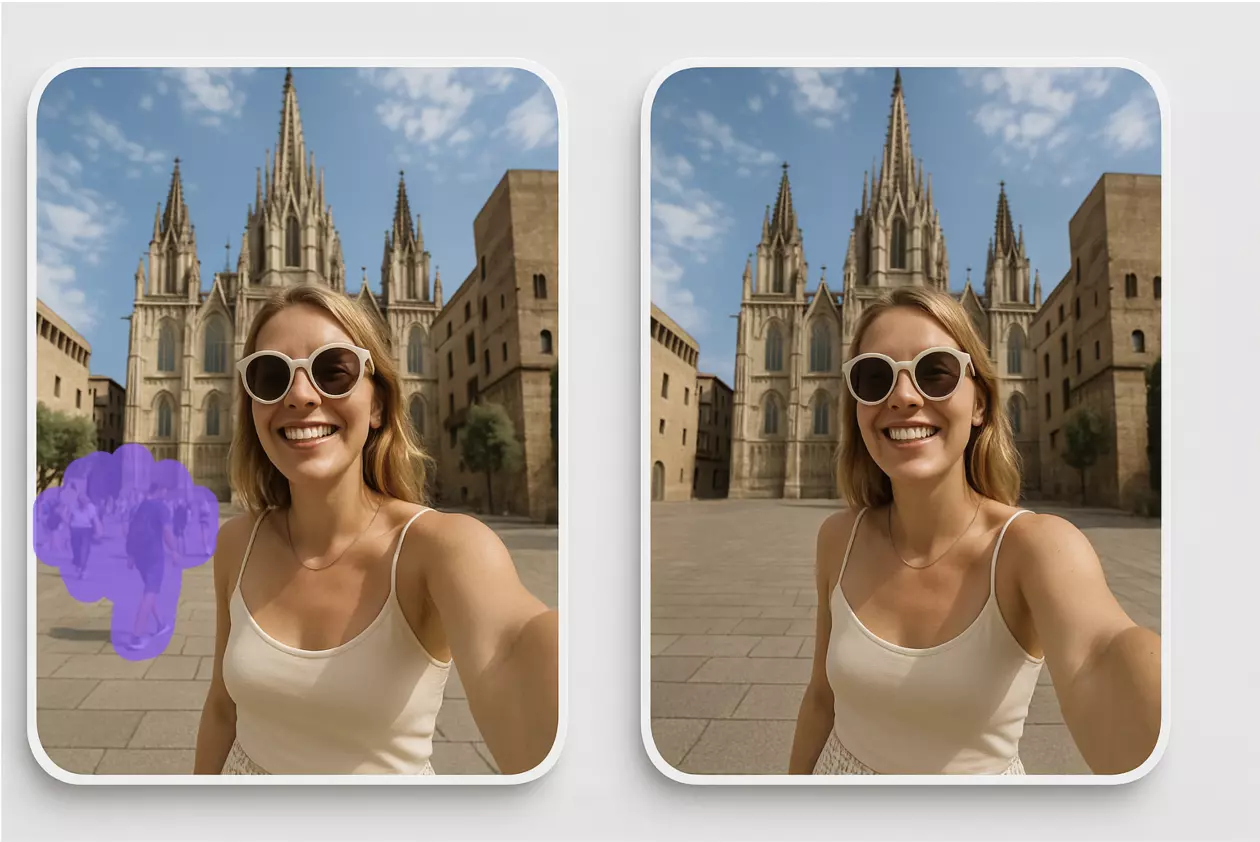
Can I also delete objects like signs, cables, or passersby in my travel photos?
Yes, object removal works for many non-text distractions. AI object removers can erase cables, stray signage, or background passersby while reconstructing the scene. Always avoid edits that misrepresent safety information or mislead readers.
What if the text covers important details like a bus route?
Remove the text first, then restore or emphasize the critical detail. You can run a second pass to refine the area or lightly sharpen the route lines. The goal is a distraction-free image that still communicates essential information.
Visual placement suggestions
- (See image: in Pixflux.AI, the three-step flow—upload, AI preview, download.)
- (See image: before-and-after removing a date stamp and a text overlay on a beach photo.)
- (See image: batch gallery of cleaned itinerary maps for a consistent travel guide.)
Conclusion and next steps
Cleaner screenshots and photos make your travel stories easier to follow across blog posts, carousels, and newsletters. With AI cleanup, you get distraction-free maps, shareable booking screenshots, and hero images that put the destination first—without a steep learning curve. Pixflux.AI gives travel creators a fast path to strip overlays, tidy maps, remove watermarks where appropriate, enhance clarity, and keep a coherent look at scale.
Ready to streamline your workflow? Try Pixflux.AI to erase text from photo and ship a polished itinerary today.