Best Image Format for E-commerce: PNG vs JPG vs WebP (and When Each One Wins)
PNG for cutouts, JPG for photos, WebP for speed. See the export matrix and a 60‑second compression check to keep images sharp and under 200 KB.
 Sierra CappelenDecember 12, 2025
Best Image Format for E-commerce: PNG vs JPG vs WebP (and When Each One Wins)
If your product pages feel slow or your ad uploads keep failing size checks, your image format is likely part of the problem. On modern e‑commerce sites, the wrong choice between PNG vs JPG (or WebP) can add hundreds of kilobytes per image, hurting Core Web Vitals and conversion. In retail media, stricter creatives and file caps reward lean images that still look great.
This guide gives you a practical, Google‑friendly answer: when to export PNG (cutouts and transparency), JPG (photographic realism), and WebP (next‑gen speed). We’ll share a simple export matrix, a 60‑second compression sanity check, and a quick workflow using Pixflux.AI to prep cutouts, enhance detail, and batch clean your catalog. If you’re on the fence about png vs jpg, the fastest way to decide is to export both once, compare size and quality, then standardize your team’s settings.
Note: WebP has near‑universal browser support in 2025, and major marketplaces increasingly emphasize fast, consistent product visuals with clean backgrounds. Lean assets are more likely to pass platform checks and help your LCP scores.
Why format choice matters for ecommerce speed and conversion
- File size drives performance. Each unnecessary kilobyte slows first paint and hurts Largest Contentful Paint (LCP). As a rule of thumb, keep hero images under ~200 KB when possible without visible quality loss.
- Marketplaces and ad networks have caps. Retail media platforms often prefer sub‑150 KB hero assets and strict pixel dimensions. Format choice can be the difference between “upload failed” and “approved.”
- Visual consistency converts. Transparent cutouts, crisp edges, and true colors signal quality. The right format preserves detail without bloating size.
PNG vs JPG: crisp edges vs photo realism
Think of PNG as the “graphics” format and JPG as the “photography” format.
- Choose PNG when:
- You need transparency (cutouts, overlays, compositing).
- The image has sharp edges, text, logos, or UI‑like elements that must stay razor‑clean.
- You see halos/fringes around product edges that JPG compression amplifies.
- Choose JPG when:
- It’s a photographic scene (fabrics, wood grain, reflective surfaces).
- You need smaller files for catalogs and listings without transparency.
- You can tolerate mild compression to stay <200 KB.
Tip: For product cutouts on white, PNG prevents edge halos and preserves crisp silhouettes. For lifestyle photos and gallery alternates, JPG usually wins on size‑to‑quality.
(See image: a side‑by‑side of the same product exported as JPG quality 80, PNG‑24, and WebP lossy with file sizes under each thumbnail.)
WebP vs JPG in 2025: modern compression that just works
WebP often beats JPG at the same perceived quality, especially for textured or noisy content (e.g., knitwear or leather). In 2025, practical browser support is near‑universal, so it’s safe for most storefronts and landing pages.
- When WebP wins:
- Anywhere you currently use JPG and need faster loads.
- Hero images where every KB affects LCP.
- When to pause on WebP:
- Vendor portals or older internal tools that still require JPG or PNG uploads.
- Workflows that need transparency but mandate PNG only (some marketplaces).
If your target channel accepts WebP, use it for photos at Q70–80 quality. Keep a JPG or PNG version handy only when a platform explicitly disallows WebP.
Export matrix: best image format by channel and asset type
Use this as a starting point; always confirm platform requirements.
- Marketplace main image (white background, no props):
- PNG‑24 (transparent or pure white) for flawless edges.
- If allowed, WebP (lossless for transparency or lossy Q75–80 for white background). Verify transparency support.
- Product gallery (alternate angles, lifestyle):
- WebP Q70–80 if accepted; else JPG Q80.
- Target: <200 KB per image (resize if needed).
- Thumbnails and category grids:
- WebP Q60–70 or JPG Q70; aggressive compression acceptable at small sizes.
- Target: 20–60 KB.
- Banners and hero tiles:
- WebP Q70–80; add subtle noise/dither if gradients band.
- Target: <250 KB when possible.
- Logos, UI badges, vector‑like graphics:
- PNG‑24 (or WebP lossless if supported).
- Social and ads (retail media, Meta, TikTok):
- WebP or JPG depending on spec; keep under platform caps (often 150–500 KB).
- Avoid PNG unless transparency is essential; PNG can inflate file size.
Compression sanity check: a 60‑second workflow
Do this once per product type; then templatize your settings.
- Open your master at final dimensions (e.g., 2000 px on the long side).
- Export three variants:
- JPG at quality 80.
- WebP at quality 75.
- PNG‑24 (only if you need transparency or crisp edges).
- Compare file sizes. If JPG/WebP is <200 KB with no obvious artifacts at 100% zoom, prefer the smallest.
- If still too big, try:
- Resize down 10–20% (often invisible on page).
- Drop JPG to Q75 or WebP to Q70.
- Ensure chroma subsampling 4:2:0 for photos, remove metadata.
- Lock your winning settings into a team‑wide export preset.
Cutouts and transparent backgrounds: PNG or lossless WebP
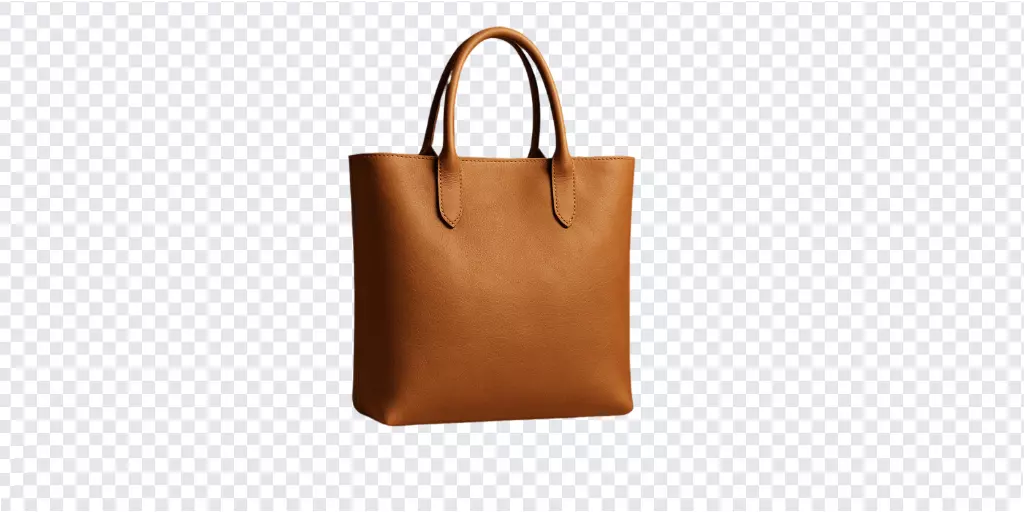
For catalog‑style cutouts, PNG is still the safest bet. It preserves transparency and sharp contours. If your channel supports lossless WebP with alpha, you’ll often get similar quality at a smaller size.
Edge cleanup tips:
- Avoid semi‑transparent fringes. Place cutouts over the target background color during review.
- If halos appear, increase edge hardness slightly or add a 0.5–1 px contract before exporting.
- For compositing on colored backgrounds, test at 100% zoom with the final brand color behind the product.
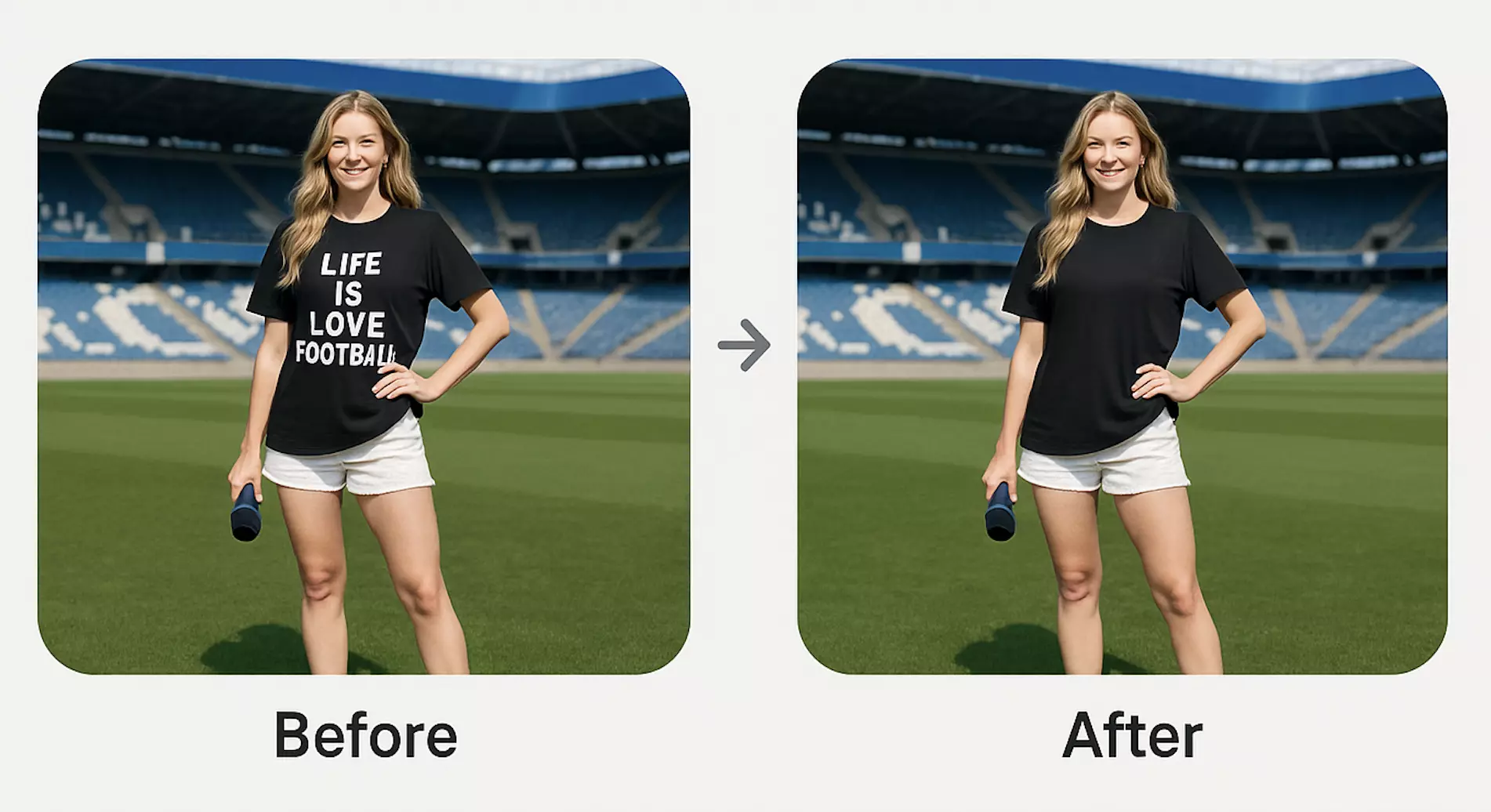
Pixflux.AI helps here by removing complex backgrounds cleanly and enhancing fine edges on hair, fabric, or reflective surfaces. It can also remove watermarks when you have rights to the underlying image. Always ensure you own the content or have permission to edit it; removing watermarks must not be used to bypass licensing or platform rules.
(See image: a before‑and‑after of a product cutout where Pixflux.AI removes the background and a faint overlaid watermark.)
Preparing product images with Pixflux.AI: remove, enhance, batch
Use Pixflux.AI to standardize product visuals across your catalog—cut out backgrounds, remove stray objects, enhance clarity, and export in the best format for each channel.
Quick 3‑step flow:
- Upload your source image.
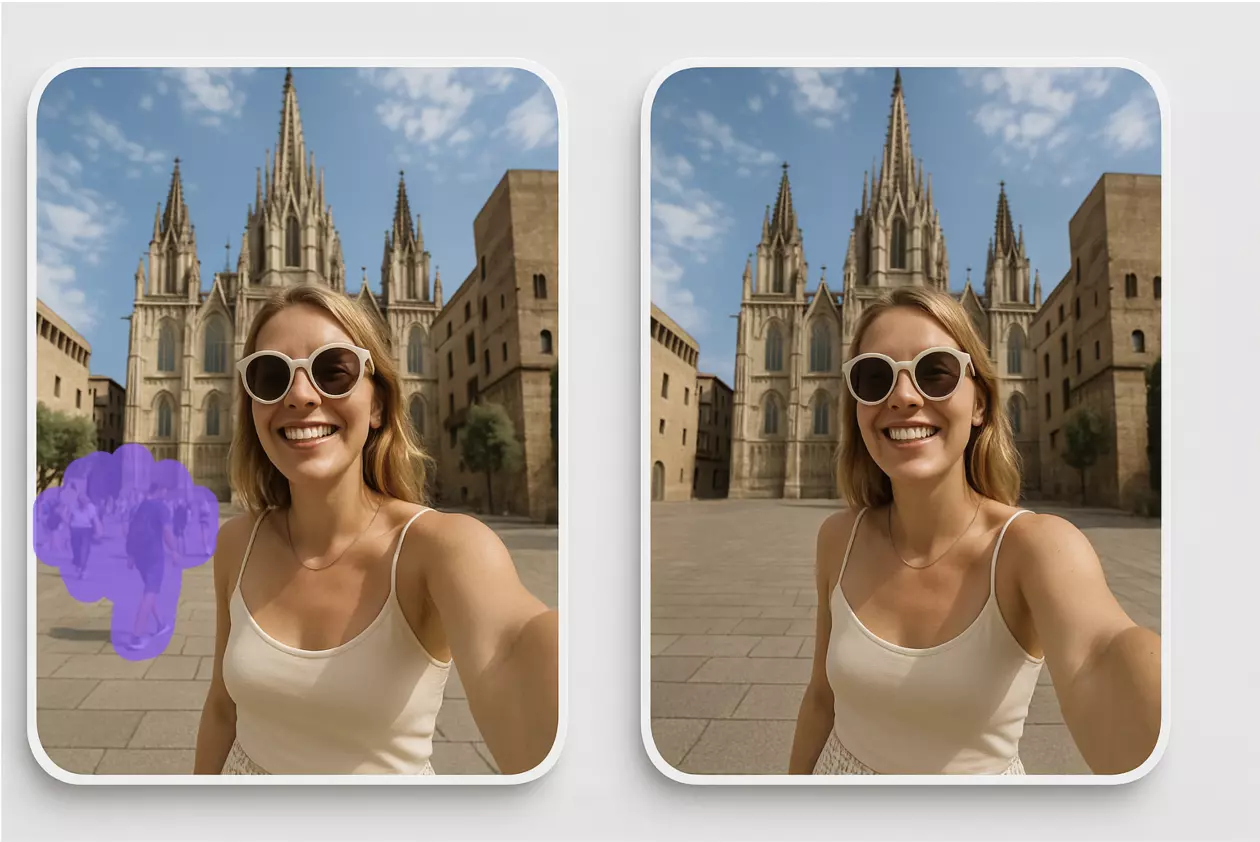
- Let the AI remove the background, clean watermarks if needed, enhance details, or delete unwanted objects (like passersby or cables).
- Download your optimized file, exporting as PNG, JPG, or WebP according to the matrix above.
Advanced 5‑step control:
- Open the Pixflux.AI tool page.
- Upload your original product photos (batch uploads supported for faster catalog work).
- Pick the relevant tool: background removal for cutouts, background change or generation for on‑brand scenes, unwanted object removal to declutter, or photo enhancement for clarity and contrast.
- Preview the result and make quick tweaks: refine edges, adjust contrast, ensure shadows and reflections look natural.
- Download your final assets and export to the channel‑specific format (PNG for transparent cutouts, WebP/JPG for photographic images).
If your team frequently debates png or jpg for product photos, run both exports in Pixflux.AI once, compare visual quality at 100% zoom, and standardize the winning setting for your brand kit. It also shines on batch clean‑ups—perfect for turning vendor‑supplied mixed assets into store‑ready images in minutes.
(See image: Pixflux.AI interface showing the three‑step flow—upload image → AI processing → download result.)
Quality controls: color, chroma, quality levels, dimensions
- Color profile: Export sRGB. Many browsers and marketplaces expect it; incorrect profiles cause shifts or dull colors.
- Chroma subsampling: For photos, 4:2:0 is usually fine and saves size. For UI/line art, use PNG or lossless WebP (no subsampling).
- Quality levels:
- JPG: Q75–85 is the sweet spot for ecommerce. Avoid extremes (Q100 balloons size with negligible gain).
- WebP: Q70–80 is typically equivalent or better than JPG at the same size.
- PNG: Prefer PNG‑24 for transparency and complex edges; PNG‑8 is okay for flat graphics with limited colors.
- Dimensions:
- Master at 1600–2560 px on the long side for zoom capability, then downscale for thumbnails.
- Don’t ship oversized files. Resize to each placement’s display size + ~1.5x for retina if necessary.
- File size target:
- Strive for <200 KB for photos and <250 KB for heroes where feasible.
- For thumbnails, aim for 20–60 KB.
Compliance and platform guidelines
- Backgrounds: Marketplaces like Amazon typically require pure white backgrounds (RGB 255,255,255) on the main image. Keep props and text off the primary shot unless explicitly allowed.
- File caps: Respect specified dimensions and maximum file sizes to avoid rejections in retail media and marketplace portals.
- Watermarks and logos: Only remove or alter marks if you own the asset or have explicit permission. Do not use watermark removal to evade licensing terms or platform policies. Pixflux.AI’s watermark removal is intended for lawful cleanup of your own or licensed images.
Troubleshooting artifacts: banding, halos, color shifts
- Banding in gradients (e.g., backgrounds or shadows):
- Add subtle noise/dither before export or bump WebP/JPG quality a notch.
- Prefer WebP over JPG; it often handles gradients smoother at the same size.
- Halos around cutouts:
- Export as PNG or lossless WebP; check matte color and edge hardness.
- In Pixflux.AI, refine the selection edge and preview on the final background color.
- Color shifts or dullness:
- Convert to sRGB before export and remove embedded CMYK/ProPhoto profiles.
- Avoid double compression—don’t re‑save already compressed JPGs; go back to your master.
- Over‑sharpening or crunchy textures:
- Reduce sharpening amount; let WebP/JPG compression do some micro‑contrast work.
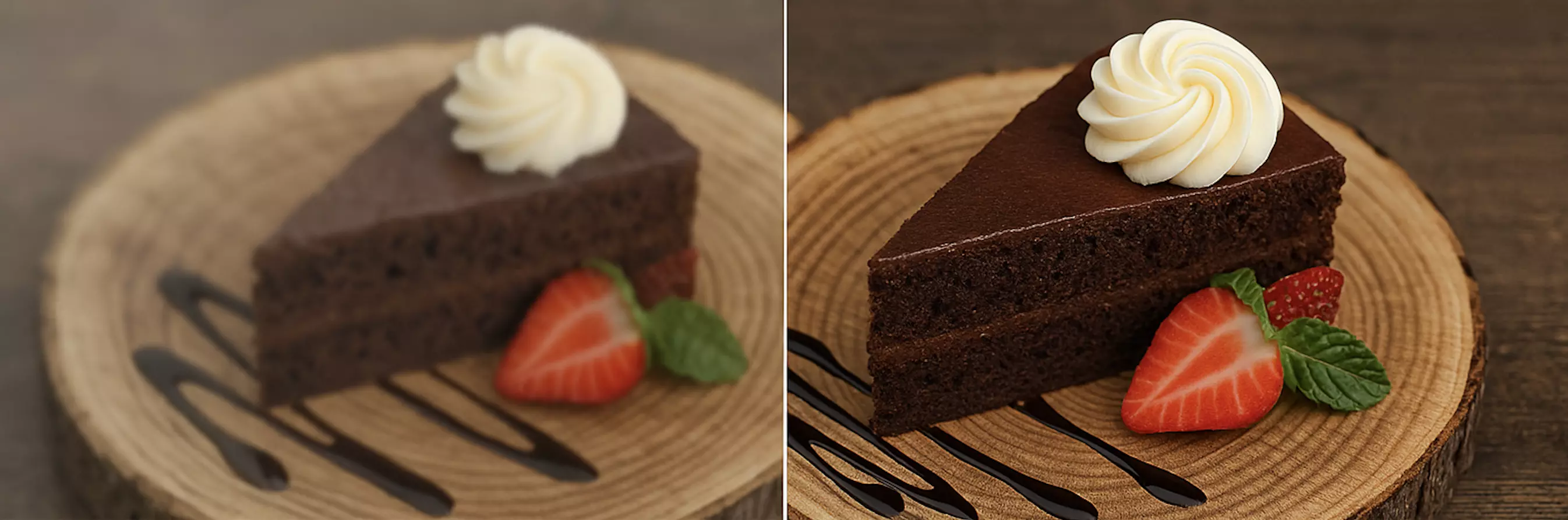
- Use Pixflux.AI’s photo enhancement conservatively to boost clarity without halos.
AI online tools vs traditional software or outsourcing
- Speed to value:
- Pixflux.AI delivers cutouts, background changes, watermark cleanup, and object removal in minutes—even at catalog scale with batch uploads. Traditional desktop workflows or back‑and‑forth with external editors can take days.
- Learning curve:
- No deep editing skills required. Complex selections, edge refinement, and cleanup are automated. Desktop tools can do the job, but ramp‑up time is real for non‑designers.
- Batch efficiency:
- Batch processing helps teams normalize hundreds of vendor assets fast. Manual editing struggles to keep pace for seasonal drops or flash sales.
- Cross‑team readiness:
- Online access and predictable outputs make it easy for merchandising, performance marketing, and creative teams to align on a shared export standard—without complicated training.
Put it all together: a quick workflow that scales
- Prep: Use Pixflux.AI to remove backgrounds for main images (PNG), enhance lifestyle shots, and clean stray objects or marks.
- Export: For each asset type, generate WebP/JPG/PNG candidates once, compare at 100% zoom, and lock your preset.
- Verify: Keep sRGB, target <200 KB, and confirm marketplace specs.
- Publish: Reuse your presets to crank through new shipments, seasonal ads, and bundles without reinventing the wheel.
Conclusion and next steps
The short version: use PNG (or lossless WebP) for transparent cutouts and anywhere edges must be perfect; use JPG for photographic realism when WebP isn’t acceptable; prefer WebP wherever it’s supported to trim kilobytes and improve page speed. Keep exports in sRGB and aim for <200 KB. As platforms tighten creative caps and Google continues to reward fast‑loading pages, the “smallest file that still looks right” wins.
Ready to standardize your product images and settle png vs jpeg for ecommerce once and for all? Try Pixflux.AI to remove backgrounds, enhance detail, and batch‑export the right format for every channel—so your pages load fast and your products look their best.