Creator Workflow Keep Photos Natural with Smart AI Enhancers
Keep photos real, not overcooked: a quick workflow for noise cleanup, subtle sharpening, and consistent color—plus batch tips with Pixflux.AI.
 Michael WalshJanuary 10, 2026
Creator Workflow: Keep Photos Natural with Smart AI Photo Enhancers
Your audience wants real, not plastic. In 2026, creators compete on authenticity: skin should look like skin, product materials should feel true, and colors should stay consistent from Instagram to your storefront. The challenge is that phone and mirrorless sensors still add noise in low light, platform compression blurs details, and overzealous sliders create halos and waxy faces. You need a repeatable photo enhancer workflow that cleans up noise, adds just-enough crispness, and standardizes color—without calling attention to itself.
That’s where a focused, creator-friendly toolchain helps. Modern AI can separate texture from noise, boost edges without halos, and keep tones steady across outputs. Tools like Pixflux.AI make this practical with an AI photo enhancer that favors restraint by default and scales from single portraits to entire shoots.
Why creators need a natural photo enhancer workflow in 2026
Two shifts define this year:
- Authenticity is the aesthetic. Heavy retouching gets penalized by audiences and brand partners who want honest, inclusive visuals.
- Platforms compress differently. The same image can look soft on Instagram, punchy on a website, and clipped in a newsletter. A controlled, consistent enhancement pass protects your look across channels.
An effective workflow has three outcomes: 1) noise reduction that preserves fine texture; 2) edge-aware sharpening with no halos; 3) color/tone consistency across exports. Everything else—background edits, object cleanup, batch control—should support these outcomes without stealing attention.
Core principles: authenticity, restraint, and consistency
- Authenticity: Preserve native texture (skin grain, fabric weave, wood pores). Avoid smoothing that erases identity.
- Restraint: Use small, cumulative improvements. Denoise lightly, sharpen subtly, and keep saturation in check.
- Consistency: Lock standards so an entire series feels unified—same noise profile, similar micro-contrast, and calibrated color.
Noise reduction that preserves texture and skin grain
The goal is less noise, not zero noise. A believable portrait retains micro-variation in cheeks and forehead; a lifestyle shot keeps the textile thread pattern.
Guidelines:
- Prefer chroma denoise over luminance-heavy cleanup for skin, so color speckles vanish but luminance texture remains.
- Start with subtle denoise at native resolution, then resize. Upscaling magnifies artifacts; denoise before they grow.
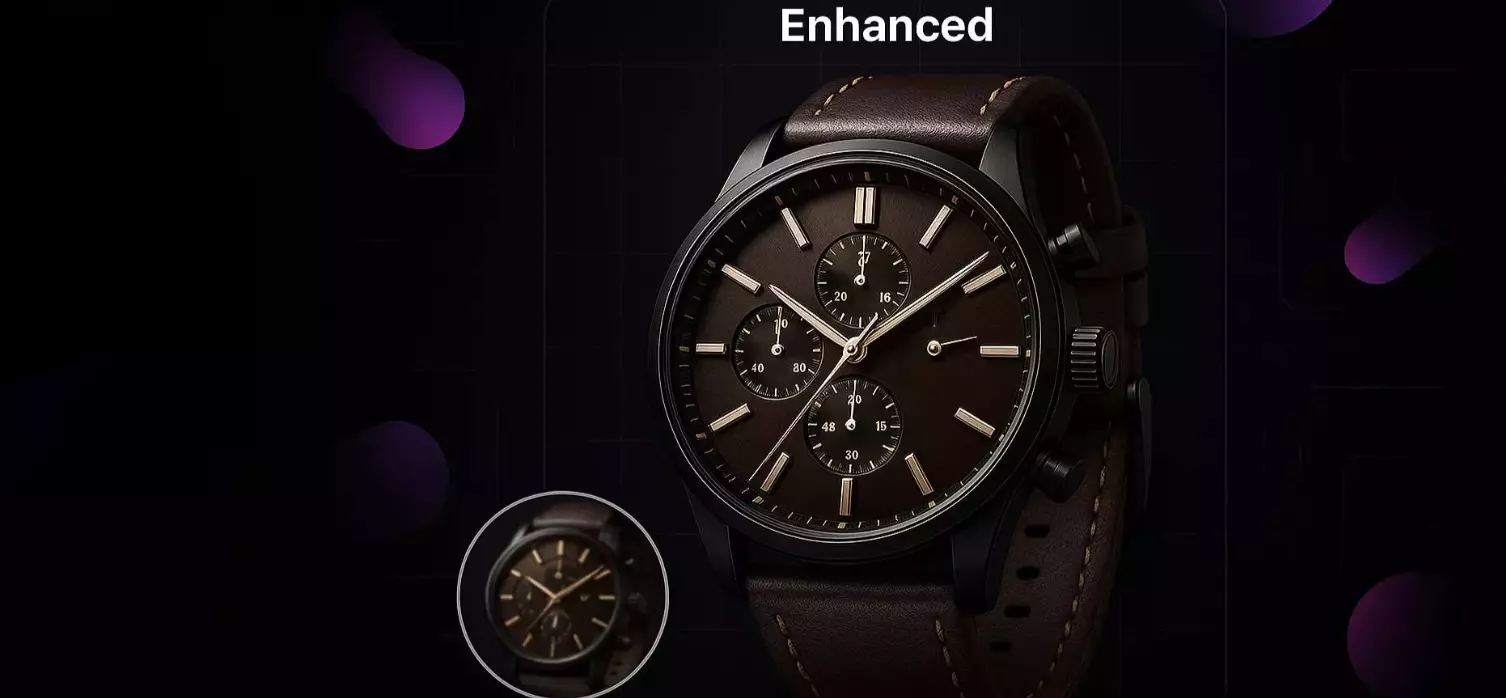
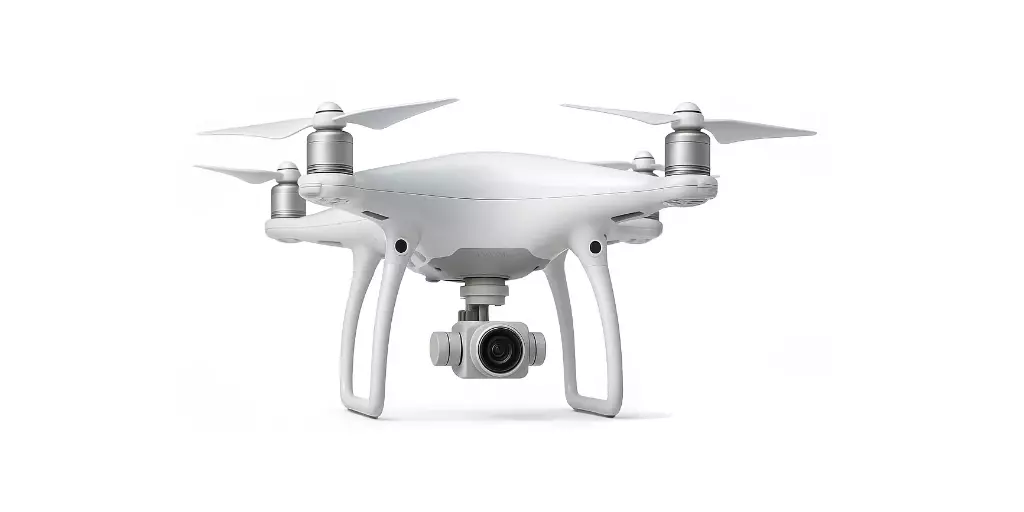
- For products, be bolder in the background but gentler on reflective materials and labels—detail matters for conversion.
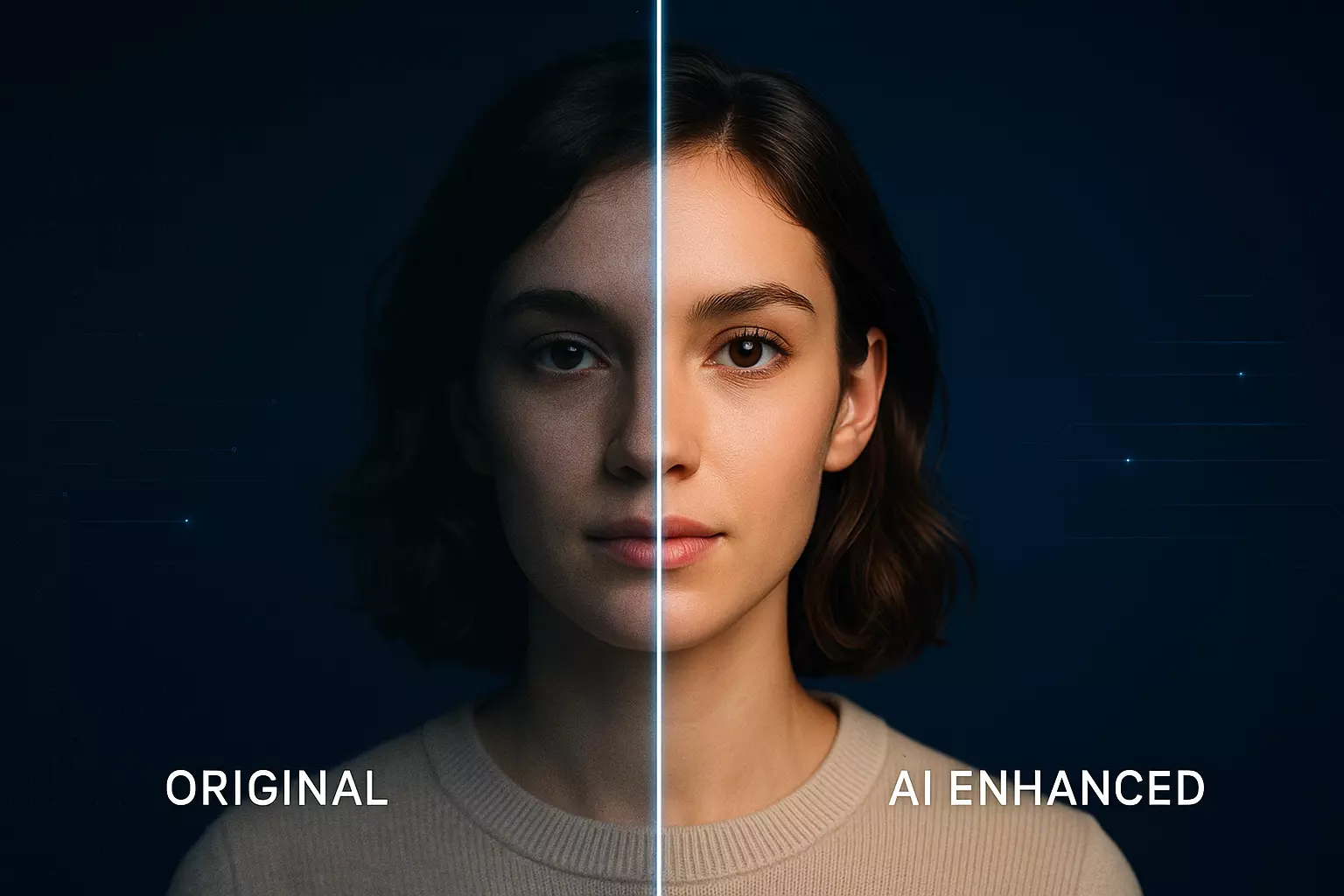
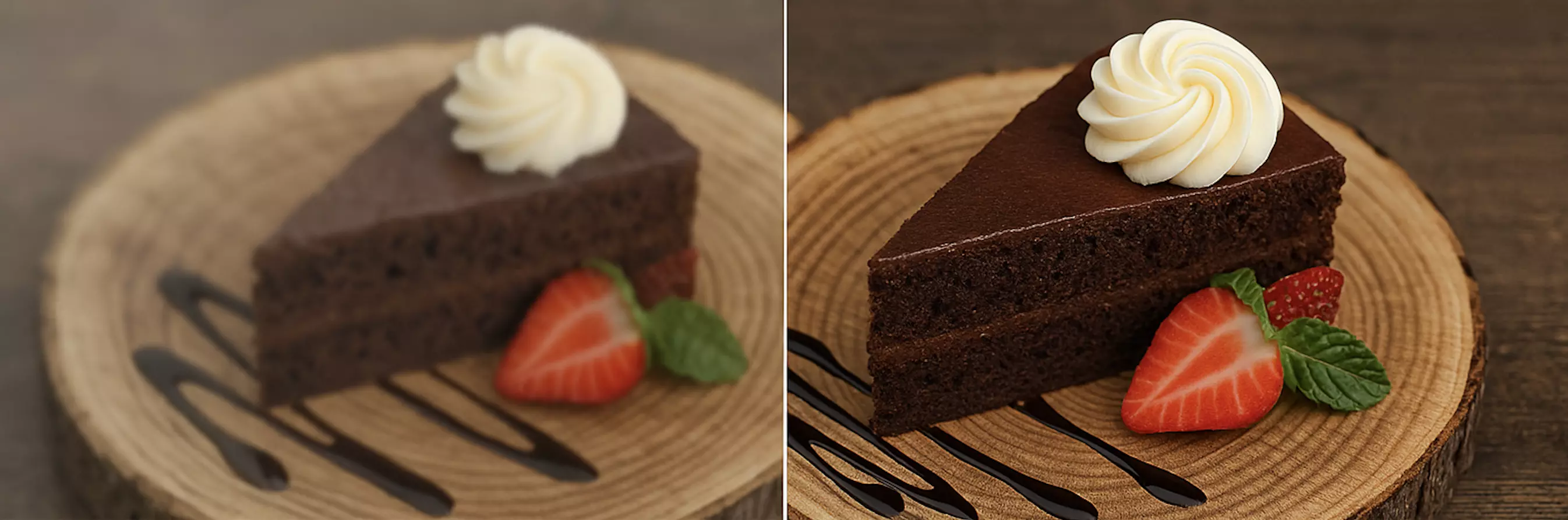
(See image: a before-and-after portrait showing gentle noise cleanup and subtle sharpening while preserving natural grain.)
Subtle sharpening without halos: edge-aware methods that scale
Sharpening should lift perceived detail without outlining edges. Halos are the signature of over-processing; viewers may not name them, but they feel “edited.”
Guidelines:
- Apply edge-aware or unsharp masking with a small radius and moderate amount; avoid global clarity that hits midtones too hard.
- Resize first, then sharpen to the delivery size. Sharpening pre-resize often leads to brittle edges after downscaling.
- Combine low-level micro-contrast with minimal global sharpening to keep the look cohesive.
Color and tone consistency across platforms
Even with the right enhancements, mismatched color ruins trust. Aim for a controlled palette that survives different compression and rendering stacks.
- Work in sRGB for social and most web uses; embed the profile on export.
- Hold midtones steady; slight contrast bumps are okay, but protect highlights and near-black zones from clipping, which compressions exaggerate.
- Create test exports at platform-native sizes and compare side-by-side to your master.
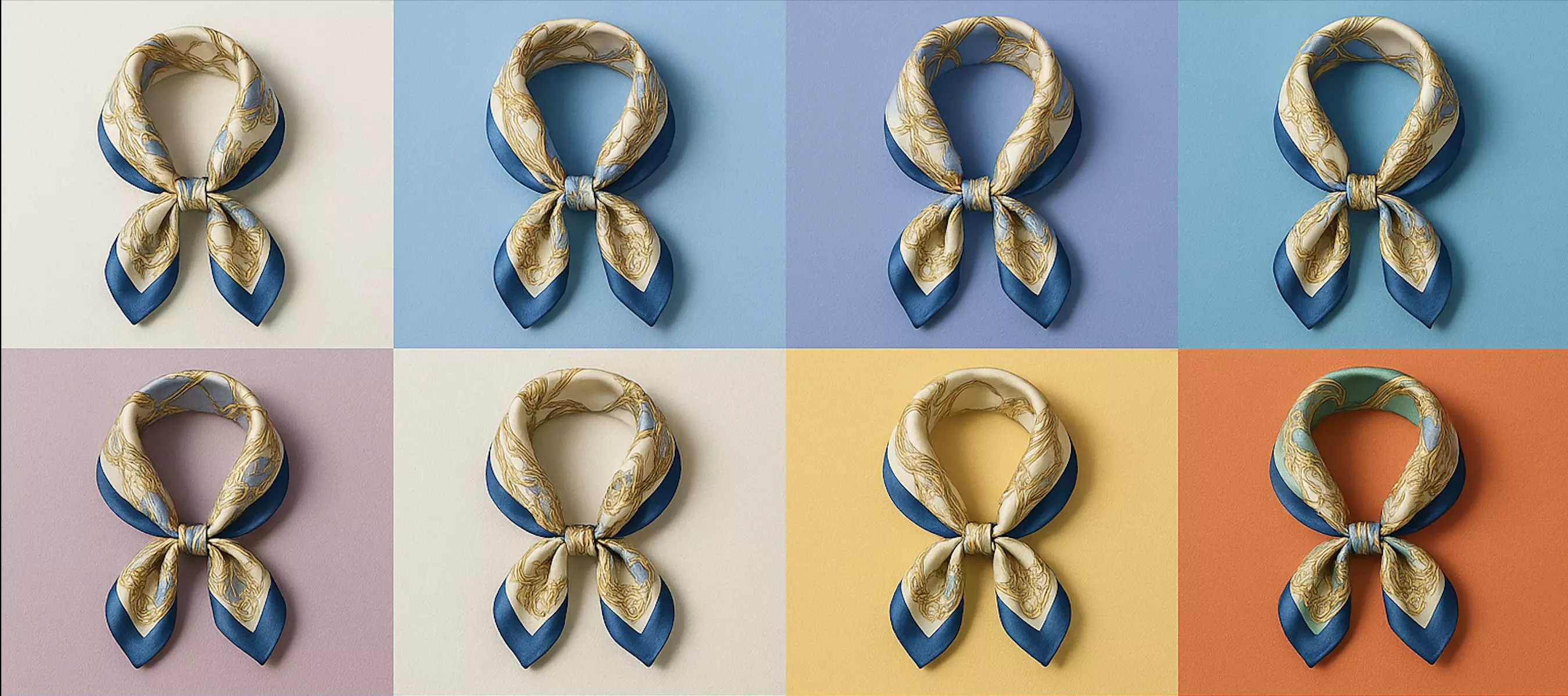
(See image: a grid of previews—Instagram, website, and print—confirming consistent color and tone for the same photo.)
How to run a three-step natural photo enhancement flow
This is a fast, repeatable sequence that scales from a single image to a full campaign:
- Upload your original. Keep files at their native resolution and retain EXIF when possible.
- Let the AI process. Apply gentle noise reduction and subtle, edge-aware sharpening for a clean-but-real result; avoid aggressive presets.
- Download the enhanced image. Export to sRGB in your target size and do a quick platform preview before publishing.
If you want a guided experience, open the Pixflux.AI photo enhancer and follow the same three steps—its defaults are tuned for a natural look.
(See image: Pixflux.AI interface demonstrating the three-step flow: upload → AI processes → download the enhanced image.)
Using Pixflux.AI to enhance photos naturally and at scale
Pixflux.AI helps creators balance authenticity with polish while staying efficient:
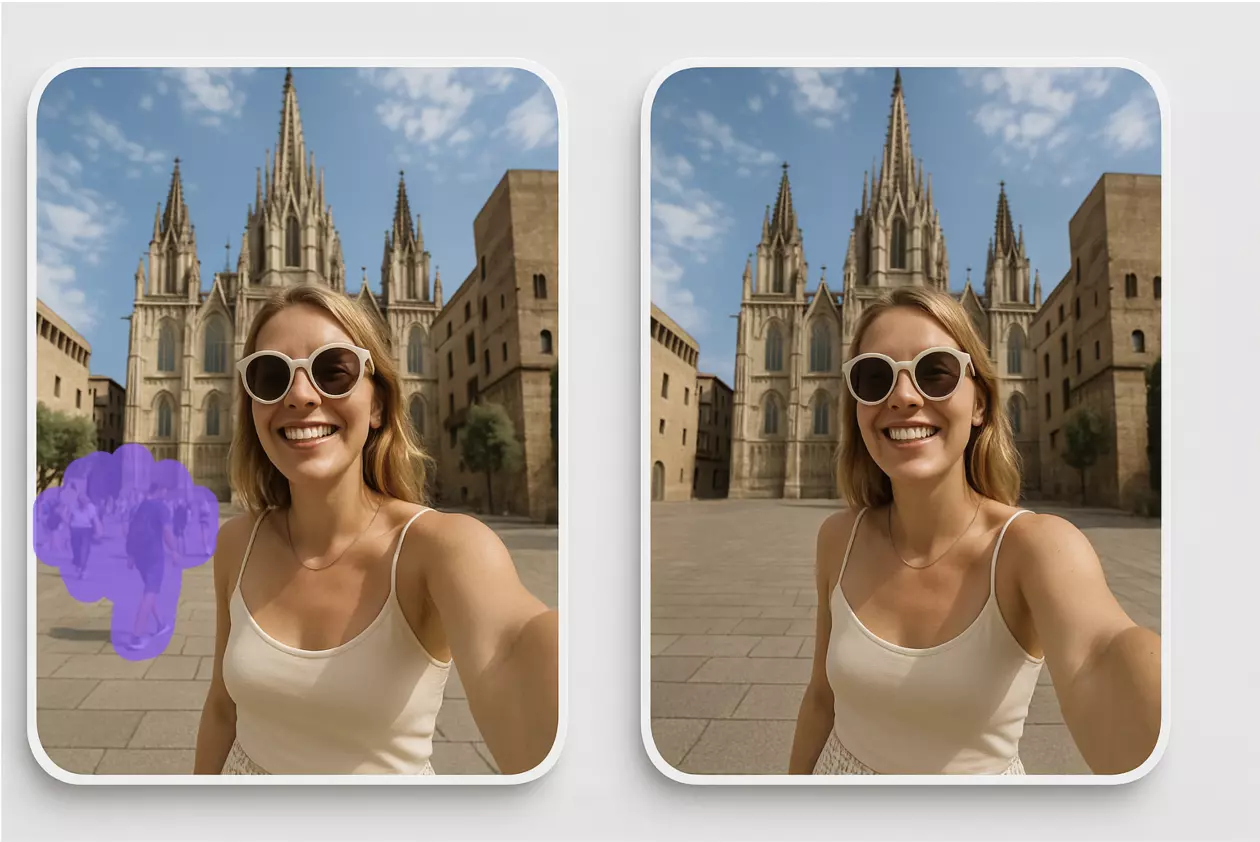
- Natural enhancement by default: It reduces noise while keeping texture, adds subtle sharpening, and improves contrast without harsh edges. If you’re shooting products, you can clean distractions—remove a stray cable or dust spot—so the hero item stays front and center.
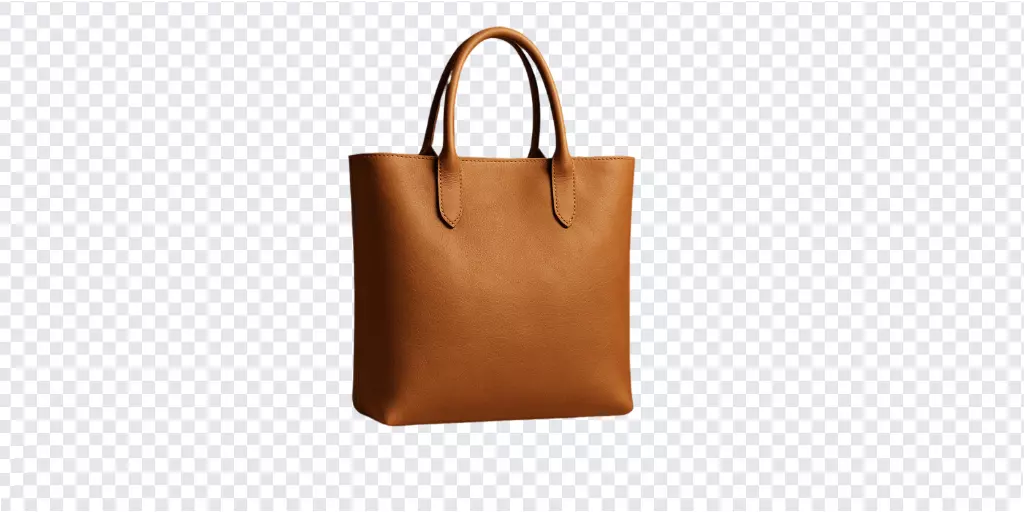
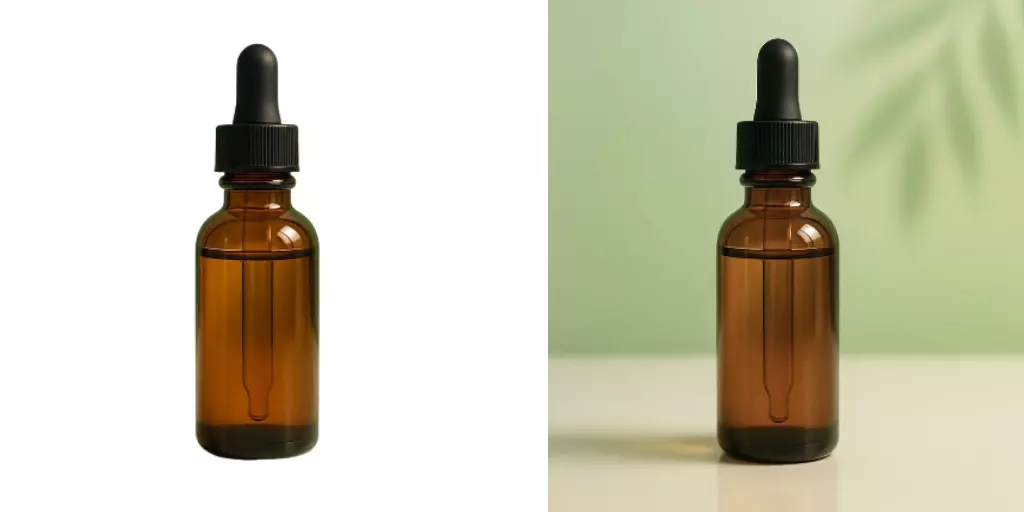
- Background control when needed: Swap a chaotic background for a clean, brand-aligned one, or generate a soft gradient backdrop that matches your color palette. For marketplaces, a neutral white or light gray can lift perceived quality and CTR without distracting from the subject.
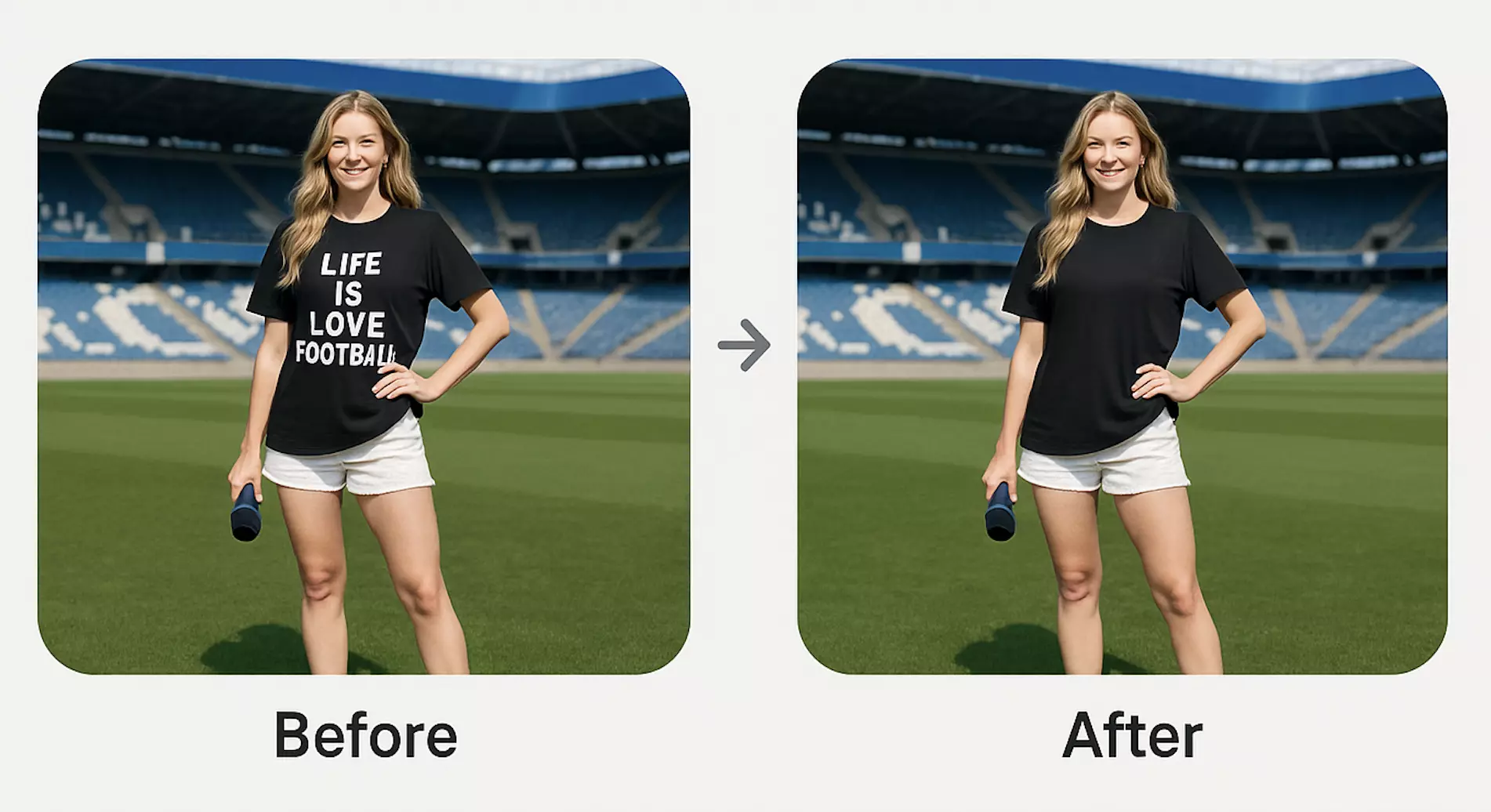
- Watermark and label cleanup: For your own assets, you can remove obsolete logos, stickers, or watermarks to unify a campaign. Only edit images you own or are authorized to modify; don’t remove watermarks to bypass rights.
- Batch processing: Upload multiple images and apply consistent adjustments in one pass. This is ideal for lookbooks, UGC compilations, or multi-angle product sets.
Advanced five-step method for tighter control:
- Open Pixflux.AI.
- Upload one or more originals.
- Choose the enhancement tool and let AI process; optionally combine with background cleanup or object removal.
- Preview side-by-side and tweak intensity for noise/sharpening until it looks real at 100% zoom.
- Download and file by platform (e.g., IG 1350 px, web 2048 px, print 300 DPI).
Batch processing for series consistency and time savings
A consistent series beats a set of one-off winners. With batch tools, you can:
- Normalize noise and micro-contrast across a shoot so every image feels like the same “camera day.”
- Standardize backgrounds for product angles, or lightly grade lifestyle shots to a cohesive tone.
- Save hours on repetitive edits while protecting details that matter for trust and conversions.
Pixflux.AI handles multi-image uploads and applies enhancements uniformly. Then you can quickly fine-tune a few outliers rather than micromanaging every file.
Quality control: side-by-side checks, histograms, and compression tests
Even with a great default, keep QC simple and objective:
- Side-by-side: Open the original and enhanced image at 100% zoom. Confirm skin pores, fabric weave, and type edges are intact.
- Histogram: Look for clipped highlights or crushed shadows after enhancement; adjust contrast or blacks as needed.
- Compression test: Export at platform size and typical JPEG/WebP quality. Re-open the compressed file to ensure no new banding or halos appear. If they do, slightly reduce sharpening or use a higher quality setting.
Ethics, disclosure, and copyright-safe edits
Stay transparent and lawful:
- Only edit images you own or are licensed to modify. Don’t remove watermarks to infringe rights or bypass platform rules.
- If you materially alter a news or documentary-style image, disclose the change. For commercial and creative work, keep edits realistic so content remains trustworthy.
Troubleshooting common artifacts and edge cases
- Waxy skin after denoise: Back off luminance noise reduction and favor chroma-only cleanup. Reintroduce a touch of fine-grain if needed for realism.
- Halos around hair or text: Reduce sharpening amount or radius; try edge-aware sharpening to confine effects to true edges.
- Color shifts between devices: Ensure exports are sRGB with embedded profiles. Calibrate your display and compare on a second device before publishing.
- Banding in gradients: Add minimal dither or export at higher quality; if possible, keep gentle background texture instead of perfectly flat fills.
- Over-sharpened product edges: Sharpen at the final delivery size and protect highlights to avoid “crunchy” speculars.
AI online tool vs traditional methods
- Time cost: Manual denoise and selective sharpening in desktop editors can take 5–10 minutes per image. An AI online tool like Pixflux.AI typically finishes in seconds, even for batches.
- Learning curve: Traditional software demands deep knowledge of masks, frequency separation, and export profiles. Online tools expose only the essentials for creators who need results, fast.
- Batch efficiency: Bulk processing in pro suites requires complex actions and careful setup. Online workflows keep batch simple and consistent without scripting.
- Cross-team adaptability: A web-based tool allows marketers, photographers, and social managers to align on a single look by referencing the same presets and visual checks—no heavy onboarding needed.
FAQ: Photo enhancer workflow for creators
How do I keep photos looking natural when using a photo enhancer?
Use minimal denoise, edge-aware sharpening, and consistent color in sRGB. Start with gentle chroma noise cleanup to remove color speckles while keeping luminance texture. Apply subtle sharpening after resizing to delivery size, and avoid aggressive clarity. Export in sRGB with the profile embedded so the look holds across platforms.
Will AI noise reduction remove skin texture?
No, if you prioritize texture and limit luminance smoothing. Choose settings that favor chroma noise reduction, then review at 100% zoom to confirm pores and fine lines are intact. If it still feels too smooth, roll back intensity or add a faint grain layer to restore natural feel.
Can I batch-process images and keep a consistent look?
Yes, batch processing is ideal for series consistency. Process multiple files with the same noise and sharpening profile, then spot-check a few edge cases for minor adjustments. Tools like Pixflux.AI apply uniform enhancement across uploads, saving time while preserving a cohesive style.
What export settings work best for social platforms?
Export to sRGB at platform-native sizes with moderate compression. Downsize before uploading (e.g., 1350 px on the long side for Instagram portrait) and use quality settings that avoid banding or halos. Re-open the exported file to verify detail and smooth gradients before posting.
Is it okay to remove watermarks or logos?
Only remove marks from assets you own or have explicit permission to edit. Watermark removal must not be used to infringe copyrights or violate platform rules. For your own brand assets, it’s fine to clear old logos or stickers to unify a campaign.
How do I avoid halos when sharpening?
Use edge-aware sharpening with a small radius and apply it after resizing. Keep the amount modest and watch high-contrast edges like hair against sky or text on light backgrounds. If halos appear, reduce the radius or intensity and re-export.
How do I maintain color consistency across devices?
Work in sRGB, embed the profile, and proof on a second device. Check histograms to prevent clipped highlights or blocked shadows, and keep midtone contrast moderate so platform compression doesn’t exaggerate differences.
Conclusion and next steps
A natural photo enhancer workflow protects what matters: authentic texture, readable detail, and a consistent look across every channel. By combining gentle denoise, halo-free sharpening, and disciplined color management—with occasional background cleanup or distraction removal—you deliver visuals that feel real and perform better.
Ready to streamline your edits and enhance photo quality without losing authenticity? Try Pixflux.AI’s three-step flow, batch a full set in minutes, and ship content that looks like your brand—every time.