Picture Background Remover vs. Manual Cut-Out: Which is Better in 2025?
We benchmark AI removers against manual Photoshop cut-outs—speed, cost, learning curve, and image quality—plus a hybrid workflow you can use today.
 Richard SullivanDecember 1, 2025
Picture Background Remover vs. Manual Cut-Out: Which Is Better in 2025?
If you sell on Amazon or Walmart, shoot content for Instagram and TikTok, or manage a multi-SKU catalog, background removal is no longer “nice to have.” Marketplaces expect clean, consistent product photos, and social feeds reward crisp visuals that pop. But teams are stuck in a familiar tension: do you rely on a picture background remover powered by AI, or invest time in manual Photoshop cut-outs to control every pixel?
In 2025, AI segmentation has matured. On common product shots, quality often rivals expert retouchers, and batch processing is now a standard expectation for creative ops. If you want a practical, scalable path, tools like Pixflux.AI act as a fast, reliable picture background remover that shortens your path to a clean, on-brand image without the steep learning curve.
This guide compares both methods head to head—speed, cost, learning curve, and visual quality—then gives you a simple, three-step workflow to ship production-ready images today.
(See image: Split-screen comparison of a product image cut out manually in Photoshop versus an AI background remover result, focusing on hairline edges and soft shadow preservation.)
Why background removal matters now
- Consistency: Marketplaces enforce uniform backgrounds and margins. Consistent edges and shadows directly affect click-through and conversion.
- Speed-to-listing: Faster background work means faster merchandising and ad testing cycles.
- Scale: Batch processing is essential as image volumes grow across SKUs, channels, and formats.
- Team enablement: Not every contributor is a Photoshop expert. You need a workflow that works across roles.
Picture background remover vs. manual cut-out: what’s the actual difference?
- Picture background remover (AI): An online tool that segments subject from background automatically. Modern models handle edges, hair, and soft shadows with surprising accuracy and allow quick background changes or enhancements.
- Manual cut-out (Photoshop): A handcrafted mask using Pen Tool, Select and Mask, and various refinements. It offers maximum control but requires time, skill, and patience—especially for complex edges, transparent materials, and color spill clean-up.
How we evaluate the two approaches
- Speed: Turnaround per image and throughput in batches.
- Cost per image: Includes software, plugins, external retouchers, and internal labor time.
- Learning curve: How quickly a non-specialist can achieve a professional result.
- Visual quality: Edge fidelity, hair detail, transparency handling, soft shadow preservation, and color spill control.
What to expect across five image types
Here’s a practical look at typical results you can expect in 2025:
- Ecommerce packshots (simple edges): AI removers typically excel, producing clean cut-outs with consistent edges and preserved soft shadows. Manual is equally good but slower.
- Portraits: AI does well on skin and clothing; fine hair can require touch-ups. Manual masking can recover more flyaway strands but takes time.
- Hair and fur: This is the hardest case. AI results are often publish-ready for social and marketplace use; manual can push fidelity further for print or high-end brand campaigns.
- Glass and transparency: AI is increasingly competent, but manual work can better manage partial transparency and color cast cleanup for premium outputs.
- Complex edges (e.g., bikes, jewelry chains): AI handles many cases well; manual offers surgical control to fix tiny gaps, overlaps, and micro-reflections.
Bottom line: For everyday ecom and social content, AI is often “good enough” or better and dramatically faster. For hero banners, premium print, or nuanced transparency, a manual pass can still win.
How to use a picture background remover in 3 simple steps
You can turn a cluttered shot into a clean, marketplace-ready image in minutes using Pixflux.AI:
- Upload your image
- Drag a product or portrait photo into Pixflux.AI. High-resolution inputs give the best edges.
- Let the AI process the background
- The model segments subject from background, preserving soft shadows where appropriate. You can preview and make quick adjustments.
- Download the result
- Export a transparent PNG or a ready-to-publish JPEG. If needed, swap in a new background before downloading.
Tip: To follow along, open Pixflux.AI’s image background remover and try a product image with textured edges (e.g., fabric or hairline details).
(See image: Pixflux.AI interface showing the three-step flow—upload image, AI processes background, preview and download the result.)
Using Pixflux.AI beyond removal: change, enhance, and scale
Once you’ve removed the background, keep momentum in the same workspace:
- Replace or generate a new background: Drop your subject onto a clean white, a color field that matches your PDP palette, or a context that suits social ads. This is especially useful for marketplace vs. campaign variants.
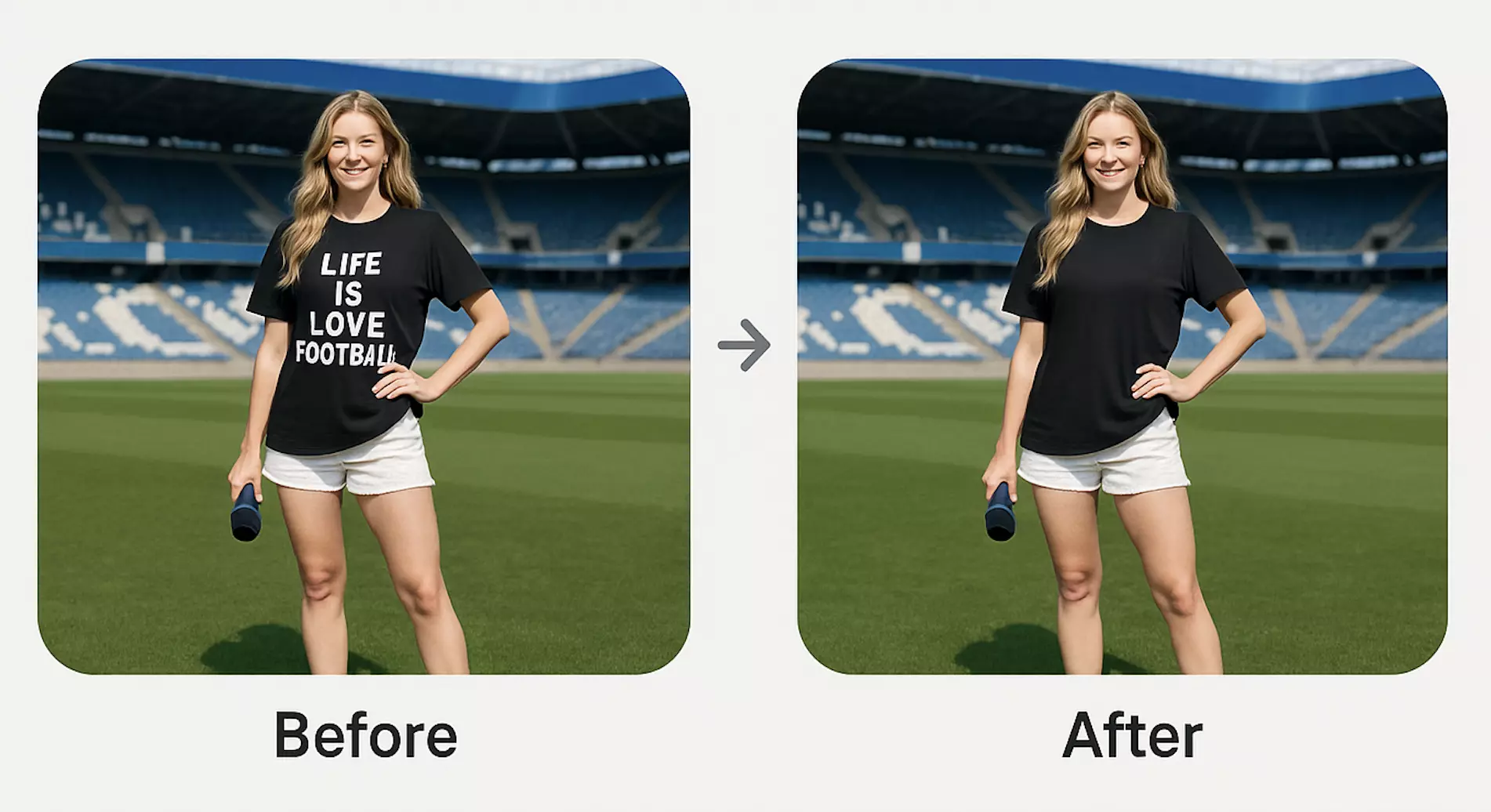
- Remove watermarks or logos (with rights): If your sample images contain legacy marks, you can clean them before launch assets go live. Only do this when you own the rights or have explicit permission.
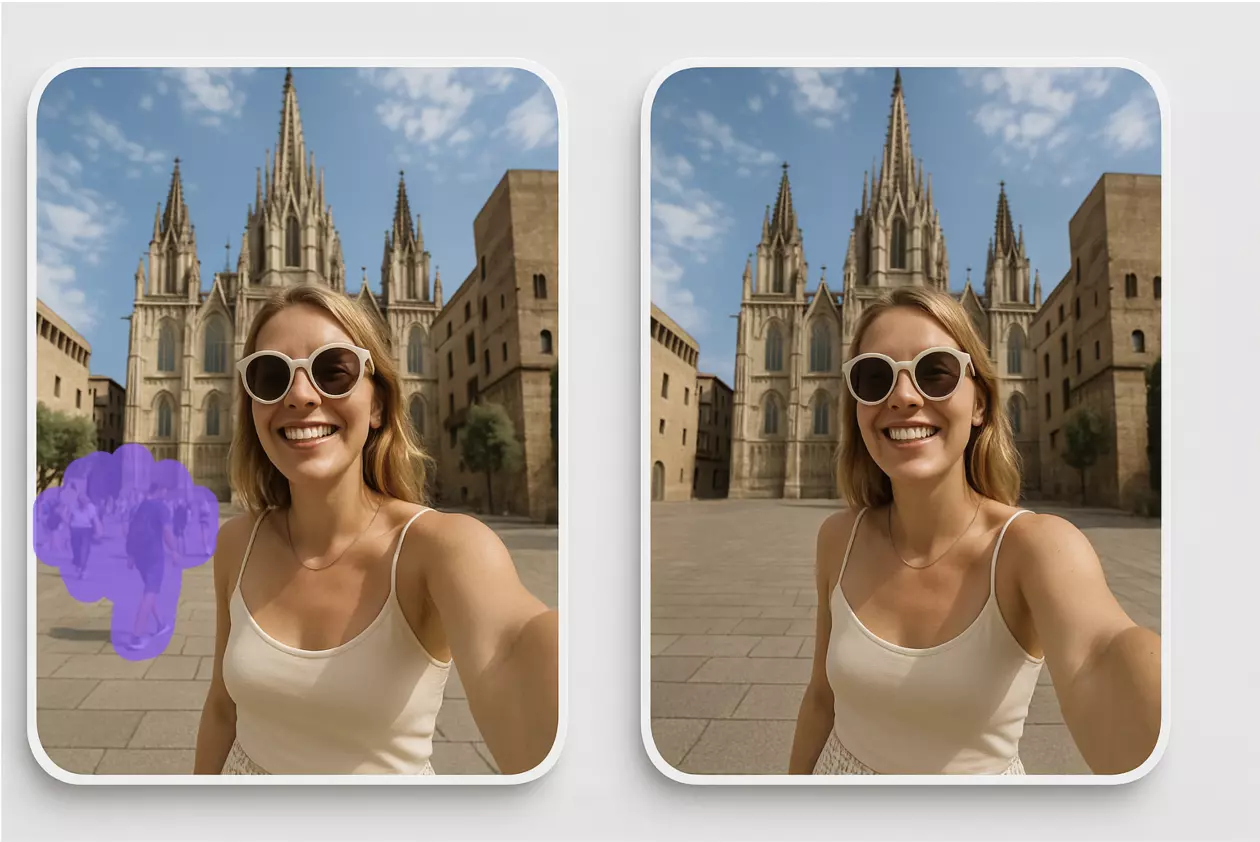
- Remove unwanted objects: Clear distracting cables, passersby, or label stickers from lifestyle shots.
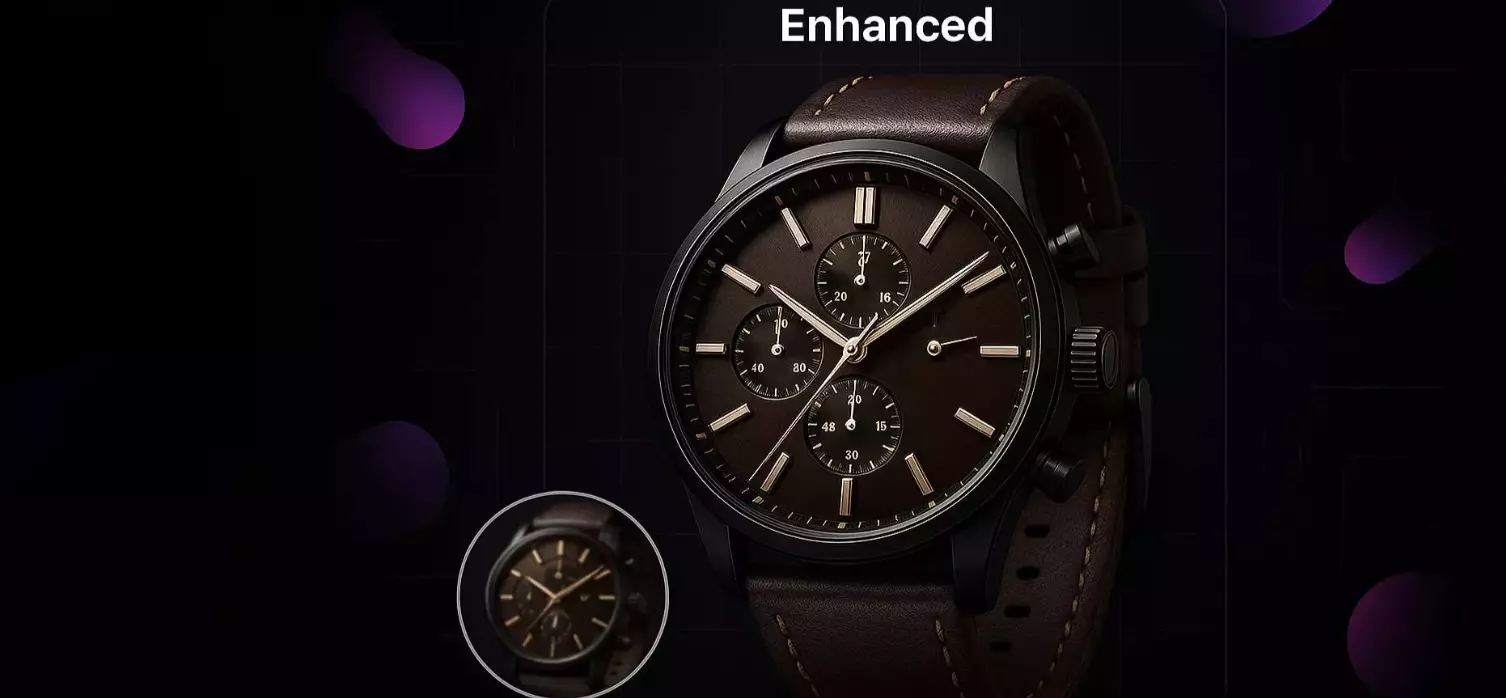
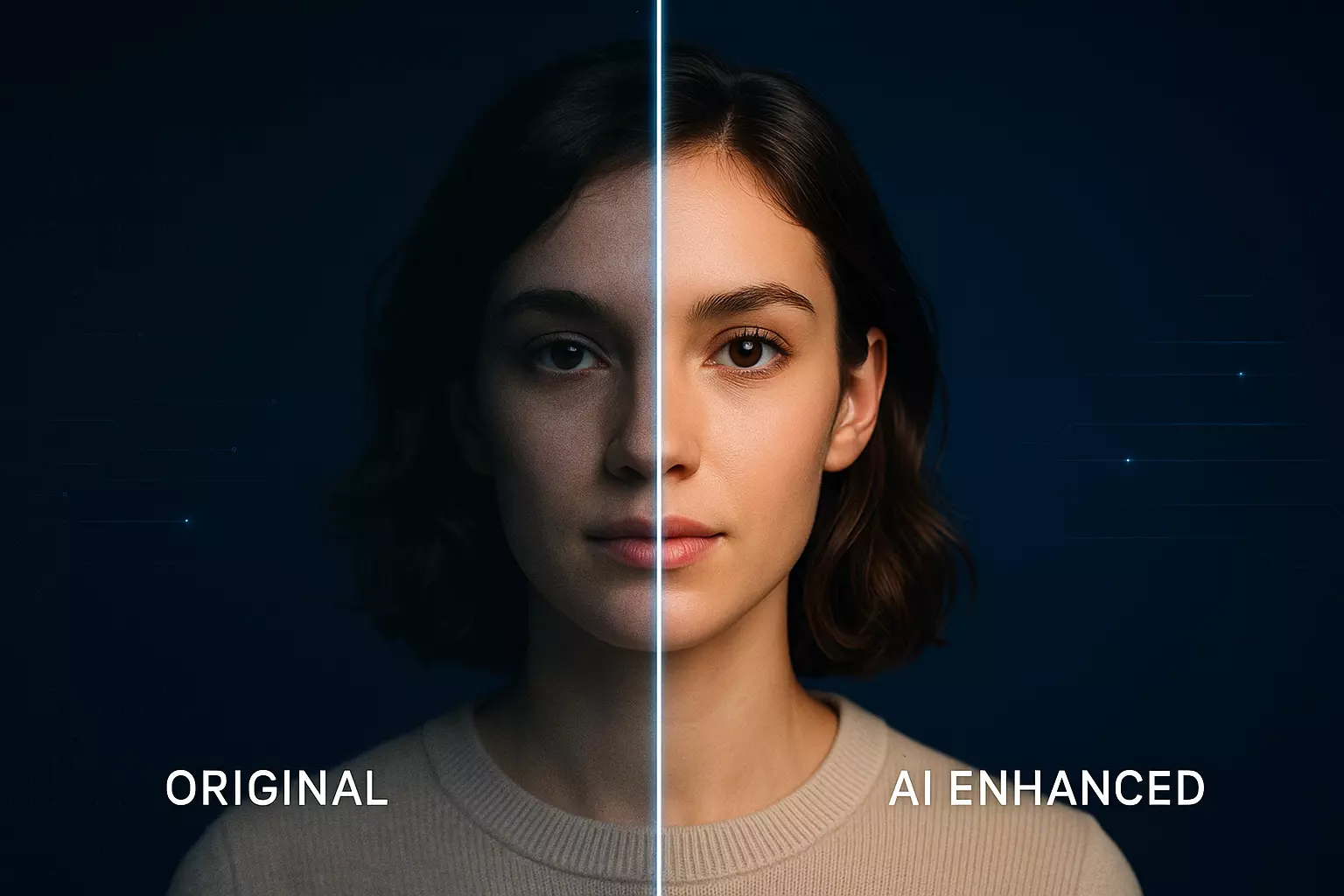
- Enhance images: Improve clarity, contrast, and micro-detail so your subject reads well at thumbnail and hero sizes.
- Batch process: Upload multiple images and process them in one go—handy for multi-SKU drops or UGC roundups.
(See image: Before-and-after set for the same product in Pixflux.AI—first background removal, then watermark removal on a brand-approved sample.)
Manual Photoshop cut-out workflow in brief
For times when you want total control, here’s the standard sequence:
- Rough select: Use Object Selection or Quick Selection to get close.
- Refine edges: Enter Select and Mask to adjust radius, feather, and contrast. Use Refine Edge Brush for hair and fur.
- Pen Tool for hard edges: Trace product contours for pixel-precise paths (e.g., packaging, metal, and geometry).
- Transparency handling: For glass and liquids, build a layered mask and manually paint alpha levels to preserve partial transparency and soft interior reflections.
- Shadow reconstruction: Either preserve original soft shadows on a separate layer or recreate realistic shadows to match the new background.
- Color decontamination: Clean color spill using decontaminate colors, blend-if, or targeted hue/saturation adjustments.
This yields excellent results but demands skill and time, especially across large batches.
Quality comparison: edges, hair, transparency, shadows, color spill
- Edges: AI typically nails common edges; manual excels at micro-geometry and edge noise control.
- Hair/fur: AI is strong, manual still best-in-class for premium work where every strand matters.
- Transparency: AI handles many glass/plastic cases; manual masking can more accurately portray partial alpha and reflection nuance.
- Soft shadows: AI is increasingly good at preserving soft shadows; manual offers full control to match lighting to new backgrounds.
- Color spill: AI can mitigate spill; manual allows precise cleanup, especially on glossy surfaces or saturated backgrounds.
AI online tools vs. traditional Photoshop/outsourcing
- Time cost
- AI tool: Seconds per image; minutes for batches. Great for fast merchandising and ad testing.
- Manual/outsourcing: Minutes to hours per image, plus back-and-forth for clarifications.
- Learning curve
- AI tool: Minimal. Non-designers can ship publish-ready assets in one session.
- Manual/outsourcing: Requires advanced skills or vendor management.
- Batch efficiency
- AI tool: One-click batch uploads streamline multi-SKU catalogs and UGC sets.
- Manual/outsourcing: Batching is slower and more error-prone without meticulous QA.
- Cross-team fit
- AI tool: Anyone in marketing, merchandising, or content can contribute quickly.
- Manual/outsourcing: Bottlenecks around specialists or vendor turnaround windows.
- Quality ceiling
- AI tool: Excellent for ecommerce and social; improving fast on edge cases.
- Manual/outsourcing: Highest ceiling for hero work, transparency nuance, and art-directed composites.
Decision guide: choose by use case, budget, and timeline
- Marketplace listings (Amazon, Walmart): Start with an AI remover like Pixflux.AI; use selective manual touch-ups if needed.
- Social ads and organic content: AI first for speed; swap backgrounds to match campaigns.
- Large catalog updates: Use AI with batch processing; reserve manual time for 1–2% of tricky SKUs.
- Premium brand/print: Manual or hybrid (AI base + expert refinements).
- Startup budgets: AI wins—low learning curve and fast throughput.
Troubleshooting common artifacts
- Halos around edges: Increase feather slightly or darken the edge with a soft brush on the mask. Re-run the AI pass with higher edge sensitivity if available.
- Jagged or stair-stepped edges: Export at higher resolution or apply a subtle anti-alias on the mask.
- Mismatched shadows: Duplicate the subject’s original shadow if available, or recreate soft shadows with a blurred ellipse and lowered opacity.
- Color fringing/spill: Desaturate edge pixels or use a clipped hue/saturation layer to neutralize spill from the original background.
Compliance and ethics
- Only remove watermarks, logos, and trademarks from images you own or are authorized to edit. The goal is to tidy legitimate assets, not to bypass rights.
- Follow marketplace and client brand guidelines. When in doubt, secure approvals before publishing.
Pro tips: a hybrid flow that balances speed and quality
- Start with AI: Use Pixflux.AI to remove backgrounds, change them to marketplace-friendly formats, and enhance base clarity.
- Touch up what matters: For hair, glass, or hero visuals, add light manual refinements in Photoshop—especially on edges and color spill.
- Keep a style checklist: Background color, margins, shadow style, and export sizes. Apply it consistently across AI and manual outputs.
- Iterate fast, then standardize: Validate what works with performance data (click-through rate, add-to-cart) and lock in a repeatable flow.
Advanced: a 5-step Pixflux.AI workflow for production teams
When quality or volume increases, a slightly longer pass keeps you fast and consistent:
- Open Pixflux.AI
- Upload your original images (single or batch)
- Choose the background removal tool and run the AI
- Preview and tweak edges, then optionally change/generate a background, remove distracting objects, or enhance detail
- Download your final assets in the required format (transparent PNG for compositing, JPEG for listings)
This approach balances throughput with control for teams that need both speed and brand consistency.
Conclusion and next steps
By 2025, AI background removal isn’t just “close enough”—it’s often the practical best choice for ecommerce and social, with hybrid touch-ups reserved for high-stakes hero work. If you need fast turnarounds, consistent outputs, and batch-ready workflows, an AI-first stack is hard to beat.
Ready to try it on your own images? Use Pixflux.AI to remove picture background online in minutes, then swap backgrounds, clean distractions, and enhance clarity—all without the steep learning curve. Your next product drop or campaign can be cleaner, faster, and more consistent starting today.