How Designers Use Picture Background Removers to Speed Up Client Work
See how freelancers and agencies use a picture background remover to speed briefs, batches, and QA—delivering polished, consistent assets on time.
 Richard SullivanDecember 1, 2025
How Designers Use Picture Background Removers to Speed Up Client Work
If you design for clients—freelance or agency—you know the clock starts ticking the moment assets land in your inbox. The fastest way to lose a day is wrestling with messy backgrounds: uneven lighting, busy scenes, product shadows that don’t match, or watermarked supplier images. Multiply that across a campaign and turnaround times and margins suffer.
This is exactly where an AI-powered picture background remover fits the workflow. Instead of hand-masking in every round, designers offload the busywork, preserve brand consistency, and keep proofs moving. Tools like Pixflux.AI make this shift practical: you can go from upload to clean cutout in seconds and keep a consistent look across all deliverables. If you’re exploring options, try a reliable picture background remover to see how much time it frees up in your next project.
Industry-wide, the shift is already happening: agencies have normalized AI-assisted masking to meet 24–48 hour turnarounds, while ecommerce marketplaces demand distraction-free images at scale. The goal isn’t to replace design judgment—it’s to remove repetitive steps so your energy goes into layout, messaging, and brand polish.
Why background removal is core to turnaround and brand consistency
- It’s the foundation for reusable assets. Clean cutouts drop into any layout, seasonal colorway, or channel format without re-editing.
- It reduces revision loops. Clients react faster when visuals are tidy and on-brand, not cluttered by inconsistent scenes.
- It enables fast testing. Cutouts let you spin variations (A/B hero banners, marketplace thumbnails, or social crops) in minutes.
- It protects brand standards. Consistent backgrounds, shadows, and edges maintain a cohesive look across Amazon listings, website PDPs, and paid social.
Key methods to know: cutouts, masks, edge refinement, semantic matting
- Cutouts and masks: Non-destructive masks keep original pixels intact so you can iterate without starting over.
- Edge refinement: Hair, fur, and semi-transparent materials require tighter edges and feathering to avoid halos.
- Semantic matting: AI identifies the subject versus background using context, improving edges around fine details like jewelry chains or glassware.
- Shadows and ground reflections: Subtle drop shadows or floor reflections are often recreated post-removal to avoid “floating” subjects.
Understanding these terms helps you brief stakeholders and debug tricky inputs quickly.
Choosing a picture background remover: what actually matters
- Quality of the cutout: Look for accurate subject detection, hair-level detail, and minimal halos.
- Speed and reliability: Turnaround is everything. A tool should handle one-off images and large batches without delays.
- Batch support: For product catalogs and UGC-heavy campaigns, the ability to process many images at once saves hours.
- Cost and predictability: Flat or transparent pricing makes it easier to budget projects and quote clients.
- Extras that matter: Background replacement or generation for mockups, object/watermark removal for supplier images, and enhancements (denoise, sharpen, upscale) for final polish.
Where background cleanup fits in the client workflow
- Intake and triage: As soon as assets arrive, separate source photos by quality tiers (ready, fixable, reshoot). Run fixable images through background cleanup right away.
- First proofs: Use cleaned cutouts with simple neutral backdrops to align on composition and messaging quickly.
- Iterations: Swap backgrounds by channel (e.g., white for Amazon main image, brand color for PDP gallery, seasonal backdrops for social).
- Final delivery: Export consistent sets by channel with matching edges, shadows, and file specs.
How-To: background removal in Pixflux.AI (Upload → AI process → Download)
You can complete a client-ready cutout in three simple steps in Pixflux.AI. This flow works for single images and scales neatly for many assets.
- Upload your original image
- Drag and drop your photo to Pixflux.AI. Prioritize the highest-resolution version you have.
- Let the AI process the image
- The tool removes the background automatically. Refine edges if needed—check hair, wisps, or transparent surfaces.
- Download the cleaned result
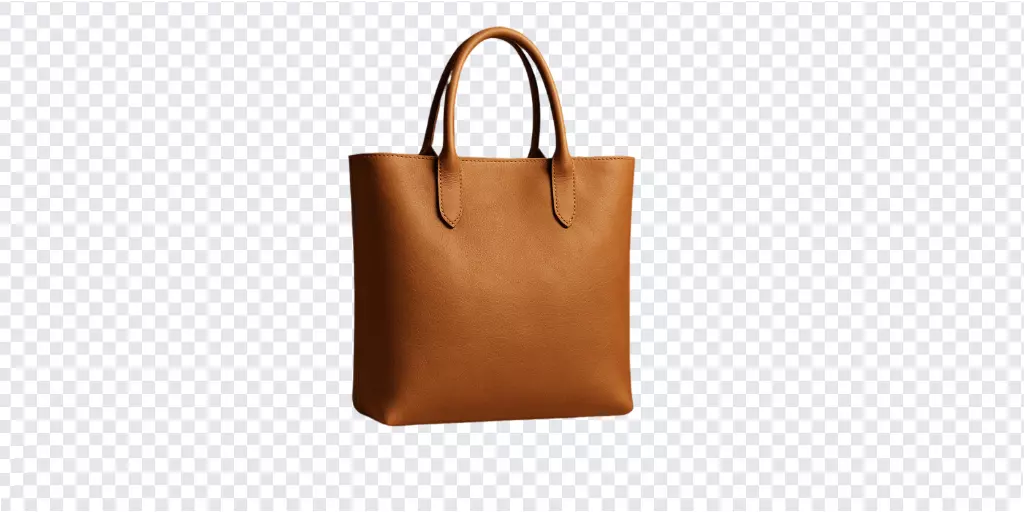
- Export a PNG for transparency or a JPEG if you’re placing it on a solid background.
(See image: Pixflux.AI interface showing the Upload → AI processing → Download three-step flow.)
If you want to try it now, open the streamlined photo background remover and follow the same steps on a test image.
Pro tip: For ecommerce, keep subject scale consistent across a set by checking cropping and padding before you export.
Batch pipelines for agencies: folders, presets, and QA checkpoints
When you’re processing dozens or hundreds of assets, the secret isn’t just batch capability—it’s the surrounding discipline.
- Intake folders: Sort by shooting angle or product family so you can apply similar crops and shadows in one pass.
- Preset decisions: Commit to default canvas sizes and padding rules (e.g., 85% subject-to-frame for marketplace thumbnails).
- One-pass review: After automated background removal, do a 10–20% spot-check. Look for soft halos, stray hairs, or missed gaps between limbs and clothing.
- Edge normalization: Feather edges slightly for lifestyle assets; keep edges crisp for catalog cutouts.
- Deliverable-ready exports: Name files consistently (sku_color_angle.jpg) and produce all channel variations together to avoid rework.
Pixflux.AI supports both single and batch processing, so you can clear an entire folder’s worth of product images with consistent results and a quick QA sweep.
Beyond removal: change or generate backgrounds and remove distractions
Background cleanup is the start, not the end:
- Replace backgrounds to match brand palettes, seasonal campaigns, or marketplace guidelines.
- Generate new backdrops for concept mockups—studio paper, textured stone, or soft gradients—without booking a shoot.
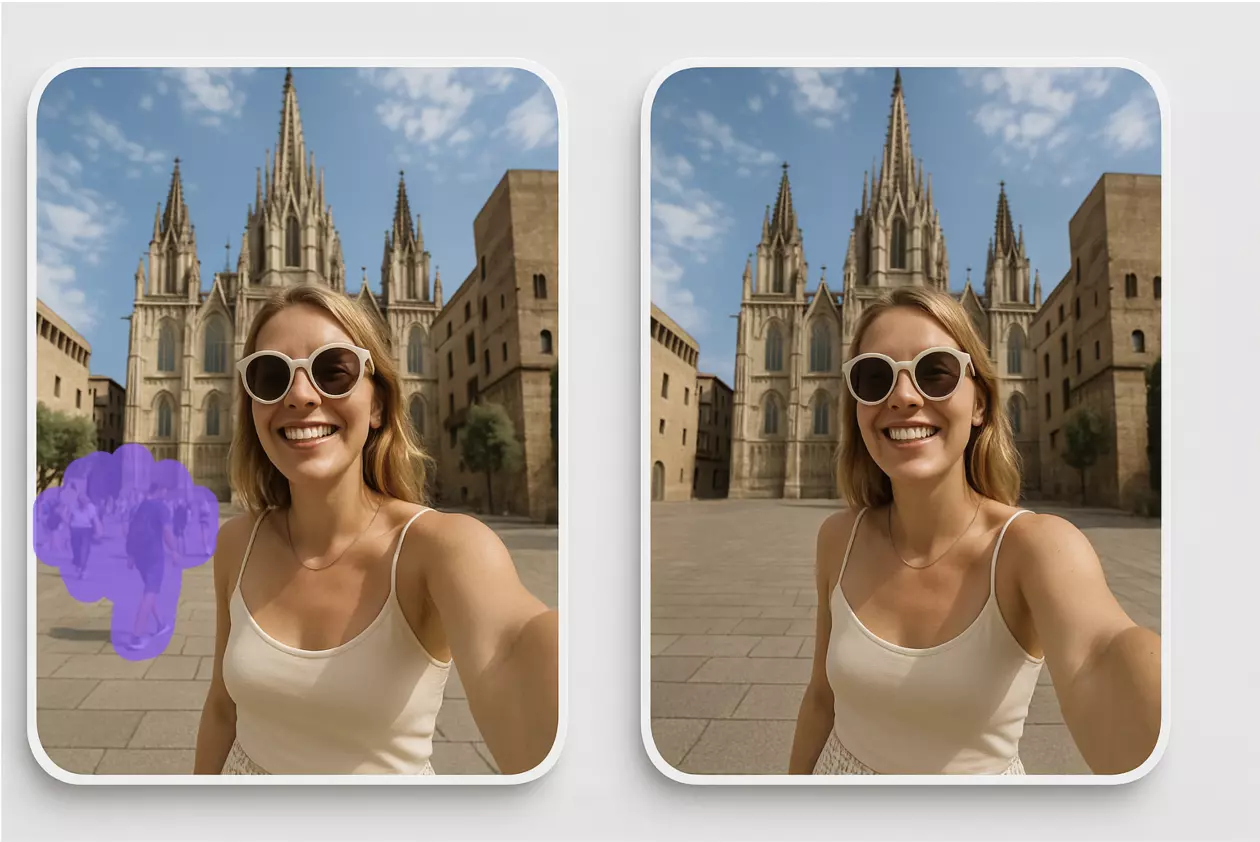
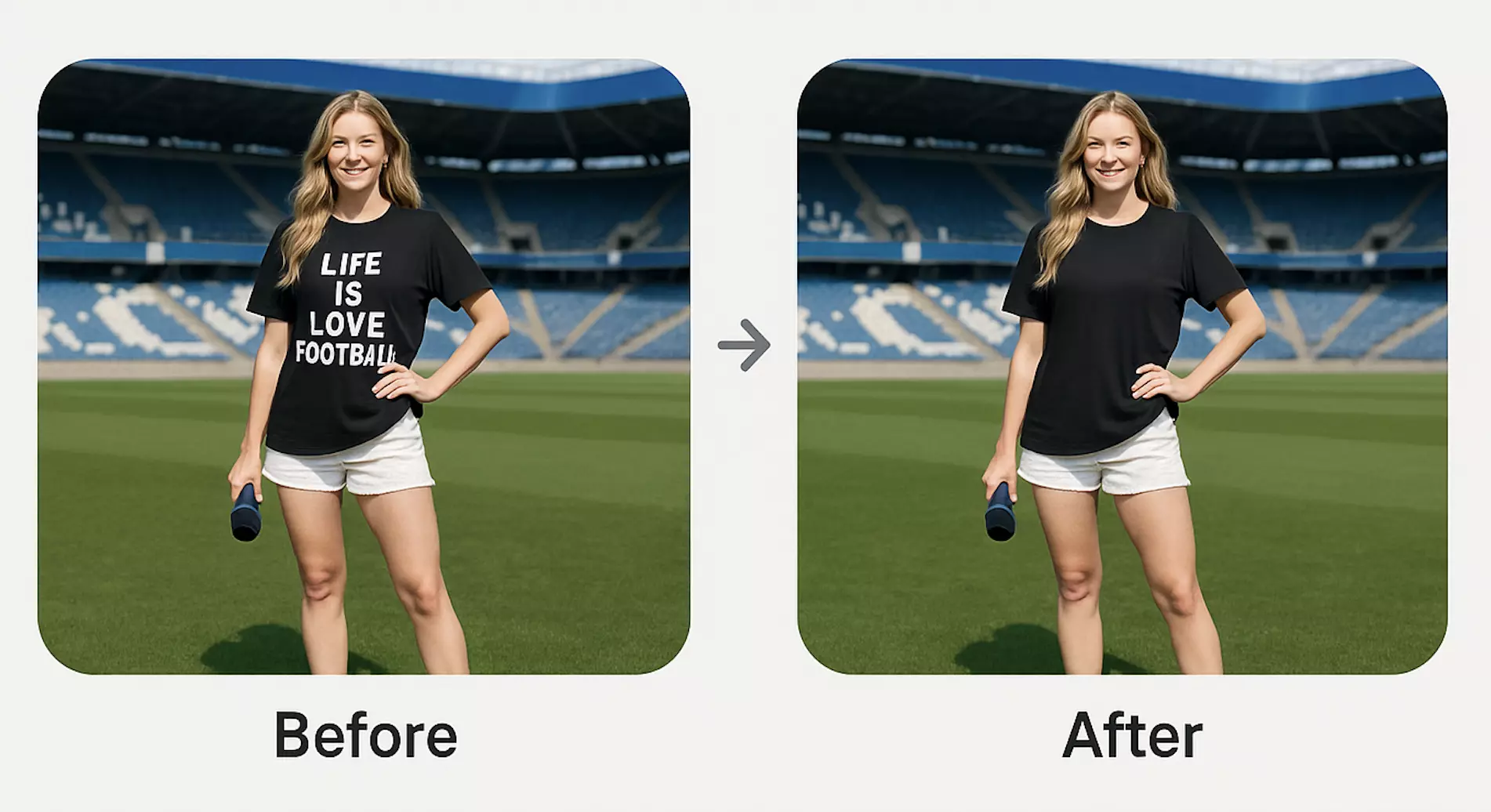
- Remove unwanted elements like passerby, cables, or reflections that draw the eye.
If supplier images arrive watermarked, use AI watermark removal to produce neutral, client-safe previews or internal mockups. Always stay compliant: only remove watermarks from images you own or have explicit rights to use, and never bypass marketplace or copyright rules.
With Pixflux.AI, you can handle these edits in the same session: cut out the subject, swap in a branded background, clean distracting objects, then finalize for delivery.
(See image: Designer’s artboard with the original photo and the final cutout placed on a generated studio background.)
Enhance for polish: sharpening, denoise, and upscaling
Even great cutouts fall flat if the source photo is soft or noisy:
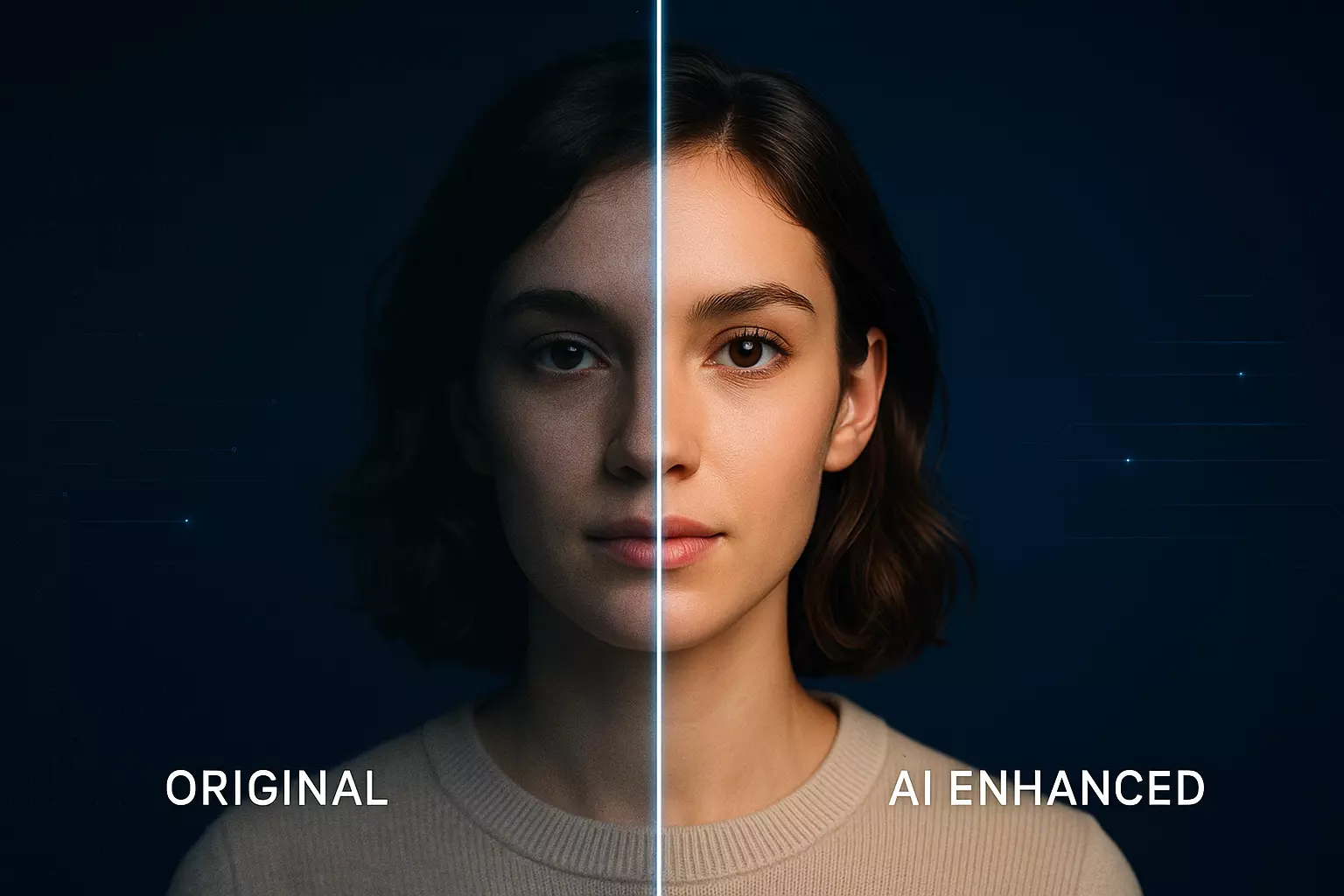
- Sharpen thoughtfully to recover micro-contrast in textures (fabric weave, product edges).
- Denoise to clean up high-ISO source shots without plastic skin tones.
- Upscale for channel-specific requirements (e.g., PDP zoom or print applications).
In Pixflux.AI, run enhancements right after background removal so you judge edges and detail in their final context.
Quality control and file preparation
Before you send assets to clients or upload to marketplaces:
- Color and contrast: Align with brand LUTs or style guides. Ensure skin tones and product colors are accurate.
- Edges: Inspect at 100% zoom for halos, jaggies, or missed gaps. Pay extra attention to hair, lace, and transparent items.
- Shadows and grounding: Add a subtle, consistent shadow so the subject doesn’t float.
- Export settings: Use PNG with transparency for layered design work, JPEG for solid backdrops. Match platform specs (dimensions, max file size) and naming conventions.
(See image: Before-and-after comparison of the same product image, with background removed and watermark removed using Pixflux.AI.)
Ethics and client communication
- Rights: Only process images you own or are licensed to edit. Get written permission if in doubt.
- Watermarks: Do not remove watermarks to conceal ownership or infringe on copyrights. Disclose your cleanup steps in project notes so clients understand the process.
- Consistency: Document your background, shadow, and export rules so future campaigns match today’s look.
Troubleshooting tricky edges
- Hair and fur: Use finer edge refinement and slight feathering; check against both light and dark backgrounds.
- Glass and transparency: Maintain realistic refraction—avoid turning glass edges into hard opaque lines.
- Motion blur: If the subject is slightly blurred, sharpening first can improve the mask, but don’t overdo it.
- Low-resolution assets: Upscale early, then remove the background; this reduces jagged edges and improves matting.
Case-study snapshots: time saved across project types
- Amazon catalog set (50 SKUs): Manual pen-tool cutouts might take 6–8 hours. With AI removal plus a 20% QA pass, expect ~90 minutes end-to-end, with consistent backgrounds and shadows across the set.
- Lifestyle social refresh (20 images): Replace mixed, busy scenes with brand gradients for a unified grid. AI background changes and object removal can condense two days of work into a focused afternoon.
- Pitch mockups for a rebrand: Generate on-brand backdrops and deliver three visual directions quickly. This accelerates alignment without committing to new studio shoots.
The pattern is consistent: AI handles the repetitive layers, while designers focus on composition, typography, and story.
AI online tools vs traditional methods
- Time cost
- AI tools: Seconds per image, minutes per set. Repeatable across a campaign.
- Traditional software: Advanced selections and manual refinements can take 5–15 minutes per image, longer for hair and glass.
- Learning curve
- AI tools: Minimal—upload, review, download. Great for cross-team collaboration with non-designers.
- Traditional software: Requires deep masking skills, plugins, and lots of practice.
- Batch efficiency
- AI tools: Built for multi-image throughput with predictable output.
- Outsourcing: Can be accurate but adds coordination time, rounds of feedback, and delays.
- Consistency
- AI tools: Same engine and presets enforce uniform cutouts and shadows.
- Manual: Quality varies by editor and fatigue; standards drift across large sets.
Pixflux.AI exemplifies the “good enough instantly, perfect with small tweaks” approach—exactly what fast-moving client teams need.
Getting started in minutes
Here’s a lightweight five-step routine when you’re on deadline:
- Open Pixflux.AI.
- Upload your raw images (start with the highest-res versions).
- Choose background removal, then preview the cutouts.
- Make quick refinements: edge cleanup, background swap, object/watermark removal if required.
- Download channel-ready files (PNG or JPEG) and drop into your design files.
If you want to put this flow into practice, jump into the streamlined photo background remover and process a sample set to benchmark your time.
Conclusion and next steps
Designers aren’t judged by how long they spend masking hair; they’re judged by clarity, consistency, and speed. A modern picture background remover lets you tame messy inputs, standardize outputs, and keep focus where it belongs—on creative direction and outcomes. Whether you’re prepping Amazon mains, PDP galleries, or social campaigns, the combination of fast cutouts, flexible background options, and simple enhancements will become your default.
Try it on your next client set. Open Pixflux.AI’s remove image background tool, run a few challenging photos, and see how much time you get back this week.