Create Marketplace-Ready Product Images: A Simple Checklist for Amazon, Shopify, Etsy, and TikTok Shop
A simple, repeatable checklist to make Amazon, Shopify, Etsy, and TikTok product photos look pro, pass requirements, and load fast—without switching tools.
 Sierra CappelenDecember 12, 2025
Create Marketplace-Ready Product Images: A Simple Checklist for Amazon, Shopify, Etsy, and TikTok Shop
If you’ve ever had a product listing flagged for “non-compliant images,” you know how costly a reshoot or relisting can be. In 2025, marketplaces increasingly tie image compliance to discoverability—clean hero photos and consistent variants aren’t just “nice to have,” they influence search rank and conversion on mobile-first storefronts.
The good news: you don’t need a studio crew for every SKU. A simple, repeatable SOP—plus an AI-powered workflow—can take you from inconsistent photos to marketplace-ready images in minutes. If you’re unsure where to start, review the core product image requirements that most platforms expect and build your process around them.
Below is a practical, tool-agnostic checklist you can apply to Amazon, Shopify, Etsy, and TikTok Shop. To demonstrate each step, we’ll show how a lightweight online tool like Pixflux.AI can remove backgrounds, standardize lighting and color, clean watermarks and stray objects, and enhance clarity across a batch.
Why marketplace-ready images matter for conversion and trust
- Search rank and visibility: Marketplaces increasingly reward listings with compliant, fast-loading, mobile-optimized images.
- Conversion: Clean edges, consistent backgrounds, and true-to-life color reduce returns and improve add-to-cart rates.
- Brand trust: Unified imagery across hero, variant, and lifestyle shots signals quality and professionalism—especially on TikTok Shop and mobile apps where vertical frames dominate.
Core product image requirements across major marketplaces
While rules vary slightly, you’ll see these patterns:
- Background: White or neutral for hero images; contextual allowed for secondary/lifestyle shots.
- Cropping and margins: Product centered with minimal empty space; no borders or text overlays.
- Lighting and color: Uniform illumination; accurate color that matches what customers receive.
- Resolution: High enough for zoom; typically 1500–3000 px on the longest edge; sharp, not oversharpened.
- File format: JPEG or PNG are common; WebP/AVIF are gaining traction for speed when supported.
- Prohibited edits: No fake shadows, misleading transformations, or added graphics that change the product.
The SOP at a glance
Use this as your repeatable, cross-team checklist:
- Background and aspect ratio
- Remove busy backgrounds for hero images; use white or light neutral.
- Prepare 1:1 (square) and 4:5 or 3:4 (vertical) crops for mobile-first feeds.
- Cropping and composition
- Center the product; keep consistent margins across variants.
- Straighten perspective; avoid tilted product lines unless stylistically intentional for lifestyle shots.
- Lighting and color consistency
- Match white balance across the set.
- Neutralize color casts; keep tones consistent between hero and variants.
- Resolution and compression
- Aim for 1500–3000 px longest edge; ensure crisp edges.
- Compress for speed without halos or artifacts; consider WebP/AVIF where supported.
- File naming and organization
- Use an SKU-based convention: brand_sku_color_view_01.jpg.
- Keep versions organized by channel if requirements differ slightly.
- Variants and lifestyle coverage
- Capture angles (front, side, detail), color variants, size scale.
- Include one lifestyle/context image that reflects real use.
Backgrounds and aspect ratios: white, neutral, and contextual
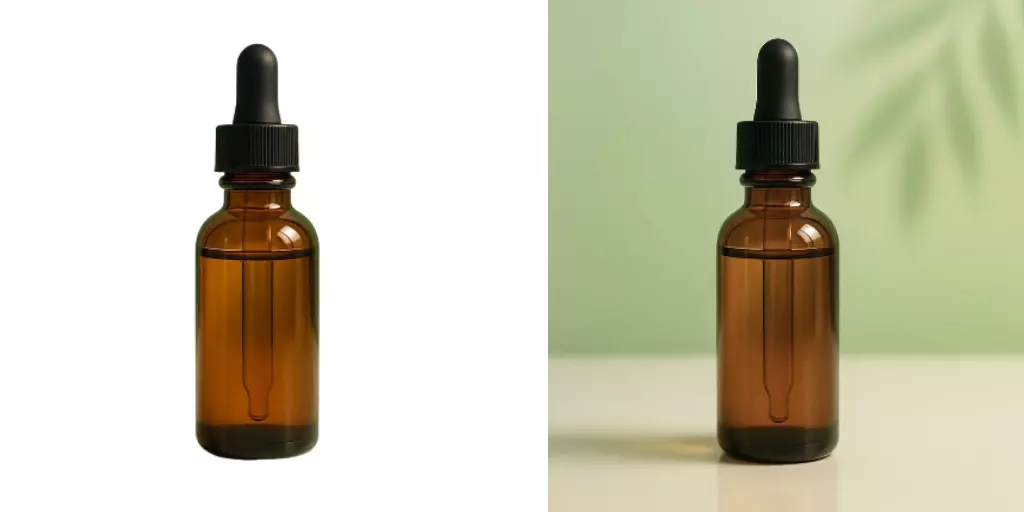
- Hero images: Amazon and most marketplaces prefer pure white or uniform neutral backgrounds. If your source photos come from a studio or UGC shoot, use an AI background remover to isolate the product and clean edges. Pixflux.AI can remove complex backgrounds and generate a clean white or brand-consistent neutral backdrop in one pass.
- Secondary/lifestyle images: For Etsy and TikTok Shop, contextual scenes convert well. Generate subtle, on-brand backgrounds—like a soft shadow surface or minimal room setting—while keeping the product as the focal point.
- Aspect ratios: Prepare a square hero (1:1) for most catalog grids and a vertical (4:5 or 3:4) for mobile feeds. Keep the crop consistent across variants so thumbnails line up neatly.
Tip: If shoots include unplanned clutter (wires, tags, stray props), remove those extra objects so they don’t distract in zoom views.
Color accuracy and lighting consistency: practical tests and targets
- White balance: Place a neutral reference (gray card) in at least one photo per set, or sample a “neutral” area in post to normalize.
- Product color: Compare to the actual SKU under daylight-balanced lighting. Small hue shifts can drive returns for fashion and home decor.
- Contrast and clarity: Enhancing micro-contrast can help details pop in zoom, but avoid heavy sharpening halos on edges.
- Consistency test: Tile your hero and variants in a grid to check background tone, crop margins, and brightness side by side.
How to process images in Pixflux.AI (Upload → AI process → Download)
Here’s a fast, repeatable flow to produce marketplace-ready product images without deep editing skills.
- Upload your source photos
- Drag a single image or a batch from your shoot. Include your hero and variant angles.
- Let the AI process the images
- Remove the background for hero shots; swap in a white or neutral backdrop.
- For lifestyle images, modify or generate a simple, brand-fitting scene.
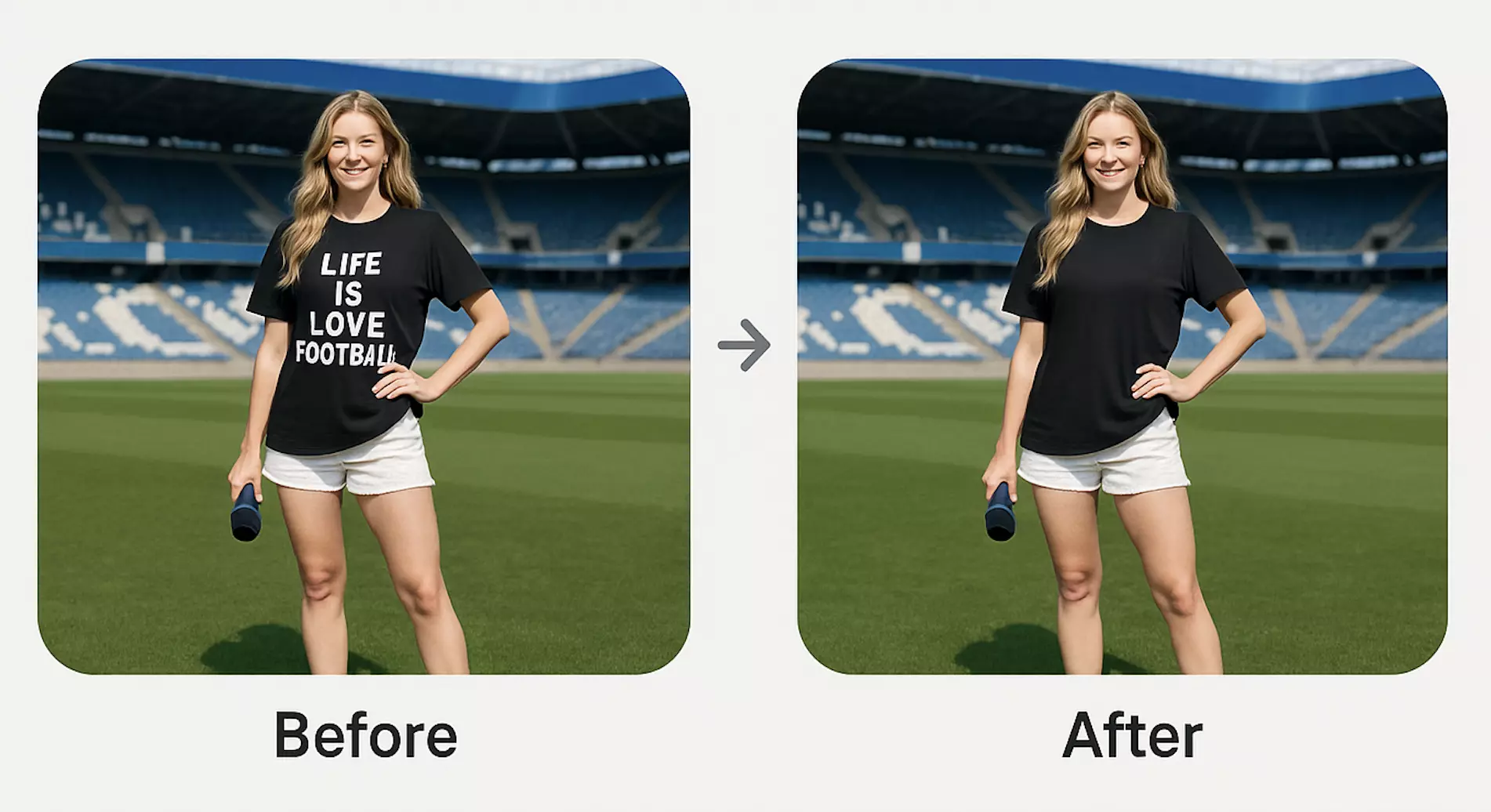
- Clean distractions: remove watermarks or logos you don’t intend to show, stray objects, or reflections.
- Enhance clarity: sharpen edges, lift shadows slightly, and boost contrast for a crisp zoom experience.
- Download and review
- Export JPEG/PNG for universal support, or WebP if your storefront supports it.
- Check edges, color, and crop consistency before publishing.
(See image: Pixflux.AI interface showing the three-step flow: Upload → AI processing → Download.)
Pro tip: If you prefer a little more control, follow a five-step loop—open the tool, upload, choose the specific operation (background, enhance, object removal), preview and make micro-adjustments, then download the final assets. For large catalogs, Pixflux.AI supports batching so you can process multiple SKUs consistently in one run.
Compliance reminder: Only remove watermarks or logos from images you own or have explicit rights to edit. Do not use background or object edits to misrepresent the product.
Resolution, file format, and compression: fast loads without losing detail
- Target resolution: 1500–3000 px on the longest side for zoom; 72–150 ppi is standard for web displays.
- Compression: Export at 75–85% quality for JPEG as a baseline; verify no banding in gradients or jagged edges on fine lines.
- Modern formats: Where supported, serve WebP or AVIF versions for lighter pages and faster mobile loads. Keep JPEG/PNG fallbacks if your platform theme requires them.
- File size guardrails: Aim for 150–250 KB for catalog thumbnails and 300–600 KB for main images before CDN optimization, then test performance.
Variant images and lifestyle shots: framing, prop rules, and consistency
- Angles and variants: Deliver a front view, side view, detail macro, and any color or size variants. Maintain the same crop margins and horizon line across angles.
- Props and context: Use minimal, non-distracting props that don’t imply missing accessories. Explain scale with a neutral object or a hand model when relevant.
- Lifestyle clarity: Keep the product dominant; blur or simplify the background if the setting competes with the subject. Pixflux.AI can refine or replace busy backgrounds while preserving realistic shadows.
(See image: a grid displaying a compliant hero image, variant angles, and a lifestyle shot for one SKU.)
Before-and-after examples and quality metrics
- Edge cleanliness: Look closely at hair, fabric threads, and transparent plastics. Crisp edges indicate good background removal.
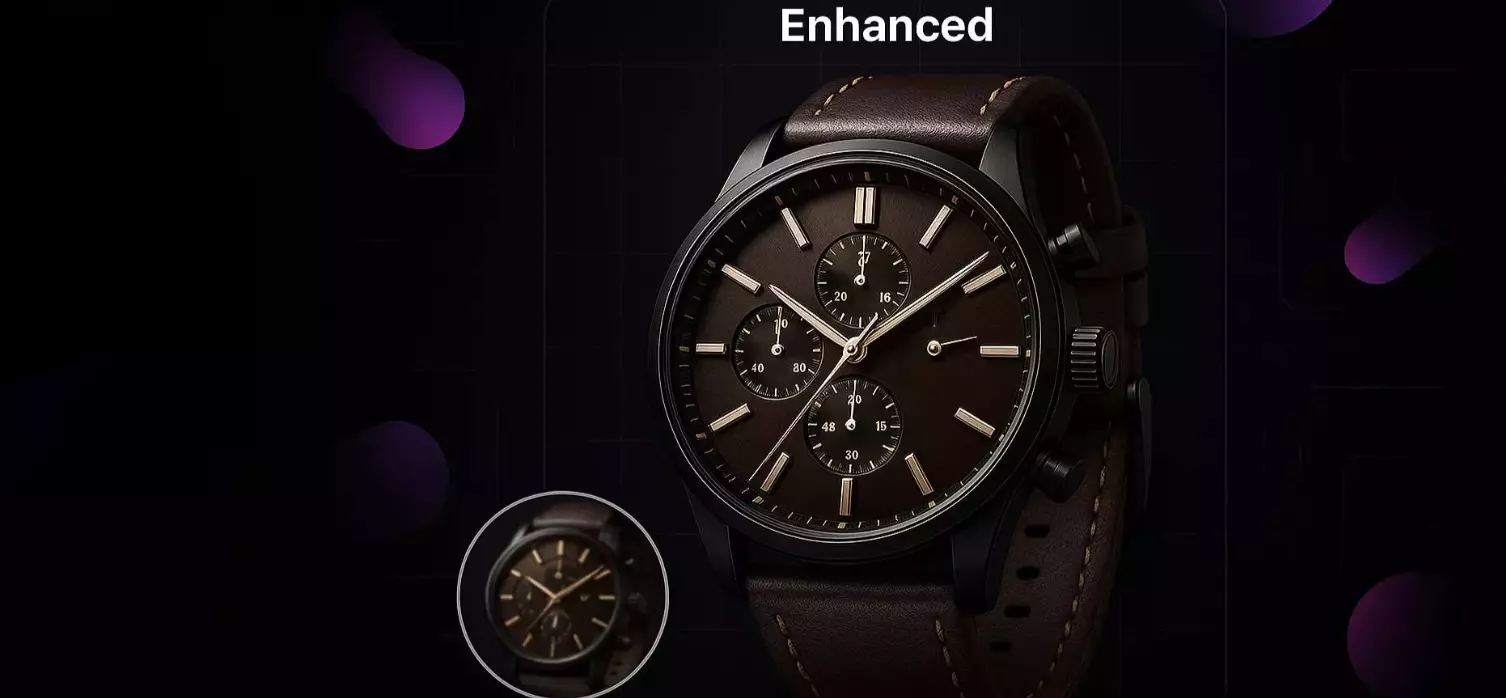
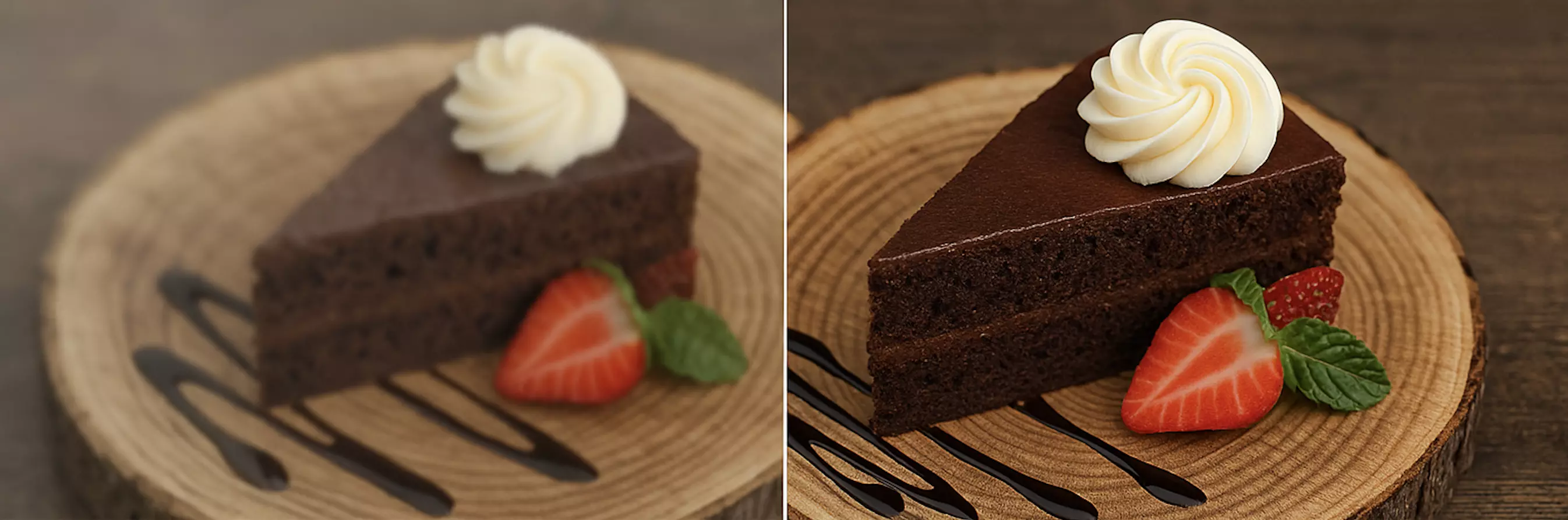
- Sharpness and noise: Zoom to 100%—details should be clear without sandpaper-like noise. If needed, use AI enhancement to lift details without artifacts.
- Color fidelity: Compare the edited image next to the physical product under neutral lighting; adjust tint if needed.
- Distraction removal: Confirm no stray reflections, wires, or studio tape remain around the product base.
(See image: side-by-side before/after of a product photo with background removed and clarity enhanced.)
Troubleshooting and compliance: watermarks, artifacts, and disallowed edits
- Watermarks and logos: Remove only if you own the image rights or have explicit permissions. Don’t strip branding from third-party assets you don’t control.
- Artifacts and halos: If you see jagged edges or glow around the product after background removal, increase feathering slightly or re-run the cutout at higher precision.
- Shadows and reflections: Keep shadows realistic; avoid adding fake reflections that mislead buyers.
- Forbidden overlays: No text, badges, or borders in hero images unless the marketplace explicitly allows it.
- Color mismatch: If customer returns cite “color was different,” calibrate your display and normalize white balance across the full set.
The ecommerce product photo checklist: final pre-upload review and naming
Run this quick review before you hit publish:
- Hero image
- White or neutral background; no text or borders.
- Product centered; consistent margins; correct aspect ratio for the channel.
- Edges clean; natural shadow; no artifacts.
- Variants and detail
- All angles shot and consistent.
- Color variants accurately represented and labeled.
- Close-ups show texture/material clearly.
- Lifestyle image
- Product remains focal point; context aids understanding, not distracts.
- Props do not imply missing items or misrepresent features.
- Color and exposure
- White balance consistent; no strong color cast.
- Highlights not blown; shadows retain detail.
- Resolution and format
- Meets zoom requirements; compressed without visible degradation.
- JPEG/PNG or WebP/AVIF as supported by your storefront.
- File naming
- brand_sku_color_view_01.jpg convention.
- Channel-specific variants saved to the right folder.
- Compliance
- No disallowed edits, watermarks, or misleading graphics.
- Confirm platform-specific requirements for margins, background, and aspect ratio.
If you need a fast way to execute the checklist on your next batch, process your set with Pixflux.AI and validate against your ecommerce product photo checklist before upload.
AI online tools vs traditional methods
- Time to publish
- AI tool: Minutes for a full batch—remove backgrounds, enhance, and clean distractions in one flow.
- Traditional software: Manual masking, layer work, and retouching per image; hours for similar volume.
- Outsourcing: 24–72 hours turnaround, plus revision cycles.
- Learning curve
- AI tool: Simple three-step flow; minimal training.
- Traditional software: Steeper learning; maintaining consistency across editors can be challenging.
- Batch consistency
- AI tool: Uniform settings across a batch for margins, color, and background.
- Traditional software: Consistency depends on presets and user diligence; prone to variations.
- Cost control
- AI tool: Predictable, per-use or subscription costs; no minimum order.
- Outsourcing: Per-image costs add up; rush fees for urgent listings.
Pixflux.AI stands out for everyday ecommerce work because it handles background removal and generation, color and clarity enhancement, and removal of extra objects—and does it across multiple images in one go. For teams without full-time retouchers, it’s the fastest path to compliance and a cohesive brand look.
Conclusion and next steps
Marketplace-ready images are now table stakes for ranking and conversion—especially on mobile-first platforms. With a clear SOP and an efficient AI workflow, you can keep listings compliant, maintain brand consistency, and ship SKUs faster.
Start with a few products today: clean the hero image, align your variants, and compress for speed. Then roll the process out across your catalog. When you’re ready to move, use Pixflux.AI to execute your ecommerce product photo checklist in a simple upload → process → download flow.
And if you’re aligning an upcoming launch to 2025 trends—square and vertical frames, UGC-style lifestyle shots, faster formats like WebP/AVIF—build them into your presets now. Your future self (and your conversion rate) will thank you.
Looking for a quick refresher on the standards? Revisit marketplace product image requirements and spin up a batch inside Pixflux.AI to see the difference in minutes.