Pixflux.AI Lab: Our Editing Standards (So Your Before/After Results Stay Real and Trustworthy)
See how we keep AI edits natural: clear limits, zoom-based QC, and texture preservation—so your before/after results stay honest.
 Sierra CappelenDecember 12, 2025
Pixflux.AI Lab: Our Editing Standards (So Your Before/After Results Stay Real and Trustworthy)
If you edit photos for products, campaigns, or social, you’ve probably faced the same pushback: “Did you really shoot that?” Over-processed images erode trust. Plastic skin, crunchy edges, and surreal backgrounds might grab attention for a second—but they cost you credibility with customers, marketplaces, and editors.
This is why we run our work through clear, consistent photo editing standards. They keep enhancements honest, textures intact, and colors truthful across portraits, lifestyle shots, and product photos. If you want a simple way to apply similar discipline with an online tool, start with our practical image editing standards and a lightweight, AI-assisted workflow that’s fast to learn and easy to repeat.
Note: Throughout this post, when we say “AI,” we’re talking about human-directed tools that execute clear instructions with guardrails—not one-click gimmicks that hallucinate details.
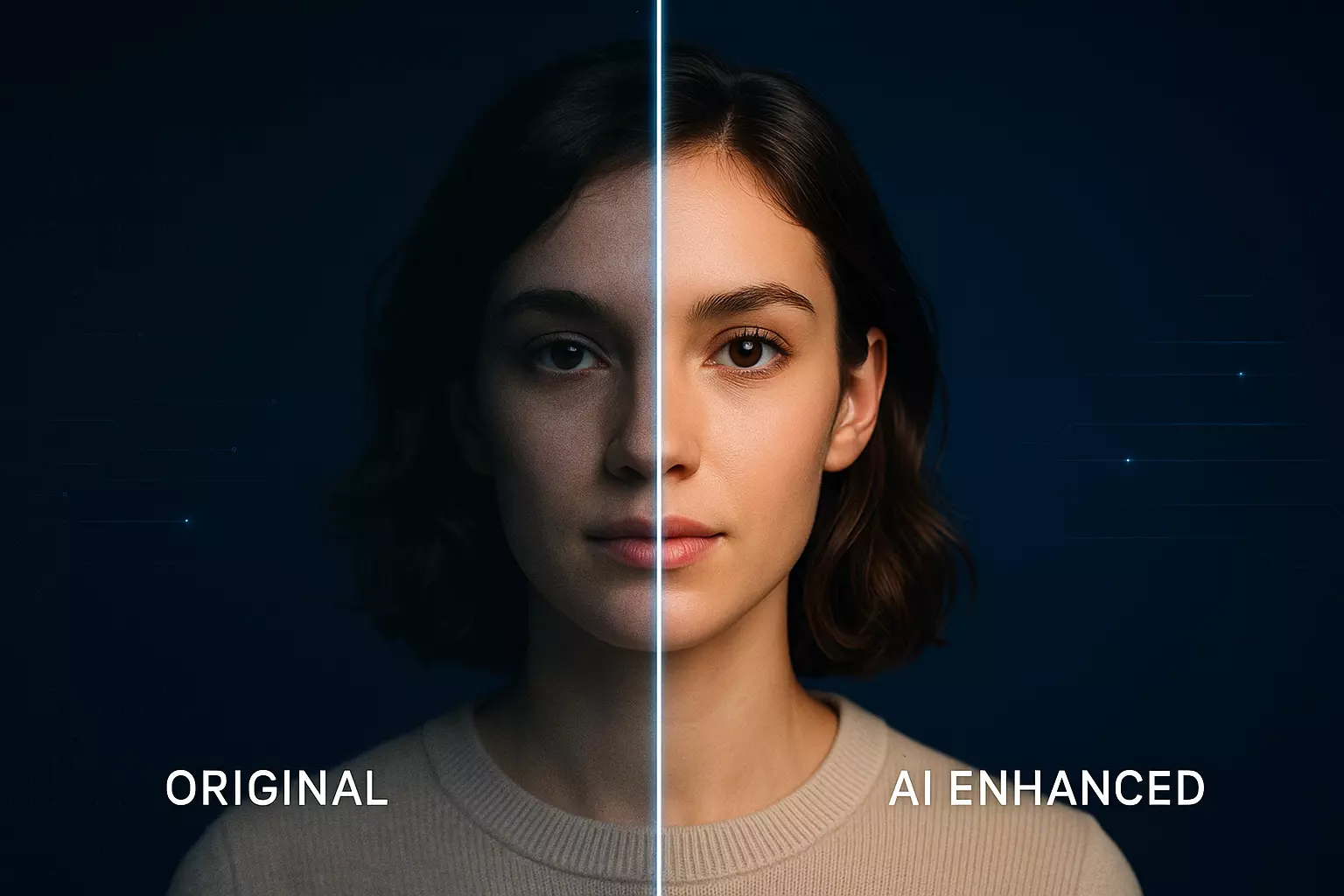
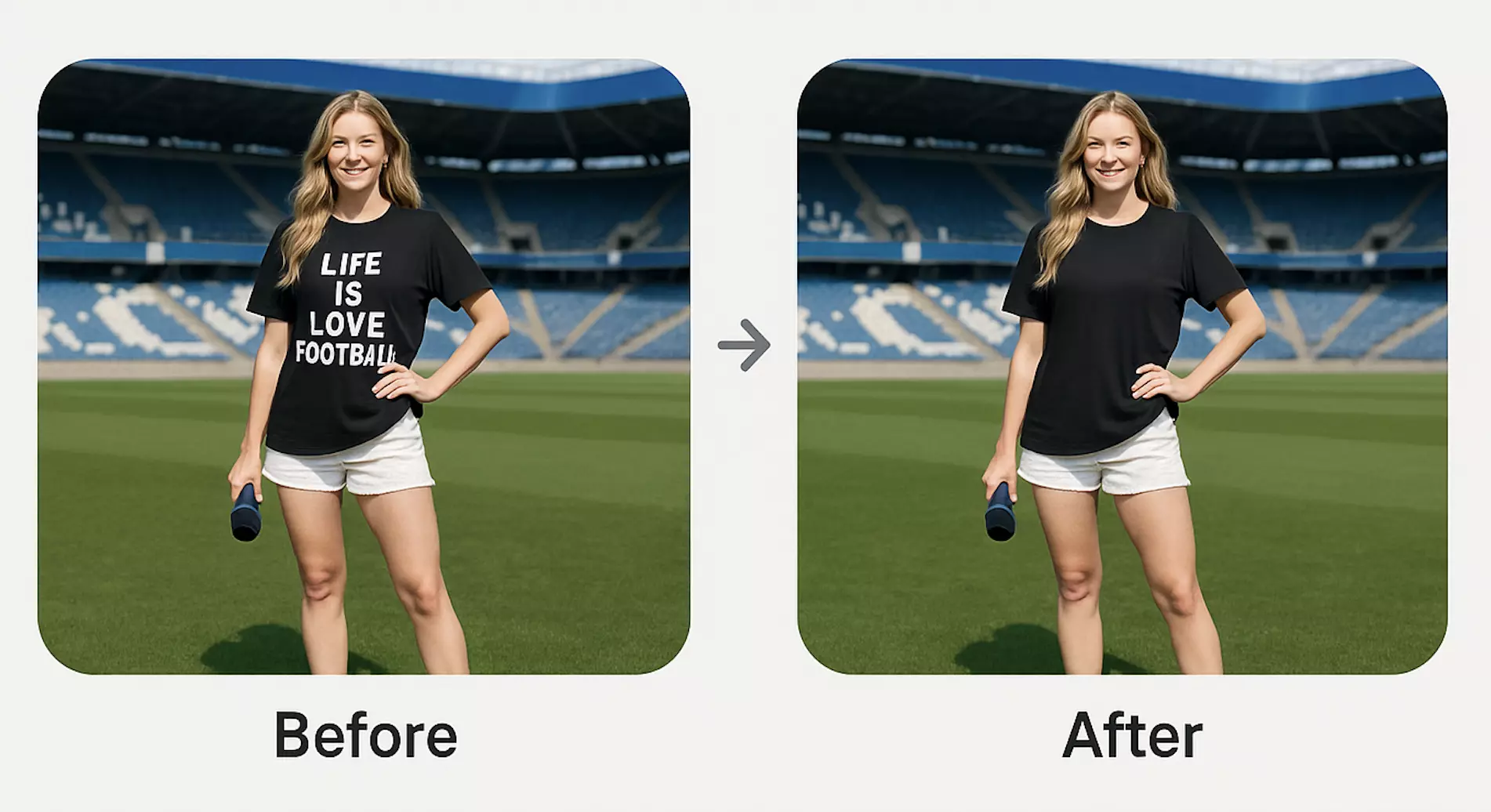
(See image: side-by-side comparison—original portrait vs a subtly enhanced version with preserved skin texture and natural noise.)
What “natural-looking” enhancement really means
Natural-looking photo enhancement does not mean flat or “untouched.” It means coherent with the way a camera and light behave.
What we change:
- Exposure and contrast to reveal true scene detail
- Color balance and white balance to neutralize casts
- Local dodging/burning to guide attention
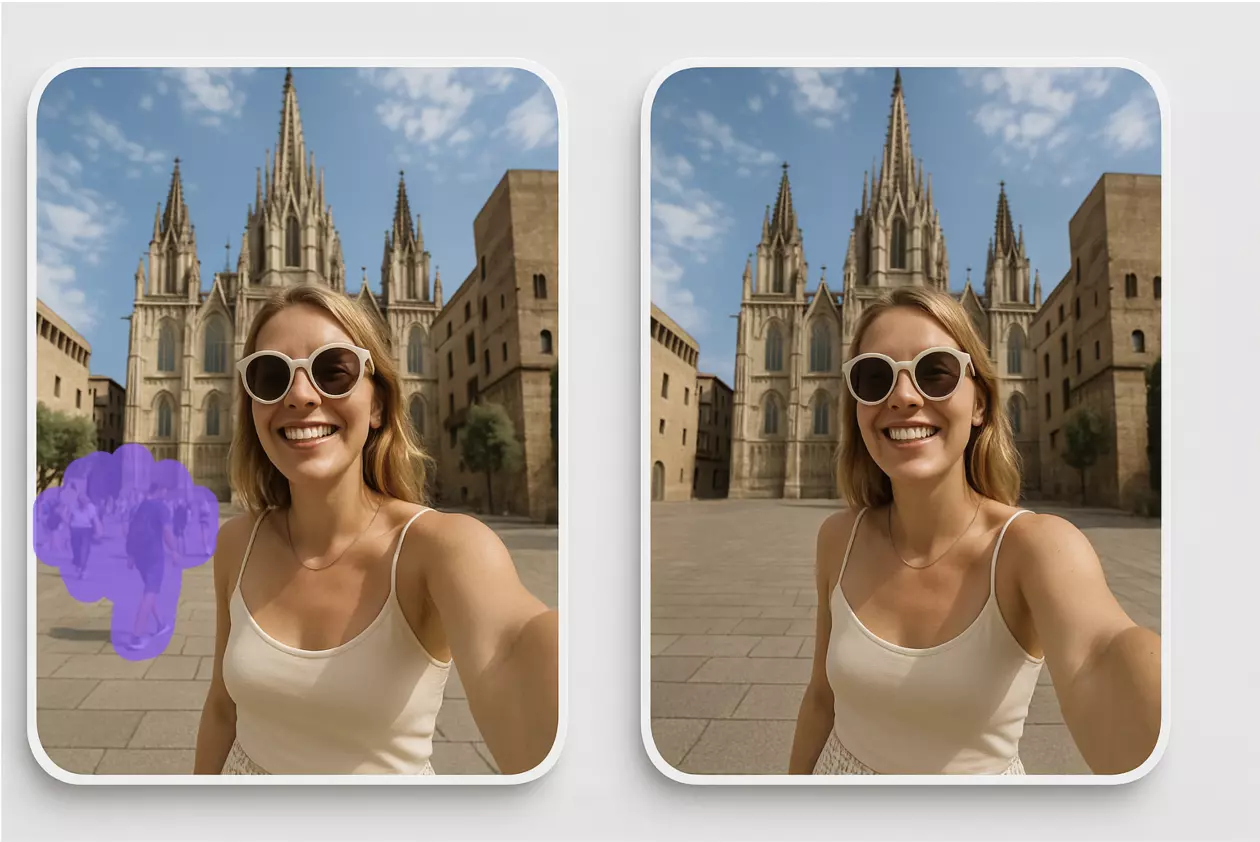
- Minor cleanup of distractions (dust, sensor spots, stray cables)
- Background refinements that match the product’s context (neutral, branded, or lifestyle) with believable shadows
What we don’t:
- Over-smoothing skin until pores disappear
- Stretching body proportions or reshaping products
- Pushing saturation or clarity to the point of halos and banding
- Adding fake reflections or shadows that defy physics
- Replacing entire scenes without clear disclosure
These boundaries keep your before/after results honest, so teams and clients trust your edits.
Our photo editing standards: exposure, color, perspective, and retouch limits
We use a few non-negotiables as our baseline.
Exposure and tone
- Keep midtones natural; don’t crush blacks for drama unless the brief calls for it.
- Pull back highlights before adding global contrast to avoid clipped areas.
- If the source is underexposed, raise exposure first, then reduce noise—never the other way around.
Color and white balance
- Neutralize color casts (common: tungsten/yellow indoors; green in mixed lighting).
- Stick to a consistent white balance per series; establish a “hero” reference frame.
- Skin tones: prioritize hue consistency over saturation. Adjust by channel, not just global vibrance.
Perspective and geometry
- Correct lens distortion and keystone effects on architecture and product lines.
- Align horizons and table edges. Crooked lines make images feel untrustworthy.
Retouch limits
- People: target blemishes that are temporary; preserve moles, freckles, and pores.
- Products: remove dust and minor scuffs; never erase design features or alter proportions.
- Shadows: soften or tidy, but don’t remove shadows entirely unless going for a clean, floating pack shot—and then add a subtle, realistic soft shadow.
AI image editing best practices to avoid over-processing
- Edit for output size. A 1200 px web image needs different sharpening than a 6K billboard.
- Work locally when possible. Global sliders can create halos around edges and faces.
- Preserve noise pattern. If you denoise aggressively, re-introduce a fine, natural grain.
- Calibrate saturation by channel. Oversaturated reds and blues are the quickest “fake” tell.
- Final step: zoom to 100% and 200% to hunt artifacts before exporting.
QC checklist we use: zoom inspections, artifact checks, and texture preservation
Before we publish or deliver:
Zoom inspections
- 100%: Evaluate focus, texture, fine edges (hair, fabric, stitching).
- 200%: Look for halos from sharpening/clarity around faces and products.
Artifact checks
- Banding in skies or gradients after heavy color work
- Blocky compression in low-light shadows
- Edge fringing after background removal
Texture preservation
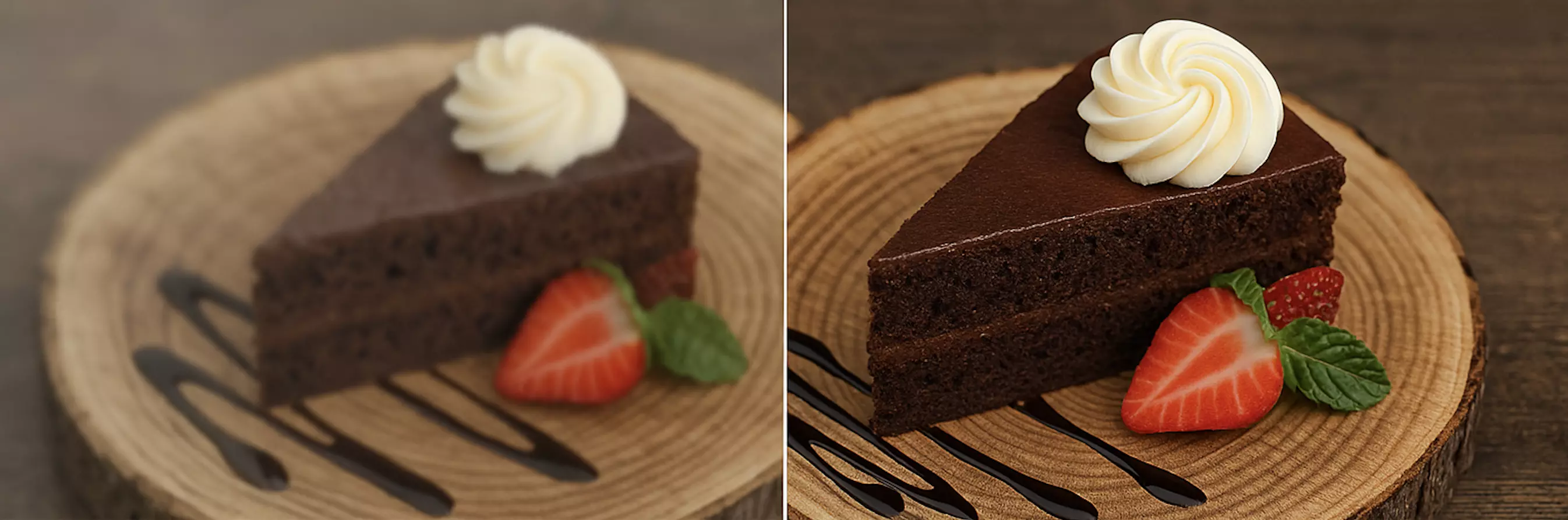
- Skin: keep microtexture; smooth only what reads as temporary blemish
- Products: maintain material cues (matte vs gloss), stitching, and seam definition
- Background: soft shadows and ground contacts should remain believable
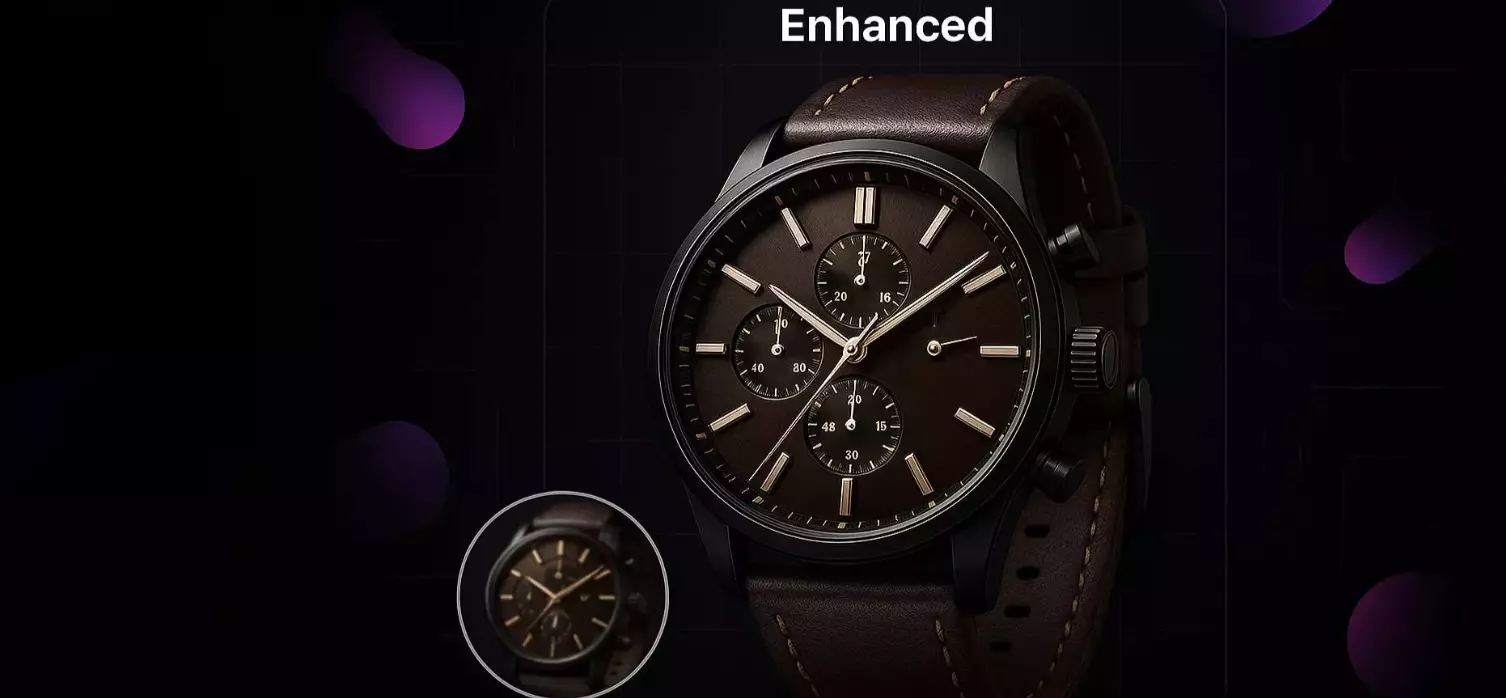
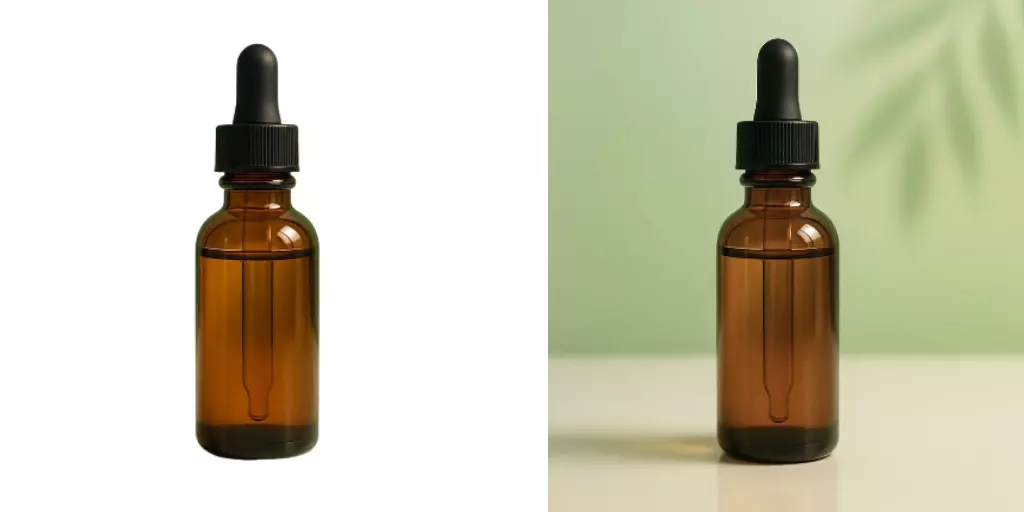
(See image: product before/after—background removal and small object cleanup with clean edges and soft shadows.)
Edge cases and risk controls: halos, banding, over-sharpening, color shifts
- Halos: Often from aggressive clarity or unmasked sharpening. Fix by masking edges and reducing global micro-contrast.
- Banding: Add 1–2% noise to gradients and export as high-quality JPEG or PNG when needed.
- Over-sharpening: Use radius 0.6–1.0 px for web assets; sharpen last; avoid doubling up across tools.
- Color shifts: If skin or product colors drift, compare against a neutral reference shot and adjust HSL channels individually instead of boosting global saturation.
Using Pixflux.AI responsibly: a 5-step workflow
Pixflux.AI is our go-to for quick, consistent edits that stay inside guardrails—like realistic background removal, subtle enhancement, and small distraction cleanup. Here’s the workflow we recommend:
1) Open the Pixflux.AI tool 2) Upload your original images 3) Choose the appropriate tool and let AI process
- Background removal for clean catalog shots
- Photo enhancer for clarity, contrast, and detail
- Object removal to clear stray cables, logos, or litter 4) Preview the result and make small adjustments
- Check edges at 100% for halos
- Ensure shadows look soft and grounded
- Confirm skin/product textures are intact 5) Download the final image
If you prefer a quick start, use our photo editing standards as a checklist while you run the three core steps: upload, let AI process, download.
Compliance note: Only remove watermarks, logos, or marks from images you own or are authorized to modify. Do not use watermark removal to bypass licensing or platform rules.
(See image: Pixflux.AI interface—upload → AI processing → download.)
Product photos: when to change backgrounds vs generate new ones (and keep it real)
Retail marketplaces have tightened requirements around plain backgrounds, soft shadows, and consistent angles. Here’s how we decide:
- Keep and clean: If the original backdrop is usable, remove small distractions and even out tones; add a soft, grounded shadow.
- Replace the background: For catalog consistency or marketplace compliance, remove the background and apply a neutral gray/white with a subtle shadow that matches the product’s light direction.
- Generate a new background: For campaign/lifestyle content, generate a contextually relevant set—kitchen counter for cookware, outdoor wood for hiking gear. Keep depth of field coherent with the subject and avoid mismatch between reflection/specular cues and the new environment.
With Pixflux.AI, this is straightforward: remove a busy background, enhance the product, and where appropriate, generate a new on-brand scene. For batch launches, you can process multiple images in one run to keep lighting, tone, and shadow style consistent.
Reality checks:
- Match light direction: Shadow falls must align with highlights on the product.
- Keep scale: Background elements should not dwarf or miniaturize your subject.
- Respect material: Matte objects shouldn’t acquire mirror-like reflections post-edit.
Before/after disclosure: captions, consistent crops, and lighting notes
Transparent before/after policies are becoming a brand standard. We recommend:
- Same crop and angle: No zoom tricks. If you crop, crop both versions equally.
- Caption the edit: “Exposure + color balance + minor dust cleanup. Background replaced for consistency.” If a background is generated, say so.
- Lighting note: Describe the scene briefly (“Window light + fill card”), so viewers understand what’s real vs refined.
These practices align with a broader trend: brands are rebuilding trust in AI visuals through explicit, lightweight disclosures.
Troubleshooting: quick fixes for common issues
- Color casts (green/magenta): Use a neutral gray reference, then fine-tune skin/product hue in HSL. Re-check at 100%.
- Noise and compression: Denoise first, then apply gentle sharpening; consider adding fine grain to mask banding.
- Detail loss from aggressive denoise: Re-introduce micro-contrast locally (not globally); avoid clarity on faces/edges.
- Jagged edges after background removal: Feather masks by 0.3–0.7 px; add a soft shadow to ground the subject.
- Flat product metals: Add constrained highlights along edges; avoid clipping; check against true material reflectivity.
AI online tools vs traditional software or outsourcing
Time cost
- Online tools like Pixflux.AI deliver clean results in minutes, ideal for daily marketplace uploads or social drops. Traditional suites can match quality but require longer operator time per image; outsourcing adds turnaround delays.
Learning curve
- You can get consistent results without mastering layer stacks or specialized plugins. Traditional tools demand deeper training to avoid artifacts and over-editing.
Batch efficiency
- Fast batch processing helps teams publish cohesive collections at once. Outsourcing can handle scale, but you trade control and iteration speed.
Cross-team alignment
- A shared standard is easier to enforce when the tool is simple and the output is consistent. Long, complex PSD workflows can drift between editors.
Bottom line: lightweight online tools are replacing heavy suites for quick, compliant enhancements—especially when you pair them with clear standards and a tight QC checklist.
Why editing standards matter right now
- Marketplaces are stricter about backgrounds, shadows, and realism. Non-compliant images get rejected or throttled.
- Editors are adopting zoom-based QC and artifact detection as baseline practice.
- Teams are embracing AI batch workflows but capping retouch intensity to protect authenticity.
Having documented standards plus a reliable tool like Pixflux.AI makes it possible to move fast and keep trust high.
Quick-start: run a realistic enhancement with Pixflux.AI
Here’s a simple 3-step flow for a single asset: 1) Upload: Drag in your portrait or product photo. 2) Process: Use background removal or the photo enhancer; clean small distractions if needed. 3) Download: Review at 100% for halos and texture, then export.
If you need a deeper pass, repeat selectively: fix color first, then detail, then background. Avoid stacking heavy global effects.
For a hands-on walkthrough, open our image editing standards and follow the on-screen steps while you edit your next set.
Conclusion and next steps
Realistic, trustworthy edits come from two things: clear boundaries and a consistent workflow. When you combine both, your before/after pairs inform rather than mislead—and your images clear marketplace checks without drama.
Try a focused run today: clean a product background, enhance clarity, and verify textures at 100% before you export. Use Pixflux.AI to keep the process simple and repeatable. If you want a reference while you work, jump into our professional photo enhancement guidelines and apply them to your next batch.