Remove object from image: A Practical AI Workflow for E-commerce Sellers
Skip Photoshop. Use Pixflux.AI to remove objects in minutes—upload, brush or lasso, preview clean fills, batch edits, and export marketplace-ready images.
 Emily CremerDecember 4, 2025
Remove Object From Image: A Practical AI Workflow for E‑commerce Sellers
A rogue price tag on a shoe. A reflection of your camera in a glossy bottle. A stray hand holding a prop in a lifestyle shot. Small distractions like these cost clicks, erode trust, and can even break marketplace listing rules. Yet most sellers don’t have the time—or the appetite—to learn heavyweight desktop software just to clean up a few product photos a day.
Good news: browser-based AI now rivals desktop workflows for this exact job. If you need to quickly remove object from image, modern online tools let you get from upload to clean export in minutes. Marketplaces like Amazon and Walmart increasingly require distraction-free main images, so adopting a simple, repeatable process pays off fast. If you’re ready to try it, you can start with a guided flow to remove object from image using an AI editor that works right in your browser.
Why object removal matters for conversions
- First impressions drive CTR. Listing thumbnails compete in milliseconds. A clean hero image helps the eye land on your product, not its surroundings.
- Visual trust equals fewer returns. Stray wires, stands, or reflections can be read as “amateur,” which undermines perceived quality.
- Marketplace compliance. Many platforms prohibit props or overlays on the main image. Clean frames keep you compliant and prevent listing suppression.
- Creative flexibility. You can salvage more shoots and iterate faster when you know a tripod leg or a stray cable won’t derail a winning photo.
How AI object removal works in 2025: masks, inpainting, context-aware fill
Modern AI object removal uses three building blocks:
- Selection and masks. You brush or lasso the unwanted item; the tool creates a mask to guide the edit.
- Inpainting. The AI predicts what should appear inside the masked region by sampling the surrounding pixels and learned patterns.
- Context-aware fill. Texture, light direction, and perspective are inferred so the “filled” area blends with fabric weaves, wood grains, or reflections.
The result is a realistic fill that preserves textures and edges—without manual cloning or hours of retouching.
AI online tools vs traditional methods
- Time to value
- Online AI: minutes from upload to export; zero install.
- Desktop: installs, license management, and often multi-step clone/heal workflows.
- Learning curve
- Online AI: brush, lasso, preview—done.
- Desktop: masking, feathering, blend modes, layer housekeeping.
- Batch efficiency
- Online AI: built to handle daily catalog updates quickly, including multi-image uploads.
- Outsourcing: back-and-forth rounds add days to your schedule.
- Team adoption
- Online AI: anyone on the team can make consistent, on-brand edits with a shared process.
- Specialist retouchers: great for complex composites, but overkill for routine cleanup.
In short: online AI tools like Pixflux.AI are ideal for day-to-day cleanup at scale, while advanced desktop workflows remain useful for high-end creative retouching.
Use Pixflux.AI to remove objects: a fast, guided workflow
Pixflux.AI gives e‑commerce teams a lightweight, repeatable way to remove objects from photos without Photoshop. Here’s a practical, five-step flow:
- Open Pixflux.AI
- Go to the object removal tool in your browser. No installs or plugins needed. If you prefer a quick entry point, try this AI object remover online.
- Upload your source image
- Drag-and-drop a product, travel, or lifestyle photo. High-resolution files yield better fills.
- Select the object (brush or lasso)
- Use the brush for organic shapes (hands, cords) and the lasso for geometric items (signs, boxes). Adjust size for edge control.
- Preview and refine
- Generate the result, then zoom in. If needed, make a second pass on leftover fragments or tweak the selection edge and feather.
- Download the final image
- Export in your preferred format and resolution for marketplaces, your storefront, or social.
Tip: Keep your selections tight. The less extra background you mask, the more precise the inpainted result. (See image: Pixflux.AI interface showing the three-step flow—Upload → AI process → Download.)
Brush vs lasso selection: edge control, feathering, iterative passes
- Brush tool
- Best for irregular shapes and fine details like hair, cords, or foliage.
- Use a smaller brush for tight corners; increase the softness slightly when blending into textured surfaces.
- Lasso tool
- Ideal for straight edges and clean geometry—props, signboards, boxes.
- Snap tight to edges; feather a few pixels if the background is subtly gradient or textured.
- Iterative passes
- Don’t hesitate to run two quick passes: first for the bulk, second for tiny remnants or halos.
- If you see artifacts, undo, refine the selection edge, and regenerate.
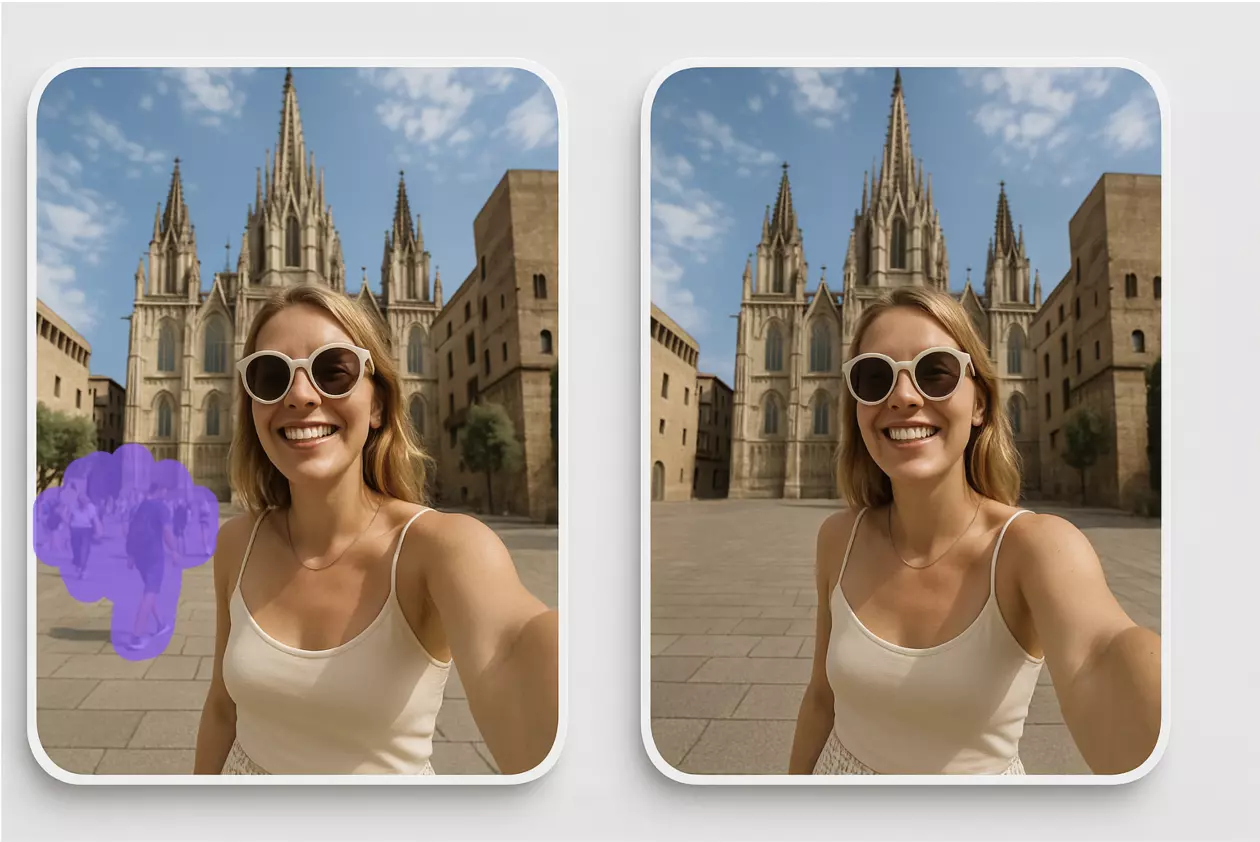
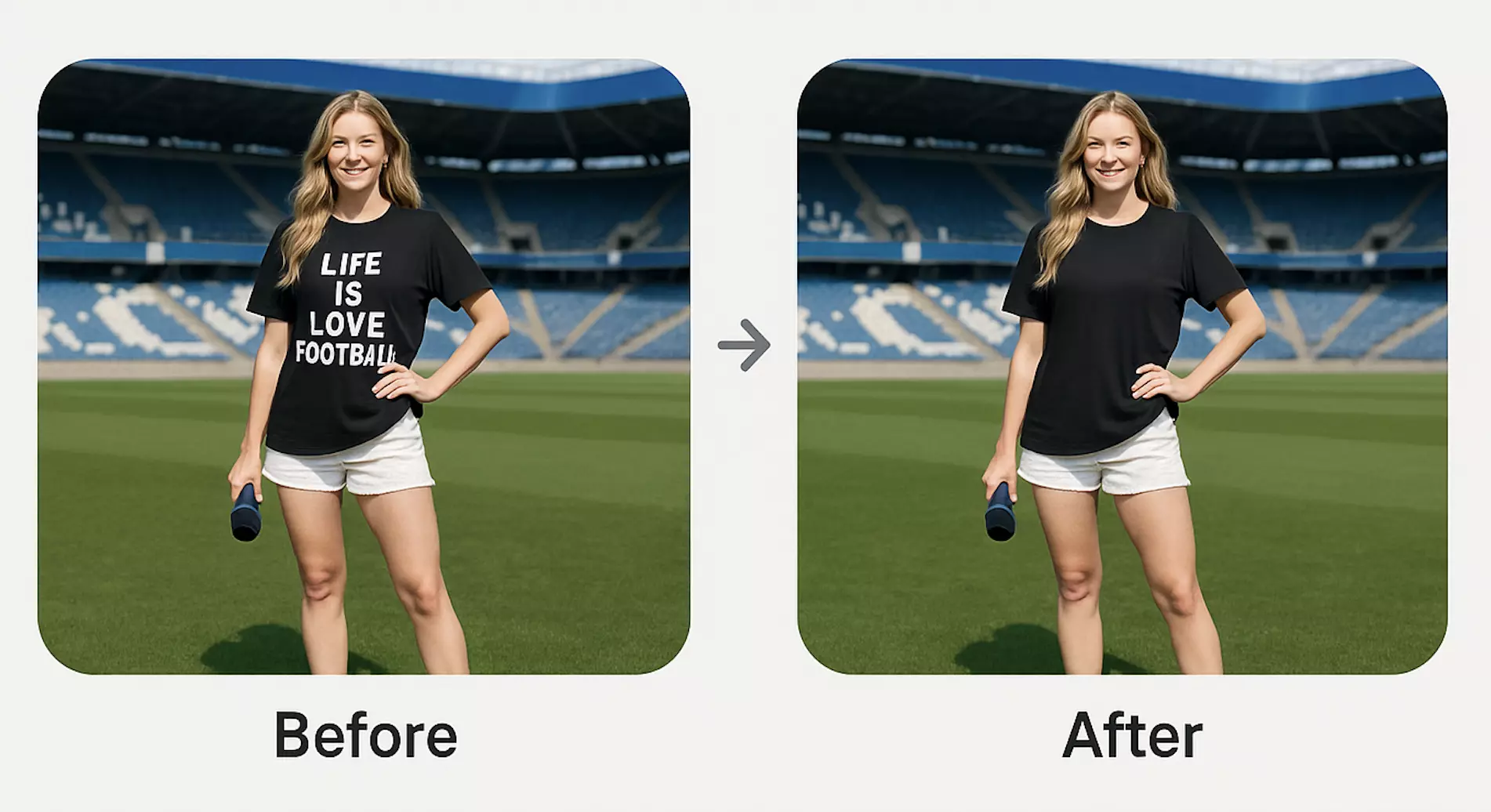
(See image: close-up crop demonstrating clean edges, preserved shadows, and texture continuity after object removal.)
Quality checks before export: light, shadows, reflections, and scale
Before you hit download, verify:
- Shadows and highlights
- The fill should respect the direction and softness of light. If a removed object cast a shadow, check that the reconstructed area looks natural.
- Reflection and gloss
- For glossy products, ensure reflections are not smeared or abruptly cut. If needed, lightly feather the mask and re-run.
- Texture continuity
- Wood grain, fabric weave, or concrete noise should remain continuous across the removed area.
- Scale and perspective
- On surfaces with lines (tiles, floorboards), check that perspective remains coherent.
(See image: side-by-side before-and-after of a product photo where a distracting prop is removed with Pixflux.AI.)
Batch cleanup to keep catalogs consistent
Large catalogs benefit from consistent cleanup:
- Stage a “queue” by uploading multiple product photos together.
- Work set-by-set: remove cables from electronics, then props from apparel flats, etc.
- Apply the same zoom and review routine to each image for uniform results across thumbnails and PDPs.
- Combine batch removal with later background standardization so your main images look aligned by design.
Pixflux.AI supports multi-image handling so you can streamline daily edits without juggling files between apps.
Beyond object removal: backgrounds and enhancements with Pixflux.AI
When you’ve removed the distraction, consider finishing touches:
- Background removal and change
- Clean to white for marketplace main images or swap in a branded color for PDP, social, or email.
- AI background generation
- Create on-brand, context-appropriate scenes for lifestyle or seasonal campaigns without extra props or location shoots.
- Photo enhancement
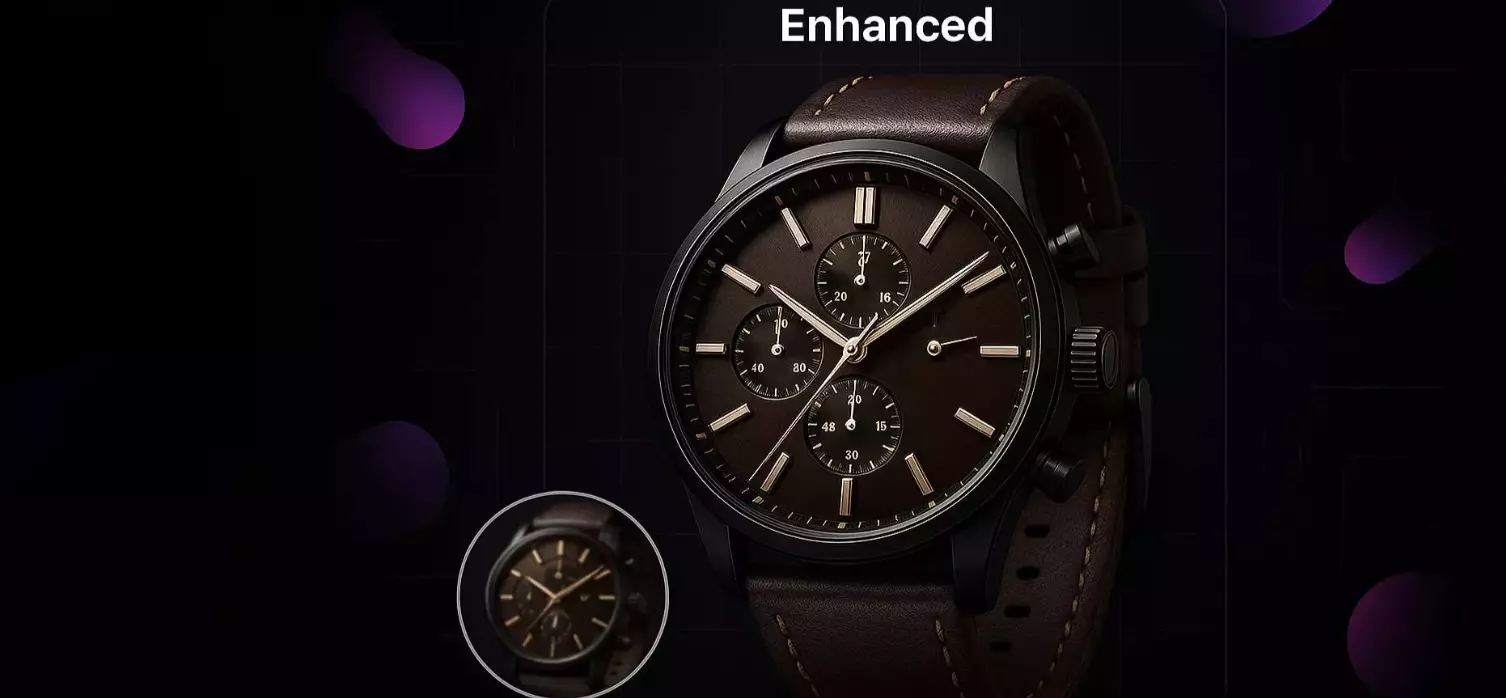
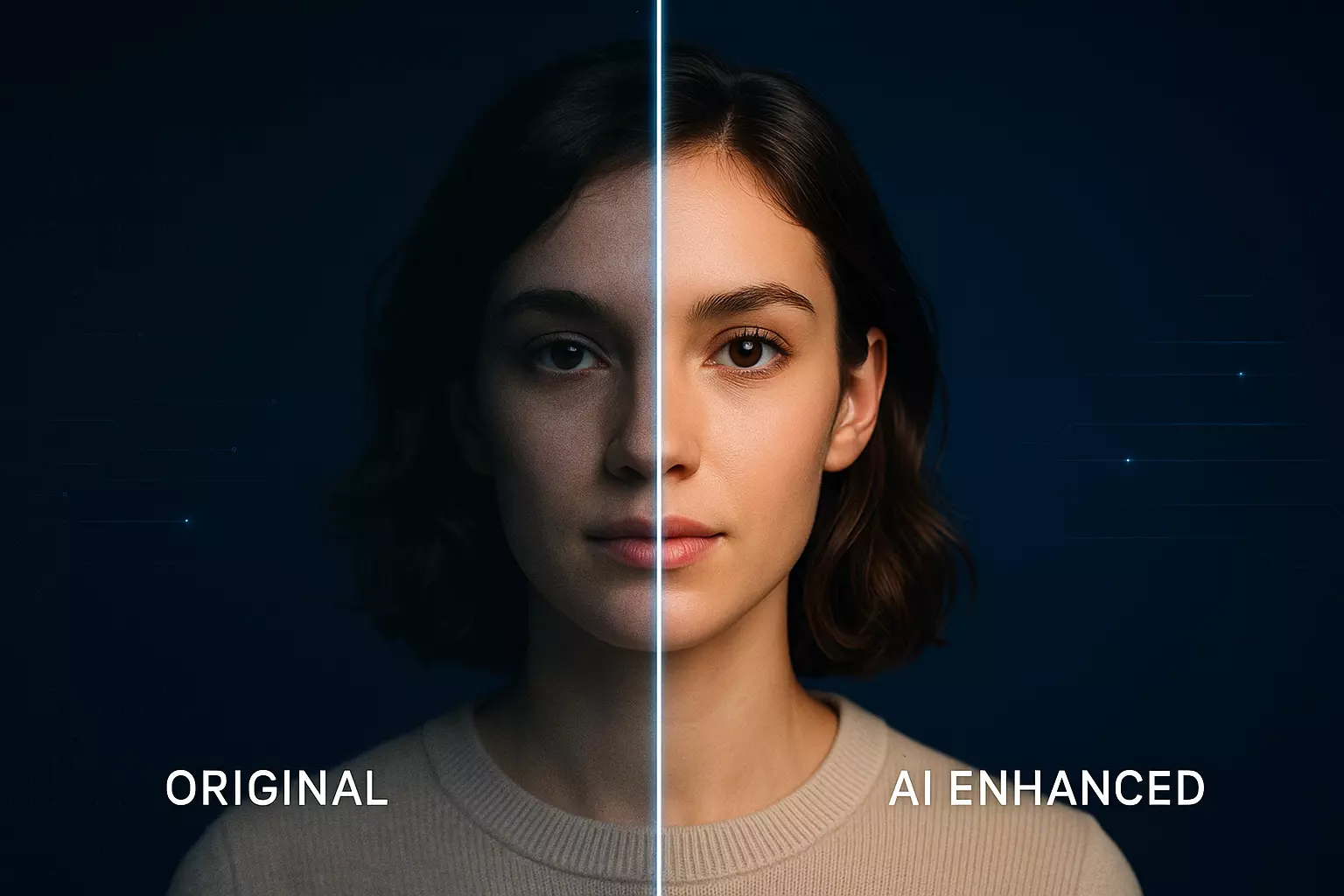
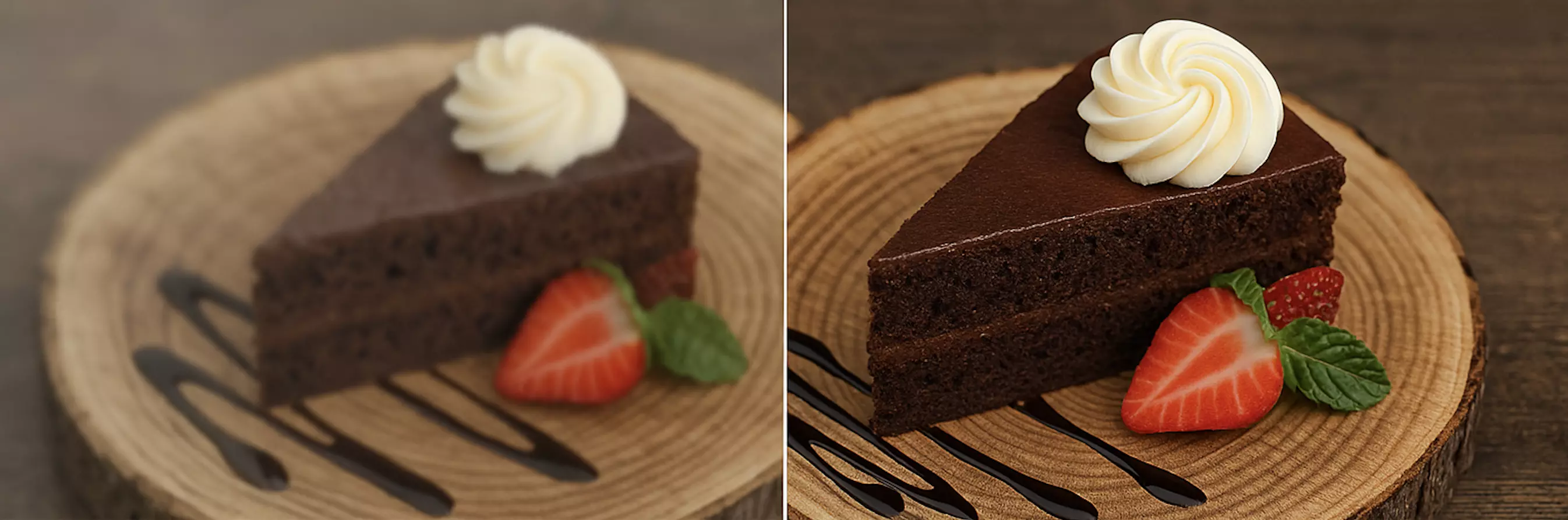
- Improve clarity, contrast, and micro-detail so textures pop on retina displays.
Each of these steps fits the same three-part rhythm: upload, let AI process, download. Pixflux.AI makes moving from object cleanup to background polish seamless within one browser tab.
Ethics and compliance: watermark remover boundaries and marketplace rules
AI tools can remove watermarks and logos, but use them responsibly:
- Only edit images you own or are licensed to modify.
- Do not remove watermarks or brand marks from images you don’t have rights to—this can violate copyright and marketplace policies.
- Keep product authenticity intact. For regulated categories, don’t “edit away” disclosures or mandatory labels.
Troubleshooting FAQ
- I see a faint halo where the object was
- Tighten your selection, reduce feathering slightly, and regenerate. For high-contrast edges, try the lasso for a cleaner cut.
- Textures look smeared on fabric or wood
- Zoom in, redraw a more precise mask that includes enough surrounding texture as context. Re-run the fill.
- Fine edges are missed (e.g., hair or cables)
- Use a smaller brush and zoom to 200%. Run two short passes instead of one large selection.
- The source image is low-resolution
- Remove the object first, then run an enhancer to add clarity. Consider reshooting hero images that will be viewed full-screen.
- Reflections on glossy products look off
- Soften the mask edge (slight feather) to blend reflections, then regenerate.
Export best practices for marketplaces
- Formats
- Use JPEG for most catalog images (balance of size and quality); PNG if transparency is required.
- Resolution
- Follow platform guidelines (e.g., 1600–2560 px on the longer side for Amazon zoom). Avoid upscaling beyond 2× to prevent softness.
- Compression
- Target 70–85% JPEG quality for a good size-to-quality ratio; verify critical details like stitching remain crisp.
- Naming and organization
- Use SKU-based names plus suffixes: SKU1234_main.jpg, SKU1234_alt1.jpg, SKU1234_detail.jpg.
- Consistency
- Standardize background color, margins, and product scale across variants to increase perceived quality and conversion.
Online AI tool vs desktop/outsource: where Pixflux.AI excels
- Speed for daily edits
- Pixflux.AI gets you from upload to export in minutes, perfect for rolling product drops and seasonal campaigns.
- No learning curve
- Teams can adopt the brush-and-preview workflow immediately—no deep retouching knowledge needed.
- Flexible beyond removal
- In the same session you can adjust backgrounds, generate simple scenes, and enhance clarity for sharper thumbnails.
- Cost control
- Reserve external retouchers for complex compositing; keep routine cleanup in-house and on schedule.
Quick visual checklist: when to use object removal vs background work
- Remove object from image when
- The underlying surface should stay the same and the distraction is localized (cables, hands, stands).
- Switch to background removal or change when
- The surroundings are busy and a clean white or brand color will better match marketplace requirements.
- Generate a new background when
- You want lifestyle context without a reshoot (e.g., kitchen counter for cookware, studio gradient for beauty).
What a clean result looks like
- Edges are natural with no halo
- Texture continues across the fill
- Light direction is consistent
- No cloning repeats or pattern tiling is visible
- The product silhouette reads clearly at thumbnail size
Put it into practice
Ready to tidy up your catalog? Use Pixflux.AI to quickly remove objects from photos, standardize backgrounds, and enhance clarity—all in your browser. It’s a lightweight workflow your whole team can adopt today.
Still on the fence? Run a single image through the flow above. If the result helps your CTR or saves a reshoot, you’ve already earned back the time. For fast, everyday cleanup, start with an AI object remover online and scale up from there.