AI Travel Storytelling Clean Up Screenshots and Photos for Better Guides
Clean up travel screenshots fast. See how to remove text from image overlays, batch process with Pixflux.AI, and keep maps and photos crisp and on-brand.
 Emily CremerJanuary 10, 2026
AI Travel Storytelling: Remove Text from Image to Clean Up Screenshots and Photos for Better Guides
If you create travel content, you probably rely on screenshots of maps, tickets, or attraction pages—and you probably fight a constant battle with overlays, watermarks, and UI clutter. Labels overlap, arrows block key details, and that one “Share” button photobombs the perfect itinerary graphic. Readers skim, platforms compress, and small distractions add up to a less trustworthy, less scannable guide.
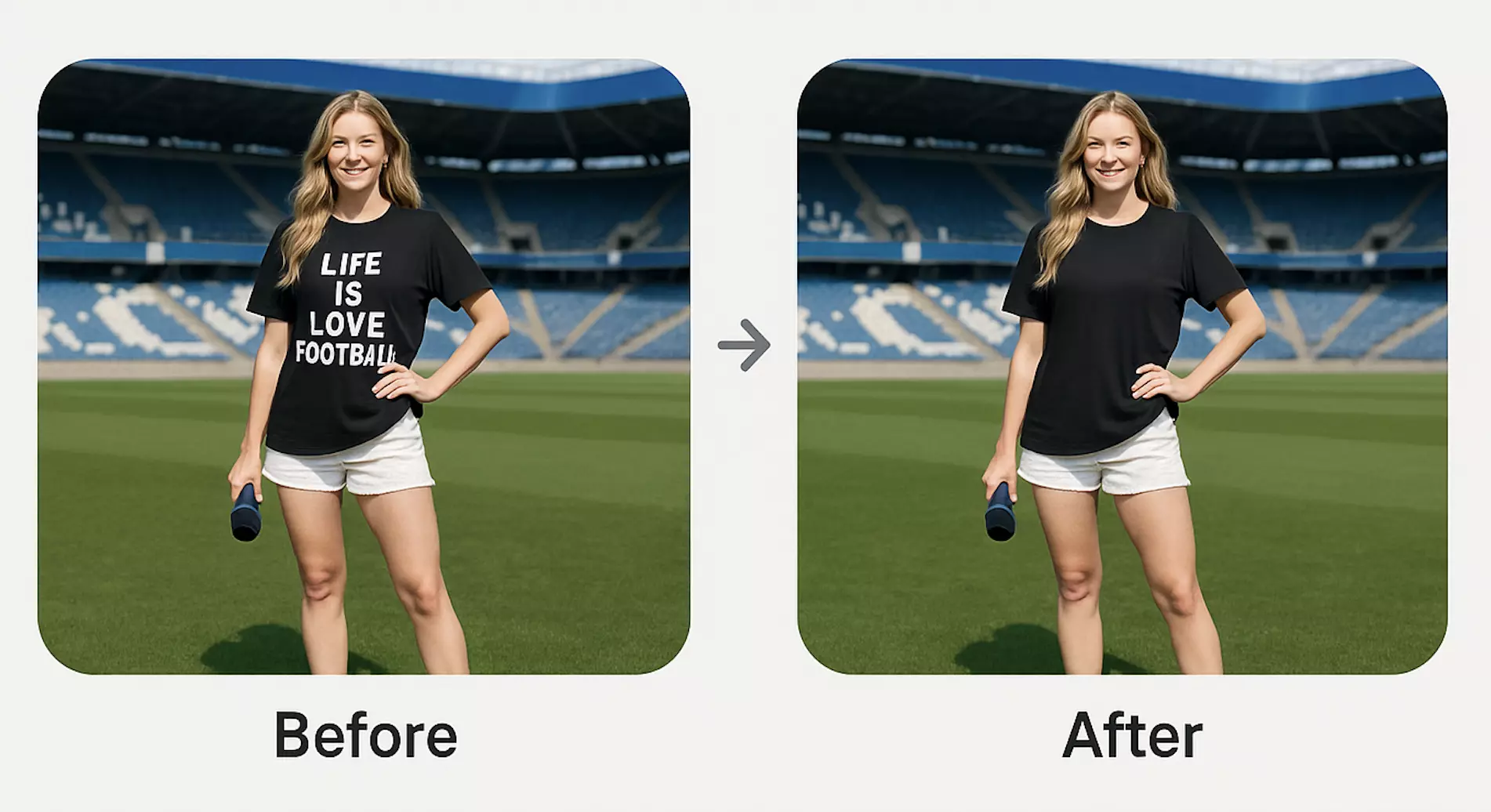
Good news: AI inpainting makes cleanup fast, consistent, and batch-friendly. Instead of redrawing backgrounds manually, you can remove text from image artifacts in a few minutes and publish visuals that highlight only what matters—routes, landmarks, and the story. If you’re ready to streamline this step in your content workflow, try an AI editor to remove text from image without learning a full retouching suite.
Quick start (3 steps with Pixflux.AI) 1) Upload your screenshot or photo. 2) Let the AI clean text overlays and watermarks. 3) Download the ready-to-publish image. (See image: Pixflux.AI interface showing a three-step flow: upload → AI process → download)
Why cleaning travel screenshots and photos boosts clarity and trust
- Readers skim on mobile: Clean, text-free visuals guide attention to routes, times, and highlights. Fewer overlays = faster comprehension.
- Platforms reward simplicity: Uncluttered thumbnails tend to earn higher engagement because they remain legible in small feeds.
- Brand consistency: Whether you publish on a blog, Pinterest, or Instagram, consistent styling builds recognition and authority.
- Reduced support questions: Clear images reduce confusion about meeting points, directions, and ticket steps—saving you inbox time.
In short, cleaner travel blog graphics improve scannability and trust, which often translates into more time on page and better conversion on your itineraries or affiliate links.
Use cases: itineraries, maps, and visuals that benefit from text removal
- Itinerary boards: You plan a 3-day city trip and assemble hotel, transport, and sights into a single visual. Removing UI labels or watermarks keeps the layout cohesive.
- Map screenshot cleanup: Erase popup labels, toolbars, and pin text so only your route and key landmarks remain visible.
- Before/after photos: Remove stray captions or timestamps from camera apps to make comparisons crisp.
- Ticket and booking flows: Blur or remove personal data and distracting on-screen hints while preserving vital steps for your tutorial.
(See image: Side-by-side comparison of a travel map screenshot before and after text overlay removal)
How text overlays work: pixels vs semantic inpainting
When you remove text in image content, there are two broad approaches:
- Pixel-level cloning and healing: Traditional tools copy nearby pixels to cover text. It’s precise but time-consuming, especially on gradients, water, sand, or foliage.
- Semantic inpainting (AI): The model “understands” context (e.g., map textures, sky, bricks) and synthesizes plausible pixels to reconstruct what’s behind the text overlay. This is faster and usually more natural, particularly on patterns, fine textures, and soft gradients.
Key terminology to understand:
- Inpainting: Filling missing or masked regions with context-aware pixels.
- Mask: The region you want to remove or replace.
- Artifacts: Unwanted halos, smudges, or texture inconsistencies after editing.
For travel creators, AI inpainting provides the best quality-to-speed ratio, especially when you’re cleaning dozens of map screenshots or photos per week.
AI online tools vs traditional methods
- Time cost: Manual cloning in desktop software can take 5–20 minutes per image; AI tools can clean each file in seconds and process a batch in minutes.
- Learning curve: Advanced retouching requires practice; AI tools offer a low-barrier workflow with consistent outputs.
- Batch photo editing: Traditional software struggles with high-volume turnover unless you build complex actions. AI editors make batch cleanup straightforward for mixed screenshots and photos.
- Consistency and collaboration: AI inpainting produces uniform results that match your brand’s look-and-feel without relying on individual skills or playbooks.
- Flexibility: Beyond removing text overlays, modern AI tools can also remove stray objects, enhance clarity, adjust backgrounds for social, and improve contrast—all in one place.
If you have an aggressive content calendar across blog, Instagram, and Pinterest, these advantages compound quickly.
HowTo: remove text from image on travel maps and screenshots
Follow this five-step workflow to clean typical travel screenshots with Pixflux.AI:
- Open the tool: Go to the editor and choose to erase text from photos.
- Upload your files: Add one or many items—maps, tickets, and camera photos are all fine (JPG or PNG are ideal).
- Select the removal tool: Brush over text overlays, UI labels, or watermarks. For maps, focus on popups and toolbars; preserve essential labels like station names if they help your guide.
- Preview and refine: Check edges, textures, and gradients. If you see halos or smudges, slightly expand or shrink the mask and re-run the AI pass.
- Download your results: Save web-ready outputs and insert them into your template, blog post, or social design.
Pro tips
- Work at the highest resolution you have; downscale after cleanup for platform-specific sizes.
- For complex patterns (ripples on water, foliage, brick walls), use smaller brush strokes on multiple passes to preserve micro-texture.
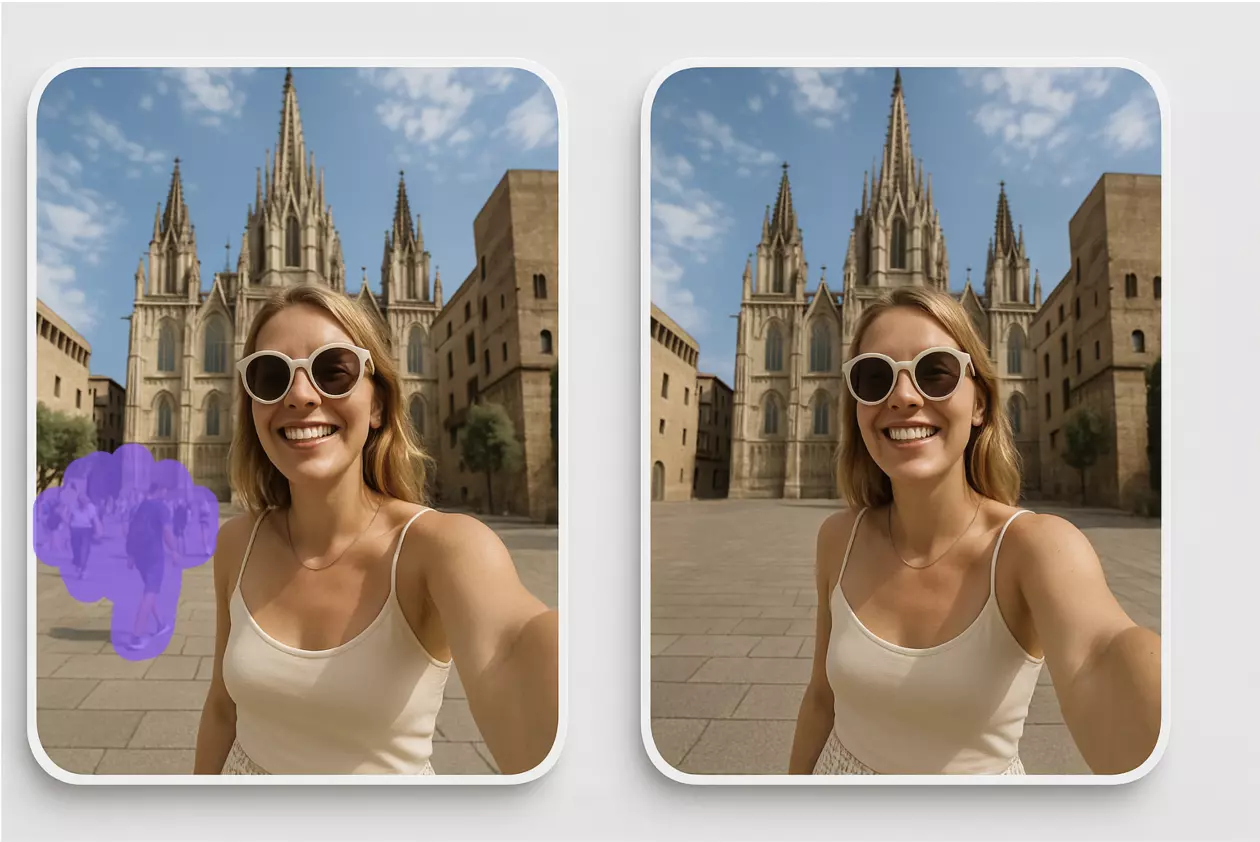
- If you also need to remove a stray passerby or distracting sign, use the same inpainting tool before exporting.
(See image: Travel blog itinerary layout showcasing cleaned photos and screenshots after batch processing)
Batch-friendly cleanup in minutes with Pixflux.AI
Travel creators often need to process 20–100 visuals per post: maps for each day, attraction screenshots, transit steps, and hero images. Pixflux.AI streamlines this:
- Batch processing: Upload a set of screenshots and photos, remove text overlays across all of them, and export the results together.
- Combined cleanup: In the same session, you can remove watermarks (only on assets you own or are licensed to edit), erase extra objects like cables or trash, and enhance contrast to boost readability.
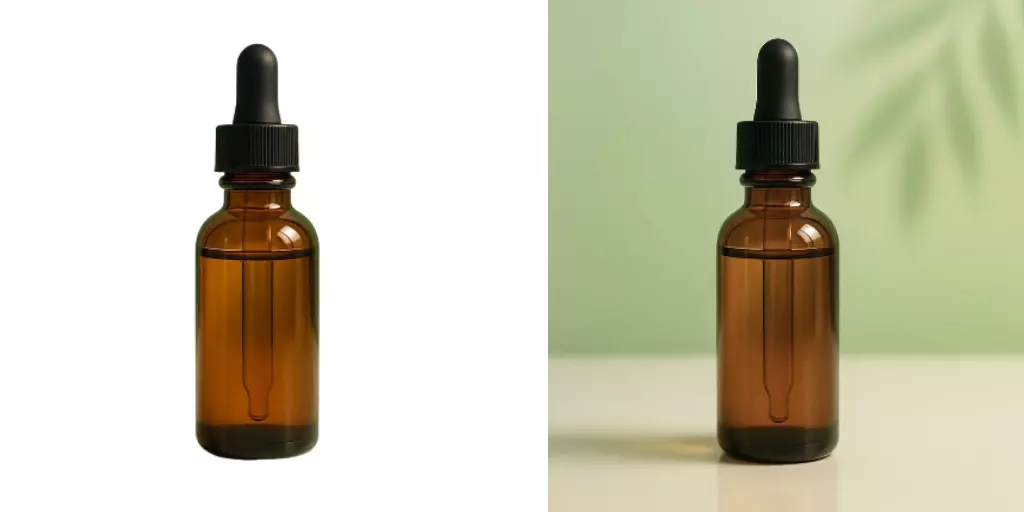
- Background tweaks for social: When a photo will be used as a card cover, remove the busy background or replace it with a subtle, brand-consistent texture to keep text overlays (your own captions) legible.
Compliance reminder: Only remove logos, watermarks, and marks on images you own or have permission to edit. Respect map provider terms, attribution requirements, and fair-use policies.
Quality checks after text removal: edges, textures, gradients, artifacts
Use this short checklist before you publish:
- Edges: Zoom to 100–200% and verify there are no halos around previously removed text.
- Texture continuity: On surfaces like water, sand, bricks, or foliage, confirm the pattern continues naturally without repetition.
- Gradients: Check skies and soft shadows for banding after edits; re-run the inpainting with slightly larger masks if needed.
- Color and contrast: If the cleaned area looks dull, apply a light AI enhancement pass to harmonize tones.
- Platform fit: Export to sizes that survive compression on Instagram, Pinterest, and your CMS. Keep everything in sRGB for consistent color.
Case studies and practical measurement
Scenario 1: Map route simplification
- Before: A city map screenshot shows your walking route plus popups, pin labels, and a bottom toolbar.
- After: You remove text overlay elements and leave only the route and a few key labels (e.g., station names). The thumbnail is legible even at small sizes.
Scenario 2: Ticket tutorial
- Before: A step-by-step booking guide includes personal info and distracting hints.
- After: Sensitive data is masked, text hints removed, and important buttons remain visible.
Scenario 3: Photo-first itinerary cover
- Before: Beautiful street photo with a bright shop sign and time-stamp overlay.
- After: Sign and timestamp removed; subtle background enhancement improves readability for your headline.
How to measure clarity gains
- Time on page and exit rate from your itinerary pages.
- Pin click-through rate or Instagram saves on cleaned visuals.
- Reader feedback (fewer “Where is this?” or “Which stop?” messages). These are reliable, measurable indicators that your visuals are truly easier to scan.
Ethics and rights: watermarks, map terms, and attribution
- Only remove watermarks, logos, and text from images you own or have explicit permission to edit. Do not use removal to bypass licensing or platform rules.
- Respect terms of map providers (e.g., attribution and usage conditions). If required, keep attributions visible or add them back in your layout.
- For third-party screenshots, check whether you’re allowed to modify and republish; when in doubt, seek permission or use official embeddable views.
FAQ: Remove text from image for travel creators
Can AI remove text from image without damaging the background?
Yes, AI inpainting can reconstruct backgrounds convincingly when you mask the right area. Work at the highest available resolution and make clean masks around the overlay. If you notice texture repetition or halos, slightly expand or refine the mask and re-run the pass. For complex patterns like water or foliage, smaller, multiple strokes help preserve micro-details.
Is it legal to remove watermarks or logos from screenshots?
You should only remove watermarks or logos on assets you own or have licensed permission to edit. Removing protective marks from third-party images you don’t own can violate copyright and platform terms. When working with maps or brand assets, review their usage guidelines and keep attributions where required.
What’s the best way to keep maps readable after removing text overlays?
Remove UI clutter but keep essential labels, then add your own annotations for clarity. Erase popups, toolbars, and redundant labels that obscure routes, but preserve station names or key waypoints that aid navigation. After cleanup, consider adding a subtle caption or legend in your brand style to replace what you removed.
Can I process dozens of screenshots at once?
Yes, batch photo editing is a core advantage of modern AI tools like Pixflux.AI. Upload multiple files, select the removal tool, and iterate through them in one session. This saves time compared to opening and repairing each image individually in a desktop editor.
Which file formats work best for text removal on travel visuals?
Use common web-friendly formats like JPG and PNG for the smoothest workflow. High-resolution sources produce cleaner inpainting results; export optimized versions for your blog and social platforms after cleanup. Keep color space to sRGB to avoid unexpected shifts online.
Why do I see ghosting or artifacts after removing a label?
Artifacts usually come from tight masks or insufficient context for the AI to rebuild textures. Try expanding the mask slightly, zoom in to refine edges, and run another pass. If the area has fine patterns, use smaller brush strokes. A light contrast or clarity adjustment can also help blend the repaired region.
Will Instagram or my CMS compress the cleaned images?
Yes, most platforms apply compression, which can expose banding or minor artifacts. Export at recommended dimensions with gentle sharpening after downscaling. Test a couple of sizes to see which holds up best in your feed or theme and keep originals in case you need to re-export.
Conclusion and next steps
Clean visuals are becoming the standard for travel storytelling: creators are using AI to replace manual cloning, and batch workflows keep pace with multi-platform schedules. Tools like Pixflux.AI remove text overlays, watermarks (when permitted), and distractions in minutes—so your audience focuses on the route, not the UI.
Ready to make this part of your workflow? Use Pixflux.AI to remove text overlay on your next set of maps and itinerary images, then measure the lift in clarity and engagement on your guide.