Remove Text from Image: How to Reuse Old Creatives Without Hurting Image Quality
Refreshing ads? Strip dates and promo codes without smears. See how Pixflux.AI removes text while keeping grain, edges, and colors natural.
 Sierra CappelenDecember 10, 2025
Remove Text from Image: How to Reuse Old Creatives Without Hurting Image Quality
Creative refresh cycles keep getting shorter. You’re revising ads every week, swapping promo dates, and reusing strong visuals across channels. The catch? A lot of your best assets are “locked” under text—dates, codes, disclaimers, or seasonal headlines—so you either leave good images on the shelf or risk visible touch-up marks that cheapen the brand.
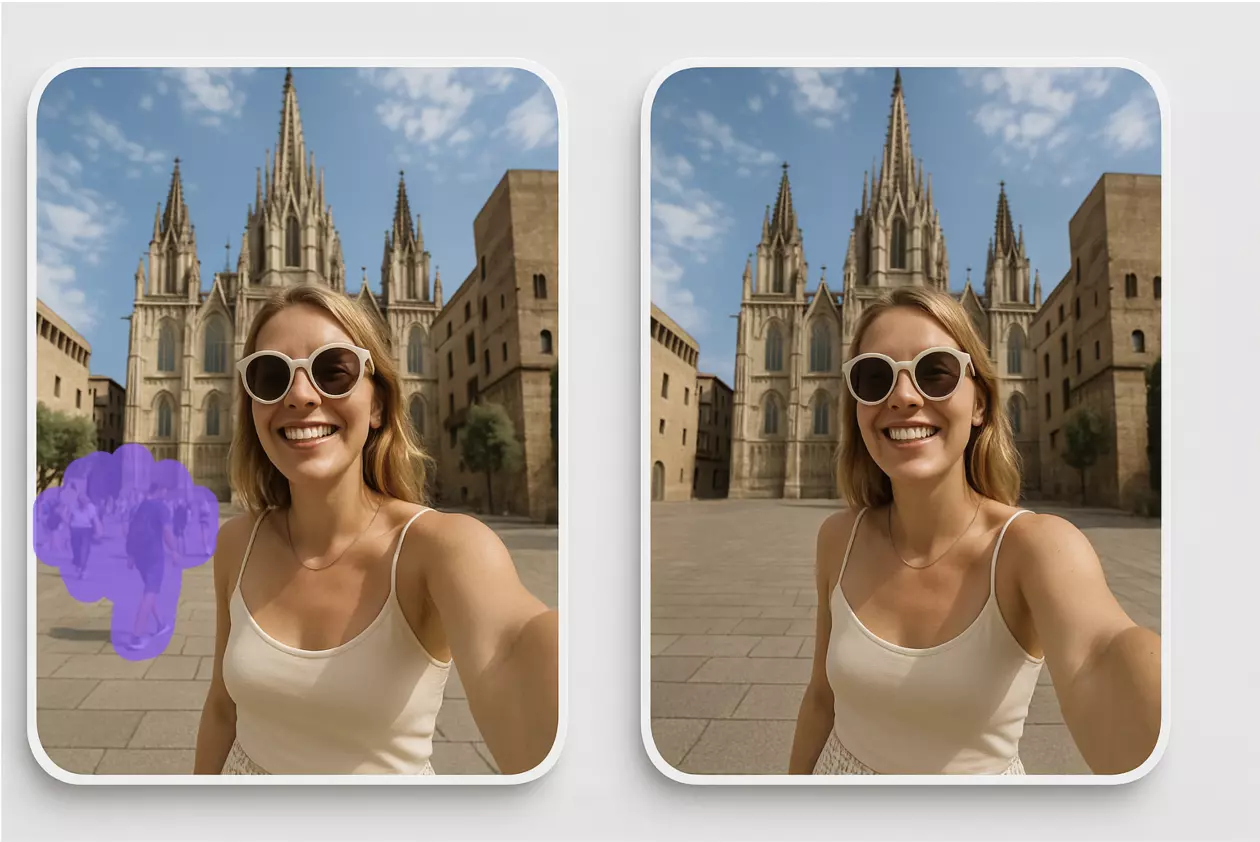
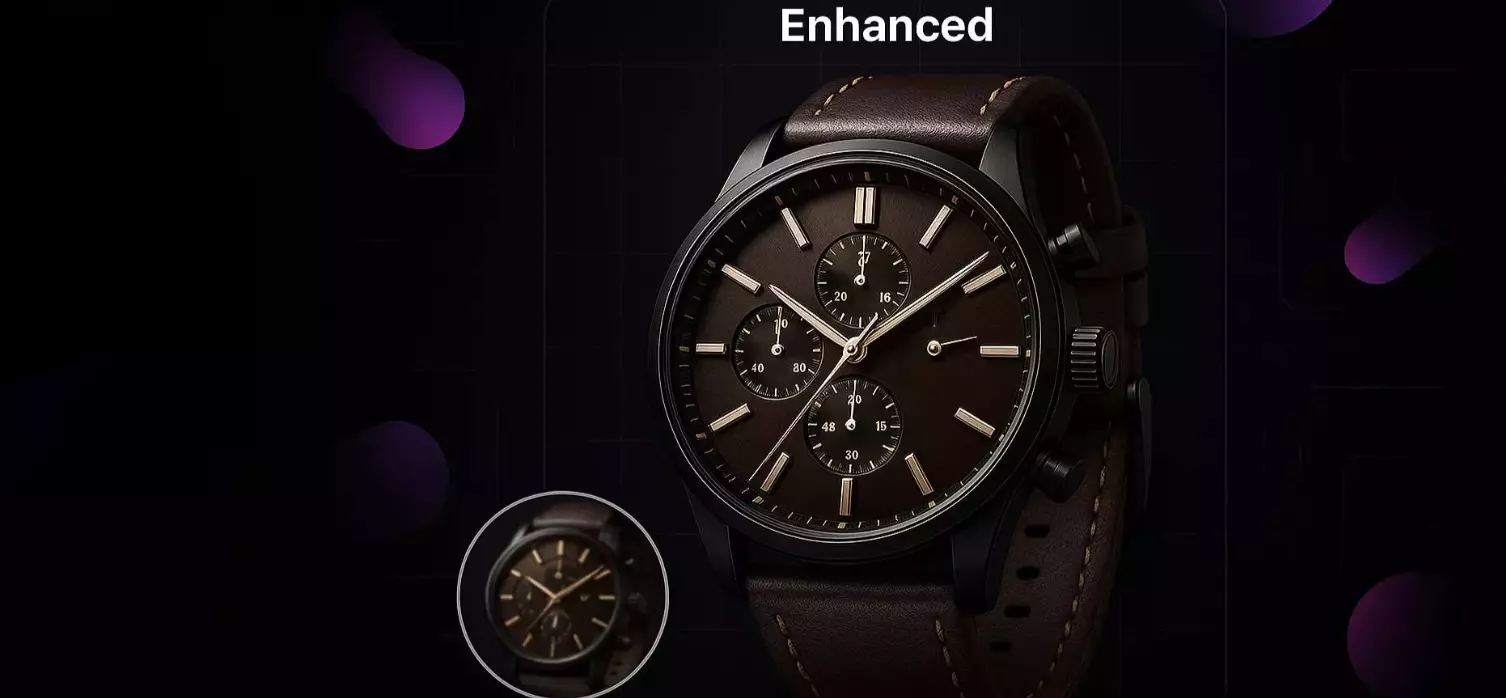
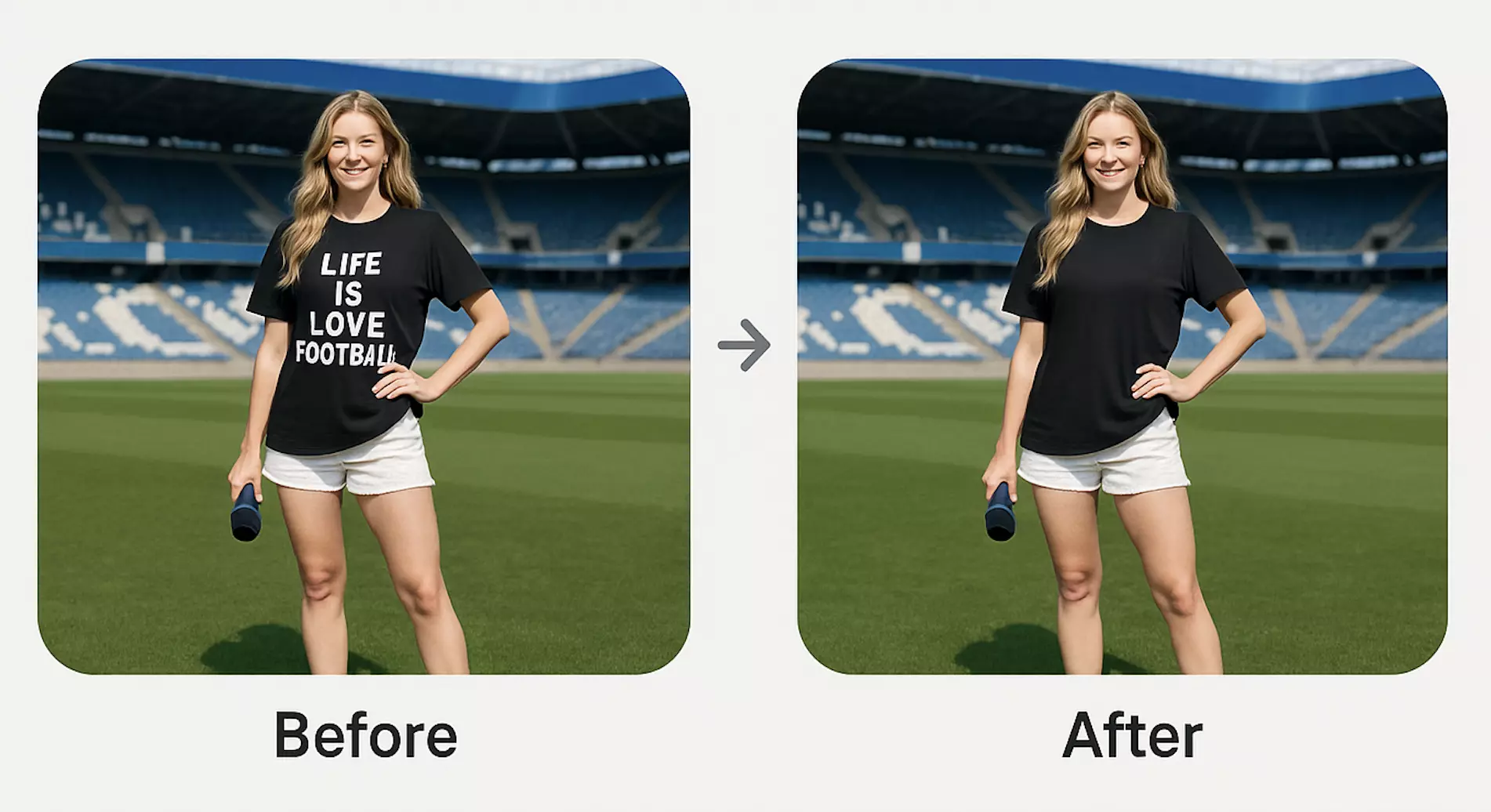
AI editors are changing that calculus. Instead of smearing pixels with blur or clone tools, modern AI can understand textures—wood grain, fabric weave, gradients—and rebuild them as if the overlaid text was never there. This is where Pixflux.AI shines for marketers who need to remove text from image while preserving natural edges and detail.
It’s not just about speed. As teams repurpose assets for Amazon hero images, Instagram Reels covers, or TikTok Shop thumbnails, consistency matters. Batch processing and quality-focused exports (WebP, high-quality JPEG) help maintain brand polish across every variant.
Why marketers need to remove text without sacrificing texture and detail
- Extend asset lifespan: Update one hero image across seasons by swapping sale dates or headlines.
- Keep performance momentum: Reuse high-CTR visuals with new offers to avoid “creative reset.”
- Protect brand finish: Maintain product textures and environmental realism instead of introducing blur, banding, or cloning repeats.
- Move faster: Avoid bottlenecks waiting on manual retouching for dozens of variants.
Common scenarios where text removal unlocks value
- Ad refreshes: Replace “Ends 10/31” across banners without re-shooting.
- Seasonal swaps: Update “Spring Sale” to “Holiday Sale” while keeping the same product shot.
- Promo code overlays: Remove old codes when testing new ones in paid social.
- Template reuse: Clear placeholder copy from UGC frames and seasonal templates.
- Legal fine print: Tidy up small print that’s no longer required in certain placements.
Why text overlays can wreck image quality if you remove them the wrong way
Text laid on top of compressed imagery creates tricky artifacts:
- Jagged edges and aliasing around high-contrast characters.
- Color banding in gradients behind text, especially in JPEGs.
- Compression ghosts that “remember” old shapes even after cloning.
- Texture mismatch where repeated clone patterns become obvious.
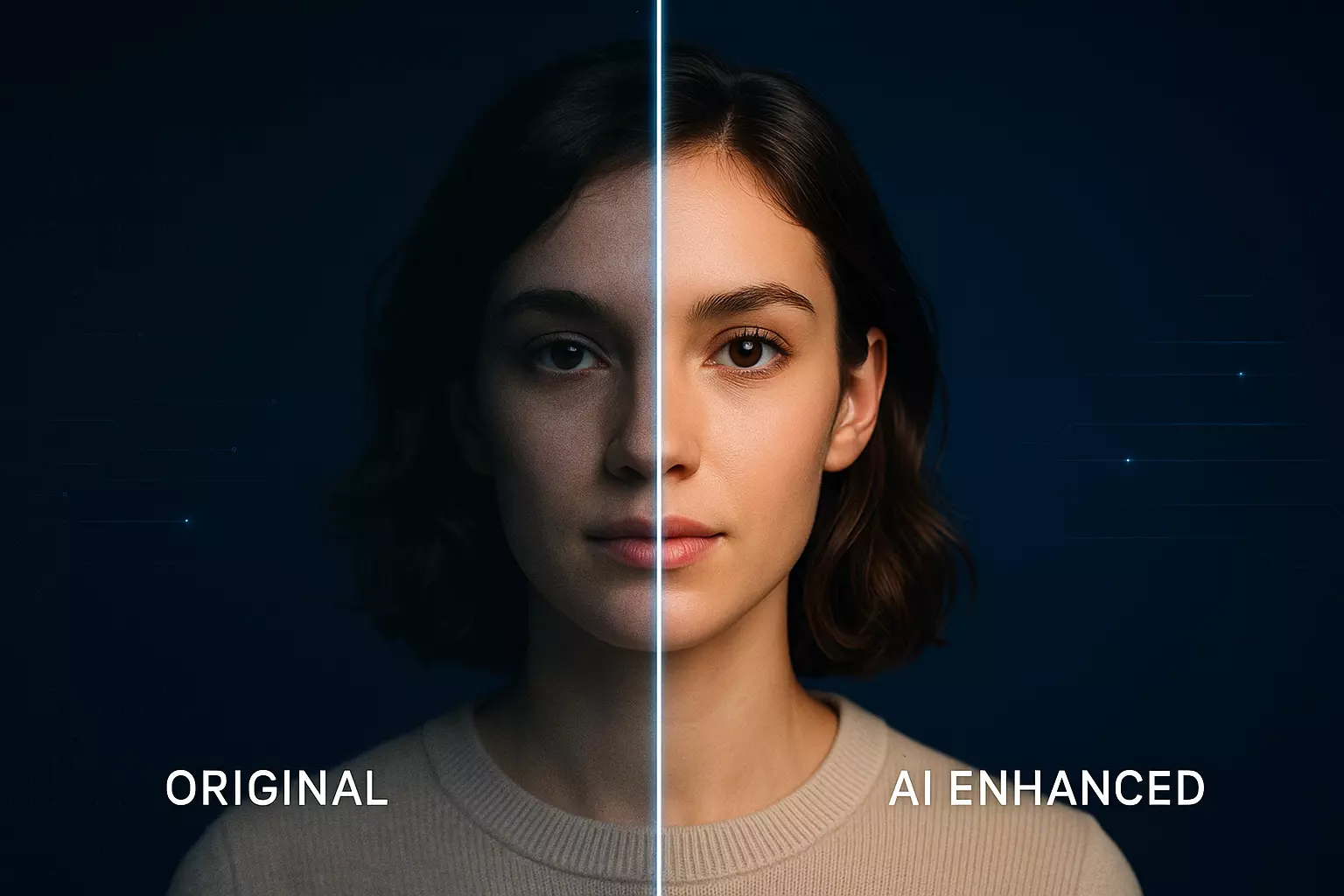
The result: even minor edits look “retouched.” AI-based removal recognizes these patterns and reconstructs surfaces (e.g., wood grain, brushed metal, fabric threads) to avoid those telltale seams.
Approaches to remove text from images: what actually works
- Clone/Heal (manual): Good for tiny spots on uniform backgrounds. Struggles with complex textures and often leaves repeats or blur.
- AI object remover: Interprets text as an object, predicts what’s beneath, and restores continuity in texture and lighting.
- Watermark remover: Tailored for repeated logos or semi-transparent overlays; useful for subtle, patterned marks.
Pixflux.AI combines AI object removal and watermark cleanup in a workflow designed for marketing images. Compared with manual clone tools, it tends to preserve textures, edges, and shadows without leaving obvious retouching trails.
Step-by-step: remove text from image with Pixflux.AI while preserving the background
Follow this five-step workflow to cleanly strip dates, promo codes, and overlays:
- Open the Pixflux.AI tool page.
- Upload your original image.
- Choose the appropriate tool—text/object remover for solid headlines or a watermark remover for semi-transparent overlays—and let the AI process. For multiple images, add them to the same session to erase text from pictures consistently.
- Preview the result and fine-tune. If a texture looks too smooth, run a second pass on a smaller selection or adjust the area you’re targeting.
- Download the processed image. Save a high-quality version for master storage and export web-optimized copies for each channel.
Tip for realism: Work at the largest available resolution first. Downscale after cleanup to help blend residual artifacts.
(See image: the Pixflux.AI interface with three panels—upload, AI processing, and download—illustrating the streamlined flow.)
Batch processing old creatives for consistent cleanup
When you’re reviving entire ad sets, speed and consistency matter as much as quality. Pixflux.AI supports batch uploads so you can process multiple variants in one go—handy for clearing promo codes across sizes (1:1, 4:5, 9:16) or localizations. Keep a naming convention (e.g., campaign_assetA_master, campaign_assetA_EN, campaign_assetA_ES) to make QA and handoff painless.
Pro tip: Group images by background complexity. Run simple gradient or studio shots together; batch complex textures (wood, fabric, hair) separately so you can apply slightly different cleanup passes if needed.
(See image: a seasonal banner cleanup where dates and small print are removed while shadows and fabric weave remain intact.)
Quality checklist before you ship
Use this checklist to ensure your edits look invisible at campaign scale:
- Grain consistency: If the background has noise, ensure the cleaned area retains similar grain. Add a subtle noise layer if needed.
- Shadow continuity: Text often sits near shadows; confirm shadow density and direction are unbroken after removal.
- Edge softness: Hard edges in product cutouts should remain crisp; background edges should not turn razor-sharp unnaturally.
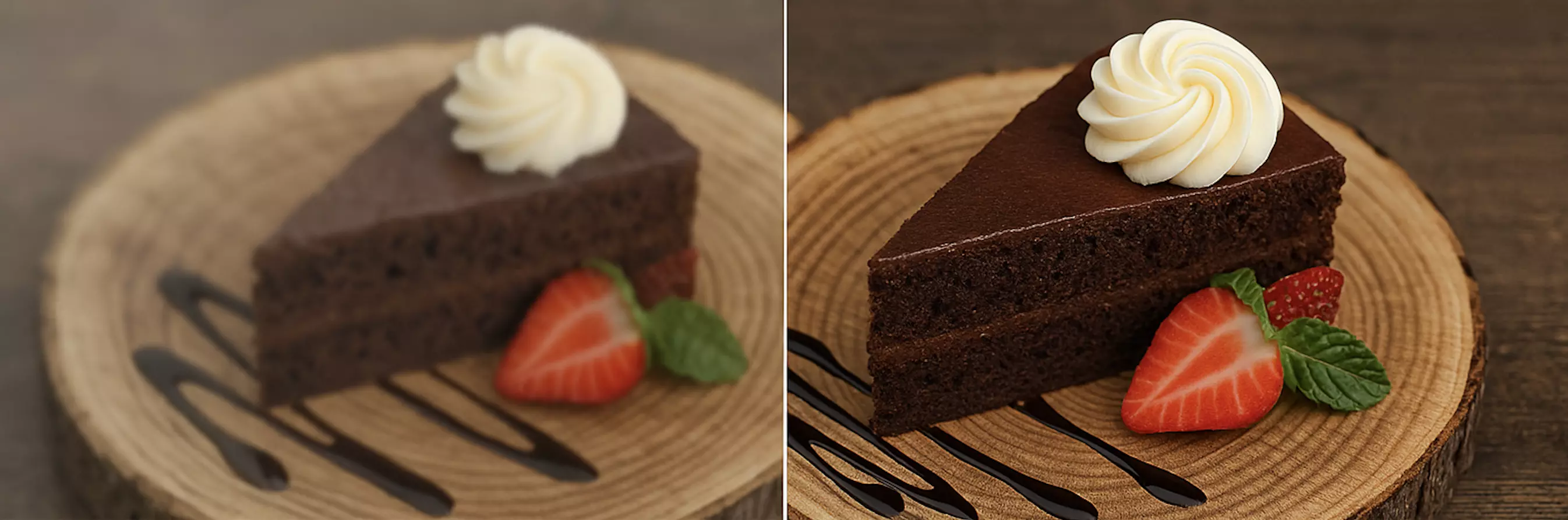
- Micro texture: Wood pores, fabric threads, brushed metal lines—look for continuity and avoid “plastic” smoothing.
- Resharpening: After removal and resizing, apply mild, output-specific sharpening to bring back intended clarity without haloing.
- Export hygiene: Prefer WebP or high-quality JPEG (85–95) to prevent new compression artifacts.
(See image: a before–after comparison where a promo code overlay is removed but wood grain remains continuous and believable.)
Background repair tactics for larger overlays
If text covers a large area or sits on complex patterns, you have options:
- Regenerate subtle textures: Run a second AI pass focused on texture continuity, or feather the selection to blend the transition.
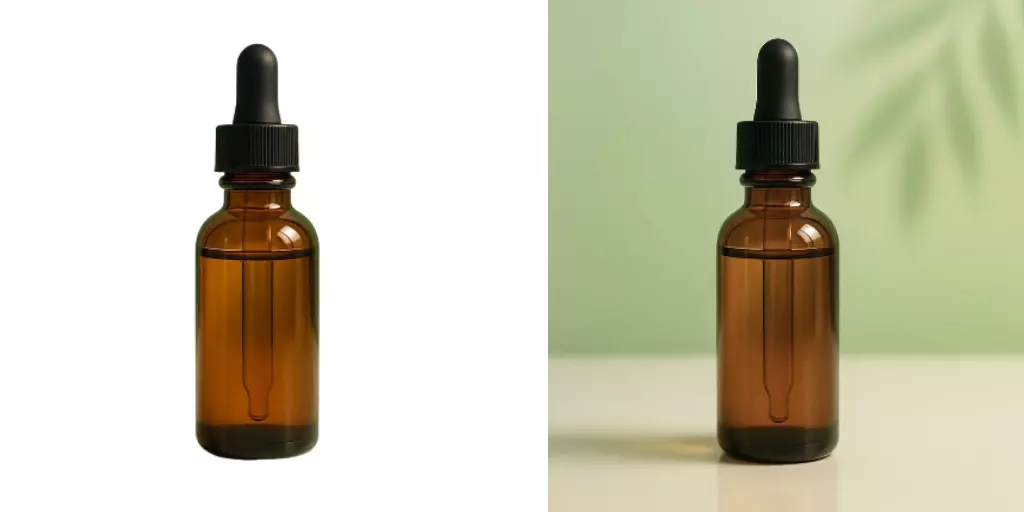
- Change the background: If repair feels forced, replace the background altogether with a clean studio look or a brand-friendly setting. Pixflux.AI can replace or generate new backgrounds that match your product lighting and tone.
- Compose strategically: Crop or reposition the subject to minimize the repaired region while preserving the main message.
Lightweight case studies: what “invisible” edits look like
- Product on wood: A bold “-20% TODAY” removed from a tabletop looks real when pores and grain lines flow through the cleaned area without repetition.
- Apparel flat-lay: Dates and small print disappear while fabric weave and soft shadows remain intact, avoiding smooth patches that betray retouching.
- Gradient banners: Removing semi-transparent headlines works when the gradient transition remains smooth with no banding or stair-stepping.
How to audit realism:
- Zoom to 200–300% and scan for repeating tiles.
- Toggle between original and edit to spot ghosting or tonal shifts.
- Print a small proof; unnatural smoothing is often easier to catch on paper.
Compliance and ethics: know when not to remove text
- Only remove text from images you own or have rights to edit. For assets with watermarks, ensure you have permission; watermark removal should never be used to infringe on copyright or violate platform rules.
- Respect trademarks and disclosures. Don’t remove required legal copy or third-party marks without proper approvals.
- Keep an audit trail. Save an original and an edited version to document authorized changes.
Troubleshooting artifacts and export best practices
- Ghosting: Run a second pass with a tighter selection and feathered edges. Slightly adjust exposure or add subtle grain to unify the area.
- Repeating patterns: Avoid large clone-like selections; use multiple small passes and vary sampling.
- Color shifts: Sample nearby colors and apply a gentle HSL adjustment to match the surrounding tone.
- Banding in gradients: Add minimal dithering or a faint noise layer. Export as WebP or higher-quality JPEG to reduce compression steps.
- Over-sharpening halos: Apply sharpening on a separate layer and mask it off the repaired area to keep textures even.
Tool stack and handoff tips
- Keep nondestructive layers: Save layered masters (e.g., with adjustment layers and cleanup passes separated) to allow future edits.
- Use consistent file formats: Store a high-quality PNG or TIFF master; export channel-specific JPEG/WebP deliverables from that master.
- Versioning: Use clear suffixes (_v1, _v2) and maintain a changelog so team members know what was altered and why.
- Cross-team feedback: Share side-by-side before/after previews at 100% zoom to align on quality standards.
AI online tools vs traditional methods
- Time cost: Manual clone/heal takes minutes per text block and scales poorly across dozens of assets. AI removal in Pixflux.AI typically handles an image in seconds, with minor touch-ups only when backgrounds are extremely complex.
- Learning curve: Clone/heal requires skilled operators to avoid repeating patterns. An AI workflow lowers the skill barrier—upload, select, review, and you’re done.
- Batch efficiency: Traditional tools make batch consistency hard. Pixflux.AI supports multi-image processing so variants stay visually aligned.
- Team adaptability: Because edits happen in a browser and results are easy to preview, marketers, designers, and content managers can all participate without passing heavy files back and forth.
Quick How-To recap: Pixflux.AI in three steps
- Upload your image with outdated text.
- Let the AI remove the text and reconstruct background textures.
- Download the result and export campaign-specific sizes.
If you’re ready to process several images at once, simply add them to the same session and run uniform settings for consistent output.
Conclusion and next steps
Refreshing campaigns shouldn’t force you to choose between speed and quality. With AI-assisted cleanup, you can update dates, remove promo codes, and reclaim high-performing visuals without introducing blur, banding, or cloning seams. Pixflux.AI helps you preserve textures and edges so your assets look like they were never edited.
Try it on your next refresh: open your best-performing banner or product shot and remove writing from photos in minutes—then export clean, ready-to-ship creatives for every channel.